Markets · Business · Economy
The stock market today delivered two different stories in a single session. The first was a rout: the Dow Jones Industrial Average fell 848.75 points, the S&P 500 closed at its lowest level since late July, nearly nine in ten S&P 500 stocks declined, and every one of the benchmark’s 11 sectors finished lower. The second story arrived after the closing bell, when Nvidia — reporting for the first time under interim chief executive Colette Kress — posted $115.8 billion in revenue against a $109.1 billion consensus and guided the next quarter to $130 billion. Between those two stories sits everything that is unsettling investors at once: a Federal Reserve now priced to raise rates in December, a consumer who is still spending but rotating hard, a software sector being repriced for the AI era, and a reported outage on an internal National Security Agency network that knocked the market to its intraday lows. This is the full close, with the numbers in context.
Track it live: https://signalpostnews.com/tracker/markets
NEW YORK, November 17, 2026 — The Dow Jones Industrial Average fell 848.75 points, or 1.64%, to close at 50,759.42 on Tuesday, and the S&P 500 lost 76.06 points, or 1.03%, to finish at 7,340.53 — its lowest close since late July and its fourth consecutive losing session. The Nasdaq Composite fell 181.38 points, or 0.74%, to 24,328.38, and the Nasdaq 100 also declined 0.74% to 26,996.90. Small companies were hit harder: the Russell 2000 dropped 1.45% to 2,703.29. The breadth of the decline was the story inside the story. Nearly nine in ten S&P 500 stocks fell, all 11 of the index’s sectors closed lower, and across the wider market decliners outnumbered advancers 4,093 to 1,430 — a ratio of almost three to one that marks Tuesday as a genuine risk-off session rather than a rotation between corners of the market.
The Cboe Volatility Index, Wall Street’s fear gauge, rose 9.48% to 25.64, its highest territory in months and a level that says options traders are paying up for protection rather than merely hedging at the margin. Yet the session was not a straight line down, and it was not a panic. The Philadelphia Semiconductor Index actually rose 0.34%, the bond market barely moved — the 10-year Treasury yield eased 1.8 basis points to 5.103% — and oil and gold were close to flat. What Tuesday looked like, in other words, was an equity market repricing a specific and increasingly uncomfortable combination: interest rates that may be going up rather than down, an AI trade that has begun to eat its own software incumbents, and a consumer economy whose strongest data point of the morning was also, on inspection, an argument for the Fed to stay restrictive. Then, after the bell, Nvidia reported — and the after-hours market promptly began arguing with the close.
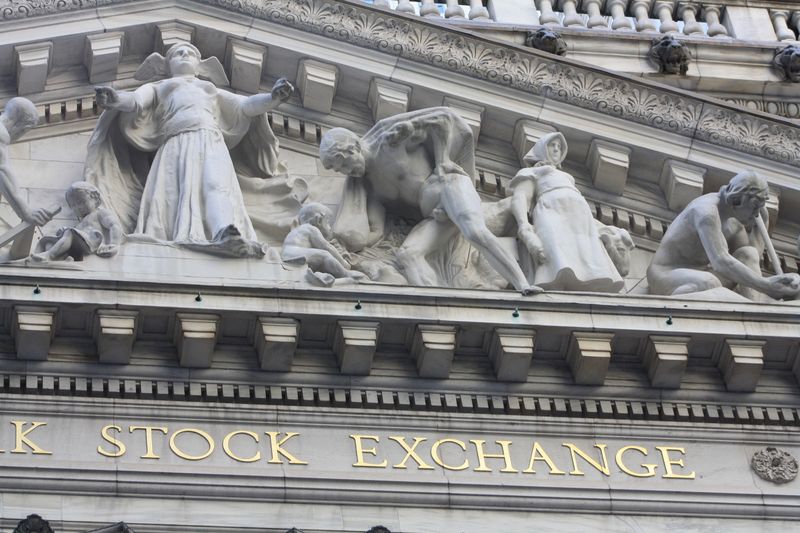
The close in full: a fourth straight loss, and nowhere to hide
Start with the shape of the decline, because the shape is what separates a bad day from a regime change. A fourth consecutive loss for the S&P 500, at its lowest close since late July, means the index has now given back the autumn’s advance in a steady grind rather than a single capitulation. Monday’s session — S&P 500 down 1.92%, the Nasdaq Composite down 2.49% and into correction territory, more than 10% below its October 6 record — set the tone; Tuesday extended it with broader participation. When nearly 90% of the S&P 500 falls on the same day, index-level explanations matter more than stock stories: this was investors reducing equity exposure overall, not swapping one name for another.
The sector table confirms it. Financials were the worst performers, down 1.91% — a notable detail, because banks usually benefit from higher rates; their underperformance suggests the market is beginning to price the credit and deal-making costs of a tightening cycle rather than the margin benefits. Energy was the least-bad sector, down 0.52%, cushioned by crude holding its ground. At the other end of the risk spectrum, the Russell 2000’s 1.45% fall extended a pattern in which smaller, more rate-sensitive companies lead declines whenever the expected path of policy shifts higher — small caps borrow at floating rates and refinance more often, so a December hike is not an abstraction for them but a line item.
Cross-asset markets, by contrast, were calm to the point of eeriness. West Texas Intermediate crude rose 0.20% to $85.70 a barrel and Brent added about 0.76% to roughly $93.14. Gold futures slipped 0.11% to $3,850.20 an ounce, with spot gold near $3,854 — a fourth straight equity selloff produced no haven bid worth the name. The dollar index eased 0.09% to 103.51. Bitcoin fell 1.70% to $63,908, continuing to trade as a high-beta risk asset rather than a hedge. The message from everything that is not a stock was consistent: this is an equity valuation and positioning event, driven by the expected path of US interest rates, not a macro shock arriving from outside the market.
Why this matters
Why this matters is the direction of the interest-rate surprise. For most of the past two years, the market’s bad days came when rate cuts looked less likely. Tuesday’s decline came with the futures market pricing something stronger: according to CME FedWatch, traders assigned a 95.4% probability to the Federal Reserve raising rates by a quarter point at its December 8–9 meeting. A market that has to absorb not merely the absence of relief but the return of tightening is a market whose valuation math changes everywhere at once — the discount rate on every future earnings stream rises, the premium on cash-rich balance sheets grows, and the stocks most dependent on cheap capital and distant profits, from small caps to enterprise software, get marked down first and hardest. That is precisely the pattern Tuesday’s tape shows.
It matters, too, because of what did not fall. Semiconductors rose as a group, and after the bell Nvidia delivered the strongest possible version of the AI-infrastructure story: triple-digit revenue growth, a data-center business doing $107.6 billion in a single quarter, and a guide above every published estimate. The market is therefore not abandoning the AI trade; it is splitting it. Money is concentrating in the companies that sell the picks and shovels of the build-out — and in the cash flows already arriving — while fleeing the software layer whose pricing power the same build-out may be about to disrupt, a fear sharpened by the imminent pricing of Anthropic’s initial public offering, expected above its $70–78 indicated range, which hung over incumbent software names all session. A split trade is a healthier trade than a bubble, but it is a narrower one, and narrow markets break more easily when the macro wind turns.
The morning’s data: a consumer still spending, an industry still shrinking
Tuesday’s economic data arrived before the open and cut in two directions at once, which is why the market’s reaction tells you more than the headlines. October retail sales rose 0.2% on the headline — in line with expectations — but the control group that feeds directly into GDP calculations rose 0.6%, beating the 0.4% consensus, and September’s core figure was revised up to 0.5% from 0.1%. Read one way, that is a consumer who refuses to crack a month before the holiday season. Read the Fed’s way, it is evidence that demand is holding up well enough that restrictive policy is not yet biting where it is supposed to — and our separate report on the October retail sales report sets out the statistical caveats, including the Census Bureau’s own warning that the headline change is within the margin of error of flat, and the fact that after inflation the month’s sales fell in real terms.
Industrial production, released the same morning, fell 0.4% — the factory side of the economy contracting even as the checkout side holds. Put the two together and you get the economy the bond market has been describing for weeks: services and consumption resilient, goods and industry soft, and inflation sticky enough that the 10-year yield sits above 5.1% and the 30-year near 5.45%. That is not a recessionary mix, but it is a mix in which the Fed can plausibly argue that financial conditions need to tighten further — which is exactly the argument one of its presidents made out loud on Tuesday.
The Fed angle: Musalem floats hikes, and futures price one
St. Louis Fed President Alberto Musalem said Tuesday that several rate hikes may be needed before spring 2027 — remarks that would have been unthinkable in market pricing a month ago and that landed, on Tuesday, like confirmation rather than provocation. With FedWatch at 95.4% for a 25-basis-point December hike, the debate on trading desks has shifted from whether the Fed moves in December to what a hiking cycle does to a market that spent the autumn positioned for the opposite. The 10-year yield’s behaviour is the tell: it rose toward 5.15% intraday after the retail sales release before settling at 5.103%, down 1.8 basis points on the day — long-term borrowing costs are being set by growth-and-inflation arithmetic, not by panic, which makes them harder to argue with.
The calendar now tightens around the market. The minutes of the Fed’s October meeting arrive Wednesday, November 18, at 2 p.m. Eastern, and will be read for how close the committee already was to the position Musalem voiced publicly. Weekly jobless claims and the Philadelphia Fed survey follow on Thursday. The December 8–9 FOMC meeting is three weeks away, and between here and there sit November’s data and the market’s own verdict on Nvidia. A central bank priced at 95.4% rarely surprises by standing still; if the minutes read hawkish, the remaining 4.6% becomes the trade.
The outage report that knocked stocks to their lows
The session’s strangest leg down came on a report — attributed here as a report, not an established fact — that an internal, classified National Security Agency network had suffered an outage. Stocks slid to their intraday lows as the report circulated. Nothing about an intelligence agency’s internal systems has a direct read-across to corporate earnings, and that is the point worth recording: in a market already four days into a selloff, with volatility elevated and positioning defensive, an unverifiable headline about a sensitive government network was enough to accelerate selling before any confirmation existed. Thin, nervous markets do not wait for verification; they sell first and read later. Readers should treat the outage itself as unconfirmed unless and until an official source states it on the record — and treat the market’s reaction to it as confirmed, because it is in the tape.
Winners and losers: what the tape actually rewarded
The day’s gainers were a study in old-economy cash flow. Energizer jumped 12.4% on an earnings beat. Engineering and construction firm Aecom rose 11.3%. Tyson Foods gained 8.7% after reporting earnings per share of $0.61 against a $0.53 consensus and revenue of $14.59 billion against $14.10 billion expected, with beef pressures easing. Broadcom rose 2.46%, extending the semiconductor divergence, and Comfort Systems, Gilead, McDonald’s and Honeywell were also among the session’s stronger names. The common thread is not sector but profile: companies selling things people demonstrably bought this quarter, at prices that already reflected modest expectations.
The losers’ list is the mirror image. Salesforce fell about 9.5% and ServiceNow 6.5%, the software complex repricing for a world in which AI agents threaten per-seat pricing — with Anthropic’s imminent IPO pricing acting as a live, competing claim on the same investor dollars. Strategy, the bitcoin-holding company formerly known as MicroStrategy, fell 5.6% alongside the crypto decline. Intel lost 4% even as the broader semiconductor index rose, Microsoft fell 3%, JPMorgan lost 2.7% with the financials, United Airlines fell 3.7% and Marvell 2%. Disney reported adjusted earnings of $1.77 a share against $1.67 expected and raised its dividend 33% — and its stock still slipped, which in a market like Tuesday’s is less a verdict on Disney than a measurement of the headwind.

Home Depot: a beat, a narrowed outlook, and a 2.7% fall
Home Depot reported before the open and gave the market a nearly perfect specimen of the day’s mood. Third-quarter sales rose 4.9% to $43.4 billion; adjusted earnings came in at $3.86 a share against a $3.84 consensus, with GAAP earnings of $3.72; comparable sales rose 2.2%; and the adjusted operating margin was 13.0%. By the standards of any normal week, that is a beat. But the company narrowed its full-year outlook — and in a market repricing interest rates, the outlook is the stock. Home Depot is the most housing-sensitive name in the Dow, mortgage rates track the same long yields that rose toward 5.15% intraday, and our coverage of this morning’s homebuilder sentiment reading, at a 14-year low of 25, describes the demand backdrop the retailer is guiding into. Shares fell 2.7%. The earnings were fine; the future the market is discounting is the problem.
After the bell: Nvidia beats, guides to $130 billion, adds $150 billion of buyback
Then came the report the whole week had been organised around. Nvidia — reporting for the first time since Jensen Huang’s resignation, under interim chief executive Colette Kress — posted revenue of $115.8 billion, up 103% year over year and 20% sequentially, against an LSEG consensus of $109.1 billion. Non-GAAP earnings were $2.68 a share against $2.48 expected; GAAP earnings were $2.70, at a GAAP gross margin of 74.8%. The data-center segment alone contributed $107.6 billion. For the fourth quarter, Nvidia guided revenue to $130.0 billion, plus or minus 3% — a guide that explicitly excludes any China data-center compute sales — with gross margins expected in the 71–72% range. The board also authorised an additional $150 billion of share repurchases, leaving roughly $227.3 billion of total authorisation remaining.
The stock’s path tells the two-story day in miniature: Nvidia closed the regular session down 0.44% at $155.46, having traded as low as $150.33, and rose about 2.2% in after-hours trading to roughly $158.88 by 4:24 p.m. Eastern. One shadow sits over the print, and it is reported here at its correct weight: the Wall Street Journal has reported that the Securities and Exchange Commission has opened a civil investigation into Nvidia’s disclosures. That is attributed reporting about an investigation, not a finding of wrongdoing, and the company’s numbers on Tuesday night were what the market chose to trade on. Whether the after-hours gain holds through Wednesday’s session — with the Fed minutes landing at 2 p.m. — is the first test of whether the AI-infrastructure story can still carry a market whose macro foundations are shifting under it. The governance drama around the company continues in parallel: earlier today, Jensen Huang broke his silence to say he would be “honored” to return if the board asked — a door the board, as we reported Monday, has said it is not considering opening.

Data in context: how unusual was Tuesday?
Four straight down days, a sub-3-to-1 decliner ratio in the wrong direction, all 11 sectors red and a VIX at 25.64: by the standards of 2026, Tuesday was a top-decile bad day without being a disorderly one. The two comparisons that matter most are internal. First, Monday was worse on the headline indices — the S&P 500 fell 1.92% and the Nasdaq 2.49% into correction — but Tuesday was broader, which technicians read as the selloff completing its spread from the most extended names to the whole list. Second, the assets that usually confirm a true macro scare refused to confirm this one: the 10-year yield fell on the day, gold fell on the day, and the dollar was flat. Equity investors are repricing the price of money and the durability of software earnings; they are not, yet, pricing a crisis. That distinction is the difference between a correction and something worse, and it is why Wednesday’s twin tests — Nvidia’s open and the Fed minutes — carry so much weight.
One more number belongs in the frame: the S&P 500’s close at 7,340.53 is its lowest since late July, which means the index has round-tripped the entire autumn rally in four sessions. Rallies built over months and surrendered in days tend to leave positioning washed out rather than rebuilt — sellers exhaust themselves faster than buyers regain conviction. Nothing in Tuesday’s data says the selling must continue; everything in Tuesday’s policy pricing says the burden of proof has moved to the bulls.
What happens next
Wednesday brings the two events most likely to set the rest of the week: Nvidia’s first full session after its beat, and the October FOMC minutes at 2 p.m. Eastern. Thursday adds weekly jobless claims and the Philadelphia Fed survey; the Anthropic IPO pricing will test how much demand exists for the AI story at its newest, purest point of sale. Beyond the week, the December 8–9 FOMC meeting dominates: with futures at 95.4% for a hike, the scenarios that matter are no longer hike-versus-hold but hike-with-guidance-for-more versus hike-presented-as-one-and-done — and Musalem’s “several hikes before spring 2027” framing has already told the market which way at least one voter leans. For investors, the honest summary of Tuesday is this: the economy gave the Fed no reason to relent, the Fed’s own voices gave the market no reason to hope, software gave AI’s disruption story fresh evidence — and the largest company in the AI build-out then reported numbers strong enough to argue the whole selloff is about price, not prospects. Both halves of that sentence were true at the close. Wednesday decides which half the market believes.

Sources
Closing data as reported by CNBC, the Associated Press and Reuters-based market coverage, Tuesday, November 17, 2026: S&P 500 7,340.53, -76.06, -1.03% (lowest close since late July; fourth straight loss; nearly nine in ten S&P 500 stocks fell, per AP; all 11 sectors lower); Dow Jones Industrial Average 50,759.42, -848.75, -1.64%; Nasdaq Composite 24,328.38, -181.38, -0.74%; Nasdaq 100 26,996.90, -0.74%; Russell 2000 2,703.29, -1.45%; VIX 25.64, +9.48%; breadth 1,430 advancers against 4,093 decliners; financials -1.91%, energy -0.52%; Philadelphia Semiconductor Index +0.34%; 10-year Treasury yield 5.103%; WTI crude $85.70, +0.20%; Brent about $93.14; gold futures $3,850.20, -0.11%; bitcoin $63,908, -1.70%. US Census Bureau (via Reuters): October retail sales +0.2% headline, control group +0.6%. Industrial production -0.4%. St. Louis Fed President Alberto Musalem’s remarks on possible further hikes; CME FedWatch at 95.4% for a 25-basis-point December hike. The reported NSA internal network outage is attributed to reports and is not confirmed by any official statement in this article. Company reports: Home Depot third quarter (sales $43.4 billion, +4.9%; adjusted EPS $3.86 vs $3.84 consensus; comparable sales +2.2%; narrowed full-year outlook); Tyson Foods (EPS $0.61 vs $0.53; revenue $14.59 billion vs $14.10 billion); Walt Disney Co. (adjusted EPS $1.77 vs $1.67; dividend +33%). Nvidia, reported after the bell: revenue $115.8 billion (+103% year over year) vs $109.1 billion LSEG consensus; non-GAAP EPS $2.68 vs $2.48; data-center revenue $107.6 billion; fourth-quarter guidance $130.0 billion ±3% excluding any China data-center compute sales; additional $150 billion buyback authorisation; regular-session close $155.46, -0.44%, after-hours about +2.2%. The SEC civil investigation into Nvidia disclosures is as reported by the Wall Street Journal and is attributed reporting only. Monday, November 16 closing figures are used for continuity context only and are not today’s numbers. Photographs are file photos via Wikimedia Commons; none depicts the events of November 17, 2026.