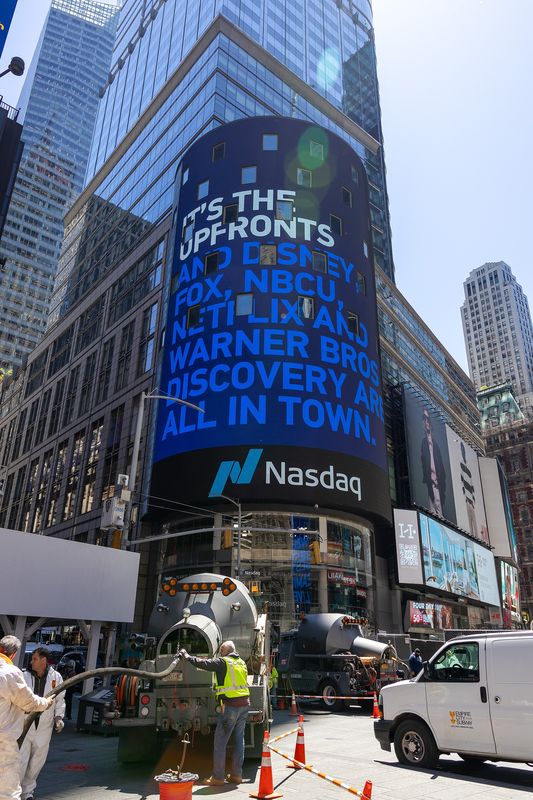
NEW YORK — Anthropic will price its initial public offering on Wednesday evening, November 18, after U.S. markets close, in a deal that could value the five-year-old company at about $1.4 trillion. The San Francisco-based maker of the Claude AI models plans to sell 825 million shares at $70 to $78 each, according to its filing with the U.S. Securities and Exchange Commission, and trading is expected to begin on Thursday, November 19, on the Nasdaq Global Select Market under the ticker ANT. At the top of the range the offering would raise about $64.4 billion, valuing it at roughly $1.4 trillion including employee stock options and restricted shares. Reuters reported Wednesday that Anthropic has guided investors to the top of its range or above, citing Bloomberg News, and demand has been reported at nearly seven times the shares available — raising the possibility the final price lands above $80 a share, pushing the valuation toward $1.5 trillion to $1.6 trillion.
Track it live: follow the market reaction on our live markets tracker
The deal, in numbers
Of the 825 million shares, 801,351,354 are new shares issued by the company and 23,648,646 sold by existing holders, according to the amended prospectus of November 10. A November 17 amendment confirmed the Class A stock is approved to list on Nasdaq under ANT, with the range unchanged at $70–$78. Alongside the public offering, seven technology partners — Google, Nvidia, AMD, Broadcom, Micron, Microsoft and TSMC — agreed to buy $26 billion of nonvoting shares at the IPO price in a private placement. Combined, the two tranches come to up to $90.4 billion, among the largest equity raises in history — though short of SpaceX’s $86 billion June raise at a $1.77 trillion valuation on the public-offering measure, and short of the $100 billion Anthropic was once expected to seek.
The operating numbers underneath are as striking as the price. Revenue reached $17 billion in the third quarter, up from $1.4 billion a year earlier — a twelvefold increase — and the annualised run-rate stood at about $81 billion as of October 31, up $10 billion from the end of September alone. As Signal Post News reported when the draft prospectus appeared — Anthropic’s IPO filing and its $80.7 billion loss — the filing showed an $80.7 billion headline loss driven mostly by non-cash marks on convertible securities, plus some $518 billion in long-term cloud commitments. Related coverage: Anthropic’s existential-risk warning and Tuesday’s market close, as the Dow fell 849 points and Nvidia beat expectations.
Why this matters
This week is a referendum on AI in two acts. Nvidia beat expectations on Tuesday in its first earnings report since Jensen Huang’s departure. “I’ve looked at this whole week as a referendum on AI,” Jake Behan of Direxion told Reuters. “Nvidia gave us a read on the buildout, and Anthropic is about to give us a read on investor appetite for the next generation of AI companies.” Anthropic is asking roughly 17 times run-rate revenue for a company with historic paper losses. A strong debut says the boom has years to run and that model companies are the next giants; a stumble would hit Nvidia customers’ spending, the circular supplier investments threaded through the sector, and OpenAI’s path to market.
There is a political dimension no ordinary IPO carries. The prospectus warns that advanced AI “could pose catastrophic or existential risks to society if not developed and deployed responsibly.” The company is feuding with the Trump administration, which ordered agencies to stop using Claude and applied a supply-chain risk label after Anthropic refused Pentagon requests touching mass surveillance and lethal autonomous weapons. And the Democrats — the party more wary of AI — have just taken both chambers in the midterms. The Anthropic valuation 1.4 trillion question is therefore not only whether the revenue curve holds, but whether Washington lets it.
How we got here
Dario and Daniela Amodei founded Anthropic in 2021 with colleagues from OpenAI, structured as a safety-first public benefit corporation. The founders pledged 80 percent of their personal equity to charity; 5 percent of shares go to a public benefit fund, and roughly 20 percent of shares are directed to public purposes. Claude’s rise in coding drove the revenue line from $1.4 billion to $17 billion year over year, and a SaaStr analysis estimates more than 5,000 employees are set to bank more than $200 billion between them. Earlier talk of a $2 trillion valuation faded as AI stocks slid this autumn — which is why tonight’s pricing, not the rumour, is the number that counts for anyone asking when does Anthropic stock start trading and at what level.
Who benefits, who loses — and what the critics say
The winners on paper are insiders and early backers, and the seven placement investors — though critics note the circularity: those partners are also Anthropic’s landlords and chip suppliers under huge compute contracts, so a share of the money they put in flows back to them as revenue. The skeptics make three arguments. First, history: First Trust and Bloomberg data cited by Motley Fool put the average IPO drawdown at about 32 percent in the first year. Second, governance: the placement shares are nonvoting, and control sits with the founders’ benefit trust. Third, price: the $74 midpoint implies about $1.33 trillion for a company warning of existential risk and “disproportionate regulatory action” — a hard answer to give anyone asking should I buy Anthropic stock tonight.
The bulls answer with growth and scarcity. Twelvefold revenue growth is unprecedented at this scale; $10 billion of run-rate was added in a single month; and ANT carries scarcity value as the only pure frontier-lab stock. New Street Research has a buy rating with a $105 target. Nasdaq’s fast-entry rules could put ANT in the Nasdaq-100 after 15 trading sessions, forcing index funds to buy regardless of the debate.
What happens next
Scenario one: priced above $80, and the AI trade gets a second wind
On sevenfold demand, the deal prices above $80, the Anthropic stock price jumps on Thursday’s open — SpaceX rose 19 percent on day one in June — and the AI trade gets a second wind into the December Fed meeting. Every private AI mark in Silicon Valley gets quietly revised upward.
Scenario two: priced at the top, then a fade
The deal prices at the top of the range but fades in early trading — the classic pattern for huge, full-value offerings. Anthropic still raises about $64 billion, but the message to OpenAI and late-stage startups is that public investors now want a discount for AI risk.
Scenario three: a weak debut resets the sector
A weak debut triggers a valuation reset across private AI marks — marks that were set when $2 trillion was being discussed for Anthropic itself. Suppliers’ shares, data-centre financing and the next year’s IPO queue all reprice with it.
By Thursday night, the AI boom will have a public price for a pure model company for the first time. Tonight’s number — somewhere between $70 and something above $80 — is where that story starts.
Read next: Anthropic’s IPO filing and its $80.7 billion loss · Anthropic’s existential-risk warning · Stock market today: Dow falls 849, Nvidia beats
Sources
Sources: Reuters, November 18, 2026 (pricing timing, guidance to the top of the range or above citing Bloomberg News, reported demand of nearly seven times the shares available, Direxion’s Jake Behan quoted); AFP, November 18, 2026, via TechXplore; Anthropic Form S-1/A, U.S. Securities and Exchange Commission, November 10 and November 17, 2026 (825 million shares at $70 to $78; 801,351,354 new shares and 23,648,646 shares sold by existing holders; Nasdaq listing approval under ANT; $26 billion private placement to seven technology partners; revenue and risk disclosures); Bloomberg News and Wall Street Journal reporting via RankiaPro and Motley Fool, November 18, 2026 (First Trust/Bloomberg average first-year IPO drawdown of about 32 percent; New Street Research buy rating and $105 target; SaaStr employee-equity analysis).