stock market today
The Dow rose for a third straight session while the S&P 500 and Nasdaq eased, as a selloff in AI-linked chip and optical stocks, a third straight rise in oil and a closed bond market left investors waiting on bank earnings and Wednesday's inflation report.
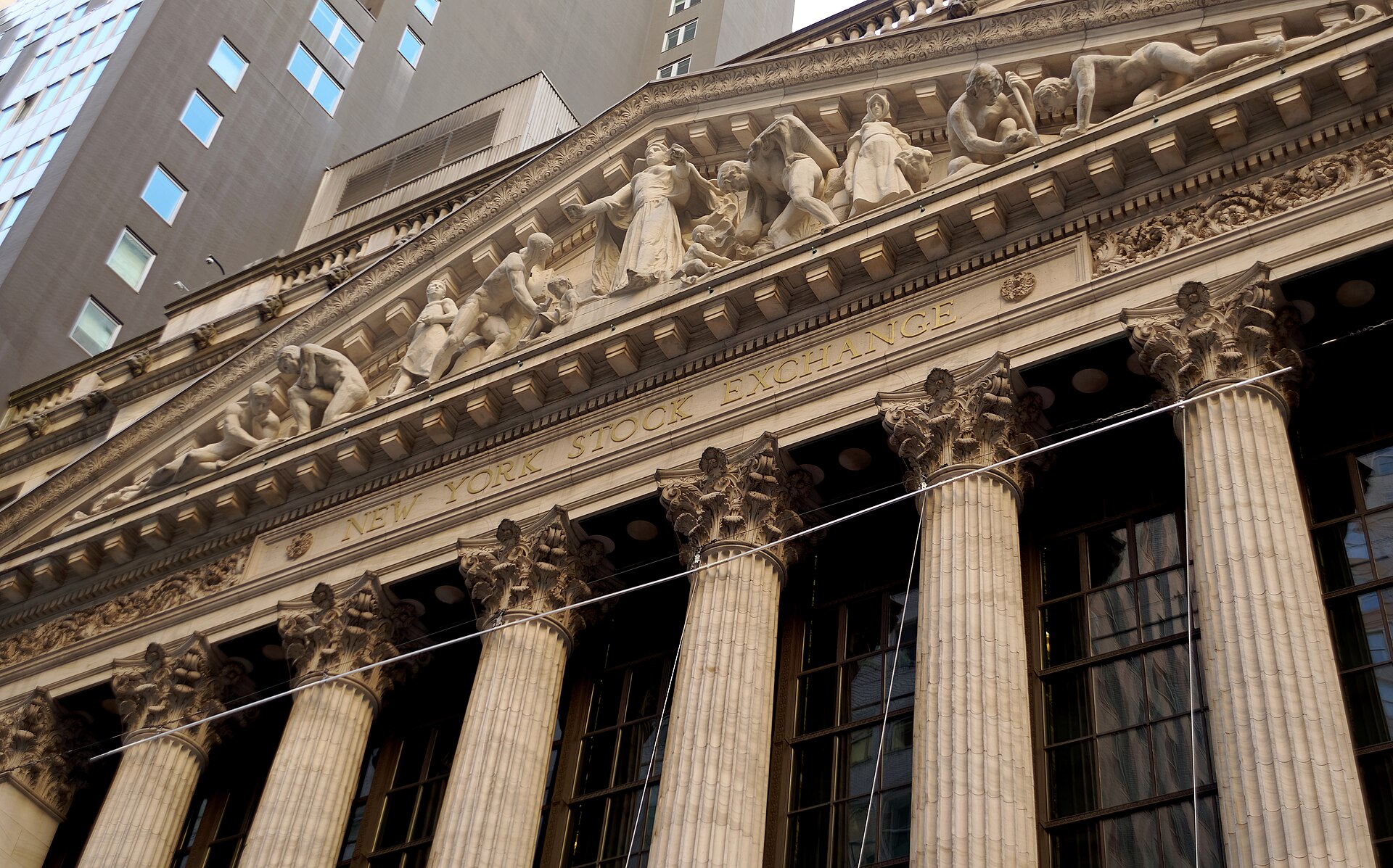
The stock market today closed mixed on Monday, October 12, 2026. The Dow Jones Industrial Average rose 195.60 points, or 0.38 percent, to 51,850.55 — its third straight advance. The S&P 500 slipped 4.30 points, or 0.06 percent, to 7,807.24, and the Nasdaq Composite fell 120.27 points, or 0.44 percent, to 27,245.90. Underneath the calm index numbers, money rotated hard out of AI hardware and into energy, software and banks on a Columbus Day session with the bond market closed and volumes thin.
Track it live: Live markets tracker · Oil price forecast
The closing scoreboard
The small-cap Russell 2000 fell 12.50 points, or 0.45 percent, to 2,794.48, underperforming the large-cap indexes — a sign that the day's caution was broad even if the headline Dow number looked comfortable. With the Treasury market shut for Columbus Day, bond yields simply carried Friday's close: the 10-year yield sat at 5.24 percent, the 30-year near 5.60 percent and the 2-year at 4.80 percent. The rate that drives mortgages, corporate borrowing and every stock-valuation model on Wall Street did not move on Monday — but it did not retreat, either.
Energy was the day's clearest mover. West Texas Intermediate crude rose 1.5 percent to $93.28 a barrel, and Brent crude gained 1.3 percent to $106.09 — a third straight gain for the global benchmark. Gold went the other way: the Comex front-month contract settled 0.60 percent lower at $4,165.80 an ounce, a reminder that even the classic haven is competing with a 5.24 percent risk-free yield. Bitcoin held above $83,000, trading near $83,100, down about 0.7 percent, and the dollar index rose about 0.25 percent to roughly 102.47 — its strongest level since April 2025, adding one more headwind for U.S. exporters and emerging markets.

Why this matters
Monday's split close is the market's whole argument in miniature. The Dow — heavy with banks, energy and industrial names — could rise because those sectors had genuine good news: oil is climbing, and the big banks are about to report earnings into a credit environment that has not cracked. The Nasdaq fell because the trade that carried the indexes to records, artificial-intelligence hardware, hit its first real air pocket in weeks. Neither move was large. The information was in the direction of the rotation, not its size.
The timing matters more than the percentages. This close lands the night before third-quarter earnings season opens with the major banks, and two days before the September Consumer Price Index — the last big inflation reading before the Federal Reserve meets on October 28. A market that is merely rotating, rather than de-risking, is a market that still believes the week's news will be survivable. Tuesday and Wednesday will test whether that belief is analysis or habit.
Three forces that moved the market
1. The AI and optical selloff
The day's worst damage sat in the plumbing of the AI buildout. Optical-networking names — the companies that make the fiber connections between AI data centers — were hit hardest: Ciena fell about 10 percent, Lumentum dropped 9.8 percent, Coherent lost 7.9 percent and Corning slid 6 percent. Chip names followed: Marvell fell 3.4 percent and Cisco lost 2.6 percent, while Nvidia also slipped. Two triggers converged. Comments from Broadcom's chief executive in Singapore — describing a capital bottleneck in the AI buildout and likening some AI investors to casino gamblers — handed traders a reason to take profits in the market's most crowded trade, and a much-watched Open Compute demonstration turned into a classic sell-the-news moment.
Memory chips told the second half of the story. Micron fell about 4 percent after reports of progress by China's CXMT in memory technology, and South Korea's SK Hynix dropped about 4 percent as well; storage makers were marked down on the same competitive worry — Western Digital lost more than 2 percent and Seagate more than 3 percent. The distinction investors should keep is the one the market itself drew on Monday: demand for AI computing was not repudiated — Meta, a buyer of that computing, rose. What was repriced was the assumption that every supplier in the chain deserves a premium multiple at the same time. The exchange-traded funds captured the net effect: the QQQ fell 0.7 percent while the SPY eased 0.1 percent.
2. Oil climbed for a third straight day
Energy stocks were the mirror image of the chip trade. The Energy Select Sector fund (XLE) rose 1.7 percent, with Exxon Mobil up about 2 percent, ConocoPhillips up roughly 2 percent and Chevron ahead 1.5 percent; tanker owner Frontline jumped about 5 percent as shipping rates responded to the same supply anxiety lifting crude. The drivers were physical, not speculative: renewed Houthi attacks tied to Riyadh's airport, an incident involving a tanker off Oman, and a war of words over whether any energy ceasefire exists at all. President Trump has said an energy ceasefire is in effect; President Volodymyr Zelenskyy has said the claim was news to him, and Ukrainian officials report continued Russian strikes on energy infrastructure. Traders who cannot verify either version price the risk — and on Monday they priced it higher for a third consecutive session.
That is why Brent above $106 matters beyond the energy sector. Every dollar on crude is a future argument in the inflation data, in the Federal Reserve's deliberations and in household budgets. Oil rising on supply fear is the one input that simultaneously lifts one part of the stock market and threatens the rest of it, and it is the thread connecting Monday's sleepy index close to Wednesday's CPI report.

3. A silent bond market leaves the 5.24 percent question open
The most important market on Monday was the one that did not open. With Treasurys closed for Columbus Day, the 10-year yield froze at Friday's 5.24 percent — down from last week's 5.37 percent peak, a 24-year high, but still a level that reprices everything it touches. Futures markets put the odds of a rate hike at the Fed's October 28 meeting below 20 percent, yet the odds of at least one hike by December sit near 85 percent. That gap is the market's real position: not panic about this month, but a steadily hardening expectation that the Fed is not done.
When bond trading resumes Tuesday, the yield will react to bank earnings and CPI positioning in real time — and equities will have to share the stage with a rate market that has been the tail wagging the dog all month. A quiet Monday close, on thin holiday volume, tells us investors were unwilling to commit either way before the data. It does not tell us they are calm about it.
Winners and losers
Meta and the software names led the winners
Meta was the day's standout, rising 3.4 percent to $742.96 on the launch of its Muse Wonder large language model — the stock's first gain after four straight losses, and evidence that investors will still pay for AI when it arrives as a product rather than a promise. Salesforce rose more than 2 percent after Bank of America upgraded the stock to buy with a $285 price target, and enterprise-software peers Workday and Intuit each gained more than 3 percent in early trading before the broader tape softened. EBay surged after a top-pick designation, and apparel name FIGS jumped — a reminder that on a rotation day, the winners' list is written stock by stock, not sector by sector.
The laggards: deal math and momentum unwinds
Bloom Energy fell 6.9 percent, among the session's sharpest decliners. IonQ fell after announcing a $1.3 billion all-stock acquisition of Elisity — quantum-computing investors, asked to absorb a large dilutive deal paid for entirely in shares, marked the buyer down in the standard verdict on all-stock transactions: the target's shareholders get paid in a currency the acquirer's own holders now trust a little less. Nvidia's slip, modest next to the optical names, still mattered symbolically: when the AI trade de-risks, even its most liquid name is a source of funds.
What the close means for regular people
Your 401(k): a four-year-old bull market with a concentration habit
The bull market has just turned four years old, and the year-to-date scoreboard through Friday explains both the comfort and the risk: the S&P 500 is up 13.9 percent in 2026, the Nasdaq 17.8 percent, the Dow 6.8 percent and the Russell 2000 11.9 percent. A retirement account invested across the big indexes has had a strong year. Monday's lesson is about what those index returns rest on: a narrow band of AI-linked companies whose suppliers can fall 8 to 10 percent in a day on an executive's remarks. Diversification did not fail on Monday — energy, banks and software rose — but it lived inside the same indexes, which is precisely why the Dow and Nasdaq could tell two different stories on the same afternoon.
Mortgages, savers and the 5.24 percent economy
The 10-year yield is the number that reaches kitchen tables. It anchors mortgage pricing, and with it pinned above 5 percent, Freddie Mac's average 30-year fixed mortgage rate stands at 7.40 percent — the arithmetic that keeps housing turnover frozen and monthly payments at levels that strain first-time buyers. The offsetting side of the same number: savers are still being paid roughly 5 percent on Treasury bills and money-market funds, a return that did not exist for most of the past two decades. High yields are a tax on borrowers and a wage for savers, and Monday's frozen yield means neither side of that bargain changes until the data moves it.
At the gas pump
WTI at $93.28 and Brent at $106.09 keep upward pressure on fuel prices with a lag of days to weeks. A third straight daily gain in crude, driven by attacks and tanker incidents rather than demand, is the pattern most likely to show up at the pump without showing up in anyone's paycheck — the household version of the stagflation arithmetic that bond investors are watching in the CPI.
The trade footnote investors should not skip
Beneath Monday's close sat a data point with a long fuse: the August trade deficit widened to $105.6 billion, from a revised $92.8 billion in July. Imports rose $17.2 billion to $420.8 billion, led by AI capital goods — the servers and chips of the data-center buildout — while exports rose $4.5 billion to $315.2 billion. Economists estimate the wider deficit could drag third-quarter GDP by up to 2.5 percentage points, even as the Atlanta Fed's running estimate still sits near 3.7 percent growth. The tension is worth naming: the AI investment boom is simultaneously the stock market's engine and, through imports, a measurable subtraction from measured GDP. Both things are true, and the market will have to hold them together when the GDP report arrives.
What happens next
The week's verdicts arrive in sequence. Tuesday opens earnings season: JPMorgan, Goldman Sachs, Wells Fargo and Citigroup report before the bell, alongside Johnson & Johnson and UnitedHealth — the first hard read on credit quality, trading revenue and consumer health. Wednesday is the main event: the September CPI at 8:30 a.m. ET, with Bank of America, Morgan Stanley and ASML also reporting. Thursday brings the Producer Price Index, retail sales and TSMC's earnings — the AI capex audit — while Fed Chair Warsh speaks in Bangkok around the IMF and World Bank meetings. Beyond the week: the Fed decides on October 28, and the midterm elections follow on November 3.
Read neutrally, Monday's close supports two honest scenarios. In the constructive one, bank earnings confirm a sound credit cycle, CPI shows energy passing through without reigniting core inflation, and the rotation out of AI hardware reads in hindsight as a healthy broadening. In the harder one, a hot CPI print on top of $106 oil forces the December hike odds toward certainty, pushes the 10-year back toward 5.37 percent, and turns a one-day chip selloff into a valuation reset. The Dow's third straight gain says investors lean toward the first story. The frozen 5.24 percent yield says they are hedged for the second. Both positions were rational at Monday's close; the data arriving in the next 72 hours decides which one was right.
Bottom line: October 12 was a rotation day dressed as a quiet day — Dow up, Nasdaq down, oil up, bonds silent. The market did not de-risk ahead of earnings and CPI; it rearranged. What it does next depends on numbers that have not been printed yet, starting Tuesday morning. This article is market coverage and education, not financial advice.
Related coverage
Sources
- Investopedia — Stock Market Today: Dow Jones, S&P 500 (October 12, 2026)
- Investor's Business Daily — Dow Jones, S&P 500, Nasdaq: Stock Market Today (October 12, 2026)
- Wall Street Journal — Stock Market Today: Dow, S&P 500, Nasdaq (live coverage) (October 12, 2026)
- MarketWatch — Why Ciena, Lumentum and Other Optical Stocks Were Among the Market's Biggest Losers on Monday (October 12, 2026)
- Morningstar / Dow Jones — Comex Gold Settles 0.60% Lower at $4,165.80 — Data Talk (October 12, 2026)
- Reuters — Dollar Stays Near 18-Month High on Mideast Conflict, Inflation Data Focus (October 12, 2026)