stock market today
Stock Market Today October 13, 2026: Dow Falls 180 as Banks Fade and Memory Chips Slide

The stock market today closed lower across the board on Tuesday, October 13, 2026 — though the averages hide a stranger session underneath. The Dow Jones Industrial Average fell 180.45 points, or 0.35 percent, to 51,670.10, after rising as much as 242 points in the opening minutes: a 423-point slide from its morning high. The S&P 500 slipped 1.79 points, or 0.02 percent, to 7,805.45, and the Nasdaq Composite lost 41.52 points, or 0.15 percent, to 27,204.38. The small-cap Russell 2000 fell 0.40 percent to 2,783.37, its second straight decline. Yet beneath the flat index prints, more S&P 500 stocks rose than fell — 271 of 503 gained on the day — a reminder that in a market dominated by a handful of giant names, the index and the average stock can tell two different stories.
Track it live: Live markets tracker
Why this matters
For anyone with a 401(k) or an index fund, Tuesday was a small loss on paper — a 0.02 percent dip in the S&P 500 moves a $100,000 account by about twenty dollars. The more important story is the pattern. This was the second straight session in which chip stocks dragged the Nasdaq, the second straight day bank shares could not hold early gains, and it comes with long-term interest rates pinned above 5 percent — a level that competes directly with stocks for money and keeps mortgage rates expensive. Only about 35 percent of S&P 500 stocks are trading above their 50-day average, a narrow base for an index sitting near record highs. Markets that climb on a few very large stocks can fall the same way, and Tuesday's split result — most stocks up, the index down — is what that fragility looks like in practice.
The day's other lesson was about sequence. Earnings season began with the biggest banks, and the first reports contained both a rare miss from JPMorgan and a near-record quarter from Goldman Sachs. Investors sold both. When good news and bad news produce the same reaction, it usually means traders were positioned for perfection — and that the next data point, Wednesday's consumer price index, matters more than anything said on an earnings call.
The closing numbers
The Dow's 0.35 percent decline was its first loss after three straight gains, and it was driven by a short list of heavyweights: Johnson & Johnson fell nearly 6 percent after a narrow earnings miss and lingering device and talc litigation questions, and Caterpillar dropped 3.5 percent. Citigroup fell about 5.5 percent, the biggest bank decline of the day. The Nasdaq's losses were concentrated in semiconductors: Applied Materials slid more than 6.5 percent, the worst performance in both the S&P 500 and the Nasdaq-100, and memory makers Micron, SanDisk, Seagate and Western Digital fell as much as about 3.5 percent. The DRAM exchange-traded fund lost roughly 3.5 percent after Monday's 4.5 percent drop; the broader SOXX semiconductor fund eased 0.2 percent after falling 2.5 percent on Monday.
What held up was the defensive and the physical. Energy was the best sector in the S&P 500, up 1.83 percent, followed by materials at 0.69 percent and utilities at 0.61 percent. Technology slipped 0.14 percent, financials 0.37 percent and health care 0.41 percent. Meta Platforms rose 2.5 percent, extending Monday's gain of about 3.5 percent, and the MAGS big-tech fund added 0.4 percent. Apple finished 0.1 percent higher after setting an intraday record earlier in the session — a small milestone that underlines how uneven the day was: a record high for the world's most valuable company, inside a down day for the market.
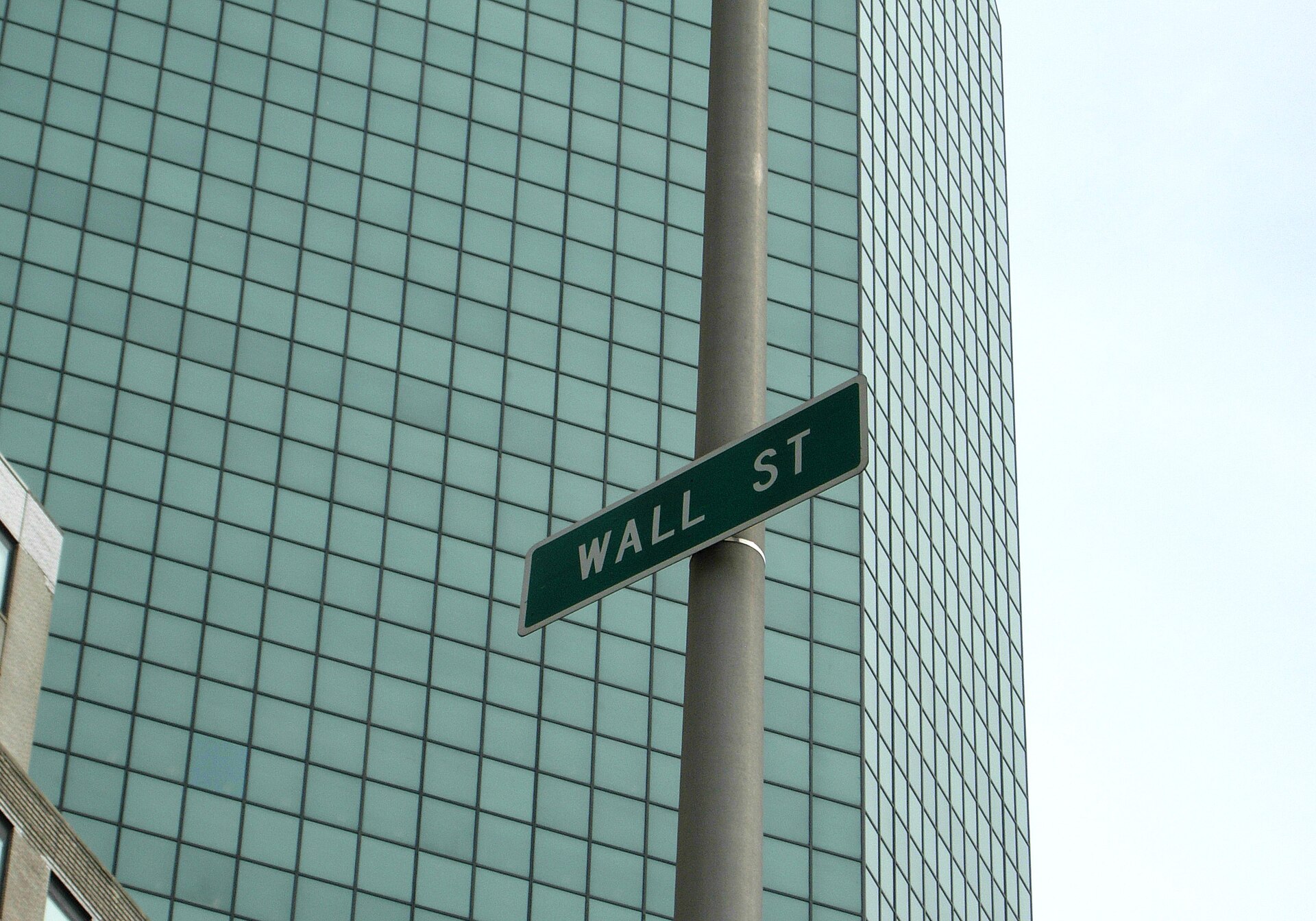
Bank earnings: a rare JPMorgan miss, a Goldman blowout
The first big reports of earnings season landed Tuesday morning, and they cut in opposite directions. JPMorgan Chase, the largest U.S. bank, reported earnings of $5.57 a share against expectations of roughly $5.90 — a rare miss. Revenue of $50.17 billion also came in below the $51.23 billion analysts expected, profit totalled $15.31 billion, and the bank took a $658 million loss on investment securities. Its fixed-income trading revenue of $5.4 billion missed estimates by about $550 million, and chief executive Jamie Dimon warned that the pain would worsen if interest rates rose another percentage point — a pointed remark with the 10-year Treasury yield above 5.2 percent.
Goldman Sachs told the opposite story: revenue of $18.68 billion, roughly $2 billion above expectations and the second-best quarter in the firm's history, powered by equity trading revenue of $6.44 billion, up 72 percent from a year earlier. Citigroup's profit rose 40 percent from a year ago — flattered by a goodwill charge tied to its Banamex unit in the year-ago quarter — and its $23.85 billion of revenue was its best third quarter in a decade. Wells Fargo's profit rose 6 percent, though revenue missed estimates. The market's verdict was unsentimental: bank shares opened strong and faded, with Citigroup closing down about 5.5 percent despite the decade-best revenue line. In health care, UnitedHealth beat expectations with adjusted earnings of $4.69 a share against roughly $4.14 expected, on revenue of $112.69 billion, and raised the floor of its 2026 earnings outlook to at least $20.50 a share — then closed slightly lower anyway. Domino's swung about 5 percent after its results. The pattern across names was the same: the numbers mattered less than what investors had already paid for them. (For how the market set up this week, see Monday's close.)
The memory-chip selloff goes global
The day's deepest damage came from a story that broke over the weekend in China. Reports that Chinese memory maker CXMT has achieved a breakthrough in advanced memory chips — the high-bandwidth components at the heart of the AI build-out — hit the shares of the Korean, Japanese and American firms that dominate the industry for a second straight session. South Korea's KOSPI index fell 5.5 percent, with Samsung Electronics down 7.4 percent and SK Hynix down 10 percent in trading so disorderly it was briefly paused. Japan's Nikkei fell 1.8 percent, and Dutch equipment maker ASML lost 3.2 percent in Europe before the U.S. open extended the losses to Applied Materials and the American memory names.
The selloff also has a domestic amplifier. Broadcom chief executive Hock Tan's weekend comments describing parts of AI speculation as a "casino" were still echoing through the sector on Tuesday, and they land on a market where chip valuations assume years of uninterrupted AI spending. Whether the CXMT reports amount to a genuine shift in the industry's balance of power or a headline the market used to take profits, the immediate effect is the same: the stocks that carried the indexes to their records are, for now, the ones pulling them back.
Bonds, oil, gold and bitcoin
The bond market, closed Monday for Columbus Day, returned with long-term yields near their highest levels in a generation. The 10-year Treasury closed at 5.21 percent, down 3 basis points from Friday and just below the roughly 5.22 percent where it traded late in the day; last week it touched 5.37 percent intraday, its highest in more than 24 years. The 30-year yield sat near 5.55 percent. Yields at these levels are the quiet tax on everything else in this story: they raise the government's borrowing costs, keep 30-year mortgage rates elevated for home buyers, and give cautious savers a genuine alternative to stocks — one reason high cash balances and money-market funds keep drawing money even as indexes sit near records.
Oil split its verdicts. West Texas Intermediate crude rose 0.8 percent to $94.45 a barrel, while Brent crude eased about 0.6 percent to around $106, still above $105, as traders weighed Washington's temporary easing of restrictions on Russian diesel against the continuing Houthi attacks on Saudi Arabia that have kept energy markets on edge — the same tensions behind President Trump's warning to the Houthis and his suggestion that Turkey could be asked to help strike them. Gold slipped 0.1 percent to $4,190 an ounce, bitcoin recovered to about $83,100 after dipping below $81,000 overnight, and the dollar index fell 0.4 percent to 102.19.
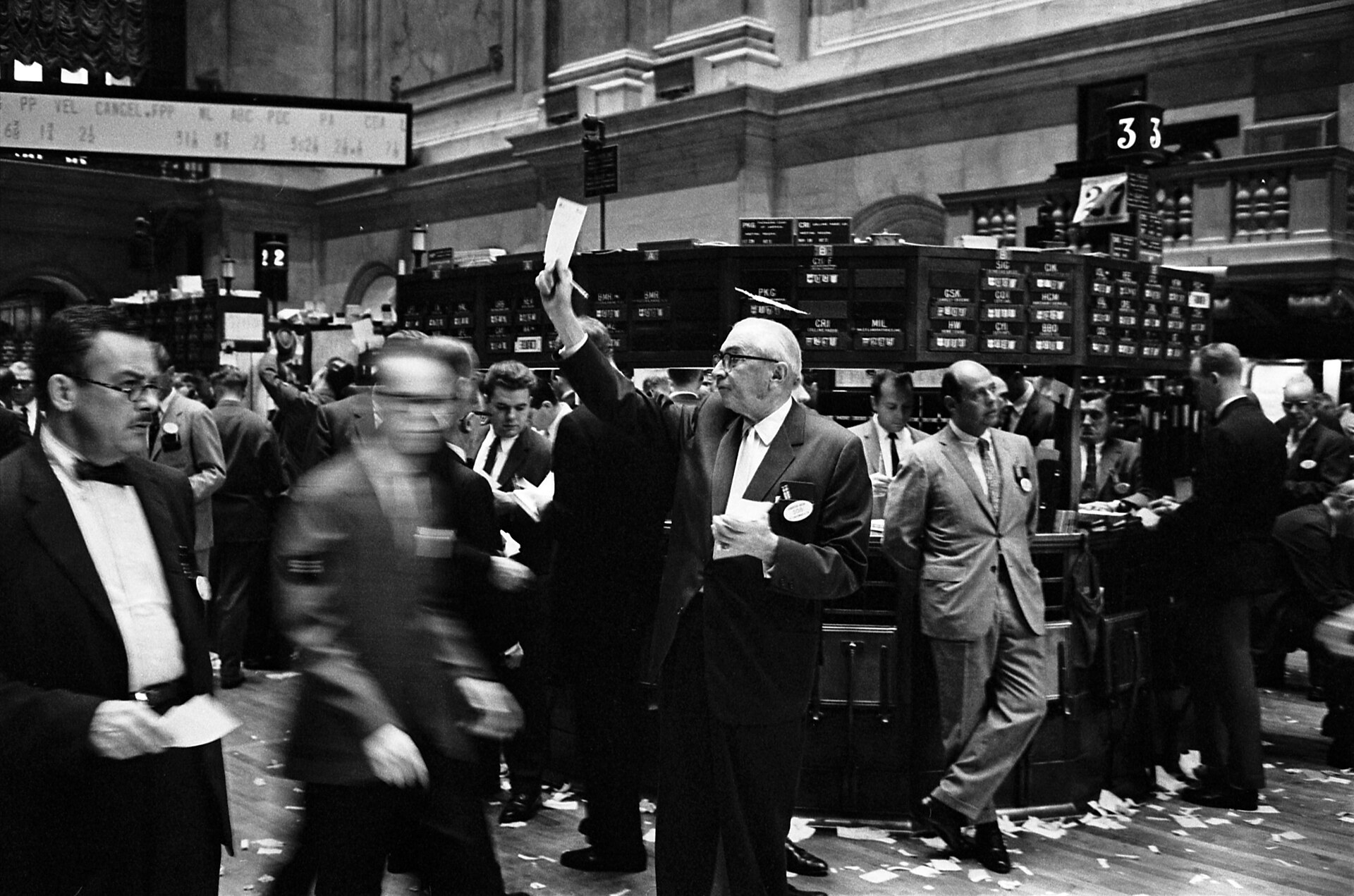
What it means for your money
For retirement savers, Tuesday changes little by itself: index funds absorbed a flat-to-slightly-down day, and the indexes remain within sight of their highs. The practical pressures are elsewhere. Mortgage shoppers face a market where the 10-year yield at 5.21 percent and the 30-year near 5.55 percent keep borrowing costs high, and the Federal Reserve — which meets on October 28 — is in no hurry to relieve them: traders are pricing a roughly three-in-four to seven-in-eight chance of another rate increase in December. Savers, conversely, are being paid to wait, with Treasury bills and money funds yielding levels not seen in decades. And anyone whose portfolio is concentrated in the AI trade has had a two-day reminder of how quickly the market's favourite stocks can move in the other direction — down 3 to 6 percent in names that were setting records last week.
What happens next
Wednesday brings the week's main event: the September consumer price index, with economists expecting a 0.6 percent monthly rise and a 3.6 percent annual rate, and core prices up 0.2 percent on the month and 2.5 percent on the year. A hotter print, with long-term yields already above 5 percent, would test the market's calm; a cooler one could hand the indexes back their footing. The Federal Reserve's Beige Book follows later Wednesday, alongside earnings from ASML — the chip-equipment giant whose shares fell in Europe on Tuesday — Bank of America, Morgan Stanley and BlackRock. Thursday adds the producer price index and results from TSMC, the Taiwanese chipmaker at the centre of the AI supply chain whose numbers will be read as a verdict on the week's memory-chip panic. After two days of selling the rally's leaders, the market has set itself a simple question for the rest of the week: was this a wobble, or the start of something larger?