World · Europe · Spain
World / Europe — Spain transport minister resigns: Óscar Puente quit on Tuesday night after a four-hour grilling over this year’s two deadly high-speed train crashes — Urda and Adamuz — which killed 115 people between them. He said he had decided within minutes of the second disaster, told only his family, and kept even Prime Minister Pedro Sánchez in the dark. On Wednesday, Sánchez handed the ministry, provisionally, to his economy minister, Carlos Cuerpo — less than four weeks before the November 29 election.
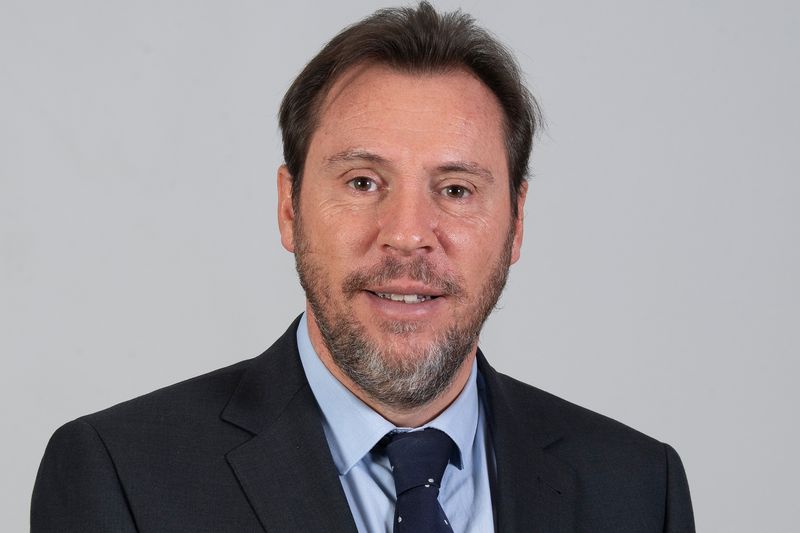
MADRID — Spain’s transport minister, Óscar Puente, announced his resignation on Tuesday night, November 3, ending — on his own terms, and by his own account on his own timetable — the tenure of the minister who presided over the two deadliest high-speed train crashes in Spain in more than a decade. The Urda crash of October 28 killed 69 people; the Adamuz crash of January killed 46. Together they killed 115 people on the same Madrid–Andalusia high-speed line, and on Tuesday, after four tense hours of questioning by parliament’s Permanent Deputation, Puente told Spain he was going.
“A transport minister in a country like Spain cannot remain in office after two accidents of this severity in less than a year, however different they may be, and whether or not I bear direct responsibility for them,” he said. It is an acceptance of political responsibility carefully separated from any admission of personal fault — offered six days after the second disaster, by a minister who had spent those six days, and the hours just before his announcement, insisting he would do no such thing.
Puente, 57, had vowed that he would not resign, saying he would stay in post to oversee the investigation into the crashes and to fix the flaws in the system. On Wednesday morning, Prime Minister Pedro Sánchez accepted the decision with gratitude and respect, and announced that his deputy Carlos Cuerpo, the economy minister, will provisionally run the Transport Ministry. Puente will not stand as a candidate in the general election on November 29.
Four hours in front of the Permanent Deputation
The announcement came at the end of a long day in parliament. Because Spain’s Cortes stand dissolved ahead of the November 29 election, the body that questioned Puente was the Permanent Deputation — the standing committee that acts as caretaker parliament between legislatures. For four tense hours its members pressed him over two crashes on his watch, ten months apart, on the same line. Most parties demanded that he take responsibility and resign.
Hours earlier, his public position had been the opposite: he had insisted he would not resign — that his duty was to stay, oversee the investigation into Urda and Adamuz, and fix the system’s flaws. That was the argument he made after Adamuz, and he was still making it as Tuesday began. By Tuesday night, it was gone.
What replaced it was not, on his account, a conversion forced by the day’s questioning. Puente said the decision had been made almost a week earlier — within the first minutes after he learned of the Urda crash on October 28, when he concluded that a second disaster of this scale in less than a year was not something a transport minister could remain in office through, whatever the eventual findings on responsibility. He told only his family. He did not tell the prime minister: Sánchez, by Puente’s own account, was kept in the dark while his minister publicly vowed to stay.
A government spokesman later summarised the reasons behind the resignation as empathy with the victims, consistency and political dignity, The Times reported. Puente closed his appearance with a short farewell that was immediately quoted across Spanish media: “I have tried to live up to it. Farewell.”
Before he resigned, Puente used his final appearance to announce the government’s immediate measures for the Urda victims: €30 million in aid for the victims and their families, including advance compensation payments and an increase in the compulsory passenger insurance that covers travellers on Spain’s railways. He also announced that services on the Madrid–Seville line will be reduced until the Railway Safety Agency has reviewed the line’s safety system and the government completes the delayed rollout of the European Rail Traffic Management System — ERTMS, the standardised European train-control system. The sequencing was plainly deliberate: the help for families and the safety measures came first, in the same appearance in which he then announced his own departure.
Sánchez answers: gratitude for Puente, and Cuerpo takes the ministry
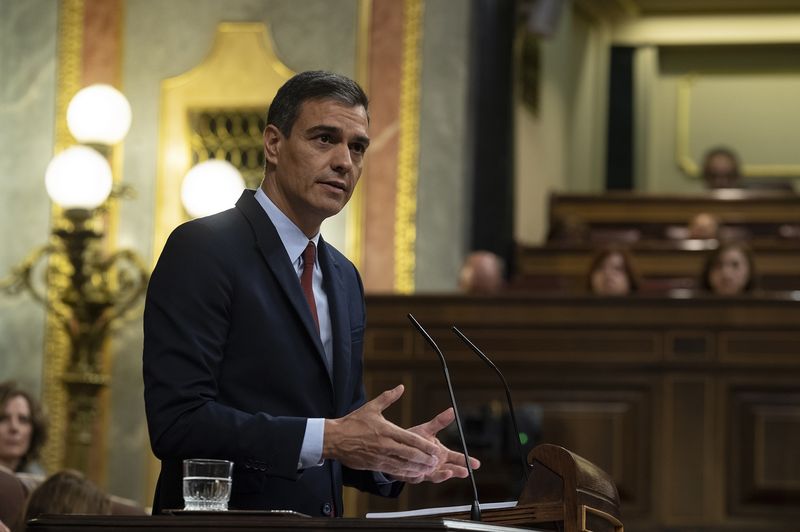
On Wednesday, November 4, Sánchez responded. The prime minister accepted Puente’s decision with gratitude and respect, and moved immediately to fill the gap: Carlos Cuerpo, his deputy and economy minister, will provisionally run the Transport Ministry alongside his existing portfolio. “Cuerpo has shown in this legislature an enormous capacity for management and integrity,” Sánchez said.
The arrangement is explicitly provisional. With an election on November 29 — less than four weeks away — the government has chosen continuity over a new appointment: an economy minister doubling up at transport until voters decide who governs next. Reuters noted the political cost: in Puente, the ruling Socialists lose one of their most combative but polarising voices mid-campaign, in the election Sánchez himself called.
Puente will not stand as a candidate in the November 29 election. A lawyer by profession, he was a PSOE figure for Valladolid, where he was formerly mayor, and he became transport minister in November 2023, overseeing an expansion of Spain’s rail network and an investment programme part-funded by European Union recovery funds — the modernisation drive of which the high-speed network was the showcase, and on which the two crashes have now cast the longest shadow.
The two crashes: Urda and Adamuz
To understand why a minister fell, the two disasters have to be held in view together, because the resignation is unintelligible from either one alone.
Urda, October 28: 69 dead on the Madrid–Seville line
The second crash came on October 28, 2026, near Urda, in Toledo province, on the Madrid–Andalusia high-speed line — the line that links the capital with Ciudad Real, Córdoba, Seville and Málaga and that functions as the spine of high-speed rail in southern Spain. Sixty-nine people were killed and more than 200 were injured. On Monday, authorities said all 69 of the dead had been identified: 54 were Spanish citizens and 15 were foreigners — four from the United States, two from Australia, two from Japan, and one each from Argentina, Canada, France, Mexico, Portugal, Tunisia and the Czech Republic. Signal Post News reported the crash and its aftermath in full in our account of the Spain train crash near Urda, Toledo, as the toll rose through the day.
What caused the Urda crash has not been established. The government has offered a preliminary account — labelled as such here, because it is not an investigation finding. On that account, a signalling and safety-system failure halted traffic on the line; a red signal prohibited movement, yet an AVE train was authorised to proceed; and the impact came at an estimated 160 to 200 kilometres per hour, after the train had travelled about 25 kilometres. The investigation continues, no final cause has been published, and every element of that sequence remains for investigators to confirm, correct or overturn.
Adamuz, January 2026: the first disaster
The first crash came in January 2026, near Adamuz, in Córdoba province, on the same line. An Iryo train derailed and struck an oncoming Alvia service. Forty-six people were killed. At the time, Adamuz could be framed as a catastrophe with a specific cause on a network with an otherwise formidable record: an anomaly to be investigated, understood and engineered out. Urda ended that framing. Two disasters, ten months apart, on the same line, present not as anomalies but as a pattern — and patterns have owners.
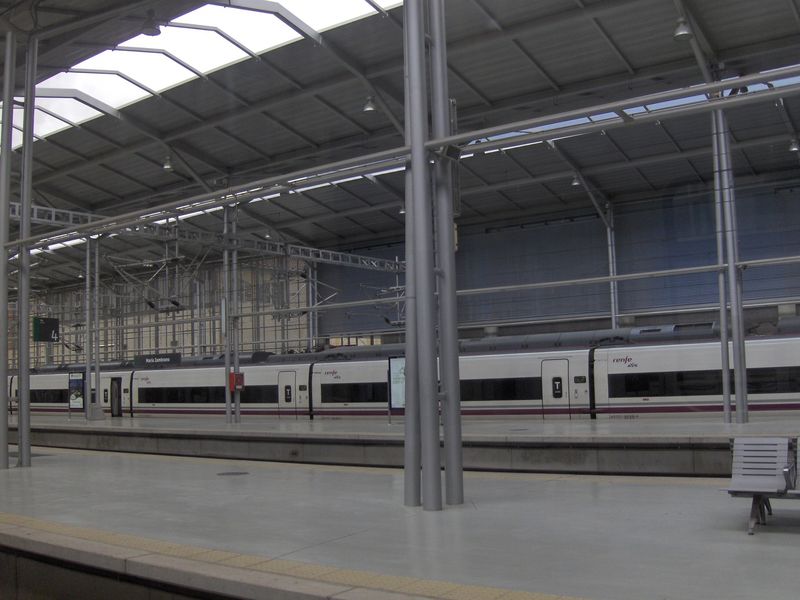
The combined toll is 115 dead. Spain’s high-speed network was long regarded as one of the country’s major infrastructure achievements — the largest in Europe, and a symbol of modern Spanish state capacity. The two disasters have shaken public confidence in it. As our Urda coverage noted, this is Spain’s deadliest year on the railways since the Santiago de Compostela derailment of 2013.
Why this matters
Analysis. A resignation is a political act with a precise and limited function, and Tuesday night’s is worth reading for what it does and for what it cannot do.
First, accountability. Puente’s resignation was, by his own description, a matter of arithmetic rather than fault: two accidents of this severity in less than a year, and the office becomes untenable, “whether or not I bear direct responsibility for them.” The formulation separates two things disaster politics usually fuses — responsibility for a system, which a minister carries by definition, and responsibility for a failure, which only an investigation can assign. Puente has accepted the first in full and conceded nothing on the second. Both halves will be quoted back, by defenders and critics alike, for as long as the investigation lasts.
Second, the six days. Puente says he decided within minutes of the Urda crash and announced six days later, having told no one but his family — not even the prime minister whose government he served. In those six days he gave the government’s preliminary account of the crash, defended his position and vowed to stay. Read generously, the delay let the rescue and identification work proceed without a political crisis layered over it, and let the aid package and safety measures be settled first. Read ungenerously, Spain’s transport minister spent six days performing a commitment to stay that he had already privately abandoned. The facts support both readings; which one voters choose is a judgement they will make, in part, on November 29.
Third, and most important: a resignation answers a political question, not a technical one. It does not establish why a red signal was passed at Urda, if that is what the investigation confirms, or why the safety system halted traffic yet a train was authorised to move. It does not complete the delayed ERTMS rollout, or decide how any failure found is shared among the signalling, the authorisation chain, the operators and the ministry that oversaw them. Those questions belong to the investigation and the Railway Safety Agency’s review. The minister has gone; the questions have not moved.
The arguments, on both sides
The demand for Puente’s resignation was broad, and it is part of the record. In Tuesday’s session, most parties in the Permanent Deputation demanded that he take responsibility for the two crashes. Opposition parties had argued that a minister presiding over 115 deaths in a single year could not credibly lead the system’s reform, and the government’s own coalition partners joined the pressure for his exit. For those critics, the resignation was overdue rather than premature — the minimum act of accountability, six days after Urda and ten months after Adamuz.
Puente and the government have their own account, and it deserves to be stated in its strongest form. They have defended the high-speed network’s overall safety record, pointed to the emergency response after both crashes, and set out Tuesday’s measures: €30 million in aid for the Urda victims and families, advance compensation, increased compulsory passenger insurance, reduced services on the Madrid–Seville line until the safety review is complete, and completion of the delayed ERTMS rollout. On this view, the government acted for the victims first, and the minister then paid the political price two disasters demand.
Between those positions sits the critics’ residual point: accountability at the top is not a substitute for the investigation’s findings. If the signalling and authorisation failures in the government’s preliminary account are confirmed, they will have names and organisational addresses attached, and a resignation neither speeds that work nor pre-empts it. If they are not confirmed, Tuesday’s political settlement will look very different in retrospect. For now, both camps are arguing ahead of the evidence.
What happens next
The immediate mechanics are simple to list and harder to date. The resignation takes effect once it is published in Spain’s official state gazette; exactly when that will happen is unclear. In the meantime the ministry sits, provisionally, with Carlos Cuerpo — an economy minister carrying two portfolios while overseeing a live crash investigation, a safety review of the Madrid–Seville line and a reduced service on it.
The electoral clock is the one certainty. Spaniards vote on November 29, in the snap general election Sánchez called — the vote we covered when Sánchez called a snap election as Spain’s housing crisis detonated its politics. The Socialists now fight that election having lost, mid-campaign, one of their most combative and polarising voices in Puente, and with rail safety — a subject no campaign plan can script — sitting on the front pages. Puente himself will not be on the ballot.
And then there is the work that outlasts the politics. The Urda investigation must establish, on evidence, the sequence the government has so far only sketched: the signalling state, the red signal, the authorisation, the speed, the distance. The Railway Safety Agency’s review must say what has to change before full services resume, and the government must complete the delayed ERTMS rollout. Whether the lessons of Adamuz were acted on in the ten months before Urda is the question underneath all the others — the one that will decide whether Tuesday’s resignation is remembered as this story’s end or its midpoint.
Óscar Puente became transport minister in November 2023 promising to build out the railway that Spain is proudest of. He leaves it, three years later, because that railway killed 115 people in a single year on his watch — by his own verdict, a fact no transport minister could survive, whatever the investigation eventually decides about fault. “I have tried to live up to it,” he said, by way of goodbye. The investigation will now decide what, exactly, “it” required.
Sources
- Reuters, reporting on Óscar Puente’s resignation and Prime Minister Sánchez’s response, November 4, 2026 — the resignation announcement, the Urda death toll and identification of the 69 dead, Carlos Cuerpo’s provisional appointment and Sánchez’s remarks, and the assessment that the Socialists lose a combative, polarising voice mid-campaign: reuters.com
- CNN, reporting on the Urda crash aftermath and Puente’s position, November 3, 2026 — the government’s account of the crash sequence and the minister’s statements ahead of the Permanent Deputation session: cnn.com
- The Times, reporting on the resignation, November 4, 2026 — the government spokesman’s summary of Puente’s reasons as empathy with the victims, consistency and political dignity: thetimes.com
- BusinessWorld (Reuters), “Spain’s transport minister resigns after two deadly train crashes,” November 4, 2026 — wire reporting of the resignation, the combined 115 death toll and the November 29 election context: businessworld.in
Reporting note: the account of the Urda crash’s cause in this article is the Spanish government’s preliminary account, as reported by Reuters and CNN. It is not an investigation finding. The investigation continues and no final cause has been published. All photographs are file photos and are captioned as such; none shows either crash scene.