World / Europe — At least 10 people have been killed and scores injured in a Spain train crash near Urda, in Toledo province, after two high-speed trains collided on the Madrid–Andalusia line on Wednesday morning and two carriages fell down an embankment. The line — one of the busiest arteries of Europe’s largest high-speed network — is suspended, the confirmed toll is provisional, and the sequence of the collision is disputed. It is Spain’s second serious high-speed crash in ten months.
URDA, Spain — The Spain train crash happened shortly after 9 a.m. local time (0800 GMT) on Wednesday, October 28, 2026, between Los Yébenes and Urda in Toledo province, Castilla-La Mancha, on the Madrid–Andalusia high-speed line. Spanish reports put the collision at about 08:54, near kilometre point 119.7 outside Urda. Two carriages derailed and fell down an embankment, El País reported via Reuters. At least 10 people were killed, according to El País citing Spanish government sources, and numerous others were injured — a toll officials describe as provisional and expect to change as rescue work continues.
Within hours, the crash had drawn the prime minister, the transport minister and the regional president toward a small town in Toledo province, shut down high-speed services between Madrid, Ciudad Real and Andalusia, and reopened the question Spain believed it had begun to answer in January: how a railway with this safety record, this technology and this much political attention can produce two disasters in a single year. What follows separates what is verified from what is merely being said — because on this story, the distance between the two is unusually wide, and some of the widest figures in circulation are not confirmed at all.
What happened
Urda train collision: the morning the Madrid–Seville line stopped
Adif, Spain’s state rail infrastructure manager, announced the closure in a short statement on X: “Traffic on the Madrid–Andalusia high-speed rail line has been suspended following a rear-end collision between two trains.” Renfe, the state operator, said all services between Madrid, Ciudad Real and Andalusia are suspended. The Madrid–Andalusia line is the spine of Spanish high-speed rail in the south, linking the capital with Ciudad Real, Córdoba, Seville and Málaga, and its closure severs the country’s most heavily used long-distance corridor at a stroke.
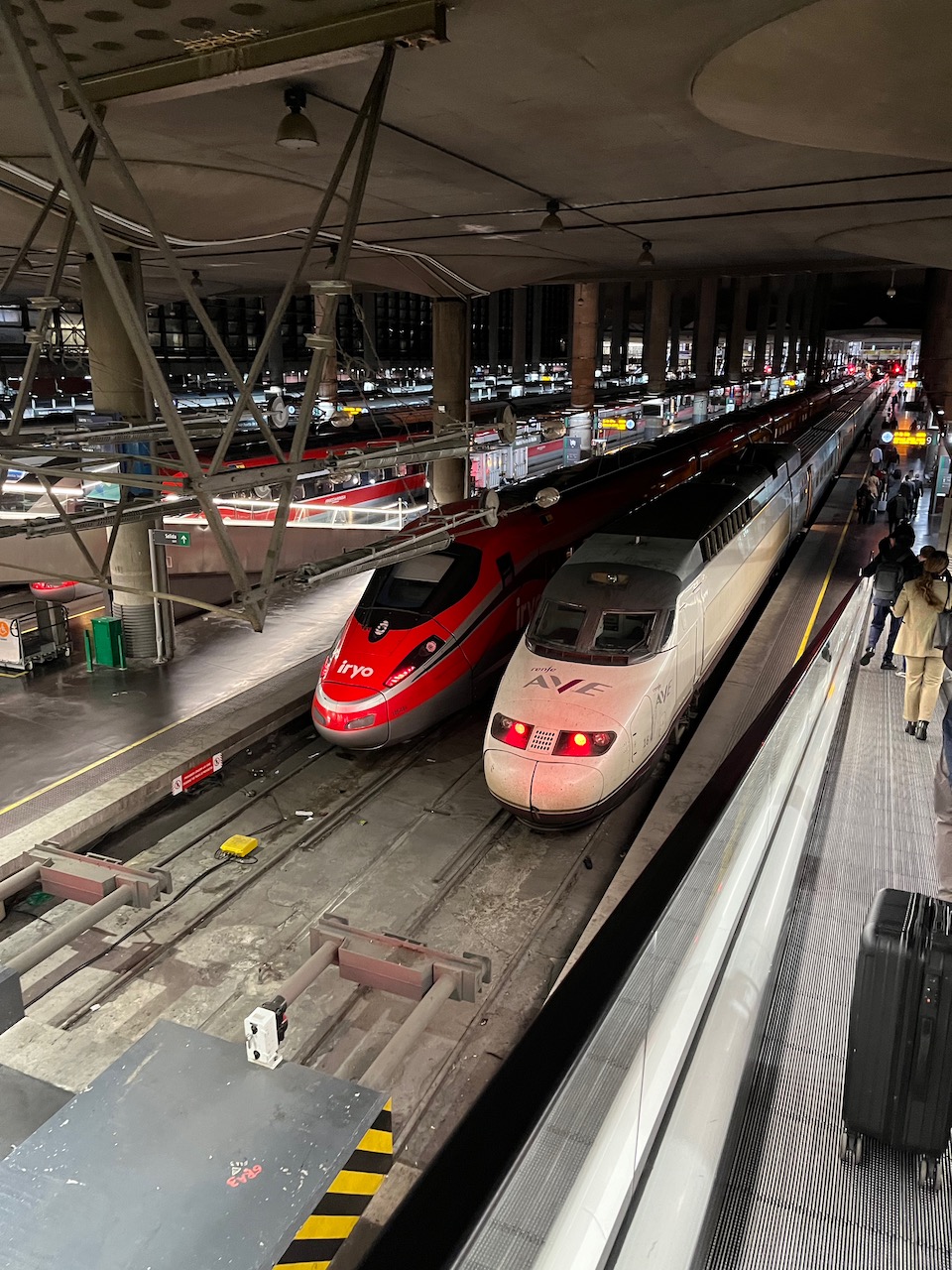
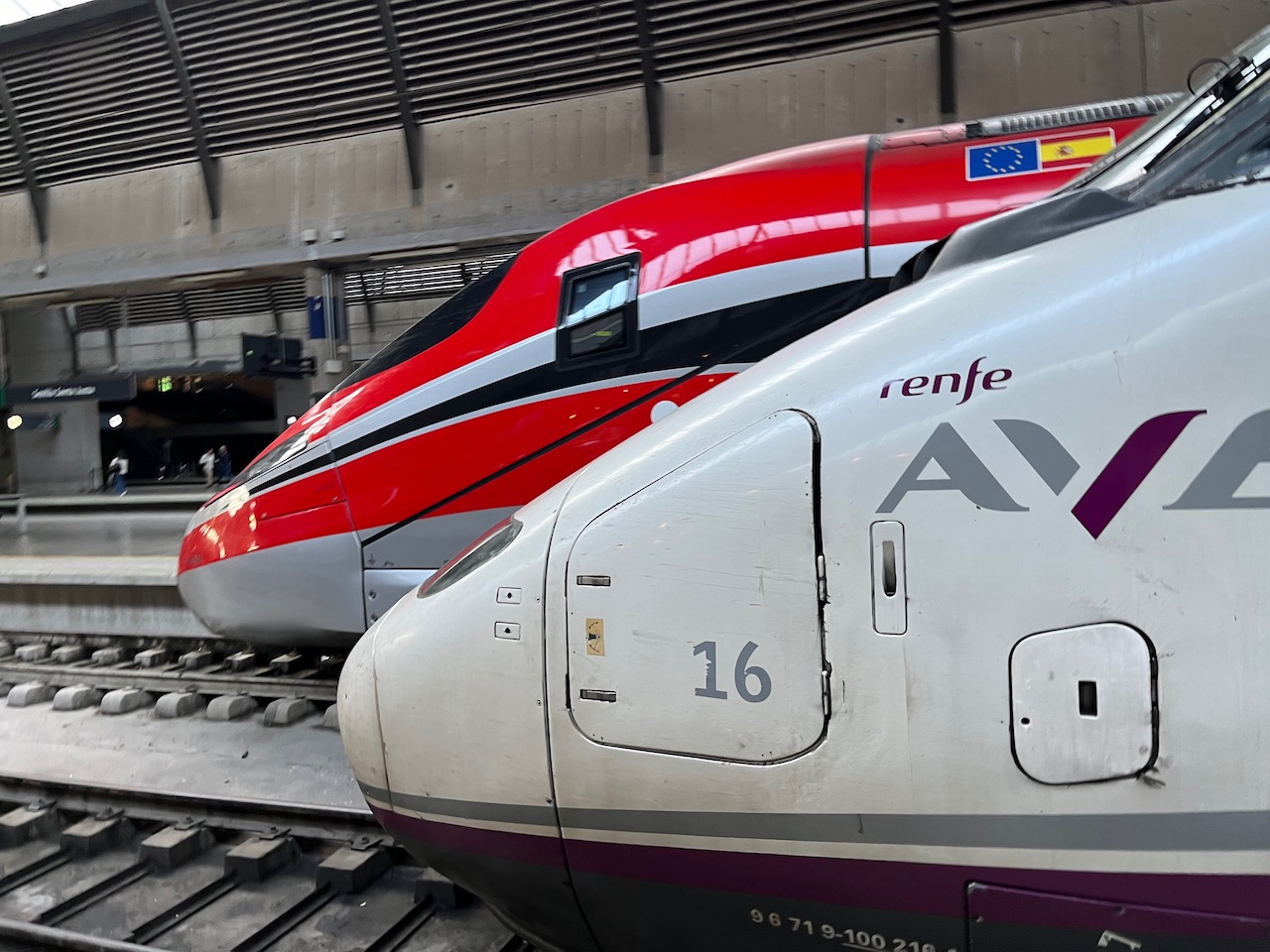
The trains involved were a Renfe AVE service and a high-speed train operated by Iryo, the private competitor that shares the liberalised line. The Renfe AVE had left Madrid Puerta de Atocha at 08:00 bound for Seville Santa Justa, where it was due at 10:39. The collision came less than an hour into that journey, on a stretch of line through open country near Urda.
The disputed sequence: head-on, rear-end, or neither yet established
One point must be stated plainly, because early coverage has blurred it: the direction and sequence of this collision are not established. Reuters and El País initially reported the Iryo train travelling in the opposite direction to the Renfe service. Later Spanish reports suggested instead that both trains were travelling the same way, and that the Renfe train struck the rear of the Iryo. Adif’s own statement described a “rear-end collision.” Those accounts cannot all be right, and at the time of writing no authority has published a settled reconstruction. Signal Post News is therefore not describing this as a head-on collision, and readers should treat any account that asserts a single sequence with caution until investigators publish theirs. What is established is narrower: two high-speed trains, one line, a collision at about 08:54, two carriages off the track and down an embankment, and at least 10 people dead.
The dead, the injured and a toll that will not sit still
Spain high speed train crash deaths: what is actually confirmed
The confirmed toll is this, and only this: at least 10 people killed, a provisional figure reported by El País citing Spanish government sources, with the news agency EFE also reporting a provisional 10. The Guardian, RTÉ and The Times reported the same at-least-10 figure. Injuries are described by officials and reporters at the scene as numerous — scores of people hurt — but no Spanish authority has yet published a confirmed injury total, and none should be treated as settled until one does. In a crash of this kind, both numbers move: carriages that fell down an embankment take hours to search, the most seriously injured are counted where they are treated, and identification of the dead takes longer still.
Spain train crash latest updates: the 39 and 46 figures are not confirmed
Readers following live coverage elsewhere will have seen far higher numbers. Sky News’ live coverage, and El Español as reported by The Times, put the death toll at 39 and even 46. Those figures are not confirmed — not by Adif, not by Renfe, not by the Spanish government, and not by Reuters — and this article does not present them as fact in its headline, its summary or its reporting. There is a specific reason for extra caution here, beyond the usual fog of a breaking story: the January crash at Adamuz, involving the same two operators on this same line, itself produced a death toll of 39 in early counts on its way to more than 40. When two disasters share a line, two operators and a news cycle, figures migrate between them. A toll of 39 attached to Urda may be a new count, an old count wearing a new dateline, or an error compounding itself across live blogs — and until a named Spanish authority confirms a higher figure, there is no honest way to tell which. The toll is expected to change as rescue work continues. When it does, it will change on the word of officials at the scene, and this article will be updated to match.
Rescue at Urda and the official reaction
Toledo train crash Spain: helicopters, field hospitals and a town that opened its sports hall
The rescue operation drew on the whole region. Firefighters from Alcázar de San Juan and Orgaz were at the scene alongside Civil Protection teams, with three medical helicopters — air ambulances — and two mobile intensive-care units deployed to treat and evacuate the injured. Urda’s mayor, Manuel Galán, told the broadcaster TVE that passengers were injured and that the town had prepared its sports pavilion to receive casualties. Castilla-La Mancha activated its regional emergency plan, and the regional president, Emiliano García-Page, suspended his agenda and travelled toward the scene — the standard choreography of a Spanish emergency, executed this time for a disaster on a line the region depends on daily.
Prime Minister Pedro Sánchez posted on X that he was “shocked by the serious train accident in Toledo,” that he was in constant contact with Transport Minister Óscar Puente and with García-Page, that emergency services were working on the ground, and he offered solidarity and support to the victims and their families. Sánchez and Puente were both reported to be travelling to the site. The speed of that political mobilisation is itself a measure of the moment: a prime minister does not fly to a provincial crash site within hours unless the government understands, immediately, that this is not only a rescue story.
From the railways themselves, the first reaction was a note of disbelief. Railway union spokesman Rafael Escudero told Antena 3 that the accident was “very strange,” noting that the trains carry real-time information and should stop if there is an obstacle ahead. That is a reaction quote from a union spokesman on the morning of a crash — it is not a finding about cause, and it is reported here as the former. But it identifies, precisely, the question the investigation will have to answer, and to which we return below.
What we do not know yet
An honest account of Wednesday’s crash has to list its own gaps. The sequence is unknown: as set out above, the earliest reports conflict on whether the trains were travelling toward each other or in the same direction. The cause is unknown: no authority has attributed the collision to signalling, to the trains, to the track or to human error, and any account that does so today is speculation. One specific claim is unconfirmed: El Español reported early that trains were running under lineside signalling after a fault with the LZB train-control system fitted to the line. That report has not been confirmed by Adif, Renfe or any official source, and it is recorded here only so readers who encounter it know its status — unconfirmed. The injury toll is unknown, the identities of the dead have not been released, and the duration of the line’s closure is unknown: a line can reopen in days after an accident or stay shut for far longer, depending on the damage and on what investigators need preserved. Each of these gaps will close on evidence, not on repetition.
Why this matters
Analysis. A single crash is a tragedy with a cause. Two crashes in ten months, on the same line, involving the same two operators, are a system with a question to answer — and that, more than the mechanics of Wednesday morning, is why this story will not close when the line reopens.
Renfe AVE Iryo train collision: the end of the one-off framing
On January 18, near Adamuz in Córdoba province, an Iryo train derailed and collided with a Renfe Alvia, killing more than 40 people — at least 45 by some tallies — in Spain’s worst rail disaster in more than a decade. Behind Adamuz stands the older reference point that has shaped Spanish rail politics for a generation: the 2013 Santiago de Compostela derailment, in which 79 people were killed. After Adamuz, the official and industry framing was that of an anomaly — a terrible, specific failure on a network with an otherwise formidable record, to be investigated, understood and engineered out. Urda destroys that framing. Whatever investigators find, Spain now has to argue about a pattern: two high-speed disasters in one year, on the Madrid–Andalusia line, involving the state operator and its private competitor. Patterns demand systemic answers, and systemic answers have owners, budgets and political costs in a way that anomalies do not.
The signalling question investigators must answer
Modern high-speed railways are built on redundancy: layered train-control systems designed so that no single failure — human, mechanical or electronic — can put two trains in the same place at the same time. That is the substance behind Escudero’s “very strange.” Two trains collided on a line engineered, at considerable expense over decades, to make exactly that impossible. The investigation will therefore have to reconstruct, minute by minute, what the signalling and train-control systems knew and communicated: what each train’s systems reported, what the control centre saw, what automatic protections were active, and at what point, if any, the layers of redundancy were degraded, overridden or absent. The unconfirmed report about lineside signalling and the LZB system points at the right category of question without answering it. If trains were running on a degraded mode of operation, who authorised it, under what rules, and with what margins? If they were not, how did full protection fail? Either branch is a serious finding. There is no branch that is not.
One line, three institutions: who carries accountability?
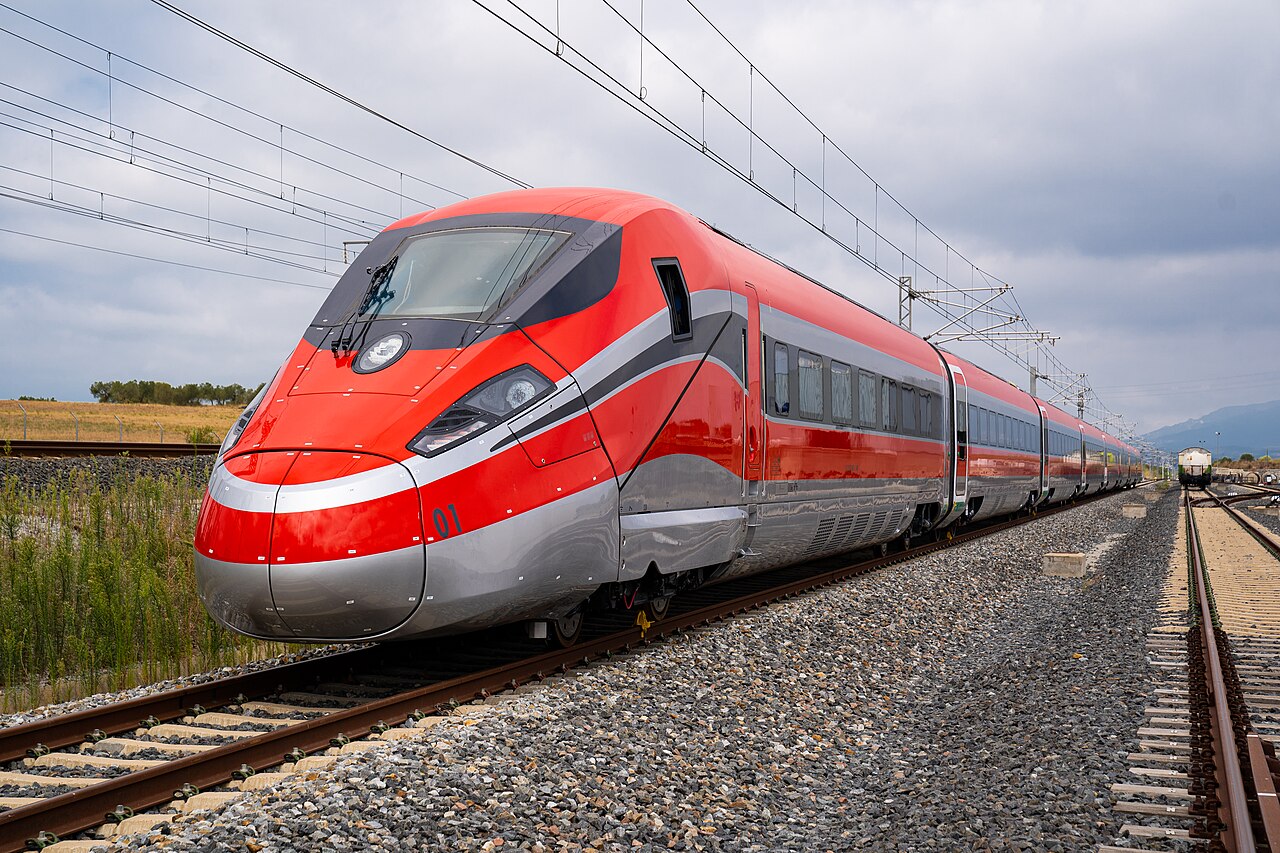
Spain’s liberalised model splits the railway three ways. Adif, the state infrastructure manager, owns the track, the signalling and the control systems. Renfe, the state operator, runs its AVE trains on that infrastructure. Iryo, a private operator, runs competing trains on the same rails under the liberalisation that made Spain the test case for on-track competition in European high-speed rail. The model has delivered what its designers promised on price and frequency — and it complicates accountability in exactly the situation Spain now faces. When two operators’ trains collide on a third party’s infrastructure, responsibility can be distributed so widely that it lands nowhere: the operator points to the infrastructure, the infrastructure manager points to the operators, and the ministry points to the investigation. After Adamuz, that diffusion was containable. After a second collision in ten months, it is not. Parliament, the courts and the travelling public will each want a name attached to the failure, and the structure of the liberalised railway is designed, institutionally, to resist giving them one. That tension — between a model built to share a railway and a public that needs someone to answer for it — is now a first-order question of Spanish transport policy.
The trust economics of high-speed rail
High-speed rail runs on a promise: that it is not merely fast and convenient but categorically safe, safer than the road journey it replaces by orders of magnitude. Spain built the largest high-speed network in Europe on that promise, and passengers ratified it in record numbers — AVE services carried 43.8 million passengers in 2025, an all-time high. Trust of that kind is an economic asset: it fills trains, justifies fares, underwrites the case for new lines and sustains the political consensus that funds them. It is also asymmetric — accumulated over decades, spent in days. Two disasters in ten months do not change the statistical safety of Spanish high-speed rail overnight, which remains far safer than the car. But passengers do not buy statistics; they buy a feeling of certainty, and certainty is what Urda, following Adamuz, has damaged. The cost will be measured in bookings not made, in modal share drifting back to motorways and short-haul flights, and in a government — one that has just staked its survival on a snap election fought over the cost of living, as we reported when Sánchez called a snap election as Spain’s housing crisis detonated its politics — discovering that the competence question now has a second front. For Sánchez and Puente, the politics of this crash are inseparable from the investigation: every unanswered question is also an opposition argument.
The Spain train crash in numbers
Set Wednesday’s provisional toll against the reference points, with the caveat that the first figure is expected to move. Urda, October 28, 2026: at least 10 killed, provisional, per El País citing government sources and EFE. Adamuz, January 18, 2026: more than 40 killed — at least 45 by some tallies — when an Iryo train derailed into the path of a Renfe Alvia, Spain’s worst rail disaster in more than a decade. Santiago de Compostela, 2013: 79 killed, the catastrophe against which modern Spanish rail safety politics is still measured. Around those three numbers sits the scale of what is at stake: Europe’s largest high-speed network, a record 43.8 million AVE passengers in 2025, and a Madrid–Andalusia line that functions as a core national artery — Madrid to Ciudad Real, Córdoba, Seville and Málaga — whose suspension alone displaces tens of thousands of journeys a day.
Spain is not the only country counting rail dead this month. Earlier in October, Pakistan’s Rehman Baba Express derailed near Multan on the Karachi-to-Peshawar run, killing 5 people and injuring 35 — a disaster we covered as the Rehman Baba Express derailed near Multan. The comparison is instructive precisely because the systems differ: Pakistan’s railway struggles with aged infrastructure and funding, while Spain’s is among the most modern and heavily invested in the world. That is what makes Urda the harder story to file away. Wealth, technology and redundancy are supposed to be the variables that prevent this. In Toledo province on Wednesday, for reasons not yet established, they did not.
What happens next
The formal investigation now belongs to Spain’s rail accident investigation body, which will take control of the site, recover the data recorders from both trains — the railway equivalent of flight recorders, logging speed, braking, signalling states and driver inputs — and reconstruct the collision second by second. Its preliminary findings will settle the questions this article has deliberately left open: the direction and sequence of the collision, the state of the signalling, and whether any degraded mode of operation was in force. Expect, in order: updated official tolls as identification of the dead is completed and families are informed; a decision on the line’s reopening, which cannot precede the investigators’ release of the site and the repair of track and wreckage, and whose duration is currently unknown; the suspension’s knock-on effects across the Andalusia corridor, with replacement services and refunds for thousands of passengers; and a political sequence in Madrid — ministerial statements, parliamentary scrutiny and, given the Adamuz precedent, pressure for the investigation’s scope to cover not one crash but the system that produced two. Signal Post News will update this article as officials confirm new figures, and will change its headline toll only when a Spanish authority does.
Sources
- Reuters, “Two high-speed trains rear-end in Spain, rail operator says,” October 28, 2026 — Adif’s suspension statement, the outline of the collision, El País’ reporting of the provisional at-least-10 toll and the carriages down the embankment, and Prime Minister Sánchez’s reaction: reuters.com
- The Times, Spain train crash live coverage, October 28, 2026 — reporting of the at-least-10 toll, and of El Español’s far higher figures, which remain unconfirmed by Spanish authorities: thetimes.com
- Sky News, Spain train crash live coverage, October 28, 2026 — live reporting from the scene and region; its higher death-toll figures (39 and 46) are not confirmed by Adif, Renfe, the Spanish government or Reuters at the time of writing: news.sky.com
Reporting note: this article’s death toll — at least 10 killed — is the figure verified by reputable sources at the time of writing: El País citing Spanish government sources, EFE, and reporting by the Guardian, RTÉ and The Times. Higher figures in some live coverage are identified in the text as unconfirmed. The direction and sequence of the collision are disputed in early reports and are described here as unestablished. All photographs are file photos and are captioned as such; none shows the crash scene.