Google Project Suncatcher AI chips space
The thesis: Project Suncatcher matters less today as a promise of an orbital data center than as a disciplined attempt to falsify one. The first flight will expose a production AI accelerator to launch forces and the hostile thermal and radiation environment of low Earth orbit. If the hardware behaves predictably, Google gains evidence for a 2027 communications experiment. If it does not, the mission may reveal which part of the economics—shielding, cooling, replacement rates or networking—breaks first.
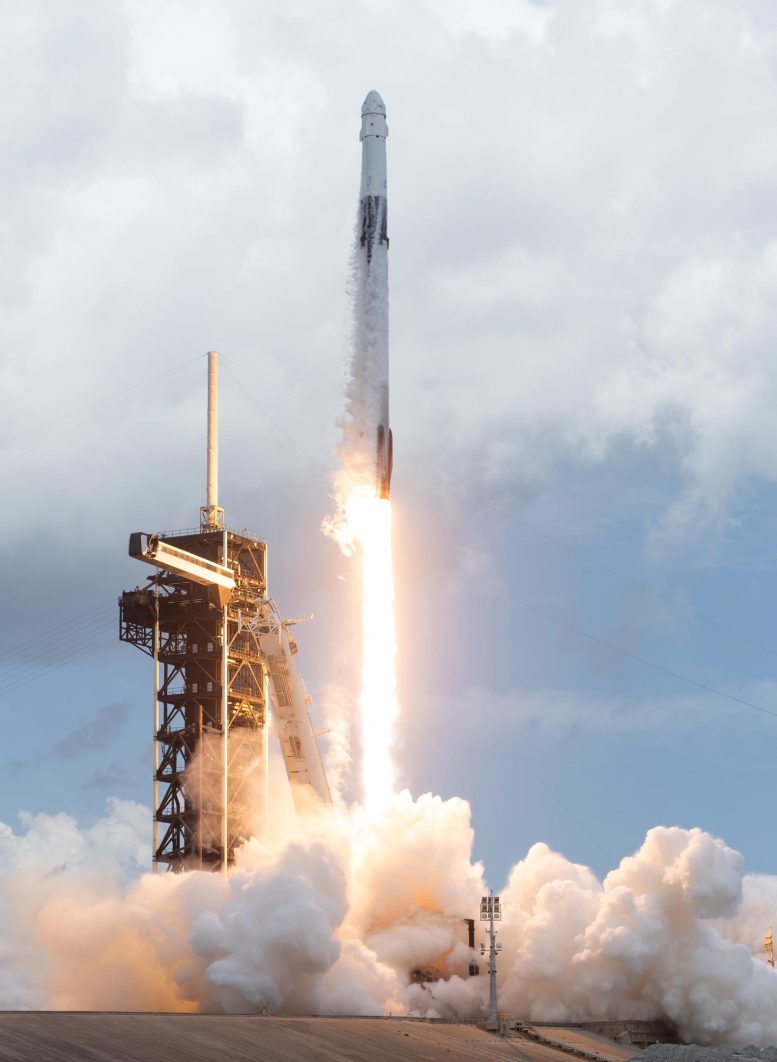
What is confirmed: Google says the prototype, developed with Planet Labs and SpaceX, is scheduled to launch next week on Transporter-18. The payload includes a Trillium TPU and diagnostic equipment. It is not an operational orbital data center, and the company has not announced a commercial service or a break-even date.
Why this matters: AI's power problem is becoming a location problem
The largest AI systems require more electricity, cooling capacity, substations and transmission connections than many established data-center campuses were designed to supply. New terrestrial facilities can face long interconnection queues, contested land use and water constraints. Faster accelerators help, but they do not eliminate the infrastructure needed to feed and cool dense computing racks.
Google's long-range proposition is that orbit changes the energy equation. The company says low Earth orbit can offer near-constant sunlight and, under its assumptions, as much as eight times the solar generation available to comparable terrestrial panels. That is a Google claim, not a demonstrated project result. It also addresses only generation. Power conditioning, eclipse periods, radiation hardening, thermal rejection, networking, launch and maintenance still determine whether usable computation is cheaper or more reliable than on Earth.
Signal Post News analysis: The strategic attraction is optionality. A cloud provider that can put some training or inference capacity beyond terrestrial grid bottlenecks may gain another place to deploy capital. But a remote power source is not automatically cheap computing. The cost that matters is the lifetime cost per reliable unit of useful AI work delivered to a customer, after launch failures, degraded chips, cooling hardware, communications losses and replacement missions are counted.
The first mission is a stress test, not a service launch
Rocket ascent subjects electronics to vibration, acoustic shock and rapidly changing mechanical loads. Once in orbit, high-energy particles can damage materials or trigger transient errors. Google says its engineers monitored bit flips while Trillium TPUs ran AI workloads during proton-beam tests at the University of California, Davis's Crocker Nuclear Laboratory. According to the company, the chips tolerated total ionizing radiation above the level expected during a five-year mission.
That result is encouraging but incomplete. A beam test compresses selected exposure conditions into a laboratory campaign; orbit adds time, temperature cycling, component interactions and the statistical possibility of rare events. The flight will therefore measure behavior that ground testing cannot fully reproduce. The right question is not simply whether a TPU turns on, but whether its calculations remain trustworthy and its performance predictable over repeated workloads.
Vacuum makes heat harder, not easier
Earth data centers remove heat with moving air and liquid systems that can ultimately dump energy into the surrounding environment. Vacuum has no air to carry heat away. An orbital computer must conduct heat from each processor into heat pipes and then radiate it from dedicated surfaces. Every watt of useful computing becomes heat that has to leave the spacecraft.
That creates a design trade-off. Larger radiators can reject more heat, but they add mass, area and deployment complexity. Running accelerators at lower power may improve reliability but reduce the amount of useful work per satellite. Temperature also changes as the spacecraft moves between sunlight and shadow, forcing the thermal system to handle repeated cycles rather than one steady operating point.
Reliability is the third constraint. A terrestrial failed board can be replaced by a technician. A failed orbital board becomes dead mass unless a mission is designed for servicing. Redundancy and spare capacity can limit outages, but they also increase launch mass. The first mission cannot settle that lifecycle problem; it can only establish better failure data.
Bandwidth may be the decisive bottleneck
Compute is valuable only if data can reach it and results can return on time. Radio links are adequate for telemetry and many satellite workloads, but large AI clusters need high-throughput connections between accelerators. Google says its next planned step is a 2027 two-satellite demonstration of high-bandwidth laser links. Planet Labs says it will build and operate the pair, which are intended to fly in tandem using technology related to its Owl satellite-bus roadmap.
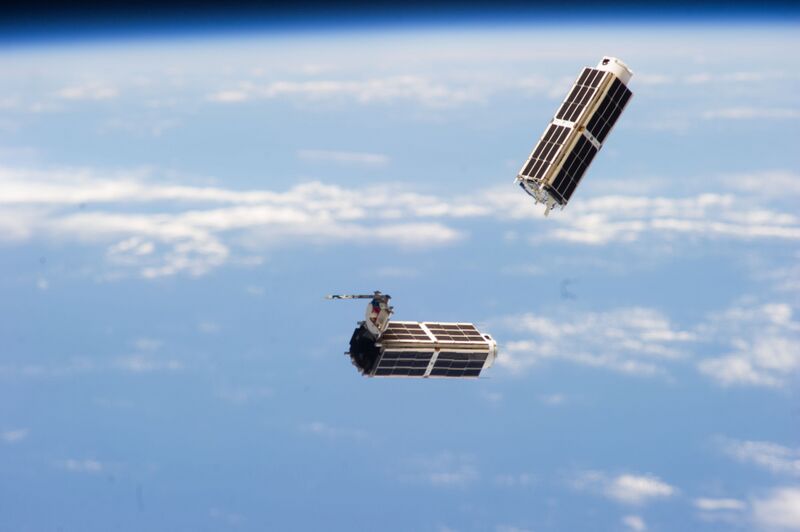
The laser test is important because a future orbital computing cluster would need to move model parameters and intermediate results among multiple spacecraft with low delay and very high reliability. Pointing an optical beam between fast-moving satellites requires precise navigation and tracking. Clouds, atmospheric conditions and ground-station geography also complicate the final link to Earth. A successful processor test does not solve any of those networking problems.
Who could win if orbital economics improve
Google would gain a new infrastructure option and a way to co-design chips, software, energy systems and networks. That vertical control mirrors its strategy on Earth, where TPUs are a differentiator inside Google Cloud. The company's recent expansion across devices and accelerators—also visible in the industry's edge-AI chip race highlighted at Qualcomm's 2026 Snapdragon Summit—shows why compute architecture is now a competitive weapon.
Planet Labs could turn experience building and operating compact Earth-observation spacecraft into a larger role as a platform supplier for compute payloads. Its two-satellite role is not merely manufacturing: operations, formation flying and communications are central to learning whether a cluster can be coordinated.
SpaceX benefits if more experimental and later production payloads require frequent launch. Companies pursuing separate orbital-compute plans, including Starcloud, could also gain if Google helps prove common technologies such as thermal control and optical networking. None of those benefits requires Google to become a satellite manufacturer.
If orbital capacity eventually becomes competitive, pressure could extend beyond rival cloud providers. Terrestrial data-center developers, cooling-equipment vendors and utilities would face a new alternative for some workloads. But the effect would be conditional and gradual: on-Earth infrastructure would remain easier to service, faster to upgrade and closer to most users, while many latency-sensitive applications would stay terrestrial.
The skeptical case
Launch remains expensive and capacity is finite even as rideshare missions reduce the cost of small experiments. Radiation shielding, deployable radiators and redundant systems consume mass that could otherwise be used for processors or power. Production quantities of suitable spacecraft would have to rise sharply for clusters to scale. A cluster also needs secure, high-bandwidth links, autonomous fault management and a replacement cadence that does not erase the energy advantage.
Timelines deserve particular caution. The 2027 two-satellite test is still a prototype communications mission. Moving from two spacecraft to a useful orbital computing cluster would require repeated successful launches, dependable inter-satellite networking and evidence that useful output per dollar competes with continually improving terrestrial systems. This first test cannot establish commercial break-even because it does not measure an operating cluster, a complete cooling architecture or a production replacement cycle.
What happens next
The immediate milestones are practical: survive Transporter-18's launch environment, run workloads, measure radiation-induced faults, track temperatures and return trustworthy telemetry. Engineers will compare flight data with vibration and proton-beam tests to identify where their models were right—and where hardware or shielding must change.
If those results are usable, attention moves to the 2027 tandem-satellite laser-link demonstration. A later phase could test small groups of processors sharing work across optical links, followed only much later by larger orbital computing clusters. Each step depends on the previous one; none has yet been proven by this mission.
That sequence is why Project Suncatcher should be read as a serious research program rather than a near-term cloud product. Google is not escaping the physical limits of AI infrastructure. It is moving those limits into a different environment to learn whether sunlight, mass, heat, radiation and bandwidth can be balanced better there. The experiment's most valuable result may be a clear answer about where that balance fails.
Sources: Reporting is based on Google's Project Suncatcher technical overview, Planet Labs' mission announcement, and independent coverage from Reuters. The interpretation of commercial implications is Signal Post News analysis. For related infrastructure context, see our report on the resilience risks around satellite communications on the ground.