Published October 2, 2026 at 3:31 a.m. PDT
Smit Machchhar Modi video call
Smit Machchhar Modi video callSmit Machchhar hospital bed remarksflydubai FZ1073 terror probe14,000 ft descent flydubaicockpit door locked aviation securityTabuk emergency landing second crew
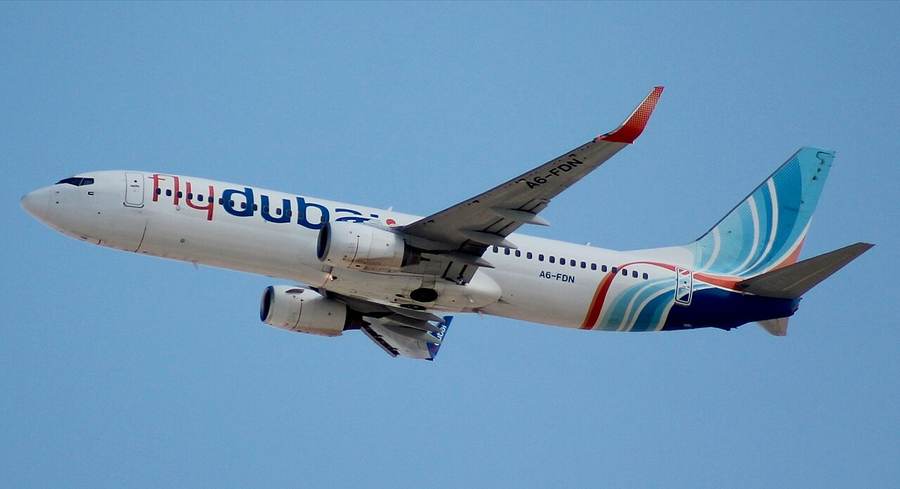
ABU DHABI — Captain Smit Machchhar, the flydubai pilot stabbed during a Dubai-to-Tel Aviv flight on September 30, spoke publicly about the ordeal for the first time Friday, telling Indian Prime Minister Narendra Modi from a hospital bed that one final decision — opening the reinforced cockpit door — made it possible for others to stop the attack.
The nearly 10-minute call, released through Modi's official channel, showed the 39-year-old captain with bandages on his head and hands and a tube in his nose. He wiped away tears as he reconstructed a struggle in which he was badly wounded, knocked to the floor and still aware that the aircraft was descending violently.
“I knew that the aircraft was going down,” Machchhar said, according to Reuters. “I had fallen to the ground. I told myself that the door is right there, just open it. I managed to do it and people entered.” In the fuller account reported by CNN, he described the thought that cut through the violence: “One last push, Smit! Just do it. The door is right there.”
Even then, he said, the other pilot was beating him. “And then I just opened it ... and then everybody came.” His reason was as stark as the emergency: “I was doing this for my life, but at the same time, I knew that I couldn't let everybody else die.”
Why this matters
The Smit Machchhar Modi video call supplies the first direct public account from the man at the center of a story that had previously been assembled from passengers, officials and flight-tracking data. It does not settle motive. It does clarify the physical sequence that mattered most: a wounded captain reached the door controls, opened a barrier designed to keep intruders out, and enabled people in the cabin to enter when the danger was already inside.
That distinction is crucial. Israeli officials have alleged that the Omani co-pilot attacked Machchhar and tried to crash the plane. Prime Minister Benjamin Netanyahu has called the captain a “true hero” and said his actions prevented a catastrophe on the scale of September 11. Yet flydubai has said the underlying reasons and motives remain unknown, and investigators have not published evidence establishing terrorism, ideological “indoctrination,” foreign direction or a personal cause. The attack and the descent are reported facts. The motive is an open investigative question.
The call also shifts the public image of the incident. Machchhar is no longer only the bloodied figure described by witnesses. He is a veteran aviator — 17 years flying, 11 as a captain — explaining how training, instinct, faith and concern for everyone aboard converged in seconds. His words give a human scale to a flight-data line that otherwise reads like machinery: almost 14,000 feet lost in less than half a minute.
The hospital-bed account: one last push toward the door
Machchhar told Modi that he was fighting for his life and feared he might not get back up. He said he recited the Hanuman Chalisa during the struggle and believed God had saved him. The call moved partly into Gujarati, the language shared by the pilot and the prime minister, and ended with “Jai Shree Krishna.” Those details matter not as proof of a cause but as the way an injured man understood his own survival.
Modi praised what he called Machchhar's courage, patience and quick thinking. “You yourself were fighting the battle of life and death,” the prime minister told him, according to CNN's translation. Modi said Indians were not people who take lives but people who save lives, and that the captain had increased the respect of 140 crore — 1.4 billion — countrymen while protecting the reputation of Indian pilots.
The politics were unmistakable, but the family exchange kept pulling the call back to the bedside. Modi asked about Machchhar's wife, parents and children. The captain said his elder daughter had visited but was frightened by his condition; his younger son is two. His wife, Sonal, separately told CNN-News18 that relatives had avoided pressing him for details because they did not want to trigger flashbacks. India's embassy in the UAE said he was in good health after treatment that began in Saudi Arabia and continued in Abu Dhabi.
September 30: from cockpit attack to Tabuk landing
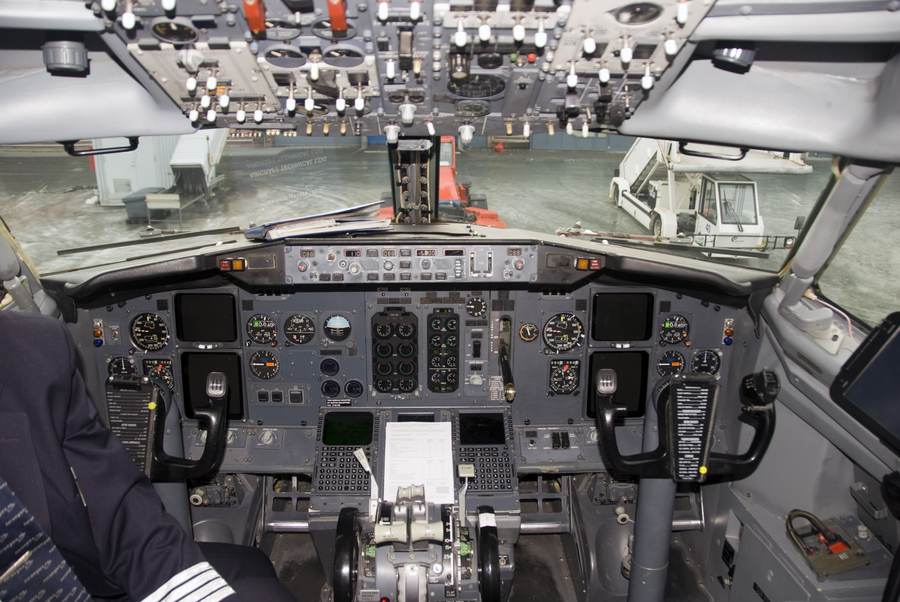
Flight FZ1073 left Dubai for Tel Aviv carrying 174 people. During the flight, the co-pilot allegedly stabbed Machchhar and forced the jet into a steep descent. Flight data cited by Reuters and CNN show the aircraft lost nearly 14,000 feet in under 30 seconds. A spokesperson for Netanyahu told Reuters that Machchhar, covered in blood on the cockpit floor, opened the door; passengers and crew then overpowered the co-pilot.
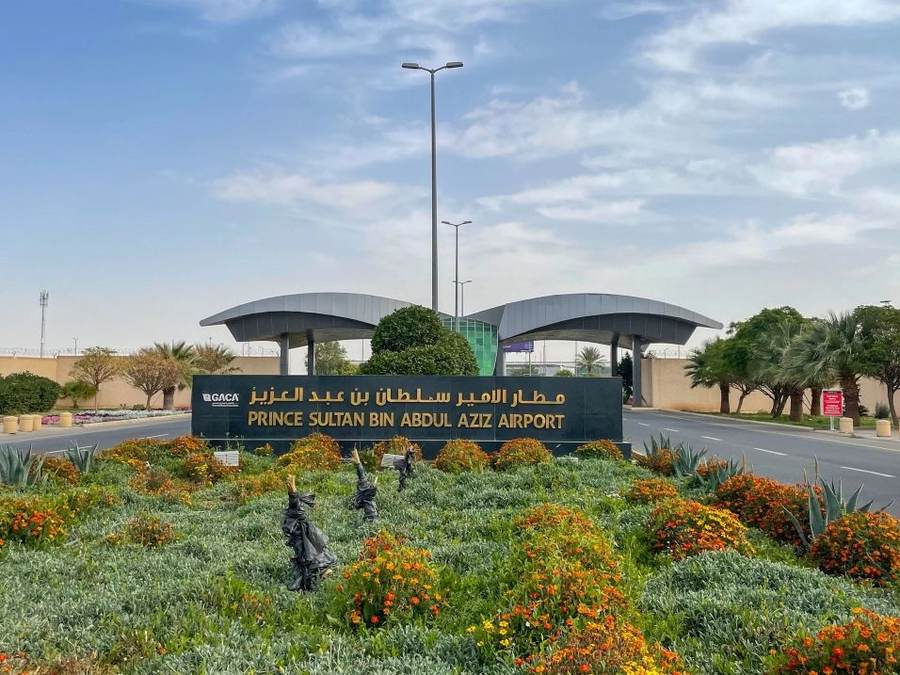
The story did not end when the attacker was restrained. Someone still had to fly a damaged and traumatized aircraft. A second pair of flydubai pilots traveling aboard the flight took control and landed safely in Tabuk, Saudi Arabia. Machchhar underwent surgery there on September 30 before being moved to Abu Dhabi. The airline sent replacement aircraft for passengers and crew.
Flydubai's own wording remains deliberately narrow. In an official statement quoted by Gulf Business, it confirmed an altercation in the flight deck, said on-duty crew traveling on the flight secured the aircraft, and stated that everyone was safe and accounted for. It added: “At this early stage, the underlying reasons and motives behind this event are unknown and remain subject to a formal investigation,” urging parties to avoid premature speculation.
That restraint should govern coverage. Nationality does not prove motive. A leader's suspicion does not become evidence because it is repeated. A violent act inside a cockpit can be investigated as a security incident without reporters deciding in advance whether the explanation is terrorism, mental illness, a personal conflict or something else. The people now examining the evidence include the UAE General Civil Aviation Authority, Saudi authorities and Israeli investigators.
Signal Post News has followed the incident from the first reports of the flight-deck fight and hijack scare, through the naming of Machchhar and the pilots who landed the jet, and into the current debate over unproven state involvement and retaliation.
The numbers: an extreme descent measured against normal flight
Fourteen thousand feet in 30 seconds converts to an average rate of at least 28,000 feet per minute. A routine airliner descent is often around 2,000 feet per minute, varying with aircraft, altitude and air-traffic instructions. On that rough comparison, FZ1073's plunge was about 14 times a conventional descent rate — commonly rounded to roughly 15 times normal.
The comparison is illustrative, not a flight-recorder reconstruction. Tracking sites sample aircraft positions rather than recording every movement, and a 30-second average cannot show the peak vertical speed, pitch, control inputs or aerodynamic loads. Only the flight-data and cockpit-voice recorders, maintenance records and witness interviews can do that. Still, the order of magnitude explains why passengers understood that this was not turbulence or a sharp but ordinary change in altitude.
The other number is 174. Aviation commonly calls every person aboard a “soul” because an emergency count is not merely a passenger tally. It includes pilots, cabin crew, off-duty crew and travelers who may become part of the response. In this case, the presence of additional qualified flydubai pilots appears to have been decisive after the cockpit was secured. The survival chain ran through Machchhar's last push, the group that entered, and the relief crew that landed.
The double edge of the reinforced cockpit door
After the September 11, 2001 attacks, reinforced and lockable cockpit doors became a foundational defense against hijacking. The logic was sound: if attackers could not reach the controls, they could not turn an airliner into a weapon. But a barrier has no moral sense. It protects whoever controls the protected side. When the danger originates inside the flight deck, the same system can delay or prevent intervention from the cabin.
Germanwings flight 9525 exposed that reversal in 2015. Investigators concluded that the first officer deliberately locked the captain out and crashed the Airbus A320 in the French Alps, killing all 150 aboard. FZ1073 presents the inverse sequence: according to Machchhar, opening the door while wounded allowed the cabin to reach an attacker already inside. One disaster showed the cost of a door that could not be breached; this survival showed the value of a door that one injured pilot managed to release.
EgyptAir flight 990 remains a more contested historical comparison. The U.S. National Transportation Safety Board concluded that relief first officer inputs led to the Boeing 767's 1999 crash, while Egyptian authorities rejected that finding and argued for mechanical causes. The lesson is not that every unexplained cockpit event belongs in the same category. It is that cockpit evidence can become politically charged, and final findings require disciplined analysis rather than narrative certainty.
Any reform now has to preserve the primary benefit of a hardened door without turning it into an unanswerable vulnerability. Options likely to receive attention include duress signals that are harder for an attacker to block, clearer override protocols, faster coordination between cabin crew and off-duty pilots, and procedures for access when one flight-deck crewmember is incapacitated. Each extra pathway can also create a route for intrusion. Security design is a balance of adversarial risks, not a single lock with a perfect setting.
Pilot vetting and the mental-health screening debate
The incident will intensify pressure on airlines and regulators to examine pilot vetting, recurrent psychological assessment and mechanisms for colleagues to report dangerous behavior. Commercial pilots already pass medical examinations and recurrent proficiency checks. The policy question is whether those systems are designed to detect an acute security threat, severe psychological crisis or ideological commitment before a crewmember reaches the cockpit.
There are limits. Mental-health screening is not a mind-reading test, and most people with mental-health conditions are not violent. Overbroad rules can drive pilots away from voluntary treatment by making disclosure feel career-ending. An effective regime has to distinguish ordinary, treatable illness from specific warning behavior, protect confidential care where possible and create a credible route for temporary removal when evidence shows an immediate risk.
The same caution applies to the “indoctrination” claim associated with Netanyahu's framing. Investigators may ultimately find an ideological motive, but no public evidence cited in the reporting reviewed here establishes it. Screening built around nationality, religion or political stereotype would be both unjust and operationally weak. Vetting should focus on behavior, verified threats, access misuse and evidence that can be assessed — not identity as a proxy.
Who benefits, who loses and what critics will press
Machchhar's account helps flydubai — but does not clear the airline
The airline benefits from a story of professional courage, cabin intervention and backup pilots completing a safe landing. Those actions show resilience: when the primary cockpit pairing failed catastrophically, people elsewhere in the system improvised a recovery. Modi's praise reinforces the value of experienced Indian aviators across Gulf carriers.
But heroism does not answer institutional questions. Investigators will examine hiring and vetting records, crew scheduling, prior conduct, cockpit procedures, security communications and the airline's response. Passengers may pursue claims for physical injury or psychological harm. Insurers and courts will ask what was foreseeable, what safeguards existed and whether any warning was missed. Celebrating the captain cannot become a substitute for disclosing what the airline knew.
Regional governments gain a cooperation story
The safe landing required practical coordination among a UAE airline, Saudi authorities, Israeli officials and Indian diplomats — governments whose political relationships do not align neatly. Saudi Arabia received an Israel-bound aircraft in crisis and provided medical care. The UAE became the center of recovery and the airline investigation. Israel accounted for travelers and joined the security inquiry. India supported its injured citizen and elevated his actions through the prime minister.
That is a diplomatic asset for all four: a rare case where operational cooperation is easier to demonstrate than political consensus. Modi gains a domestic narrative about Indian service and sacrifice abroad. Saudi and UAE authorities can point to an emergency handled across borders. Israel can credit a captain whose actions, its officials say, prevented mass death. The danger is that each government's preferred narrative races ahead of the shared evidence.
The first casualty of speculation is the investigation
Critics are right to demand answers quickly because the stakes are enormous. They are wrong if urgency becomes permission to fill gaps. Premature attribution can distort witness accounts, pressure investigators and attach collective blame to people who had nothing to do with the act. It can also produce security rules aimed at a dramatic theory rather than the failure investigators actually find.
The strongest public posture is therefore dual: treat the event as the severe aviation-security failure it plainly was, while holding motive claims to the standard of published evidence. The airline's narrow wording is not proof that the allegations are false; it is recognition that a formal inquiry exists to test them.
What happens next
First, the recorders and digital evidence. Investigators will seek to align cockpit-voice and flight-data recordings with surveillance, access logs, crew communications, medical evidence and passenger testimony. The sequence around the door — when it was locked, who controlled it, when Machchhar reached the release and how others entered — will be central to both causation and reform.
Second, a cross-border account. The UAE GCAA, Saudi investigators and Israeli authorities need a common timeline even if their legal responsibilities differ. Saudi Arabia controls evidence tied to the emergency landing and initial custody. The UAE is the airline's home regulator. Israel was the flight's destination and says many of its citizens were aboard. A credible final report will need to separate findings supported by shared evidence from intelligence claims that cannot be publicly tested.
Third, operational changes. Flydubai and other carriers may review relief-pilot access, cabin-to-cockpit emergency signals, two-person flight-deck practices, recurrent security training and the handling of concerns about crewmembers. Regulators should resist announcing a universal fix before they know the failure mode. A measure that helps when one pilot attacks another can weaken protection against someone trying to storm the cockpit from the cabin.
Fourth, liability and care. Machchhar's recovery, other injuries and trauma among 174 people will continue after the news cycle moves on. Questions of compensation, counseling, duty of care and return-to-flight decisions should not be reduced to a public-relations line. His family has already described protecting him from unnecessary retelling; that boundary deserves the same respect as the public's need for verified facts.
The call ended with gratitude and prayer, but the investigation begins with mechanics: a door, a descent, an intervention and a landing. Machchhar's account explains the hinge between catastrophe and survival. It does not explain why the cockpit became a battlefield. That answer belongs to evidence still being assembled — and the best tribute to the captain's judgment is to show comparable judgment while waiting for it.
Sources and reporting notes
- Reuters, October 2, 2026 — hospital-call details, Machchhar's account, the descent, passenger intervention and Netanyahu spokesperson's description.
- CNN, October 2, 2026 — extended quotations, family details, recovery and witness reporting.
- Narendra Modi's official channel, October 2, 2026 — the prime minister's account of the call and praise for the captain.
- Gulf Business quoting flydubai's official statement, October 1, 2026 — airline confirmation of the flight-deck altercation, safe landing and warning against premature speculation.
Reporting cutoff: October 2, 2026 at 3:31 a.m. PDT. Machchhar's remarks and Modi's response are directly attributed to the released call and the cited reports. Allegations that the co-pilot intended to crash the aircraft or acted from ideological indoctrination remain under investigation. Rate comparisons and assessments of incentives, security design and future scenarios are Signal Post News analysis.