Latvia election 2026 results
TopicsLatvia election 2026 resultsAndris KulbergsUnited ListSaeima coalitionRussia security fears
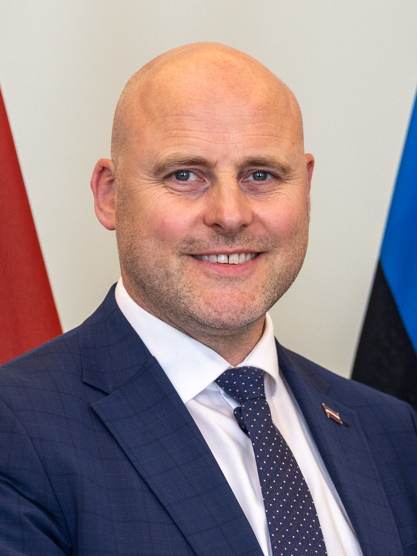
Latvia election 2026 results put Prime Minister Andris Kulbergs' United List on roughly 37% and 39 of the Saeima's 100 seats in the first official projection, a victory large enough to reorder Latvian politics but not large enough to govern alone. With 70.92% of votes counted at 3:30 a.m. local time on October 4, voters had rewarded Kulbergs' unapologetically pro-Ukraine, high-defense-spending course while also sending two protest parties sharply higher.
This was not a quiet endorsement of the status quo. It was a split-screen election: a decisive plurality chose continuity against Russia, while a substantial minority registered anger over living costs and the political establishment. Kulbergs won the argument that national security is the precondition for every other policy. He did not make the economic grievance disappear.
Why this matters: a Baltic referendum on standing up to Russia
Latvia is an EU and NATO frontier state with a long border with Russia, a large Russian-speaking minority and a political memory shaped by Soviet occupation. When voters in that setting give a pro-Ukraine prime minister a 24-seat gain after months of drone scares, cyber warnings and sabotage fears, the message travels beyond Riga. Moscow hears that intimidation did not produce strategic retreat. Kyiv hears that a Baltic ally under direct pressure is still willing to pay for deterrence.
The vote therefore belongs in the same European security story as the bloc's expanding military support for Ukraine and its attempts to harden sanctions. Signal Post News has covered the EU's €6.6 billion Ukraine military-aid package, and the recent sanctions over the deportation of Ukrainian children. Latvia's result supplies domestic political backing for that wider line.
Calling the result a blank check would be wrong. More than a quarter of projected seats went to Latvia First and Sovereign Power, parties that channeled cost-of-living anger and drew support from parts of the Russian-speaking electorate. Security won the election; it did not erase the country's social and linguistic divides.
The numbers: a landslide that still needs partners
The LSM public-broadcaster exit poll put United List at 35.6%, Latvia First and the Progressives at 11.3% each, and Sovereign Power at 10.8%. The first official projection, based on 70.92% of votes counted, moved the picture further in Kulbergs' favor:
- United List (AS): 37.10%, 39 seats — up 24.
- Latvia First (LPV): 13.05%, 15 seats — up 6.
- Sovereign Power (SV): 10.33%, 14 seats — entering with 14.
- National Alliance (NA): 9.90%, 10 seats — down 3.
- Progressives (PRO): 6.30%, 9 seats — down 1.
- New Unity (JV): 5.96%, 7 seats — down 19.
- Union of Greens and Farmers (ZZS): 5.84%, 6 seats — down 10.
Turnout reached 51.67%, about 7.7 percentage points higher than the previous election. That rise matters because it weakens the easy explanation that Kulbergs merely mobilized a narrow security-minded base. More Latvians came out, and United List expanded dramatically across that larger electorate.
Latvia uses open-list proportional representation across five constituencies, with seats allocated by the Sainte-Laguë method and a 5% national threshold. That threshold made ZZS's night especially perilous: exit polling placed it close to exclusion, where a fraction of a point could have redistributed every one of its seats and altered the coalition menu.
How the drone crisis remade the government
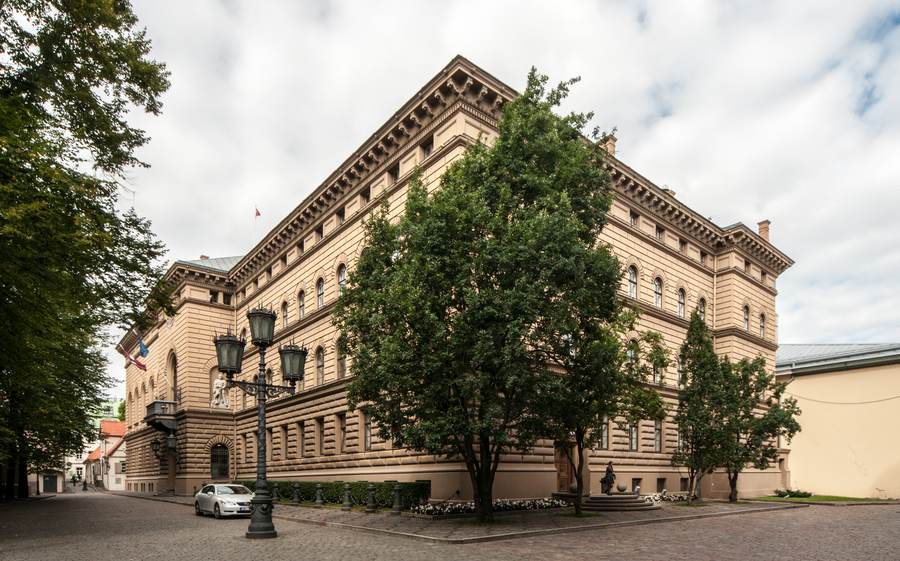
Kulbergs, 47, entered office on May 28 after the coalition led by Evika Siliņa collapsed. The Progressives withdrew support amid anger over military drones that entered Latvian airspace without timely detection. The Saeima confirmed Kulbergs with 66 votes, giving a businessman and amateur rally driver the premiership just over four months before the election.
The new prime minister treated the drone failures not as isolated technical lapses but as part of Russia's pressure campaign. He blamed Moscow for diverting Ukrainian drones toward Latvia after incidents in Krāslava in March and Rēzekne in May, followed by NATO interceptions in June and August. The broader European climate reinforced that framing: warnings about sabotage, arson and cyber operations have moved hybrid war from an intelligence-service concern into daily politics, as reflected in NATO warnings that Russia is testing alliance defenses.
Kulbergs promised stronger counter-drone systems and defense spending equal to 5% of GDP, one of NATO's highest commitments. He retained Baiba Braže as foreign minister, made Estonia his first foreign trip, signed a Latvia-Ukraine defense-cooperation agreement with President Volodymyr Zelenskyy in June and announced a proposed 300% tariff on Russian and Belarusian grain in September. In other words, the campaign message had a short but visible governing record behind it.
Winners, losers and the limits of the mandate
United List is the overwhelming winner. A gain of 24 seats transforms it from one coalition participant among several into the unavoidable center of government formation. Kulbergs also wins a personal mandate: he asked voters to ratify a harder security line after the previous cabinet's collapse, and they did.
Latvia First and Sovereign Power are the protest winners. Ainārs Šlesers' Latvia First, a populist party that courted ethnic-Russian voters, rose to 15 seats. Jūlija Stepaņenko's overtly pro-Russian Sovereign Power took 14. Their combined strength shows that expensive defense promises land differently in households squeezed by food, housing and energy costs. Analyst Roberts Kits of the LaSER think tank had warned that populist parties and those drawing on the Russian-speaking electorate could outperform their exit-poll showings; Latvia First did exactly that as the count advanced.
New Unity is the establishment casualty. Arvils Ašeradens' party plunged by 19 seats to seven, a collapse that turns a former governing anchor into a junior coalition option. Ilze Indriksone's National Alliance lost three but retained ten seats and significant bargaining power. Andris Šuvajevs' Progressives slipped only one seat, but their role in bringing down the previous government complicates any reunion. Viktors Valainis' ZZS survived in the projection with six seats, yet its near-threshold ordeal stripped away ten.
The critics' case is not trivial. A 5%-of-GDP defense pledge demands choices: taxes, borrowing, or pressure on social spending. Kulbergs now has to show that counter-drone procurement and military readiness are measurable programs rather than an all-purpose answer to domestic unease.
Coalition math: 39 seats are powerful, not sufficient
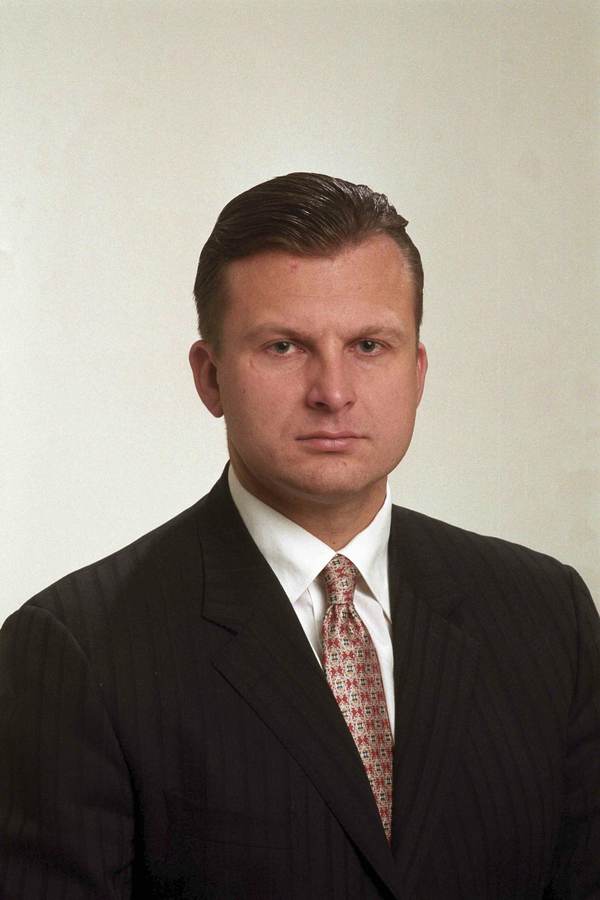
Fifty-one seats are needed. The most numerically comfortable route is United List 39 + National Alliance 10 + Progressives 9 = 58. It would combine a center-right security bloc with a socially progressive partner, but require both sides to repair the breach that ended Siliņa's government and negotiate budget priorities.
A narrower center-right formula is United List 39 + National Alliance 10 + New Unity 7 = 56. That majority is ideologically tidier on security and excludes the Progressives, but it gives diminished New Unity a route back into government immediately after voters punished it.
Other combinations are possible if ZZS stays above 5%, but Kulbergs has drawn one bright line: he will not govern with Latvia First. That removes the second-largest party from coalition arithmetic and makes Šlesers the likely leader of a loud opposition rather than a kingmaker. Sovereign Power is even less compatible with Kulbergs' pro-Ukraine program.
The best coalition is not necessarily the largest one. A 58-seat alliance may absorb more ideological friction; a 56-seat government may be more coherent but less buffered against defections. Kulbergs must decide whether the priority is parliamentary cushion, policy alignment or a broad signal of national unity under external pressure.
What happens next
The official count must be completed and seats confirmed before coalition talks harden into a governing agreement. President, party leaders and parliamentary blocs will then test who can present a majority, distribute ministries and agree on a budget. The speed of the process will be an early measure of whether Kulbergs' electoral dominance produces authority or merely higher expectations.
Three policy tests arrive immediately. First is continuity of military and political support for Ukraine, including the defense agreement signed in June. Second is whether the 5% defense pledge survives coalition budgeting in full. Third is delivery: Latvia needs radars, interceptors, electronic warfare, civil-defense procedures and cross-border NATO coordination that can catch the next drone rather than explain the last one.
Cost of living will be the opposition's pressure point. If a Kulbergs-led cabinet treats economic pain as a communications problem, Latvia First and Sovereign Power will have a large audience. If it pairs deterrence with visible household relief and regional investment, United List can turn an emergency mandate into durable political realignment.
The bottom line
Latvia voted under the shadow of Russia and chose confrontation over accommodation. That is the decisive fact of this election. Yet the second fact is almost as important: parties exploiting economic anger and Russian-speaking alienation also advanced. Kulbergs has won permission to keep Latvia firmly in the pro-Ukraine camp. He has not won permission to ignore what that stance costs, or who feels excluded by the political order defending it.
The result is a Baltic warning to Moscow, reassurance to Kyiv and a demanding contract for Riga's next government. The landslide settles who leads. Coalition talks will decide whether leadership becomes power.
Related coverage
- EU sanctions over deported Ukrainian children
- EU releases €6.6 billion in Ukraine military aid
- Russia is testing NATO with hybrid attacks
Sources
- Reuters: Latvians vote in election under the shadow of drone incursions and the war in Ukraine
- 2026 Latvian parliamentary election: results, electoral system and party background
- LSM public-broadcaster exit poll, reported October 3, 2026.
Reporting cutoff: First official projection at 3:30 a.m. EET on October 4, with 70.92% counted. Final vote shares and seat allocations may change as the count is completed; coalition combinations are analysis, not agreements.