World · Africa · Migration
A Europe-bound pirogue struck a rocky stretch of coast off Yenne, south of Dakar, in the middle of the night and washed ashore in pieces. By Thursday, dozens of the people aboard were still missing, the survivors were giving different numbers for how many had set out, and only one death had been officially confirmed.
YENNE, Senegal, November 19, 2026 — A Senegal migrant boat capsizes off Yenne, a fishing commune on the coast south of Dakar, in the early hours of Wednesday after the wooden pirogue carrying it struck a rocky area off the shore, and dozens of the people aboard remain missing. The boat, bound for Europe, hit the rocks at about 02:00 local time overnight Tuesday into Wednesday, capsized, and washed ashore badly damaged, Agence France-Presse reported. Search operations ran through Wednesday and were due to resume on Thursday, Reuters reported, with dozens of people unaccounted for and no official count of how many had been rescued. One death has been officially confirmed. It is the second mass-casualty wreck on Senegal’s Atlantic coast in under two weeks, on a route that is carrying more people — and killing more of them — than at any point this year.
What is known — and what is not
Start with the honest part: two days after the wreck, the most basic fact about it — how many people were on the boat — is disputed by the survivors themselves. A survivor questioned by the gendarmerie told officials that about 100 people were aboard, including five women, AFP reported, citing a local elected official. A different survivor, quoted by Adama Mbengue, president of the human-rights organisation ADHA (Action for Human Rights and Friendship), put the number at around 50, Reuters reported on Thursday. Signal Post News is carrying both figures because both are on the record and neither has been superseded; there is no manifest for a clandestine departure, no passenger list to check, and no authority in a position to reconcile the two accounts yet. No total of survivors or rescued people has been reported by any source, which is why the missing are described — here and by Reuters — as “dozens”: on either survivor’s count, that is the scale of the gap between who set out and who has been accounted for.
The death toll requires the same discipline. Exactly one death is officially confirmed: Yenne’s mayor, Massamba Mbengue, and the firefighters at the scene said one body had been recovered, and Radio France Internationale, cited by Reuters, likewise reported one confirmed death. Two other local sources put the number of bodies at two; some local media reported at least four, according to BBC reporting. Those higher figures are unconfirmed local reports, not a toll, and they are recorded here as reports only. Two cautions follow from the names. Massamba Mbengue, the mayor of Yenne, and Adama Mbengue, the president of ADHA, are two different people whose surnames have already invited confusion in early coverage; they are not the same official and their statements should not be merged. And the gap between one confirmed death and dozens missing is not evidence that the missing are safe — on this route, it is usually evidence only that the sea has not yet given up its count.
The wreckage tells the story
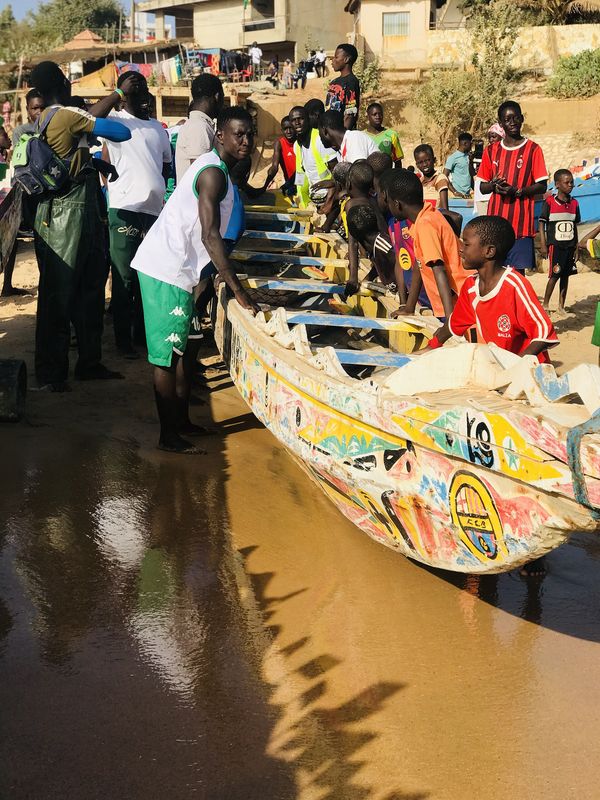
What the boat left behind on the beach is, for now, the most concrete record of who was aboard. Oumar Sow, a representative of the village chief, said the incident happened at about 02:00 and that cries from the pirogue were audible from the beach — a detail that fixes the wreck close to shore, within earshot of the village, in the first minutes after it struck. The badly damaged hull washed up on the sand. Gendarmes working the scene recovered eight identity documents, several mobile phones, sachets of water — the standard provisioning of a boat expecting days at sea — and one item that has stayed in every account of the morning: a school enrolment document belonging to a high school student from Kabrousse, in the Casamance region of southern Senegal. Kabrousse is hundreds of kilometres from Yenne. Whoever that student was, they had crossed half the country to reach a beach south of Dakar and board a fishing boat for Europe in the middle of the night. The eight identity documents will anchor the first identifications; the phones, if they can be read, may anchor more. But documents recovered from a wreck are a floor, not a census — they name some of the people who were aboard, and say nothing about the rest.
Yenne, the departure point nobody was watching
Yenne is a commune of fishing villages strung along the coast south of the capital — close to Dakar, open to the Atlantic, and, until this week, not a name associated with the migration route in the way that northern departure beaches are. That appears to have changed. A local official told AFP that Yenne has become a migration embarkation point, and that smugglers have been recruiting boat pilots there — local men who know the water off their own villages, hired to steer boats they would never take out themselves in daylight. The geography explains the attraction for organisers: a departure beach within reach of the capital’s population and transport links, far enough down the coast to feel unwatched, with a fishing fleet whose boats can be bought, borrowed or chartered without attracting the attention a larger port would draw. ADHA, the organisation whose president relayed the lower survivor count, responded to the wreck with a demand for a parliamentary inquiry and a denunciation of what it called a “lack of lasting results” in reducing migrant deaths at sea — a criticism aimed not at one night’s enforcement but at years of it.
Why this matters
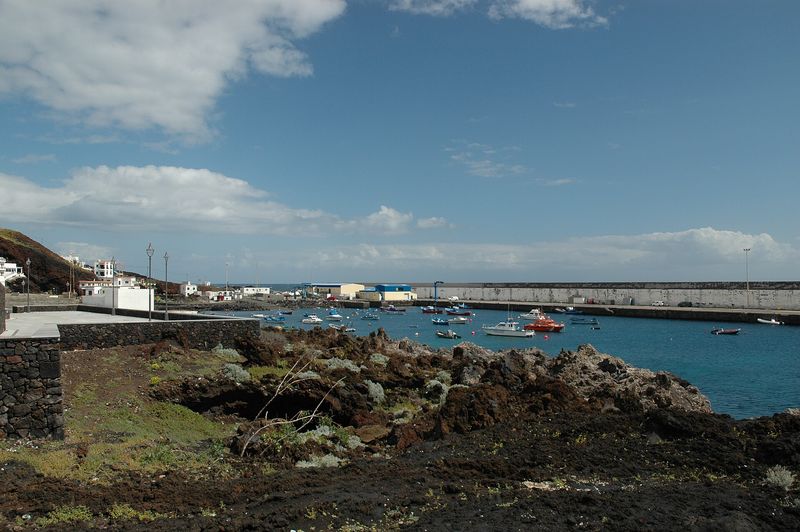
One wreck is a tragedy; two wrecks in under two weeks, on the same coastline, in the same departure season, is a pattern — and the pattern is what makes Yenne matter beyond its own beach. The numbers around the route describe a system running at full capacity and failing at a steady rate. The UN refugee agency, UNHCR, cited by Reuters, counts nearly 8,200 migrants reaching Spain’s Canary Islands via the West Africa route in the first 12 days of November alone, and nearly 600 people reported dead or missing on the route so far in 2026, against 1,200 in the whole of 2025. The International Organization for Migration, cited by the BBC, recorded at least 454 deaths and disappearances on the Atlantic route this year — a figure the BBC noted dates from last month. The two counts do not agree, and the disagreement is itself informative: they are compiled by different organisations, over different stretches of route, to different cut-off dates, from reports that arrive unevenly or never. What they agree on is the direction. At the destination end, Spain declared a migration emergency in the Canary Islands on November 10, after more than 9,000 arrivals since the start of November; on November 14, Spain’s Maritime Rescue Service rescued 1,488 migrants aboard 14 dinghies in a single day, most of them arriving on the island of El Hierro, breaking the previous record of 1,461 set in November 2020. A route that is simultaneously producing record rescues and back-to-back mass-casualty wrecks is not a route under control; it is a route at maximum throughput, where the difference between the rescued 1,488 and the missing dozens off Yenne is weather, hulls and luck. Signal Post News reported the destination end of that surge in its coverage of the Canary Islands migrant surge that overwhelmed El Hierro — the same week’s other shore.
Context: the second wreck in under two weeks
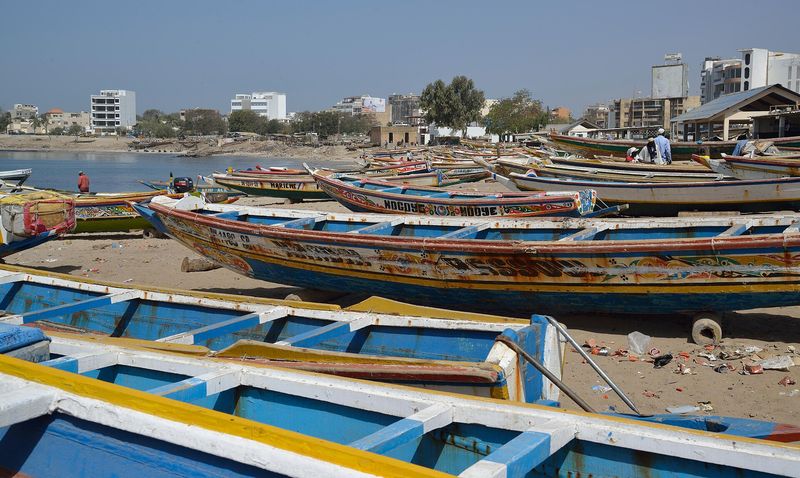
Yenne is not the first Senegalese beach to hold a scene like this in November; it is the second. Days earlier, a pirogue sank off Kébémer, near Thieppe and Loumpoul-sur-Mer on the coast north of Dakar — a different incident, in a different place, which must not be merged with this one. Signal Post News covered that wreck as the Senegal migrant boat that sank off Kébémer, reporting at least 35 dead in its headline. The toll has since been stated differently by different organisations: Reuters and the BBC now put the earlier wreck’s dead at at least 39, while Al Jazeera, carrying AFP, has reported 43. Each figure belongs to its source and its date, and none of them revises the others away; they are successive counts of a disaster whose accounting is still open, exactly as Yenne’s now is. The vessel at the centre of both stories is the same. A pirogue is a wooden fishing boat — long, open, painted, powered by outboard engines, built to work inshore grounds and come home the same day. The crossing it is asked to make from Senegal to the Canaries is roughly 1,500 kilometres of open Atlantic, several days in good conditions, in a boat with no shelter, no reserve buoyancy and no realistic prospect of surviving heavy weather or a hull strike — which is what happened off Yenne within sight and earshot of the beach, before the crossing had properly begun. Autumn is the season the departures concentrate in, when conditions are judged most survivable; the drivers underneath the season are the ones the IOM has documented in its prior reporting on the route — youth unemployment, collapsed earnings in fishing and farming communities, and the arithmetic of a passage fee set against a lifetime of local wages. None of that requires the boats to be safe. It only requires them to leave.
Who gains, who loses — and who gets blamed
The argument that follows every wreck on this route is already forming around Yenne, and its lines are familiar. The smugglers are the first and easiest target: organisers who sell places on unseaworthy boats and, on the local official’s account, recruit village pilots to steer them — men who profit from the departure and are rarely aboard for the wreck. Enforcement is the second: ADHA’s call for a parliamentary inquiry, and its charge of a “lack of lasting results,” are directed at a Senegalese state that has policed departures for years without reducing the deaths, and at the gap between announced crackdowns and beaches that keep launching boats. European border policy is the third line of the argument, made by the route’s critics after every disaster: that a system offering almost no legal pathway to Europe does not suppress the journey but sets its price and its risk, pushing departures to darker beaches and worse boats. The government’s position, so far, has been signalled rather than stated: per the QNC/AFP chain, President Bassirou Diomaye Faye addressed migration before the Council of Ministers on Wednesday and directed the interior minister to prepare a report on the issue. One line of attribution is all that chain supports, and a report is not yet a policy. Who loses is not in dispute and never is: the families now waiting in Yenne, in Kabrousse and in villages that have not yet learned their sons were on the boat, for a count that — as the Kébémer wreck showed — may take weeks to settle and may never settle completely.
What happens next
The search was due to resume on Thursday, and its results will drive everything else: each recovery narrows the gap between the survivors’ two counts and the confirmed toll, and each day without recoveries hardens the presumption about the missing. Identification comes next — the eight identity documents, the phones, and the school enrolment paper from Kabrousse give investigators a start, and the families of the missing will be asked to do the rest. ADHA’s demand for a parliamentary inquiry will test whether Yenne becomes a political event or only a news event: an inquiry would put the recruitment of pilots, the policing of the Dakar-region beaches and the state’s prevention record on a public record, which is precisely what the organisation is asking for. And then there is the question nobody in authority will answer on the record: whether back-to-back wrecks pause the departures. The route’s history says grief and deterrence are not the same thing — sailings have resumed after worse losses than this, because the conditions that fill the boats do not change when a boat is lost. Whether November 2026 follows that history is an open question, and it will be answered on beaches like this one, at night, whether or not anyone is watching. Signal Post News will update this article as the search resumes and the counts are confirmed.
Related coverage
Senegal Migrant Boat Sinks Off Kébémer: At Least 35 Dead, One Survivor
Canary Islands Migrant Surge Overwhelms El Hierro as 3,261 People Are Rescued in Six Days
More world coverage: Signal Post News — World
Sources
Sources: Reuters, November 19, 2026 — dozens missing after a Europe-bound migrant boat capsized off Yenne, south of Dakar; the survivor account of around 50 people aboard relayed by ADHA president Adama Mbengue; search operations and their resumption on Thursday; and the UNHCR figures of nearly 8,200 Canary Islands arrivals via the West Africa route in the first 12 days of November and nearly 600 reported dead or missing on the route in 2026, against 1,200 in all of 2025. AFP via Al Jazeera, November 18, 2026 — the pirogue striking a rocky area and washing ashore overnight Tuesday to Wednesday; the survivor questioned by the gendarmerie who put about 100 people aboard, including five women; Mayor Massamba Mbengue and firefighters confirming one body recovered, with two other local sources putting it at two; Oumar Sow on the 02:00 timing and cries audible from the beach; the eight identity documents, mobile phones, water sachets and the Kabrousse school enrolment document recovered by gendarmes; Yenne as an embarkation point where smugglers recruit pilots; ADHA’s parliamentary-inquiry call; Spain’s November 10 Canary Islands migration emergency and the November 14 rescue of 1,488 migrants aboard 14 dinghies. BBC reporting — search operations continuing Wednesday and due to resume Thursday; some local media reporting at least four bodies recovered; and the IOM figure of at least 454 deaths and disappearances on the Atlantic route this year, as recorded last month. Radio France Internationale via Reuters — at least one death confirmed, per local officials. UNHCR and IOM figures as cited in the text, each attributed to its source and date. The line on President Bassirou Diomaye Faye addressing the Council of Ministers and directing the interior minister to prepare a migration report is per the QNC/AFP chain only. Photographs: a pirogue launch at Toubab Dialaw by Kalamuh 045 (CC BY-SA 4.0); pirogues on a Senegalese beach by Olivier Dugornay / Ifremer (CC BY 4.0); La Restinga harbour, El Hierro, by Pepelopex (CC BY-SA 3.0) — all via Wikimedia Commons, all file photographs, none depicting the Yenne wreck, and credited in the captions.