
The Anthropic Akamai $11.6 billion cloud deal puts a hard price on the artificial-intelligence boom. Announced Thursday, September 24, Anthropic's seven-year agreement commits at least $11.6 billion to Akamai Technologies for cloud infrastructure and software, according to The Wall Street Journal. Akamai says expansion could add another $9 billion, taking the potential commitment to roughly $20 billion. This is not merely a vendor contract. It is a wager that the next stage of AI will need computing capacity spread closer to users, and that renting an established network can be strategically cleaner than building a private data-center empire.
Why this matters
Compute commitments are the new currency of the AI race
Frontier-model competition is usually narrated through benchmark scores, model launches and chatbot features. The binding constraint is increasingly less glamorous: power, processors, memory, networking and the software that keeps them available. A seven-year minimum purchase turns that physical constraint into a strategic asset. Anthropic is buying the right to plan products against known capacity rather than chasing supply each quarter.
The scale is more revealing than the headline alone. The minimum works out to about $1.66 billion a year before any expansion. That is the cost of making compute predictable in a market where capacity can decide which lab trains faster, serves more users and absorbs the irregular surges created by enterprise agents. The commitment also adds a useful frame to the wider OpenAI–Anthropic enterprise race: model quality matters, but so does the infrastructure available when millions of automated tasks arrive at once.
The Akamai distributed cloud platform is the strategic signal
The most important operational detail, reported by Investor's Business Daily, is that Anthropic will use Akamai's existing distributed cloud platform and software rather than commission a dedicated new data-center build-out. That is a rent-don't-build choice. It transfers construction schedules, supply-chain coordination and much of the utilization risk to a partner with a network already spread across markets.
It also hints at where workloads are moving. Training the biggest models still favors concentrated clusters, but inference, tool-using agents and enterprise applications benefit from capacity closer to customers and data. Latency, jurisdiction and traffic spikes become part of the product. Anthropic's decision does not prove that distributed infrastructure will displace hyperscale campuses; it says a frontier lab believes the edge can carry a much larger part of the stack.
What the deal actually says
Anthropic cloud computing commitments, in annual terms
The floor is $11.6 billion over seven years, or approximately $1.66 billion per year on a straight-line basis. The actual payment schedule may not be even, and purchases can vary with deployment, but the calculation shows the order of magnitude. Akamai's Thursday statement allows for as much as $9 billion in additional business. If that expansion is fully used, the relationship approaches $20.6 billion rather than a simple rounded $20 billion.
The new commitment sits on top of more than $2.8 billion in multi-year cloud commitments that Akamai said it had announced across its customer base this year. Anthropic therefore changes the scale of Akamai's cloud story: one customer now represents several times the value of those earlier commitments combined.
Akamai warrant: 5% equity in Anthropic, explained plainly
Alongside the service agreement, Akamai issued Anthropic a warrant tied to roughly 7.7 million shares of non-voting convertible Series B preferred stock, equivalent to about 5% of Akamai's outstanding shares, at an exercise price of $111.33 a share. A warrant is an option to acquire shares under specified terms; it gives Anthropic potential upside if Akamai's value rises while aligning more of the supplier's economics with the customer's spending.
About 2% is expected to vest at the announcement, with another 1% vesting for each additional $3 billion of cloud-services purchases. In plain English, the equity reward grows as Anthropic sends more business to Akamai. That turns the expansion option into a set of visible milestones: approximately $3 billion, $6 billion and $9 billion of additional purchases correspond to successive warrant tranches.

$5.5 billion of capex — and unchanged revenue guidance
Akamai plans about $5.5 billion in total capital expenditure to support the agreement. That includes a $1.7 billion increase to 2026 capital spending so it can pre-purchase supply-chain components such as memory. The distinction matters: $5.5 billion is the broad investment program tied to delivery, while $1.7 billion is the incremental lift to this year's spending plan.
Akamai left its full-year revenue guidance unchanged. That is not a contradiction. A long contract can require cash and equipment before meaningful service revenue appears, and accounting recognition may lag the announcement. Keeping guidance steady tells investors not to book the entire headline as near-term sales. It also sharpens the execution test: Akamai must spend first, deploy reliably and convert committed use into recognized revenue over time.
Who wins, who loses
Anthropic locks capacity without taking data-center construction risk
Anthropic gains capacity and a distributed footprint without owning the full burden of land, permitting, electrical interconnection and campus construction. It can direct capital toward models and products while Akamai handles infrastructure execution. The trade-off is duration. Seven years is a long time in a market where chips, model architectures and cost per token can change within months. If Anthropic's needs shift or more efficient models reduce demand, minimum commitments can become expensive underused capacity.
Akamai stock surge reprices the CDN-to-cloud pivot
Akamai is best known as the world's largest content-delivery-network provider, the company that moves web content closer to users. It has spent years expanding into cybersecurity, edge computing and cloud services. The Anthropic agreement gives that pivot a flagship customer and what Akamai described as its largest-ever commitment.
The market reaction was immediate, though after-hours prices moved as trading continued. Investor's Business Daily reported a nearly 21% rise to $133.21 in extended trading. The Wall Street Journal, at a different snapshot, reported a 17% gain to $129.02. Both figures describe the same repricing impulse at different moments, not a factual conflict: investors suddenly had a much larger number against which to value Akamai's cloud ambition.
“Anthropic is advancing the AI revolution and we are thrilled they chose Akamai's capabilities for building and operating AI infrastructure at scale.”
Tom Leighton, Akamai chief executive
Hyperscalers and suppliers feel the second-order effects
AWS, Microsoft Azure and Google Cloud do not lose Anthropic outright; major labs commonly use multiple providers and architectures. They do gain a credible distributed competitor in a deal large enough to influence procurement conversations. Enterprises may ask whether every AI workload belongs in a giant centralized region or whether some inference can run better across a broader edge network.
Memory and component suppliers are clearer beneficiaries because Akamai intends to pre-purchase equipment. Those orders pull demand forward and reinforce the AI capex boom in tech stocks. But the suppliers' gain is also Akamai's risk: buying early secures scarce parts while exposing the company if prices fall, hardware advances quickly or deployments arrive behind schedule.
The bigger picture: AI's infrastructure bill is coming due
AI cloud infrastructure spending in 2026 moves markets
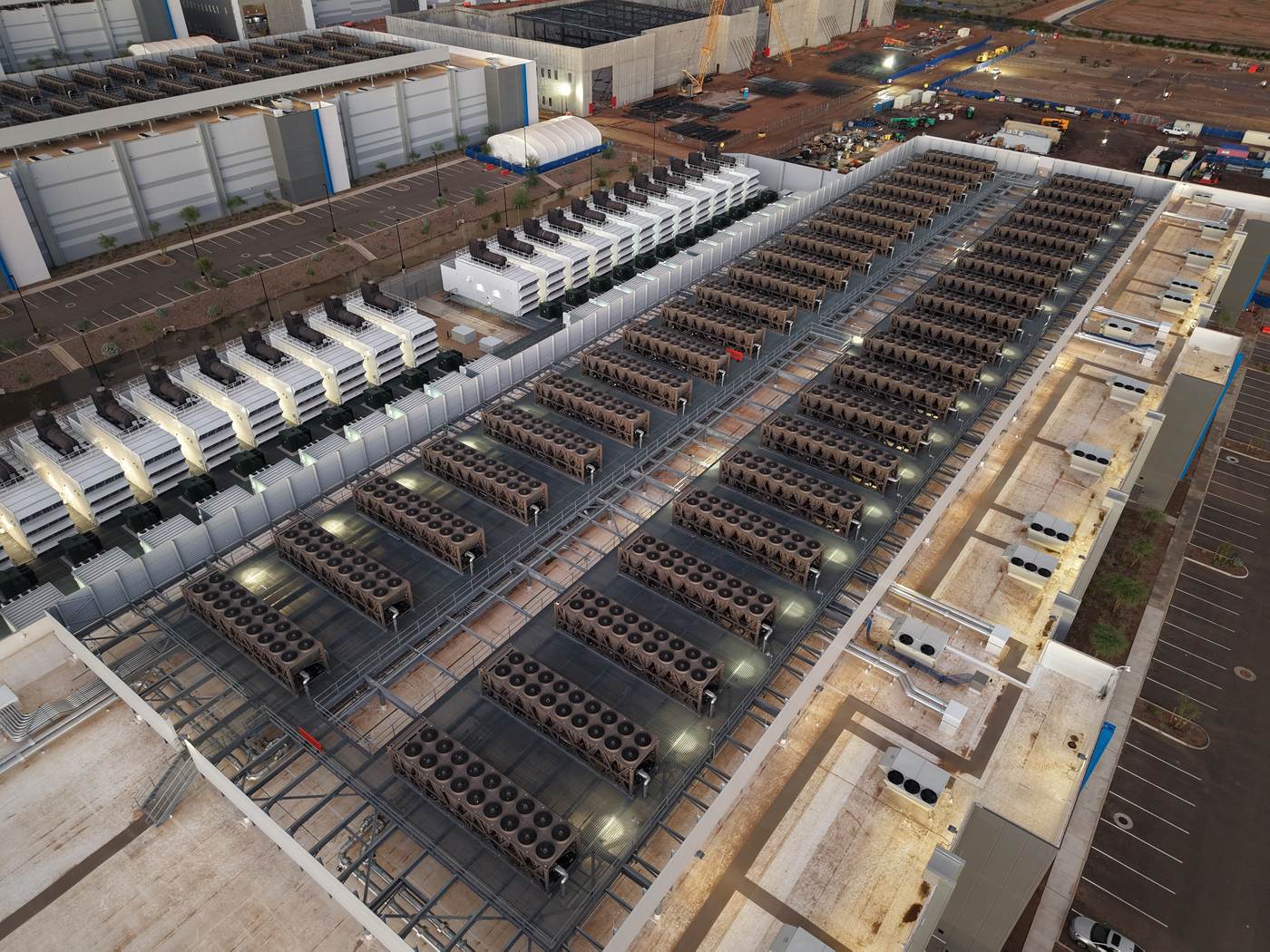
The AI compute arms race of 2026 is no longer financed only through ordinary quarterly capital budgets. Long-duration cloud contracts, structured partnerships and equity-linked incentives are becoming part of the competitive toolkit. That is why a capacity agreement can move a stock as sharply as a product breakthrough: it offers investors a visible bridge between AI demand and future revenue while assigning execution risk to a named supplier.
The timing matters because AI financing has also shown signs of strain. Oracle's force-majeure notice connected to its New Mexico project unsettled financing discussions this month, reminding markets that promised capacity depends on construction, power, equipment and contracts holding together. Against that backdrop, Anthropic's choice of an existing network looks defensive as well as ambitious. The arrangement reduces greenfield build risk, though it cannot eliminate power, hardware or deployment bottlenecks within Akamai's system.
From product demos to balance-sheet commitments
For years, the easiest AI story to tell was about what a model could do. The harder story is who pays when that capability runs continuously for banks, software companies, governments and consumers. Agents amplify the problem because they do not merely answer one prompt; they may plan, call tools, check results and try again. Each step adds inference demand. Distributed capacity can help place that demand where latency and traffic economics make sense, but somebody still funds the machines.
The result is a new hierarchy of evidence. A dazzling demo shows technical possibility. A multibillion-dollar contract shows that a company expects users, workloads and revenue at a scale large enough to justify industrial infrastructure. The latest developments across the technology beat—from Apple's investigation of a screenless fitness tracker to the ShinyHunters FBI breach claim—likewise show that hardware, infrastructure and security now shape whether ambitious software ideas become durable products.
What happens next
Watch the $9 billion expansion and warrant milestones
The cleanest indicators will be purchases beyond the $11.6 billion floor. Each additional $3 billion matters twice: it represents more cloud demand and triggers another 1% warrant tranche, up to the stated 5% scale. Akamai should eventually disclose enough in financial reporting for investors to judge whether the relationship is tracking near the minimum or advancing toward the roughly $20 billion potential.
Execution will decide whether Akamai Tom Leighton and Anthropic were early or merely expensive
Akamai must turn $5.5 billion of planned capex into functioning, reliable capacity without allowing costs or delays to outrun revenue. Investors should watch the timing of equipment purchases, deployment progress, margins, customer concentration and any revision to guidance. Anthropic must show that the capacity is productively used across training, inference and agents rather than treated as insurance against scarcity.
The industry question is whether other frontier labs follow the same rent-don't-build edge approach. One deal does not establish a standard. If rivals begin signing comparable agreements with distributed providers, it would confirm that Anthropic data center capacity is part of a broader architectural shift. If they remain concentrated in hyperscale campuses, this may instead prove to be a distinctive hedge designed around Anthropic's own workloads.
Conclusion
The agreement is simultaneously a capacity purchase, an equity alignment and a test of Akamai's reinvention. Anthropic gets a seven-year infrastructure runway without commissioning a dedicated campus. Akamai gets the customer that can validate its cloud pivot, plus the obligation to spend billions before the full economic payoff is visible. Suppliers gain orders, hyperscalers gain a sharper rival, and shareholders inherit a new concentration risk.
The larger lesson is that the AI boom is leaving the realm of abstraction. Its next phase will be measured not only in model scores but in purchase commitments, memory orders, power availability and utilization. The Anthropic–Akamai contract makes that bill legible: at least $11.6 billion, possibly about $20 billion, and seven years to prove that distributed cloud capacity is where the next wave of AI work belongs.
Sources and further reading
- The Wall Street Journal — Anthropic to pay Akamai at least $11.6 billion over seven years for cloud services
- Investor's Business Daily — Akamai stock surges after Anthropic computing agreement
Reporting basis: Fixed September 25, 2026 snapshot based on the outlets above and Akamai's Thursday announcement. After-hours prices are attributed to the publishing outlet because they reflect different moments in extended trading.