Nearly one in four of the world’s children lived within 50 kilometres of a conflict incident in 2025 — the highest number and the highest share since records began in 1990 — and the verified toll of grave violations against children, and of aid deliberately kept from them, rose alongside it, according to Stop the War on Children: Changing the Odds, released on Thursday.
Track it live: Live wars tracker
AMMAN, Jordan, November 19, 2026 — A record 589 million children living in conflict zones in 2025 made up 23.4% of all the world’s children — nearly one in four, and the largest number since comparable records began in 1990 — according to Save the Children’s 2026 Stop the War on Children: Changing the Odds report, released in Amman on Thursday. The figure is an estimate, built on a precise definition the report states openly: a child is counted as living in a conflict zone if they live within 50 kilometres of a conflict incident recorded in that year. Even on that measured definition, the direction is stark. The total has risen by more than half in a decade, from 378 million in 2015, and the share of childhood spent within reach of war has more than doubled since the mid-1990s, when it stood at about 10%. The report pairs that exposure figure with the hardest ledger in children’s rights: 38,967 grave violations against children were verified by the United Nations in 2025, including 14,224 children killed or maimed — verified cases only, a floor beneath a true toll that investigators cannot fully reach. And it documents a third record, quieter and in some ways more damning: 8,322 verified incidents in which humanitarian access to children was denied in 2025, more than sixteen times the 509 recorded in 2015.
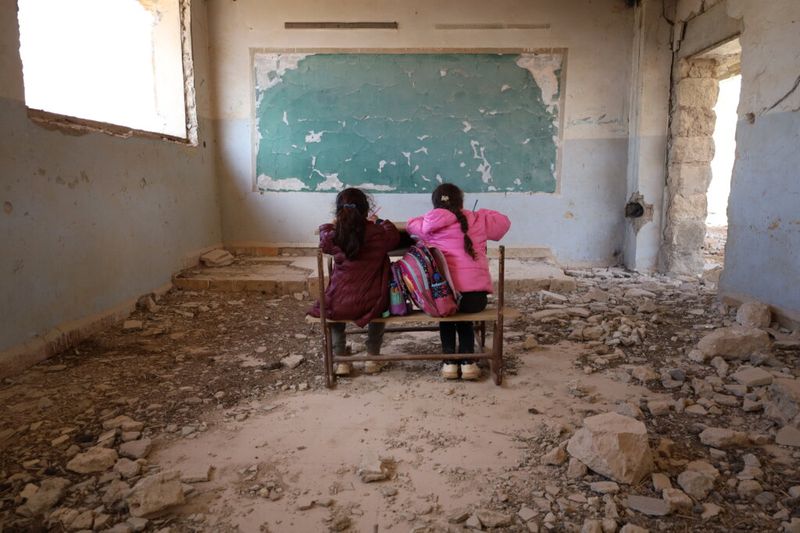
What the report found
The headline number comes from analysis by the Peace Research Institute Oslo (PRIO), which has tracked children’s exposure to conflict for Save the Children across successive editions of the Stop the War on Children series. PRIO’s researchers worked from the Uppsala Conflict Data Program’s Georeferenced Event Dataset (UCDP GED), which logs individual conflict incidents with locations, and overlaid those events on estimates of where children actually live. A child counted in the 589 million is not necessarily a child who has heard gunfire; the definition is geographic and annual — within 50 kilometres of at least one recorded conflict incident during 2025. That breadth is deliberate. It captures the radius within which war disrupts schooling, healthcare, water, family income and safety even when the fighting itself never reaches a child’s street, and it is applied consistently across the whole series back to 1990, which is what makes the trend line meaningful.
On that consistent basis, 2025 set records on both measures that matter. The absolute number, 589 million, is the highest in the series. So is the share: 23.4% of the world’s children, up from roughly one in ten in the mid-1990s and from 378 million a decade ago. A rise of more than 50% in ten years cannot be explained by population growth alone, because the proportion rose too — childhood itself, measured globally, has become measurably more likely to be lived near war. The analysis was led within PRIO by researchers including research professor Gudrun Østby, whose work on children and armed conflict underpins the series, and the findings were presented by Save the Children internationally and in national markets, including by Florian Westphal, chief executive of Save the Children Germany.
Why this matters
Analysis: a statistic about proximity can sound abstract until it is translated into the systems a child depends on. Living within 50 kilometres of conflict does not distribute its harms evenly, but it reliably loads risk onto the same foundations: schools that close or are requisitioned, clinics that lose staff and supplies, markets and roads that become dangerous, water and power systems that fail under fire or neglect, and household incomes that collapse when adults cannot work or flee. The 589 million figure matters less as a count of children in immediate danger than as a count of children whose ordinary development — nutrition, vaccination, literacy, safety from recruitment and exploitation — is now mediated by war. Development economists have long warned that these are the harms that outlast the fighting: a missed year of schooling or a year of malnutrition at age four is not fully repaid by a ceasefire at age six.
The second reason the report matters is that it refuses to let exposure stand alone. By publishing the proximity estimate alongside UN-verified grave violations and access-denial incidents, Save the Children is making an argument about responsibility. Exposure can be described as a condition of geography; a verified grave violation is an act with a perpetrator, and a denied aid convoy is a decision with an author. The report’s architecture moves the reader from where children live, to what was done to them, to what was withheld from them — and each step narrows the space in which the numbers can be treated as weather rather than as choices.
A generation-sized denominator
There is also a forward-looking stake. The children counted in 2025 will be the adults of the 2040s in precisely the regions where states are weakest and reconstruction hardest. Societies do not simply resume after childhoods spent near war; they inherit the interrupted schooling, untreated trauma and lost household wealth as structural facts. When nearly one in four of the world’s children is inside that inheritance, the figure stops being a humanitarian talking point and becomes a variable in every long-range forecast that matters — labour markets, migration, public health and political stability among them.
Context and background
The series behind Thursday’s report reaches back to 1990, and its long arc is the context that makes 2025 legible. In the mid-1990s, about 10% of the world’s children lived within 50 kilometres of a conflict incident. Through the 2000s the share climbed as wars multiplied and, critically, as fighting moved into and around the cities and towns where populations concentrate. By 2015 the count stood at 378 million. The decade since has added more than 200 million children to the total — an increase of over 50% — driven by the outbreak and grinding continuation of major wars, by conflicts that fragment into many localised fronts, and by battlefields that sit inside densely populated areas rather than at remote frontiers. The report’s title, Changing the Odds, is aimed at that arc: the odds in its subtitle are the statistical chances that a child, somewhere in the world, grows up within reach of war — and on the evidence of 2025, those odds are the worst ever recorded.
The violations data has a different, longer machinery behind it. The United Nations has monitored six categories of grave violations against children in armed conflict — killing and maiming, recruitment and use by armed forces and groups, sexual violence, abduction, attacks on schools and hospitals, and denial of humanitarian access — verifying individual cases through its monitoring and reporting mechanism. Thursday’s report examined the verified record across 2005 to 2025, two decades in which verification capacity itself grew, a caveat the data section below returns to. Within that system, 2025 produced 38,967 verified grave violations, of which the largest single human cost was the 14,224 children verified killed or maimed. Verification is deliberately conservative: cases are counted only when UN monitors can confirm them, which in active war zones is hardest exactly where the violence is worst. The report and the UN system both treat the verified numbers as a documented minimum, and any honest reading must do the same — the true toll is, as analysis rather than as a figure, certainly higher.
The map of exposure: Africa and the Middle East
The global average conceals a sharply uneven map. Africa accounts for about 260 million of the 589 million children in conflict zones — roughly 44% of the world total, reflecting both the continent’s young population and the number and spread of its active conflicts. In both Africa and the Middle East, about two in five children lived in conflict zones in 2025, a share that means proximity to war is not an exceptional experience in those regions but a common condition of childhood. The Middle East also recorded one of the sharpest single-year rises in the report: the number of children living in conflict zones there climbed from about 52 million in 2024 to 67 million in 2025, an increase of some 15 million children in a single year, as wars in the region widened their geographic footprint.
That regional pattern carries a policy implication the report presses throughout. Because exposure is concentrated, so is the case for prevention: ceasefires, protection of schools and hospitals, and humanitarian access in a defined set of conflicts would change the global total more than any worldwide programme could. The corollary is less comfortable. The same concentration means the global figure is hostage to a handful of wars; escalation in two or three of them can move the world’s headline number by tens of millions of children within a year, as the Middle East’s 2024-to-2025 jump demonstrates.
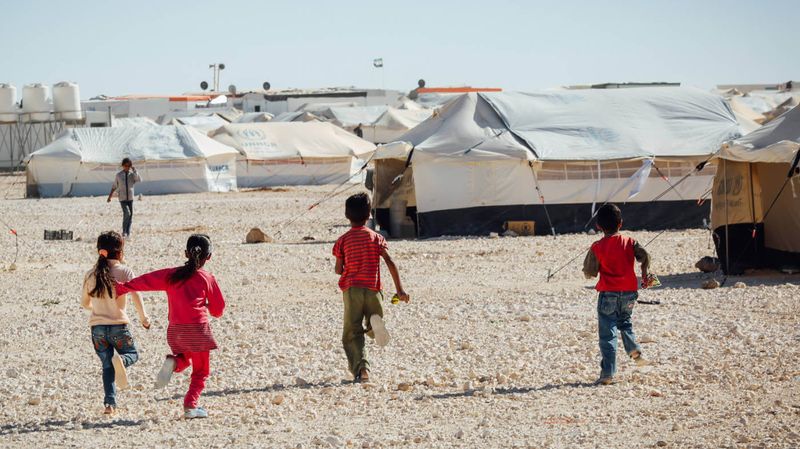
The aid blockade in numbers
Of all the report’s findings, the fastest-moving is the one about help that never arrives. Verified incidents of denial of humanitarian access to children reached 8,322 in 2025. A decade earlier, in 2015, the verified count was 509. The increase is more than sixteen-fold in ten years — a change too large, and too sustained across successive years of the series, to be read as a reporting artefact alone, though improved monitoring explains part of any long rise in verified counts. Denial takes many forms in the UN’s recording: convoys blocked or turned back, bureaucratic permits withheld, sieges and closures that seal areas entirely, attacks and threats that make delivery too dangerous to attempt. Each incident is counted once; the number of children behind each incident is not, which means 8,322 is a count of doors closed, not of children left outside them.
The geography of denial in 2025 was concentrated. The largest number of verified incidents, about 6,000, was recorded in the occupied Palestinian territory — close to three-quarters of the world total on its own. Libya recorded over 1,000 incidents, and Ukraine 473. Together those three situations account for the overwhelming majority of verified access denials worldwide, which again cuts two ways analytically: it shows how completely access can collapse inside a single besieged or heavily controlled theatre, and it warns against treating the global trend as uniform. In much of the world, aid still moves; in a few places, in 2025, it was stopped as a matter of routine.
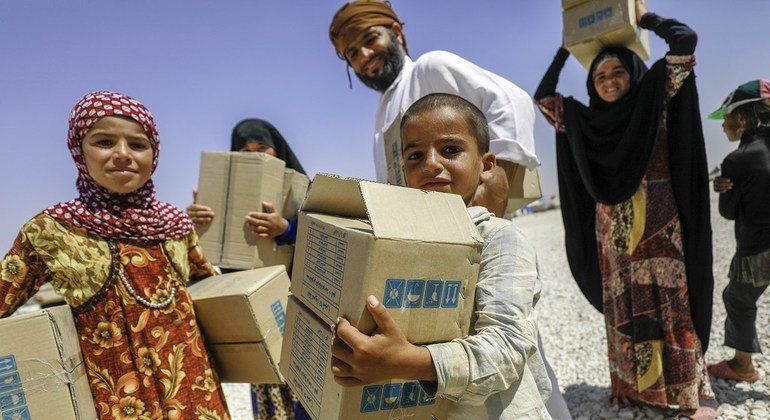
The angles
Who loses, and who is shielded from losing
The losses in this report are not symmetrically shared, and its numbers identify the asymmetry precisely. Children lose first and most permanently: safety, schooling, health and, in the verified killing-and-maiming count, life and limb. Families lose income and cohesion under displacement. States emerging from war lose the educated, healthy cohort on which any recovery depends. The parties shielded from loss are, by and large, the parties making the decisions the report counts: armed forces and groups that operate where children live, authorities that restrict aid and face no automatic consequence for doing so, and governments far from the fighting whose export licences, diplomatic cover or simple inattention sustain the conditions the data describes. The report does not name that as an accusation in its headline; it does something colder, which is to publish the counts annually, in a series that now runs to 35 years, so that the trend itself becomes the indictment.
The case the report makes
Save the Children’s argument, running through the Stop the War on Children series and sharpened in this edition’s Changing the Odds framing, is that the trend is a policy outcome and can therefore be reversed by policy: compliance with international humanitarian law, protection of schools and hospitals, an end to the use of explosive weapons in populated areas, accountability for grave violations, and humanitarian access treated as a legal obligation rather than a favour granted by belligerents. The access-denial data is the report’s strongest exhibit for that argument, because denial is the violation least attributable to the chaos of battle. A blocked convoy is a signature on an order, a checkpoint instruction, a permit unissued — and a sixteen-fold rise in a decade describes a norm being abandoned in practice, whatever governments continue to affirm on paper.
The critics and the caveats
A rigorous reading has to hold the report’s methods up to the light, and the methods invite three honest caveats. First, the 50-kilometre definition is a proxy with hard edges: a child 49 kilometres from an incident is counted, a child 51 kilometres away is not, and in a large country a single recorded incident can place very large child populations inside the radius. The measure is defensible — it is consistent across 35 years, which is what licenses the trend claims — but it measures exposure to conflict’s disruption zone, not personal experience of violence, and headlines that blur that distinction overstate what the number says. Second, the verified-violations series is not a pure measure of incidence: UN verification capacity, access for monitors and reporting networks have all expanded since 2005, so part of the long rise in verified violations reflects better counting of a toll that was always partly hidden. Third, the 589 million is a modelled estimate resting on population grids and event data, each with their own margins; it should be read as the centre of a range, not as a census. None of these caveats reverses the findings — the share of children exposed has risen under a fixed definition, and access denial has risen far faster than monitoring alone plausibly explains — but they mark the difference between what the report proves and what it estimates, and this article has kept the two apart throughout.
Governments criticised in situations the report covers have, in past cycles, disputed attribution of specific violations, challenged UN verification in their territories, or argued that access restrictions are security measures rather than denials. Those disputes are part of the record around the underlying UN data; they do not change the verified counts, which stand until the UN’s own processes revise them, but they do mean that the political fight over the numbers will continue alongside the numbers themselves.
The data in context
Set the four headline series side by side and 2025 reads as a year in which every gauge moved the wrong way at once. Exposure: 589 million children, 23.4% of the world’s children, up from 378 million and roughly one in five a decade ago, and from about 10% in the mid-1990s — the share has more than doubled within the span of a single generation. Violations: 38,967 verified in one year, within a monitored record that now spans 2005 to 2025. Killing and maiming: 14,224 children verified in 2025, the gravest single category and, by the UN system’s own construction, an undercount. Access denial: 8,322 verified incidents, against 509 in 2015 — the steepest curve in the report, and the one most directly traceable to decisions rather than to the general fact of war. Regional concentration runs through all of it: 44% of exposed children in Africa, two-in-five exposure rates in Africa and the Middle East, a 15-million single-year jump in the Middle East, and three situations — the occupied Palestinian territory, Libya and Ukraine — accounting for most of the world’s verified access denials. A reader who remembers only one sentence of context should remember this: the records set in 2025 were not set by a single catastrophe but by breadth — more wars, closer to more children, with more help deliberately kept out.
What happens next: three scenarios
Analysis, not prediction: the report’s own trend lines define the range of plausible futures, and three scenarios organise them. In the first, exposure plateaus. The major wars driving the count freeze into stalemate or partial ceasefires; the 50-kilometre footprint stops expanding even though it does not shrink, and the global share holds near a quarter of all children. That is the optimistic reading of a bad number — and even it leaves 589 million children inside the disruption zone, with access denial, on its current trajectory, still rising. In the second scenario, the footprint widens: one or two large conflicts intensify or ignite in densely populated regions, the Middle East’s 2024-to-2025 pattern repeats elsewhere, and the count pushes toward and past 600 million while the verified violations toll follows exposure upward. In the third, the odds actually change: durable ceasefires in the largest theatres, enforced humanitarian access and protection of schools and hospitals shrink the footprint measurably within a few years — the outcome the report’s title demands and its data, so far, does not describe. Which scenario materialises will be visible first not in the exposure estimate but in the leading indicators this edition highlights: whether access-denial incidents fall from their record, and whether the killing-and-maiming count follows. Those two series are published annually; next year’s edition of this report is, in effect, already scheduled as the verdict on this one.
For now, the established record of Thursday’s release is short enough to state in full. In 2025, an estimated 589 million children — 23.4% of the world’s children, nearly one in four, the most since records began in 1990 — lived within 50 kilometres of conflict. The UN verified 38,967 grave violations against children that year, including 14,224 children killed or maimed, in verified cases only. And humanitarian access to children was verifiably denied 8,322 times, over sixteen times the count of a decade earlier. Everything else — the responses of the governments named in the underlying data, the funding decisions of donors, the enforcement choices of the Security Council — is still to come.
Related coverage: Myanmar Civil War Death Toll Passes 100,000 as UN Says Military Deliberately Targets Civilians · Gaza Ceasefire ‘In Name Only’: 100+ NGOs Sound Alarm · Saudi-Led Strikes Hit 60 Targets Across Yemen as UNICEF Counts 64 Children Killed in Escalation
Sources
Sources: Save the Children, Stop the War on Children: Changing the Odds (2026), official release via ReliefWeb, Amman, November 19, 2026 (reliefweb.int): the estimate that 589 million children lived in conflict zones in 2025, equal to 23.4% of the world’s children and the highest since records began in 1990; the rise from 378 million in 2015 and from about 10% in the mid-1990s; the definition of a conflict zone as within 50 km of a conflict incident in that year; Africa’s approximately 260 million children (44% of the global total) and the two-in-five exposure shares in Africa and the Middle East; the Middle East’s rise from about 52 million (2024) to 67 million (2025); the 38,967 UN-verified grave violations in 2025 and 14,224 children verified killed or maimed; and the 8,322 verified incidents of denial of humanitarian access in 2025, up from 509 in 2015, with the largest counts in the occupied Palestinian territory (about 6,000), Libya (over 1,000) and Ukraine (473). Analysis in the report by the Peace Research Institute Oslo (PRIO) using the Uppsala Conflict Data Program Georeferenced Event Dataset (UCDP GED); grave-violations figures are UN-verified cases examined across 2005–2025. Deutsche Welle reporting syndicated via The Business Standard (tbsnews.net) and Eastleigh Voice carried the release’s findings and comment from PRIO research professor Gudrun Østby and Save the Children Germany chief executive Florian Westphal. Photographs: file photographs via GlobalGiving, UNICEF / UN Photo (United Nations media database) and Free Methodist Church – Southern California, credited in the captions; none depicts a scene dated 2025.