The Saudi crude storage Singapore plan announced on Monday is, at its core, an insurance policy written in rock. Saudi Arabia and Singapore said they intend to store Saudi crude oil in the Jurong Rock Caverns — a vast underground facility 150 metres beneath Jurong Island — from the second half of 2027, making the city-state the third Asian country, after Japan and South Korea, to host a strategic foothold for the world’s largest oil exporter. The announcement, made at Singapore International Energy Week, comes after a year in which the war with Iran choked the Strait of Hormuz and forced Asian buyers to burn through their inventories.
Track it live: oil prices and forecasts
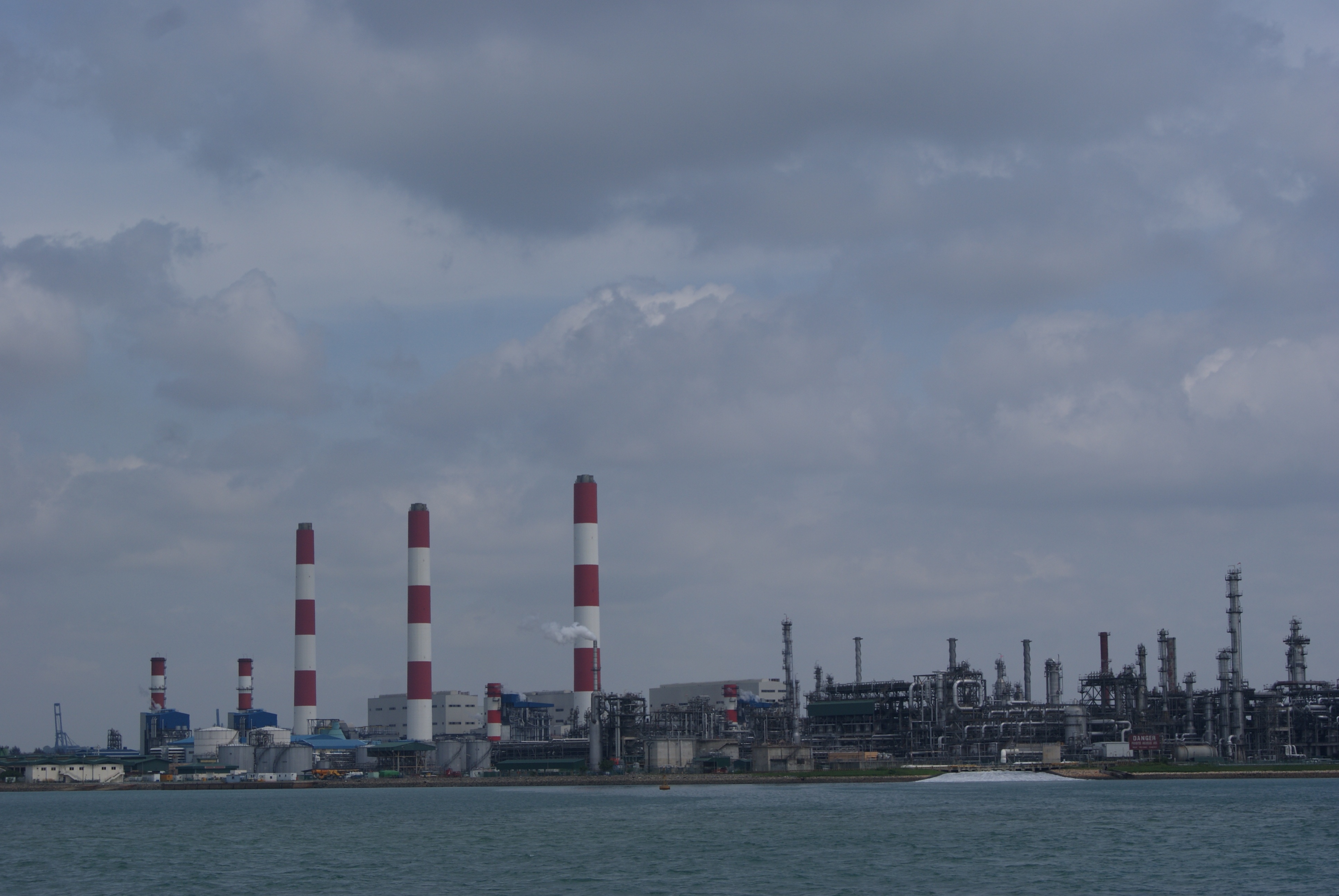
What was announced on Monday
“Saudi Arabia and Singapore are announcing our joint intent to establish an arrangement for Saudi crude oil to be stored at the Jurong Rock Caverns from the second half of 2027,” Tan See Leng, Singapore’s minister for energy, trade and industry, told the Singapore International Energy Week conference on Monday, according to Reuters. “This arrangement enhances the resilience of the Saudi crude oil supply chain in South-east Asia, as well as contributes to Singapore’s energy security and resilience in the event of supply disruptions.”
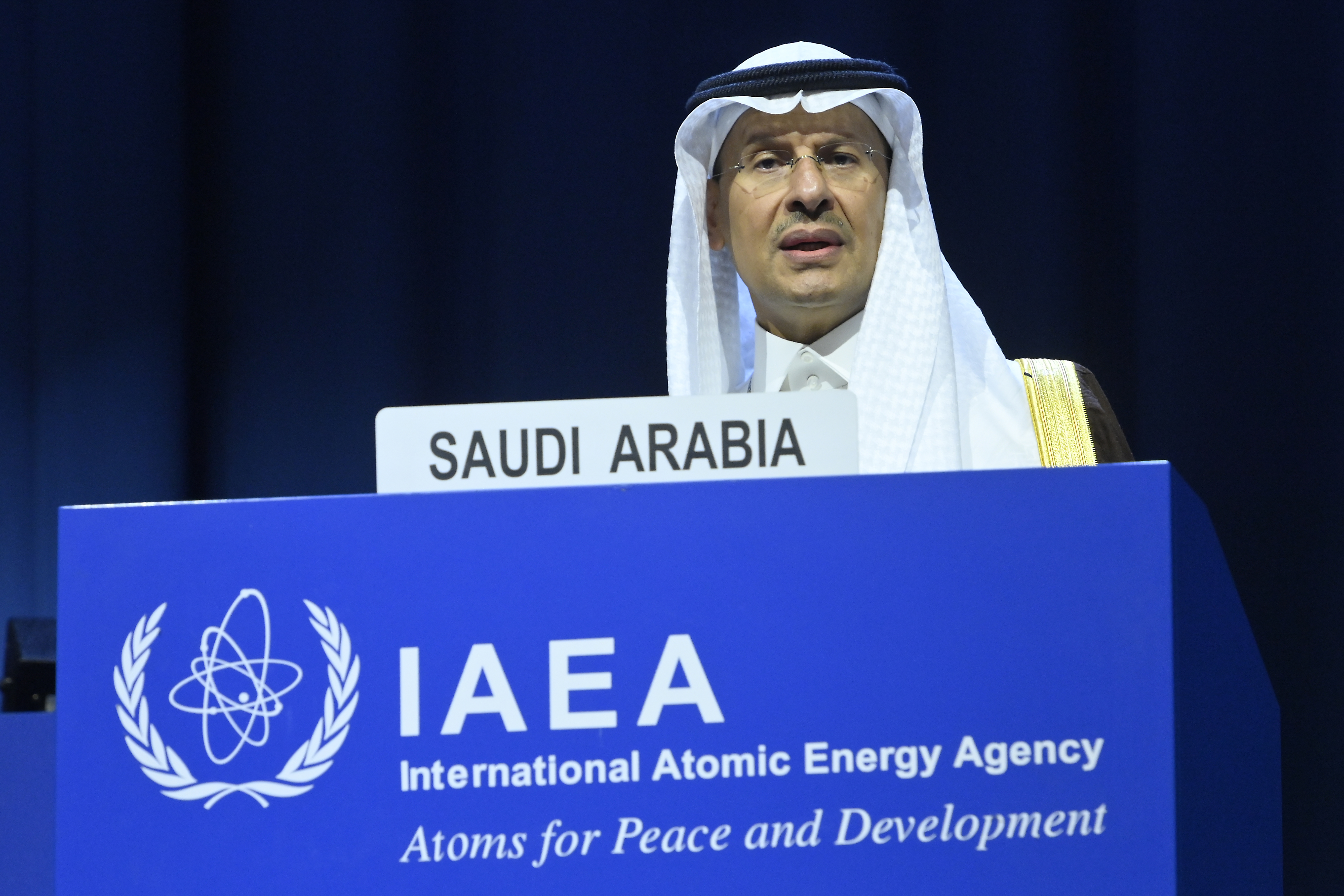
Saudi Arabia’s energy minister, Prince Abdulaziz bin Salman Al-Saud, speaking in a video recording played at the conference, made the same point from Riyadh’s side of the table: “Bringing supply closer to key Asian markets would strengthen the flexibility of our supply network and support Singapore’s security of supply and preparedness.”
The first formal step is a memorandum of understanding between Saudi Aramco and two Singapore bodies — the Energy Market Authority and JTC Corp, the state agency that built and operates the caverns. Tan said the MOU would be signed on Monday and that the parties aim to conclude negotiations within a few months. Two things were conspicuously absent from the announcement: the volume of Saudi crude that would be stored, and any financial value for the arrangement. Both remain subjects for the negotiating table, and any report that assigns the caverns’ full capacity to Saudi Arabia is getting ahead of the facts.
Inside the Jurong Rock Caverns
The Jurong Rock Caverns are Southeast Asia’s first underground commercial oil storage facility: a complex of caverns blasted out of the rock beneath the Banyan Basin off Jurong Island, linked by kilometres of tunnels and in service in phases since 2014. At their deepest the caverns sit about 150 metres (492 feet) below ground. Their total capacity is 1.47 million cubic metres of liquid hydrocarbons — crude oil, naphtha, condensate and gas oil — equivalent to roughly 9 million barrels.
That design was born of Singapore’s oldest constraint: land. Storing oil underground freed up scarce surface acreage on Jurong Island, the artificial island that hosts one of the world’s top three refining centres, where plants process more than 1.5 million barrels a day despite Singapore having no oil of its own. JTC, the caverns’ operator, describes the facility as commercial storage rather than a government strategic reserve — a distinction that matters for how Monday’s arrangement should be read. Aramco would be leasing space in a working commercial hub, not filling a national bunker, even if the strategic logic is obvious to both governments.
Why this matters
To understand why two energy ministers spent the opening day of Singapore’s flagship energy conference on a storage arrangement that will not hold a barrel until late 2027, start with the map. Before the US–Israeli war with Iran, Asia imported about two-thirds of its oil from the Middle East, and roughly 20 million barrels a day passed through the Strait of Hormuz in 2025 — around four-fifths of it bound for Asian ports. When that chokepoint seized up, the region discovered how thin its cushions were. Governments drew down inventories, stockpile levels became a global concern, and even Saudi infrastructure itself came under Houthi attack — a risk Tan pointedly cited in his Monday speech, alongside the Hormuz closure, in warning about “continued disruptions to global energy flows.”
“Energy is an existential priority,” Tan said, in remarks reported by Dow Jones. “Our economic growth and quality of life depend on continued access to reliable and affordable energy.” For Singapore — the world’s largest bunkering port and a refining giant with zero domestic production — that is not rhetoric. Every barrel it refines, trades or sells to a ship arrived by sea, most of it from the Gulf. A Saudi-owned buffer sitting under Jurong Island converts a diplomatic relationship into physical barrels that do not have to run the Hormuz gauntlet in a crisis.
For Riyadh, the logic runs the other way. Storage near the customer is a promise that survives a blockade: if tankers cannot leave the Gulf, Aramco crude already in Singapore can still reach Southeast Asian refiners, defending market share against Russian, American and other competing supplies that have been courting Asian buyers all year. It is the same reasoning that has driven producers to pre-position crude abroad for decades — and the same reasoning behind the bypass pipelines and alternative export routes the Gulf states have rushed to expand, as Signal Post News reported in the race to route oil around Hormuz.
Singapore becomes the third node in Aramco’s Asian storage map
Singapore will not be an experiment. Aramco already stores crude in Japan and South Korea under arrangements in which the host government has priority to buy the oil in the tanks in the event of an unexpected shortage — the clause that turns a commercial lease into a security guarantee. In Japan, storage capacity in Okinawa was expanded to 8.2 million barrels in September 2017 under an agreement with Japan Oil, Gas and Metals National Corp (JOGMEC). In South Korea, Aramco agreed in 2023 to store 5.3 million barrels in Korea National Oil Corp’s reserve facilities at Ulsan for five years.
Measured against those precedents, the Singapore announcement is best understood as the southward extension of an established system: Okinawa covers Northeast Asia’s north, Ulsan its centre, and Jurong would anchor the network at the mouth of the Malacca Strait, within short sailing distance of refiners in Malaysia, Indonesia, Thailand and Vietnam. Whether Singapore negotiates the same priority-purchase clause as Tokyo and Seoul is one of the key unanswered questions for the coming months of talks — the ministers’ language on Monday promised Singapore support “in the event of supply disruptions” without publishing the mechanism.
A regional scramble for barrels
Singapore is not moving alone. Japan is in talks with other Asian countries to build up crude reserves across the region under the Partnership in Wide Energy and Resources Resilience Asia — POWERR Asia — an initiative proposed by Prime Minister Sanae Takaichi and backed by $10 billion in financial support. The pattern is unmistakable: the Hormuz shock sorted Asia into countries with deep stockpiles — China, Japan and South Korea — and everyone else, and the have-nots are now buying insurance in every available form. Singapore signed a second energy-security memorandum the same day, between its GasCo and Thailand’s PTT, to explore cooperation on liquefied natural gas supply — a reminder that the scramble covers gas as well as crude, in a region still digesting shocks such as China’s halt to fuel exports.
There is also a harder edge to the timing. Saudi Arabia is storing oil abroad while its own export infrastructure is a target: tankers have been attacked at Jubail and Houthi strikes have hit Saudi airports and energy sites through the autumn, as this site reported in the Jubail tanker attacks. Every barrel pre-positioned in Singapore is a barrel whose delivery does not depend on a calm week in the Gulf.
The limits of an underground insurance policy
Sceptics have fair questions, and the numbers supply them. First, timing: nothing in this arrangement exists before the second half of 2027. If Hormuz closes again next month, Jurong’s caverns hold no Saudi crude. Second, scale: the caverns’ entire 1.47 million cubic metres — about 9 million barrels, shared among all users — equals roughly six days of Singapore’s refining throughput. That is a meaningful bridge across a short disruption; it is not a fortress against a long one. Third, status: Monday produced a joint intent and an MOU, not a final contract, a volume or a price. Storage deals have died in negotiation before, and the fine print — above all, whether Singapore wins the priority-purchase right that Japan and South Korea enjoy — will decide whether this is a strategic reserve in all but name or simply a convenient Aramco depot on Singaporean rock.
None of that diminishes what the announcement signals. Governments do not blast strategic conclusions out of conference speeches unless the conclusion has already been reached at the top: after 2026, Asia’s energy powers no longer trust just-in-time oil. The barrels are being moved closer, earlier, and underground — literally.
What happens next
The MOU signed on Monday starts a negotiation the two sides say they want finished within a few months. Watch for three things: the contracted volume, which will reveal how seriously Riyadh is weighting Southeast Asia against its Japan and Korea commitments; the emergency-access terms, which will show whether Singapore secured the priority-purchase model or something weaker; and the first preparatory work at Jurong, ahead of the first Saudi cargoes in the second half of 2027. In the meantime, the market that made all of this necessary keeps moving — readers can follow it on our live oil price tracker.
Sources
Reuters, “Saudi Arabia to store oil in Singapore to bolster Asia supply security,” October 26, 2026 — tbsnews.net (Reuters wire). Dow Jones Newswires, “Singapore Working With Saudi Arabia on Crude Storage to Boost Energy Security,” October 26, 2026 — morningstar.com. Egypt Oil & Gas (Reuters), “Saudi Arabia to Expand Asian Crude Oil Storage With Singapore Deal,” October 26, 2026 — egyptoil-gas.com. Facility background: JTC and Singapore government descriptions of the Jurong Rock Caverns and Jurong Island.