War / Energy — Saudi Aramco evacuates its headquarters in Dhahran for the first time since the Iran war began, a day after Houthi attacks killed four people at an airport and an oil field — and Saudi stocks fell 2.5 percent on the news.
Saudi Aramco evacuates its headquarters in Dhahran — that is the sentence Saudi Arabia's week has been building toward. The state oil company, the largest crude exporter in the world, ordered staff to leave its headquarters in the eastern city of Dhahran on Thursday, October 22, and work remotely, six people with knowledge of the matter told Reuters. Bloomberg, reporting independently from people familiar with the situation, said the evacuation followed an alarm at the headquarters on Thursday and that staff had been asked to work from home. Neither wire could say what triggered the order, how long remote work would last, or whether a specific new threat had been received — and Aramco itself did not immediately respond to requests for comment from either newsroom. Reuters was explicit about the milestone: this is the first evacuation of the headquarters since the start of the Iran war.
Track it live: Live war tracker · Live oil price tracker
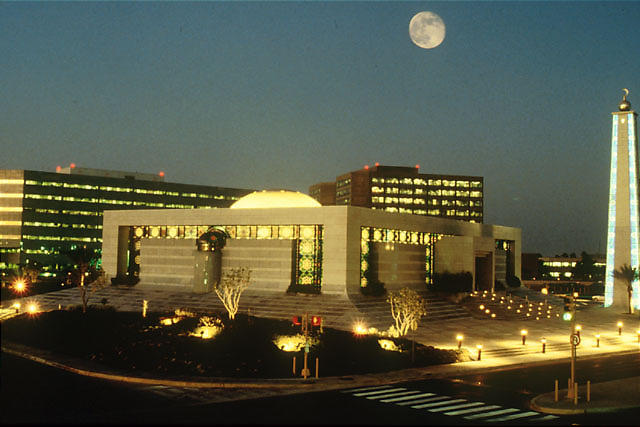
The building being emptied is not an ordinary office block. The Dhahran headquarters houses the operations centre from which Aramco oversees onshore and offshore rigs, refineries, export terminals and thousands of kilometres of pipelines — the nerve centre of a company that produces roughly one barrel in every ten the world consumes on a normal day. It is also a building that has already been hit in this campaign: earlier this month a Houthi strike damaged a tower in the headquarters compound, damaging three floors and causing a fire that spread across several of them, Reuters and Bloomberg both reported at the time. A company can absorb a fire in one tower and keep working around it. Ordering the whole headquarters out is a different decision — it says the threat is no longer being treated as an incident to be cleaned up, but as a condition to be planned around.
The 24 hours that forced the decision
Thursday's evacuation did not come out of a quiet week. On Wednesday evening, an attack on King Fahd International Airport in Dammam — the Eastern Province's main civilian airport, about 15 kilometres north of Dhahran — killed two people, a Saudi citizen and an Indian national, and wounded eight others, Reuters reported, citing Saudi Arabia's General Authority of Civil Aviation. The authority said on Thursday that operations at the airport had resumed and air traffic had returned to normal. In a separate incident the same day, two people died after Saudi air defences intercepted a drone targeting a facility at Aramco's Shaybah oil field, hundreds of kilometres southeast of Dhahran in the Empty Quarter desert, according to the Saudi energy ministry reporting carried by both wires. Four deaths in a day, split between a civilian airport and a flagship oil field, is the immediate context in which headquarters staff were sent home.
The pressure did not lift on Thursday itself. The Saudi-led coalition said it had intercepted drones over Riyadh and over Medina, Islam's holy city, Reuters reported. Houthi military spokesperson Yahya Saree said on Thursday that the group was rescuing a boat carrying 14 Indians that had been attacked off Jabal Zuqar island near the Bab el-Mandeb Strait — one of the territories the group seized in an advance in September — and blamed the attack on Saudi Arabia; Saudi authorities did not respond to a Reuters request for comment on that claim. Each of those claims and counter-claims is reported here as its side stated it; none of Thursday's individual attributions has been independently adjudicated, and readers should hold them at exactly that strength.
Why this matters
An evacuation is a signal that travels further than a strike. A missile or drone that hits a building is a fact about one night; a decision to empty the headquarters of the world's largest oil company is a fact about what its leadership expects the coming nights to look like. That is why markets moved on the headquarters news rather than only on the casualties: Saudi Arabia's benchmark TASI index dropped 2.5 percent on Thursday following the Aramco news, according to LSEG data cited by Reuters, after Gulf markets had already fallen in early trade on the airport and oil-field attacks. Oil had risen earlier in the day as the United States ordered some diplomats and family members to leave its missions in Saudi Arabia — Brent crude gained $1.29, or 1.2 percent, to $110.11 a barrel in early Thursday trading, Reuters reported — and Washington plans to withdraw family members from several other missions in the region as well, US officials told the wire.
There is a second signal inside the first. Saudi Arabia's economic pitch for a decade has been that the Eastern Province oil machine and the Riyadh business hub sit behind defences strong enough to make the kingdom a safe place to put people, capital and conferences. That pitch is already bending: the kingdom has postponed its flagship Future Investment Initiative summit, which will now be held in 2027, Bloomberg reported, and Britain has added defensive support to the kingdom as the strikes have escalated. The United States ordering non-emergency personnel and families out, and Aramco ordering its own headquarters staff home, are the same judgement made by two different institutions on the same day — that the risk in eastern and central Saudi Arabia is now high enough to act on, publicly, rather than merely to monitor.
How we got here
The Houthis, Yemen's Iran-aligned movement, have been in conflict with Riyadh since well before the US-Iran war began in February — Saudi Arabia has led a coalition backing Yemen's internationally recognised government since 2015. For several years a 2022 UN-brokered truce largely halted cross-border attacks, whatever the fighting inside Yemen. The renewed fighting of recent weeks has ended that truce in practice, Reuters reported, and opened another front in the wider US-Israeli war on Iran. The immediate accelerant, Bloomberg reported, was an October offensive by Saudi-backed Yemeni forces to recapture Houthi-held areas, after which the Houthis stepped up their attacks — pushing toward the Bab el-Mandeb Strait, the Red Sea shipping chokepoint, and striking repeatedly at Saudi airports and Aramco operations, including the headquarters tower hit earlier this month and the Riyadh airport attacks that preceded it.
Saudi Arabia has answered with a wave of strikes on missile-launcher sites, vows to protect the kingdom, and a long list of claimed interceptions of ballistic missiles and drones. Both sides' claims deserve the same discipline: interceptions are announced by the side doing the intercepting, strike responsibility is claimed by the side doing the striking, and the independently confirmed facts are the narrower set — the dead at Dammam airport and Shaybah, the fire-damaged headquarters tower earlier this month, the resumed airport operations, and now an empty headquarters. On those confirmed facts alone, the trajectory is unmistakable: the campaign has moved from shipping, to airports, to oil fields, to the desk where the whole system is run.
What the numbers actually say
Put Thursday's figures next to each other and a pattern emerges that no single headline captured. Four people killed on Wednesday across two sites. A 2.5 percent fall in the Saudi benchmark index on Thursday. Brent crude above $110 a barrel — roughly five-month highs, with prices suggesting, as Reuters' energy columnists put it this week, that investors increasingly doubt Gulf export flows can be sustained if the conflict intensifies. And an operations centre overseeing production, refining and export decisions for millions of barrels a day now being run, at least in part, by people working from home under an evacuation order of unknown duration. None of those numbers says Saudi oil output has fallen — no wire reported an output or export interruption on Thursday, and this article does not claim one. What they say instead is that the cost of keeping output normal is rising: in air-defence expenditure, in market risk premium, in diplomatic withdrawals, and in the quiet operational friction of running a war-exposed headquarters remotely.
Who gains, who loses
The Houthis gain leverage disproportionate to their means: a movement fighting inside Yemen has, with drones and missiles, forced the world's largest oil exporter to empty its headquarters, pushed its stock market down, helped postpone its signature investment summit and triggered a partial American diplomatic withdrawal — pressure that strengthens their hand in any eventual negotiation over the Bab el-Mandeb advance and the Saudi-backed offensive. Saudi Arabia loses, in the short term, on the exact asset it can least afford to discount: predictability. The kingdom's counter-argument is real and should be stated fairly — its defences intercepted drones over two cities on Thursday alone, airport operations resumed within a day, and no production loss has been reported; resilience under attack is also a signal, and Riyadh is sending it as loudly as it can. Oil consumers lose either way, paying the risk premium at $110 Brent whether or not a single barrel is actually stopped. And Washington is caught in the narrowest position of all: guarantor of Saudi security, author of a partial withdrawal, and — per earlier reporting in this cycle — so far unwilling to join the war against the Houthis directly.

What happens next
Three things will tell readers whether Thursday was a precaution or a turning point. First, duration: if headquarters staff return within days, the evacuation reads as an alarm response; if remote work stretches into weeks, Aramco will have effectively conceded that its headquarters is a standing target for the rest of this campaign. Second, the American footprint: a withdrawal of family members from other regional missions, as US officials told Reuters is planned, would widen a Saudi story into a Gulf-wide security repricing. Third, the Bab el-Mandeb front: the fighting around the strait — including Thursday's disputed boat incident off Jabal Zuqar — is the ground war underneath the missile exchanges, and movement there will decide whether Riyadh escalates its strikes, seeks a renewed truce channel, or asks more of its allies than defensive support. What is already decided is the symbolism, and symbolism is not nothing in an oil market: on Thursday, the most valuable energy company on earth sent its headquarters home. The war did not have to stop a barrel to do that. It only had to make the building feel unsafe — and four funerals in the province the day before did the persuading.
Related reading: our report on the Shaybah drone debris and King Fahd airport attack, our earlier report on the missile hit on Aramco's Dhahran headquarters, and our coverage of the US ordered departure from Gulf missions.
Sources
Reuters (October 22, 2026 — six people with knowledge of the matter on the Dhahran headquarters evacuation and remote-work order, first evacuation since the start of the Iran war, TASI down 2.5 percent per LSEG, coalition interceptions over Riyadh and Medina, King Fahd airport toll and resumed operations per the General Authority of Civil Aviation, Shaybah deaths per the energy ministry, Saree boat-rescue claim); Bloomberg via Rigzone (Anthony Di Paola and Annmarie Hordern, October 22, 2026 — evacuation after an alarm, staff asked to work from home, US State Department ordered departure, headquarters tower attack earlier in October, Future Investment Initiative postponed to 2027); Reuters (October 22, 2026 — oil prices, Brent $110.11, US plans to withdraw family members from other regional missions; Gulf markets fall on fresh Houthi strikes). Where the wires differ in emphasis — Reuters on the evacuation order, Bloomberg on the alarm that preceded it — both accounts are reported above rather than blended.