Business · Markets · Pharmaceuticals
The Sanofi Insmed $41 billion acquisition is a patent-cliff trade written at full price: Sanofi is paying about 22 times Insmed’s guided 2026 revenue for two fast-growing rare-lung drugs and one phase 3 programme, because the drug that produces nearly 40% of its own sales starts losing patent protection in the early 2030s — and its new chief executive has told investors the growth to replace it will have to be bought.
Track it live: Markets tracker — Live Global Trackers
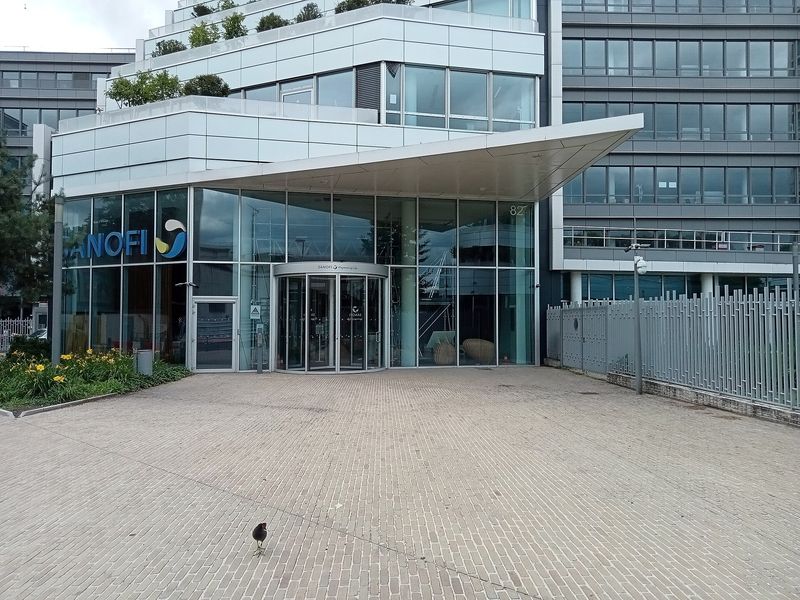
PARIS, November 24, 2026 — The Sanofi Insmed $41 billion acquisition was announced on Tuesday, November 24: Sanofi, the Paris-based drugmaker, will acquire Insmed Incorporated (Nasdaq: INSM), a biopharmaceutical company based in Bridgewater, New Jersey, for $175.00 per share in cash, valuing Insmed’s equity at about $41.0 billion (€37.6 billion) and making it the biggest pharmaceutical acquisition in three years, according to Reuters, the Wall Street Journal, Bloomberg and Sanofi’s own release via PRNewswire. The price is a premium of about 46% to Insmed’s unaffected closing price on November 18, 2026 — the day before media reports of a possible deal — and, as the Journal notes, about 17% above Monday’s closing price, which had already run up on the leak. Both boards have approved the transaction. It is expected to close in the first half of 2027, subject to approval by Insmed’s shareholders and to regulatory approvals in the United States and certain other jurisdictions, and Sanofi expects it to be accretive to its business earnings per share by the end of 2028.
The deal in numbers
Sanofi buys Insmed $175 per share — and pays now for growth that is mostly still ahead
Start with the multiple, because the multiple is the story. Insmed guides total company revenue of $1.8 billion to $1.9 billion for 2026. Against that, $41.0 billion is roughly 22 times sales — a price normally reserved for companies whose growth is a certainty rather than a forecast. Sanofi is not buying Insmed’s present; it is buying a trajectory. What it receives on day one is a rare-respiratory franchise built on two approved products and one late-stage programme. Brinsupri (brensocatib) is a first-in-disease DPP1 inhibitor approved for non-cystic fibrosis bronchiectasis, a chronic lung disease with, until Brinsupri, no approved targeted treatment. Arikayce (amikacin liposome inhalation suspension) treats refractory Mycobacterium avium complex (MAC) lung disease. And treprostinil palmitil inhalation powder — TPIP — is a phase 3 programme with potential across multiple rare respiratory diseases, including pulmonary hypertension and fibrotic lung disease. The cash structure matters too: this is not a stock swap whose value floats with the buyer’s share price. Insmed’s holders are promised $175.00 in cash, and Sanofi’s holders are promised the bill.
Brinsupri brensocatib revenue: the engine that is already running
The commercial numbers explain why Sanofi was willing to move at this size. Brinsupri generated $400.1 million in sales in the third quarter alone, and Insmed guides its 2026 revenue to $1.35 billion to $1.4 billion — blockbuster scale in its first full year rhythm, for a disease area that had never sustained a product like it. First-in-disease status is doing heavy lifting in that figure: with no approved rival mechanism in non-cystic fibrosis bronchiectasis, Brinsupri faces a market it largely defines, priced as rare-disease medicines are priced, with a patient population that diagnosis itself keeps expanding now that a treatment exists. That combination — a growing diagnosed population, no direct competitor, and a chronic therapy patients stay on — is the closest thing pharmaceuticals has to an annuity, and it is precisely the kind of cash flow Sanofi needs arriving just as its own annuity comes under threat.
Arikayce MAC lung disease sales, and the TPIP treprostinil palmitil phase 3 wager
Arikayce is the smaller, steadier leg: $124.4 million in third-quarter sales, with 2026 revenue guided to $460 million to $470 million from refractory MAC lung disease, a hard-to-treat infection where Arikayce’s inhaled liposomal delivery is its own moat. TPIP is the swing factor. Insmed has projected peak annual sales above $6 billion for the inhaled treprostinil palmitil programme if it succeeds across pulmonary hypertension and fibrotic lung disease — a figure that, on its own, would justify a large share of the $41 billion. But TPIP is a phase 3 programme, not a product: its peak-sales projection is a model of trials not yet read out, approvals not yet granted and launches not yet run. Read the price as a portfolio and it decomposes cleanly — a full price for Brinsupri, a fair price for Arikayce, and a very large option payment on TPIP. Whether Sanofi overpaid depends almost entirely on what that option returns.
Why this matters
The Dupixent patent cliff Sanofi cannot outrun
Every large pharmaceutical acquisition of the past two decades has the same author: a patent expiry. Sanofi’s is unusually stark. Dupixent, its immunology blockbuster, generated €5.7 billion in revenue in the third quarter — nearly 40% of the entire group’s sales, riding on a single product. That concentration is a triumph and a vulnerability in the same number. Dupixent’s patents begin expiring in the early 2030s, and pharmaceutical history is unforgiving about what follows: when Pfizer’s Lipitor lost exclusivity in 2011, the world’s best-selling drug shed the great majority of its revenue within a few years; AbbVie spent a decade building around the 2023 arrival of Humira biosimilars for the same reason. A company drawing two-fifths of its sales from one molecule does not get to choose whether to replace that revenue — only whether to build the replacement, at research speed, or buy it, at market price. Sanofi has now answered, at $41 billion. The deal’s own timetable confesses the urgency: closing in the first half of 2027 and earnings accretion promised by the end of 2028 puts Insmed’s growth curve on Sanofi’s books just ahead of the cliff’s edge, not comfortably before it.
Why rare respiratory disease commands the biggest pharma deal 2026 premium
The premium — about 46% over the unaffected price — looks extreme until the asset class is priced properly. Rare and orphan respiratory diseases combine small, identifiable patient populations with high unmet need, specialist prescribers who can be reached by a compact sales force, and pricing power that payers have historically tolerated because the alternative is untreated progressive disease. Brinsupri’s first-in-disease position removes the usual discount for competitive entry; TPIP’s $6 billion-plus peak-sales projection does the rest. There is also scarcity value: there are very few independent companies left with an approved, fast-growing rare-disease anchor product, a second revenue line and a phase 3 asset of TPIP’s claimed scale. When the set of possible targets is that small and the buyer’s need is that dated, the seller names the price. Insmed did — and the leak five days earlier had already moved its stock, which is why the same $175.00 reads as 46% against November 18 and only about 17% against Monday’s close.
Five days from leak to signature
The deal was public before it was announced. On November 19, Bloomberg reported that Sanofi was weighing an acquisition of Insmed valued at $35 billion to $43 billion; Insmed’s shares surged about 18% to $141.87 on the report while Sanofi’s slipped about 2% — the market’s instinctive split verdict, paying the target and taxing the buyer, five days before either company said a word. Tuesday’s announcement landed inside the leaked range, near its top. That sequence matters for what happens next: arbitrageurs who bought the leak are already in the stock, the unaffected price is a matter of record, and any shareholder suit or rival interest will be argued against a tape that shows exactly what the market thought Insmed was worth before Sanofi’s name was attached to it. It also frames the governance question. Belén Garijo, who replaced Paul Hudson as chief executive earlier this year, said last month that Sanofi needs deals to find new growth sources. In the release announcing this one, she called it “a major strategic step to significantly accelerate our mid- and long-term growth trajectory and further strengthen our mid- and early-stage pipeline.” A chief executive who has publicly committed to deal-making, five days after a leak, at the top of the leaked range, does not have the option of walking away cheaply — and sellers know it.
Who wins, who carries the risk
Insmed stock premium 46 percent: the sellers’ payday
The certain winners are Insmed’s shareholders, who are offered $175.00 in cash — about 46% above where the stock closed before the deal was reported, for a company guiding to under $2 billion of revenue this year. Cash consideration removes the risk that usually discounts a takeover price: no buyer stock to fall, no combined-company execution to underwrite. Bridgewater keeps a headquarters and a franchise inside a global group, and Insmed’s programmes gain Sanofi’s manufacturing, regulatory and commercial reach in markets a company of Insmed’s size reaches slowly on its own. If TPIP were to fail, Insmed’s holders will have sold that risk at its maximum plausible value. That is not a criticism of the deal; it is a description of who holds which side of it.
The Sanofi CEO Belen Garijo acquisition test: a step change, bought
The risk sits with Sanofi’s shareholders, and the analysts’ framing of it is blunt. Bloomberg Intelligence’s John Murphy and Aude Gerspacher have made the point that defines Garijo’s tenure: she needs a step change from a research and development organisation that has historically underperformed — an in-house engine that has not produced growth at the pace the Dupixent cliff demands. Buying Insmed is the fastest available answer, and the most expensive kind: peak multiples, paid in cash, for growth concentrated in one launched product and one unproven programme. Integration risk runs alongside the science risk — absorbing a focused rare-disease company into a group of Sanofi’s scale without dulling the commercial edge that made Brinsupri grow is its own discipline — and regulatory risk, while lower than in a merger of direct competitors, is not zero: approvals are required in the United States and certain other jurisdictions, and a transaction of this size invites a careful look whatever the overlap. The counter-case is equally concrete. Brinsupri’s $1.35 billion to $1.4 billion guided 2026 revenue is real, audited-trajectory money, not projection; Arikayce adds nearly half a billion more; and if TPIP delivers even a fraction of its projected peak, the 22-times-sales headline multiple compresses quickly into something unremarkable. Garijo is betting that bought growth, however dear, beats the alternative her predecessor’s pipeline left her.
Related coverage: CrowdStrike Buys Zscaler in Record $43.9 Billion Cybersecurity Deal · Nvidia Reinstates Jensen Huang as CEO — and the Market Erupts · Nasdaq Correction November 2026: Wall Street’s Worst Day in 18 Months Erases the Post-Election Rally
What happens next
The path from announcement to ownership has four gates, each with its own clock. First, Insmed’s shareholders must approve the transaction; the 46% premium and cash terms make approval the expected outcome, but the vote is also the moment any rival interest or activist objection must surface. Second, regulators in the United States and certain non-US jurisdictions must clear the deal — the two companies’ limited direct overlap argues for a straightforward review, while the price and profile argue for a thorough one. Third, closing, expected in the first half of 2027, after which the integration test begins: holding Brinsupri’s growth rate and TPIP’s trial timelines inside a much larger organisation. Fourth, the promise Sanofi has dated in public — accretion to business EPS by the end of 2028 — which converts the deal from a strategy into a deadline. The scenarios bracket cleanly. In the success case, Brinsupri compounds, Arikayce holds, TPIP reads out well in phase 3 and advances toward the indications behind its $6 billion-plus peak projection, and the acquisition is remembered as the purchase that carried Sanofi over the Dupixent cliff. In the disappointment case, TPIP stumbles — a failed endpoint, a narrowed indication, a delayed filing — and Sanofi is left having paid roughly 22 times sales for two products whose combined 2026 revenue guidance is under $2 billion, with the cliff still arriving on schedule. Between those poles sits the likeliest argument of the next two years: not whether Sanofi needed to buy growth, but whether this growth, at this price, was the right growth to buy. Tuesday’s announcement settles the first question. The second will be answered in trial readouts and quarterly Brinsupri numbers, one report at a time.
Sources
- Reuters, “Sanofi to acquire Insmed in $41 billion deal,” November 24, 2026 — the $175.00 per share cash terms, the approximately $41.0 billion equity value and the deal’s announcement-day reporting.
- Wall Street Journal, “Sanofi to Buy Insmed for $41.0 Billion,” November 24, 2026 — including the approximately 17% premium over Monday’s closing price.
- Bloomberg via Bloomberg Tax/Law, “Sanofi Seals $41 Billion Insmed Deal,” November 24, 2026 — including the characterisation of the transaction as the biggest pharmaceutical acquisition in three years.
- Sanofi official press release via PRNewswire, “Sanofi to Acquire Insmed in Strategic Step that Strengthens Long-Term Future,” November 24, 2026 — the approximately 46% premium to Insmed’s unaffected November 18, 2026 closing price, the products acquired, board approvals, closing conditions, the first-half 2027 expected close, expected business EPS accretion by the end of 2028, and Chief Executive Belén Garijo’s statement.
- FirstWord Pharma, “Sanofi to buy Insmed for $41B as efforts to navigate Dupixent patent cliff ramp up,” November 24, 2026 — the Dupixent patent-cliff framing of the transaction.
- PharmExec / Bloomberg, November 19, 2026 reporting — Dupixent’s €5.7 billion third-quarter revenue (nearly 40% of Sanofi group sales), Insmed’s third-quarter and guided 2026 product revenues and TPIP peak-sales projection, and the earlier report that Sanofi was weighing a $35–43 billion deal, on which Insmed shares rose about 18% to $141.87 while Sanofi slipped about 2%; Bloomberg Intelligence analysis by John Murphy and Aude Gerspacher on the step change required of Sanofi’s research organisation.
Analysis in this article — including the sections on why the deal matters, who wins and who carries the risk, and what happens next — is Signal Post News’ own and is distinguished from the reported facts above. The acquisition has been announced but has not closed; it remains subject to Insmed shareholder approval and regulatory approvals, and the companies operate separately until closing.