Business · Technology · Cybersecurity
The CrowdStrike Zscaler deal pairs the two halves of modern corporate defence — the software that guards every laptop and server, and the cloud that decides who may reach them — in the largest cybersecurity acquisition ever announced. It was unveiled on a morning when the market’s centre of gravity was already elsewhere: Nvidia’s renewed dominance under Jensen Huang, the story that has set the terms for every other technology trade this month.
Track it live: Markets tracker — Live Global Trackers
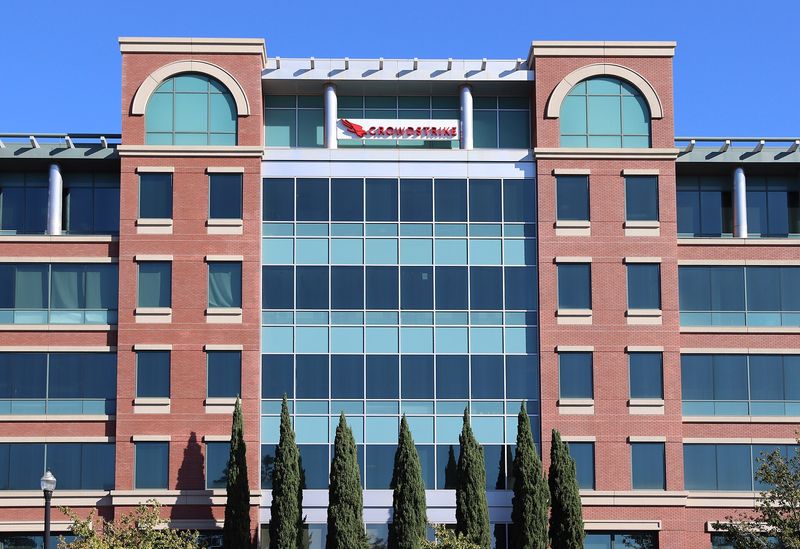
SUNNYVALE, California, November 23, 2026 — CrowdStrike announced on Monday, November 23, that it will acquire Zscaler in an all-stock deal valued at about $43.9 billion, the biggest cybersecurity acquisition on record, eclipsing Alphabet’s 2025 deal for Wiz, according to Reuters, the Wall Street Journal, Barron’s and TechCrunch. Zscaler shareholders will receive 1.135 CrowdStrike shares for each Zscaler share, valuing Zscaler at $260.41 a share — a 34% premium to its November 20 close of $194.82. CrowdStrike holders will own about 84.1% of the combined company and Zscaler holders about 15.9%. The deal has been announced, not closed: it is expected to complete in the second half of CrowdStrike’s fiscal 2028 — between August 2027 and January 2028 — subject to regulatory approvals and a Zscaler shareholder vote, and the two companies will operate separately until it closes.
The deal in numbers
The arithmetic describes a merger of near-equals in revenue, if not in market value. The combined company will carry annualised recurring revenue above $10 billion, including about $3.9 billion from Zscaler, and the companies target roughly $1 billion in annualised revenue synergies within 30 months of closing. The deal expands CrowdStrike’s addressable market by more than $185 billion — a market the companies size at over $185 billion by 2029. Zscaler brings some 8,000 enterprise customers and, in results published the same day, adjusted fiscal first-quarter profit of $1.23 a share on revenue up 20% to $949.3 million. Governance follows the money with one deliberate exception: CrowdStrike chief executive George Kurtz will lead the combined company, while Zscaler’s founder and chief executive, Jay Chaudhry, will stay to run the Zscaler business and join CrowdStrike’s board. Chaudhry and his affiliates, holding about 34% of Zscaler, have signed agreements supporting the deal — a bloc large enough to shape the shareholder vote before it is called. If the deal breaks in certain circumstances, including Zscaler accepting a rival offer, Zscaler pays a $1.4 billion breakup fee. The advisory benches were as crowded as the price tag suggests: Qatalyst, JPMorgan and Bank of America advised CrowdStrike; BDT & MSD, Citi and Goldman Sachs advised Zscaler.
Why this matters
Three forces made this deal, and each outlasts it. The first is platform consolidation: chief information security officers, buried under dozens of overlapping tools, are cutting vendor counts and concentrating spending on a handful of platforms that promise to see the whole network at once. The second is the AI-era threat: as attackers automate reconnaissance, phishing and intrusion at machine speed, defence products that each see only one layer — one device, one login, one network path — leave seams that automated attacks are built to find. The third is competitive position. William Blair analyst Jonathan Ho said the combined company would be one of the few able to compete with Palo Alto Networks and Microsoft for that consolidated spending. That is the strategic sentence in the deal: cybersecurity’s platform war has until now had two heavyweight consolidators, and as of Monday it has three.
Two halves of the same fortress
The industrial logic is unusually clean, because the two companies barely compete. CrowdStrike’s Falcon platform is endpoint protection: software agents on laptops, servers and cloud workloads that detect and stop intrusions on the device itself. Zscaler is zero-trust network access: a cloud service that sits between users and applications, verifying identity and context before any connection is allowed, so that no user or device is trusted merely for being inside a network. One guards the destination; the other guards the road. Put together, a customer can in principle buy identity-checked access and endpoint defence from a single vendor, with a single data model of who connected, from what device, in what state of compromise. That complementarity is also the deal’s regulatory shield — and its commercial promise: cross-selling into two installed bases that overlap in customer names far more than in products. Zscaler’s roughly 8,000 enterprise customers are, for CrowdStrike, a distribution channel it did not have to build.
Wall Street’s verdict
The market’s first judgment was split down the middle of the deal. Zscaler shares rose about 16% on Monday to close at $225.48, after jumping 20% in premarket trading to $235.50 — still well below the $260.41 a share the deal terms imply. That gap, roughly $35 a share, is the arbitrage spread: the market’s price for the risk that regulators delay or block the merger, that CrowdStrike’s stock — the currency Zscaler holders will be paid in — falls before closing, or that the vote fails. CrowdStrike’s own shareholders were blunter: the stock fell about 9 to 10% on the day, even as the company reported a record fiscal third quarter, with adjusted earnings of 34 cents a share and revenue up 28% to $1.58 billion. Context sharpens the scepticism: CrowdStrike had risen 96% year to date through Friday, so Monday’s buyers were pricing the deal from a position of strength the sellers had already banked; Zscaler, valued at about $32 billion before the deal and expecting its growth to decelerate next year, was the asset whose trajectory the premium had to justify. Reuters Breakingviews made the structural version of the same point: an all-stock deal of this integration scale leaves CrowdStrike itself exposed — an M&A vulnerability — if its shares slide and the currency of the acquisition depreciates before it can be spent. The overpaying question, in other words, cannot be answered at announcement, because the price is denominated in a stock that fell a tenth on the news.
The antitrust question
Whether regulators let the deal through turns on the same fact that makes it attractive: overlap, or the lack of it. Axel Rudolph of IG Group said antitrust scrutiny is “certainly possible,” and framed the key question as whether the combined company’s footprint leaves customers with fewer real alternatives. The companies’ defence writes itself from their product maps — endpoint protection and zero-trust access are adjacent markets, not the same one, and the merged firm would still face Palo Alto Networks, Microsoft and a long tail of specialists in each segment. The counterargument is about bundling rather than overlap: a platform vendor controlling both the access layer and the endpoint layer could tie, discount or integrate in ways that foreclose rivals who sell only one half, whatever the formal market definitions say. That theory — ecosystem foreclosure — is where modern technology antitrust has been moving, and it is the argument to watch when filings land in Washington and Brussels. There is also a concentration question that is not, strictly, an antitrust one. CrowdStrike’s faulty July 2024 software update caused a global IT outage that grounded flights and halted hospitals; a combined company securing both access and endpoints for a large share of the world’s enterprises concentrates operational risk in the same place it concentrates market power, and regulators reviewing resilience, if not competition, will notice.
Related coverage: Nvidia reinstates Jensen Huang as CEO, shares surge · Stock market today, November 17, 2026: Dow falls 849 as Nvidia beats
What happens next
The calendar is long, and each stage carries its own risk. Zscaler’s shareholders must approve the deal, with Chaudhry’s roughly 34% bloc already committed in support; regulators in the United States and Europe must clear a merger that creates one of the largest pure-play cybersecurity companies in the world; and the two companies must operate separately — competing, selling and reporting as independents — until a closing expected between August 2027 and January 2028. Three scenarios bracket the outcome. In the clean case, approvals arrive without structural remedies, the arbitrage gap closes, and the integration test becomes commercial: whether $1 billion of targeted revenue synergies can be extracted within 30 months without driving either customer base to Palo Alto Networks or Microsoft. In the contested case, regulators demand divestitures or behavioural conditions, the timeline slips, and CrowdStrike’s share price — the deal’s currency — decides whether the terms survive renegotiation pressure. In the break case, a rival bid for Zscaler or a regulatory block triggers the $1.4 billion breakup fee and leaves both companies to explain a year of strategic distraction. For the wider industry, the signal is already sent regardless of outcome: this was CrowdStrike’s eighth acquisition announced since August of last year and its third this month, and the platform land-grab it represents will not wait for the closing date. Cybersecurity’s map is being redrawn now, in announcements; Monday’s was simply the largest ever drawn.
Sources
- Reuters, November 23, 2026 — the $43.9 billion all-stock terms, the 1.135 exchange ratio and $260.41 implied value, ownership split, leadership arrangements, support agreements, breakup fee, market reaction and Breakingviews analysis.
- Wall Street Journal, November 23, 2026 — the stock-swap structure, the 34% premium to Zscaler’s November 20 close and the deal’s place as the largest cybersecurity acquisition on record.
- Barron’s, November 23, 2026 — CrowdStrike’s share fall despite record fiscal third-quarter results, Zscaler’s same-day earnings and analyst reaction including William Blair’s Jonathan Ho.
- TechCrunch, November 23, 2026 — the platform logic of combining Falcon endpoint protection with Zscaler’s zero-trust network access, and the combined company’s recurring revenue and addressable market figures.
Analysis in this article — including the sections on why the deal matters, Wall Street’s verdict, the antitrust question and what happens next — is Signal Post News’ own and is distinguished from the reported facts above. The acquisition has been announced but has not closed; it remains subject to regulatory approvals and a Zscaler shareholder vote, and the companies operate separately until closing.