The Empty Shelf: Sally Rooney’s Books Disappear From British Bookshops Over Palestine Action
LONDON, October 15, 2026 — The immediate cause of the disappearance is money, not content. Nothing in Rooney’s four novels has been censored, and no court has ruled on her writing. The problem, as Faber laid it out on Wednesday, sits in the royalty chain: Rooney, who lives in Ireland, has publicly pledged to use proceeds from her work to support Palestine Action, and under Britain’s terrorism legislation the publisher concluded it could no longer lawfully pay her UK earnings to her — money she has said will flow on to a group that is banned in Britain, though not in Ireland.
What Faber and Rooney said
Faber said it had agreed with Rooney that “we can no longer supply her works in the UK in any format,” while continuing to sell her books elsewhere in the world. “Current legislation in the UK has led to circumstances where Faber cannot pass on UK earnings to Sally Rooney for her work,” the publisher said in a statement. “To sell a writer’s work and not be able to pass on earnings is an unconscionable situation for a publisher.” The statement makes Faber’s position plain: it is not disowning its author — it is saying the legal structure of publishing her in Britain has collapsed, because a publisher that sells books but cannot pay the author has no workable contract at all.
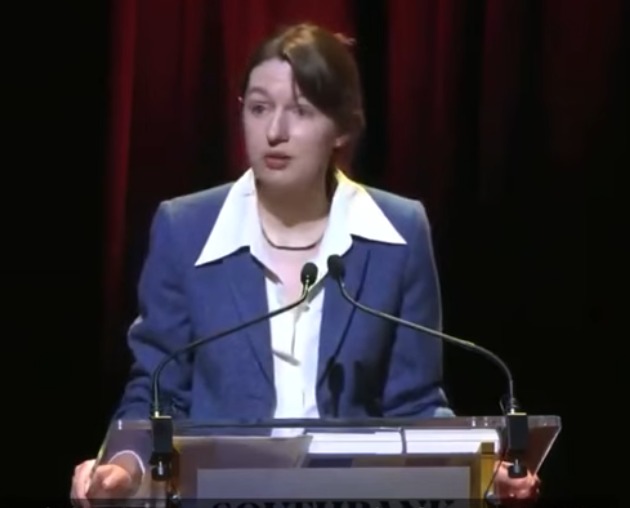
Rooney, for her part, left no room for doubt that the withdrawal happens with her consent. In a statement, she recalled that Palestine Action was proscribed in the UK in July 2025 and that the following month she wrote an opinion piece expressing her intention to go on supporting the group, which “is not a proscribed or otherwise prohibited group here in the Republic of Ireland.” “As a result, the fulfilment of contracts to publish my work in the UK could now constitute a serious criminal offence,” she said. “I have made every effort to be honest with the public about my beliefs and intentions and I am wholly prepared to accept the consequences.” She had foreseen this outcome for months: in a witness statement submitted to London’s High Court in support of the legal challenge to the ban, she had already warned that her plans could lead to her books being withdrawn from sale in Britain.
Why this matters
This is not a marginal author being quietly delisted. Rooney, 35, is one of the defining commercial phenomena of modern literary fiction. Her second novel, Normal People (2018), sold in the millions and was adapted into the BBC and Hulu television series that made her a household name far beyond the book trade; her debut, Conversations with Friends (2017), received its own screen adaptation, and Beautiful World, Where Are You (2021) and Intermezzo (2024) both arrived as major publishing events, with Intermezzo going straight to the top of the bestseller lists. For Faber, she is arguably the flagship fiction author of her generation; for British booksellers, her backlist is the kind of steady, high-volume seller that anchors a fiction section. It is rare for a literary novelist to carry that kind of weight — the same literary culture that this month celebrated Anne Carson’s Nobel Prize in Literature rarely produces a writer who is simultaneously a critical reference point and a mass-market one. Removing Rooney from UK supply therefore leaves a visible hole: not a title here or there, but the complete works of a bestselling author, across print, ebook and audio, in one of the world’s largest English-language book markets.
The ban: how a protest group became a proscribed organisation
Palestine Action built its name on direct action against companies it accuses of supplying Israel’s military, above all the Israeli defence firm Elbit Systems: break-ins, occupations and paint attacks on factories and offices. The turning point came in June 2025, when activists broke into RAF Brize Norton, Britain’s largest air base, and damaged military aircraft — an incursion that embarrassed the security establishment and, within weeks, brought the group under the Terrorism Act 2000. The proscription took effect on July 5, 2025. Membership of, or inviting support for, a proscribed organisation carries a prison sentence of up to 14 years, and the funding offences around banned groups are what ultimately reached into Rooney’s royalty statements.
The government’s case, as ministers have made it, is that the group crossed the line from protest into serious criminal damage against defence infrastructure — targeting the supply chain of a British ally and, at Brize Norton, the Royal Air Force itself — and that proscription is the tool Parliament provided to disrupt such a group’s money, recruitment and organisation. On that view, the law is working as designed: it is aimed at the group’s operations, and the consequences for supporters, however prominent, follow from the support itself. Rooney is not accused of any act of damage; what the ban criminalises is the support — including financial support — and it is that support she has refused to withdraw.
The free-speech argument on the other side
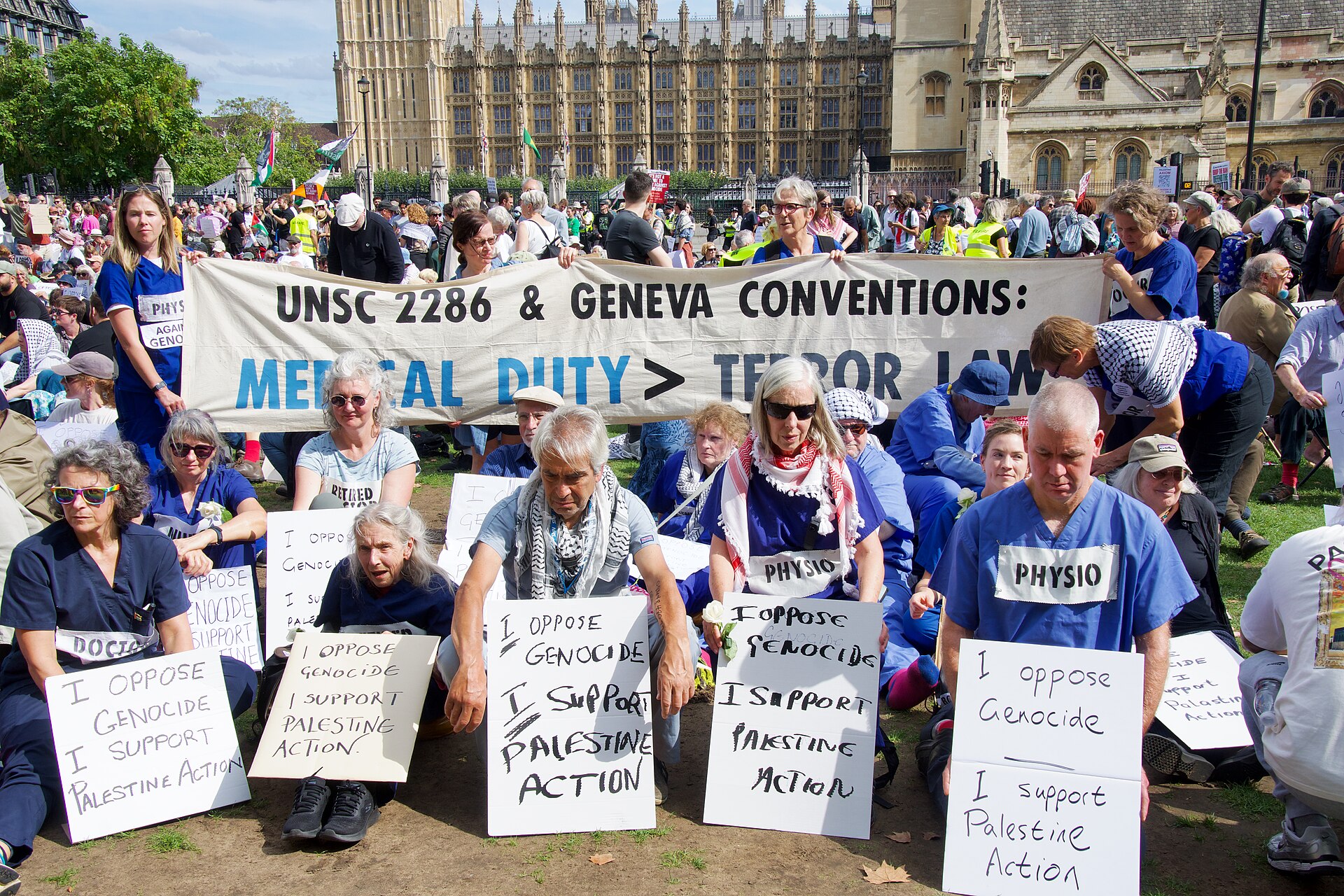
Critics of the ban — including civil-liberties groups — argue that it treats a protest movement, however disruptive, as though it were an armed terrorist organisation, and that its sharpest effects have fallen not on saboteurs but on demonstrators. More than 3,000 people have been arrested since the ban, many of them for the single act of holding a placard reading “I oppose genocide. I support Palestine Action” at the Parliament Square protests organised by Defend Our Juries — arrests that have repeatedly included elderly and retired protesters and been carried out in front of cameras. The legal challenge to the proscription, brought by the group’s co-founder Huda Ammori, has already produced one ruling on each side: the High Court ruled in her favour in February, the Court of Appeal overturned that decision in June, and the Supreme Court is due to hear the appeal next month. The Rooney case now hands the critics their most vivid example yet: a novelist whose books are leaving British shelves not because of anything they say, but because of where her earnings go — a precedent that free-expression advocates warn could chill any writer, artist or public figure whose lawful views at home become criminalised associations in Britain.
What booksellers and readers now face
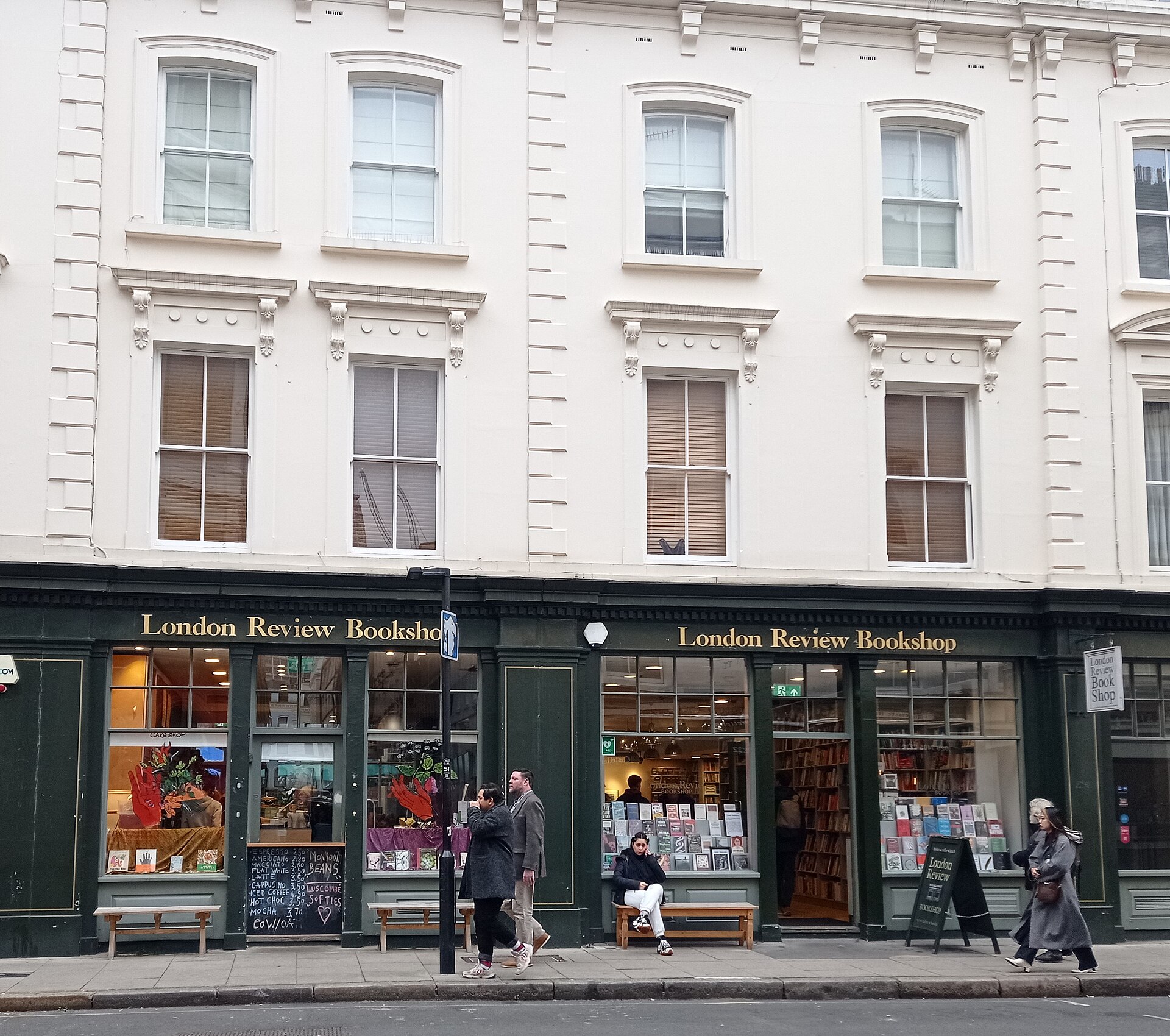
For readers, the practical effect arrives unevenly. Print copies already in shops can be sold until they run out — there is no recall — so Normal People will not vanish from British shelves overnight; it will thin out, shop by shop, as stock drains and no new copies follow. The digital disappearance, by contrast, is immediate and total: her ebooks and audiobooks have been pulled from UK sale, with Audible telling British customers it “does not currently have the rights to sell this title in your country/region.” Owning or reading Rooney has not become an offence, and copies bought abroad — Irish and American editions remain on sale as normal — are ordinary books. The legal exposure identified by Faber sits in the commercial chain: contracts, supply and royalty payments inside the UK. It is a different mechanism from the school and library book removals tracked in the United States — documented in PEN America’s latest book-bans report — but the reader-facing result rhymes: a prominent author’s work becoming harder to obtain, through law rather than through any judgment on the books themselves.
What happens next
Everything now waits on the Supreme Court. If the appeal against proscription succeeds next month, the legal ground under Faber’s decision could shift quickly and supply might resume; if the ban is upheld, the withdrawal hardens into a durable feature of British publishing for as long as Rooney maintains her pledge — and any future Rooney novel would face the same wall in the UK on the day it is published. In the meantime, publishers will be studying the precedent closely: Rooney is the most prominent creator yet caught by the funding logic of proscription, but she is not the only British-published writer to have expressed support for the group, and agents across the industry will be asking whether royalty chains elsewhere carry the same risk. For now, the position is stark and without an obvious modern parallel: one of the bestselling novelists in the world remains on sale in Ireland, in the United States and across the globe — everywhere, that is, except in the bookshops of Britain.
Sources: Reuters; CNN; The Times; statements by Faber and Sally Rooney, October 2026.