Russian oligarch son sues California
Putin-Allied Oligarch's Son Sues California City Over Blocked Skyscraper
MENLO PARK, Calif. — On Friday, one of the most audacious housing proposals in Silicon Valley history went to court. The developer behind a plan to raise three mixed-use towers — the tallest 39 stories and 461 feet — on the former Sunset Magazine campus at 80 Willow Road sued the city of Menlo Park on October 2, just three days after the city council formally rejected the project. The lawsuit, reported by the New York Post, accuses the city of violating California's housing laws by stalling and then killing a project the developer says the state entitled it to build.
On its own, that would be a major California housing story. What makes it explosive is the money behind it. The developer, N17, is backed by Vitaly Yusufov, the son of former Russian energy minister Igor Yusufov — a Putin-aligned billionaire whose fortune Forbes has estimated at roughly $1.1 billion. The elder Yusufov has been sanctioned by Canada and Ukraine, but not by the United States or the European Union. And now a member of Congress wants the Treasury Department to find out why.
On September 23, Rep. Sam Liccardo wrote to Treasury Secretary Scott Bessent urging an investigation of the financial backing behind the Willow Road project — including a possible review by the Office of Foreign Assets Control (OFAC) and the Committee on Foreign Investment in the United States (CFIUS), and even fresh consideration of sanctions against Vitaly and Igor Yusufov. Nine days later, the developer sued the city. Menlo Park now finds itself fighting a two-front war: a housing lawsuit in court, and a national-security-tinged political fight in Washington.
This is a story about three collisions at once: California's housing crisis against suburban local control, Kremlin-adjacent capital against American sanctions law, and a small city's zoning code against the state's most aggressive housing weapon, the Builder's Remedy. However the lawsuit ends, the fight over 80 Willow Road is about to become the test case everyone in Sacramento watches.
The sequence is unusually fast, and the speed is part of the story. On Tuesday, September 29, the Menlo Park City Council formally rejected the Willow Park proposal after a review process that had stretched for years, according to the Palo Alto Daily Post. On Friday, October 2, N17 filed suit.
The developer's legal theory, as described in the Post's reporting, is that Menlo Park violated the Builder's Remedy — the provision of California housing law that lets developers bypass local zoning when a city's state-mandated housing plan is out of compliance — by slow-walking the application and then denying it anyway. The company has powerful backup for that reading: in July, the office of California Attorney General Rob Bonta sent the city a letter threatening fines over its handling of the Willow Road application.
Menlo Park's answer, delivered by Mayor Betsy Nash after the September 29 vote, was defiance. The council is united, she said; the attorney general's letter is wrong; and the city will fight the project even if the fight forces cuts to local services. The project, in the city's telling, would endanger emergency response times, compound infrastructure strain, worsen the city's already severe jobs-housing imbalance — the 332,000 square feet of office space would import workers without housing them — and still fail to deliver the kind of housing the city actually needs.
Both sides, in other words, claim to be defending the law. The developer says the city broke state housing law. The city says the developer's reading of state housing law is wrong. A judge will now decide.
Why this matters
Analysis: Strip away the Russian surnames and this is the purest distillation of California's housing war anyone has produced in years: a developer using the state's most aggressive pro-housing law to plant what would be the tallest buildings in San Mateo County history in a neighborhood of ranch houses, and a wealthy suburb daring Sacramento to make it stop.
The Builder's Remedy was designed for exactly this confrontation. For decades, California cities perfected the art of the polite no — endless studies, shrinking unit counts, parking requirements that made projects pencil out to nothing. The remedy was the state's answer: fall out of compliance with your state-mandated housing plan, and a developer who sets aside enough affordable units can build regardless of what your zoning says. Menlo Park is now the highest-profile city to test whether that threat has teeth — and whether a city council will spend taxpayer money, in Nash's words even at the cost of local services, to find out.
Then add the second layer, the one that turns a zoning fight into national news: the capital. Russian-linked money has flowed into Western real estate for decades, and the question Liccardo is asking — why this particular fortune, from this particular former Putin minister, ended up owning one of the Peninsula's most storied properties — is the question American sanctions policy has never fully answered. Igor Yusufov sits on Canada's and Ukraine's sanctions lists but not on America's or Europe's. That gap is either an oversight or a judgment. Liccardo is betting it is an oversight, and he wants Treasury to prove it.
The third layer is the precedent. If N17 wins, every suburb with a shaky housing element learns that the Builder's Remedy is not a bluff — and developers across California will file accordingly. If Menlo Park wins, cities learn that defiance is survivable, and the remedy's deterrent power erodes. Either way, the ruling will be cited in every housing fight in the state for a decade.
The land: a beloved campus and a $72 million bet
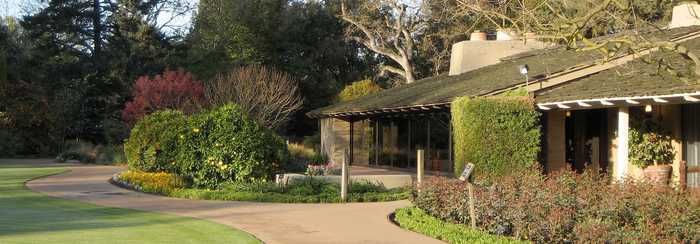
To understand why this fight is so bitter, you have to understand the land. The 6.7-acre property at the corner of Willow Road and Middlefield Road, in Menlo Park's Linfield Oaks neighborhood, was the headquarters of Sunset magazine — the publication that, since 1898, practically invented the idea of the California good life. The campus, designed by architect Cliff May and landscape architect Thomas Dolliver Church, opened in 1951: low-slung ranch-style buildings set in celebrated gardens, a landmark of mid-century modernism that the Cultural Landscape Foundation now lists as at risk.
Sunset decamped to Oakland in 2015. The site was reportedly acquired for $72 million by an entity tied to Vitaly Yusufov — reports differ on the exact timing, but not on the scale of the bet. At roughly $10.7 million an acre, the buyer was not paying for a magazine campus. He was paying for an option on the most valuable thing in Silicon Valley: entitled land.
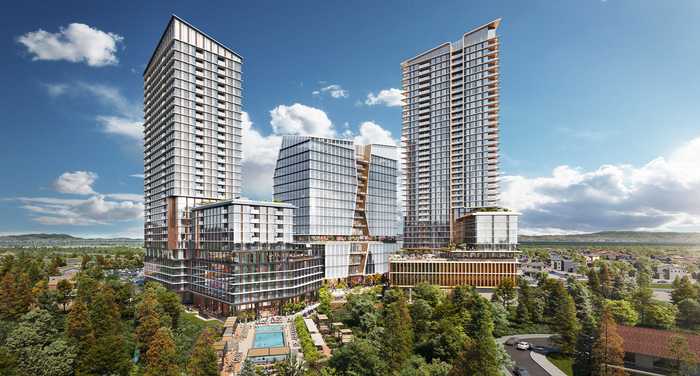
The bet was that California's housing politics would eventually force Menlo Park's hand. The Willow Park proposal — advanced by N17, a firm founded in the summer of 2023 by former Trammell Crow executive Oisín Heneghan — calls for about 665 homes, 332,000 square feet of office, 17,000 square feet of retail, a 130-room hotel and a preschool, arranged in three mixed-use buildings rising 301 to 461 feet. Of the 665 homes, 133 would be reserved for low-income households earning less than 80 percent of the area median income — the 20 percent affordable share that unlocks the Builder's Remedy.
Heneghan has framed the project as a moral response to the housing shortage. "California's housing crisis requires all of us to embrace change," he told SF YIMBY when the renderings were unveiled, arguing that the magazine offices were "an appropriate land use when it was constructed in 1951 and the population of California was a fifth of what it is now." Menlo Park's answer is that change has a scale, and 461 feet in Linfield Oaks is not it.
Builder's Remedy: the state law at the center of the fight
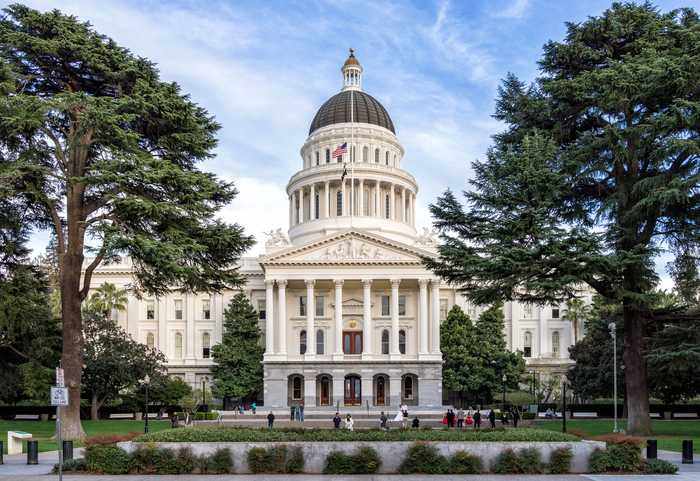
California's "builder's remedy" — Government Code section 65589.5(d)(5) — is one of the most powerful and least understood weapons in American land-use law. The concept is simple: every California city must maintain a state-certified plan, called a housing element, showing how it will accommodate its share of the state's housing need. If a city's plan falls out of compliance, the remedy kicks in: a housing project that dedicates at least 20 percent of its units to lower-income households (or 100 percent to moderate-income households) cannot be denied for conflicting with local zoning. The city's zoning code, in effect, stops applying.
The provision sat quietly on the books for decades until developers realized, around 2022, that many wealthy cities had let their housing elements lapse — and began filing builder's-remedy projects from Santa Monica to Beverly Hills to Los Angeles. The result was a wave of proposals that local officials described as extortion and housing advocates described as overdue justice.
Menlo Park's situation is the murkiest kind. The city did eventually win state approval for its housing element, but N17 filed its preliminary application before that approval landed — and the developer's position is that the clock that matters is the one running when the application was filed. The attorney general's July 29 letter threatening fines suggests Sacramento sees merit in that reading, or at least in the claim that the city mishandled the application. Nash's response — the letter is wrong, the council is united, bring it on — sets up a direct collision between a city and the state agency charged with enforcing the law the city is accused of breaking.
The numbers explain why Sacramento cares. Menlo Park's state-mandated Regional Housing Needs Allocation is at least 2,946 homes by the end of 2031 — more than four times the previous cycle's target of 655. The 665 Willow Park homes would deliver more than a fifth of that obligation in a single project, including 133 below-market units. From the state's perspective, that is not a rounding error. It is the plan working.
Who benefits, who loses, what critics say
Housing advocates: 665 homes is 665 homes
For the YIMBY movement, the math is the morality. San Mateo County has added jobs vastly faster than homes for a generation, Peninsula home prices sit among the highest in the nation, and teachers, nurses and service workers commute ever farther. Every year of delay, advocates argue, is a tax on everyone who cannot afford to live where they work. The Builder's Remedy exists, in this telling, precisely for cities like Menlo Park: wealthy, job-rich, and allergic to height.
The city: infrastructure, safety and the wrong kind of growth
Menlo Park's counter is not, on its face, about keeping people out. Nash and the council argue the project would strain infrastructure the city cannot expand, slow emergency response times in a neighborhood of narrow streets, and — crucially — worsen the jobs-housing imbalance by adding 332,000 square feet of office alongside the homes. A project that imports thousands of daytime workers while delivering a fraction of its units below market, the city says, is not a housing solution. It is a commercial development wearing a housing costume. And the city's willingness to cut local services to fund the legal fight is a measure of how seriously it takes that claim.
Sanctions hawks: follow the money
Liccardo's September 23 letter reframes the entire dispute. If the capital behind 80 Willow Road traces to a Putin-aligned former energy minister, the argument goes, then the zoning fight is secondary: the question is whether sanctionable Russian money is parked in one of America's most expensive suburbs, blocks from Stanford. The congressman wants OFAC and CFIUS to look — at the ownership chain, the financing, and whether the Yusufovs themselves belong on the US sanctions list. For sanctions hawks, the striking fact is the gap: Canada and Ukraine sanctioned Igor Yusufov. The United States and the European Union did not. Liccardo's letter is, at bottom, a demand that Treasury explain the difference.
The developer: the law is the law
N17's position is the simplest in the room: whatever you think of the money, the project follows the statute. The application was filed when the city's housing element was out of compliance; 20 percent of the units are affordable; the Builder's Remedy therefore applies; the city's denial is illegal. The lawsuit will likely lean on the Housing Accountability Act, California's "anti-NIMBY" law, under which courts can impose fines of at least $10,000 per housing unit on cities found to have violated it in bad faith — on a 665-unit project, that is real money. The developer is betting that a judge will read the statute the way Sacramento's housing enforcers do.
Residents: "Who died and made him God?"
Then there is Linfield Oaks itself, where the reaction has the plain-spoken fury that only a 461-foot tower in a ranch-house neighborhood can produce. As one resident, Kleczewska, put it to the New York Post: "Who died and made him God?" The line captures something the legal briefs don't: the sense among neighbors that the scale of the proposal is not a negotiation but an imposition — that a developer backed by a Russian billionaire's son has decided what their street will look like, and the only question is whether the courts agree.
The sanctions question: why Igor Yusufov isn't on the American list
Analysis: This is the part of the story that should make everyone uncomfortable, because it exposes how selective Western sanctions can look from the outside. Igor Yusufov was Russia's energy minister from 2001 to 2004 — the early Putin years, when the Kremlin was consolidating control over the country's oil and gas wealth. Forbes has put his fortune at about $1.1 billion. His son Vitaly bought Germany's Wadan Yards shipbuilding company in 2009 in a deal brokered by none other than Angela Merkel, then ran it as Nordic Yards Holding GmbH — a sign of just how comfortably this family's capital once moved through the West.
Canada and Ukraine decided that record warranted sanctions. The United States and the European Union, which have sanctioned hundreds of Russian officials and oligarchs since 2014, did not. There are innocent explanations — sanctions lists are triaged, evidence thresholds are high, and not every wealthy Russian is a Kremlin instrument — and there are less innocent ones, including the possibility that the file simply never got the right champion inside the bureaucracy. Liccardo is now trying to be that champion.
But precision matters here, because the stakes of imprecision are defamation and bad policy. Nothing about the Willow Park financing has been adjudicated. Liccardo's letter is a request for investigation, not a finding. Igor Yusufov has not been sanctioned by the United States or the European Union, and no authority has found that the 80 Willow Road project violates sanctions law. The allegation — that Kremlin-adjacent capital is behind the towers — is serious precisely because it is unproven. If Treasury looks and finds a clean, documented money trail, the sanctions subplot collapses and the case returns to being a housing fight. If it finds otherwise, the property itself becomes the story: an OFAC designation would freeze any US-based assets and bar Americans from dealing with the designee, effectively trapping one of the Peninsula's most valuable parcels in legal amber.
There is also a quieter possibility, raised by Councilmember Drew Combs: that a "serious" buyer is interested in the property. A sale — to a buyer with no Russian surname and no sanctions questions — could defuse the political bomb while leaving the housing fight intact. Watch that space.
By the numbers: 39 stories in a low-slung suburb
The figures are what make this case impossible to ignore — and they deserve to be read carefully.
$72 million for 6.7 acres. That is roughly $10.7 million an acre, a price that only makes sense if the buyer believed the land's zoning was negotiable. In a state with a Builder's Remedy on the books, it was a calculated gamble — and the lawsuit is the gamble resolving in real time.
665 homes, 133 below market. The project would deliver more than a fifth of Menlo Park's entire 2,946-unit state housing target for 2023–2031 in one stroke. For context, the city's previous eight-year target was 655 homes total — this single project would have exceeded it. The 133 affordable units, reserved for households earning less than 80 percent of the area median income, are the legal key that unlocks the Builder's Remedy.
461 feet in a city that barely clears a few stories. The tallest proposed tower would not just be Menlo Park's tallest building — it would be the tallest building in all of San Mateo County, shattering the 317-foot Genesis North Tower, a life-sciences complex beside Highway 101. Even the 237-foot Palo Alto Office Center, the Peninsula's reigning mid-rise landmark, would look squat beside it. Menlo Park is a city of one- and two-story buildings; Meta's sprawling headquarters, the biggest employer in town, rises only a few floors. A 39-story tower there is not a building. It is a new geography.
332,000 square feet of office. This is the number the city keeps returning to, and it is the project's genuine vulnerability. Office space means jobs; jobs without commensurate housing is the imbalance Menlo Park already suffers. The developer counts the offices as the financial engine that makes the affordable units possible. The city counts them as proof the project is about profit, not housing.
What happens next
The lawsuit is now the main event, and its timeline is measured in months, not weeks. N17's complaint will likely invoke the Housing Accountability Act, which sharply limits the grounds on which California cities can deny housing projects — and which exposes cities found to have acted in bad faith to fines of at least $10,000 per unit. Both sides will also be watching the attorney general: Bonta's July 29 letter was a warning shot, and a formal enforcement action — with its own fines — could arrive faster than a court ruling and reshape the settlement math for everyone.
The Treasury track runs on a different, more opaque clock. Liccardo's letter sets no deadline, and OFAC and CFIUS reviews are conducted in silence; months can pass with no public signal. But the mere existence of the request changes the deal dynamics: lenders, partners and potential buyers all have to price the risk that the asset ends up designated. That may be precisely why Combs's mention of a "serious" buyer matters — a sale to an untainted owner would cut the sanctions subplot out of the story entirely, leaving a cleaner (if still enormous) housing fight.
Three things to watch in the coming weeks: the full text of N17's complaint, which will show exactly which statutes the developer thinks the city broke; any response from Bonta's office, which will signal whether Sacramento intends to join the fight or let the developer carry it; and any sign from Treasury that Liccardo's letter has been answered. The answers will determine whether 80 Willow Road becomes a housing landmark, a sanctions case study — or both.
The bottom line
Fact: the developer behind a 39-story, 665-home project on Menlo Park's old Sunset Magazine campus sued the city on October 2, three days after the council rejected it, alleging violations of California housing law — and a congressman has asked Treasury to investigate the Putin-linked fortune behind the land. Analysis: this is the Builder's Remedy's biggest test yet, wrapped inside a sanctions question nobody in Washington has answered. Whoever wins the lawsuit, the fight over 80 Willow Road will be cited in every California housing battle for the next decade — and Treasury's answer, whenever it comes, may matter even more than the judge's.
Sources
- New York Post — Russian oligarch's son sues California after city blocks skyscraper, October 2, 2026.
- Palo Alto Daily Post — Menlo Park council rejects Sunset towers, September 29, 2026.
- The Almanac (via discoveryink) — coverage of the Menlo Park council decision, October 2026.
- brucewagg.com — background on the Russian businessman behind the 458-foot towers proposal, September 2026.
- SF YIMBY — Willow Park renderings, unit counts, RHNA context and project history, May 2024.