Russia Ukraine prisoner swap brings 270 people home to each side in the first exchange in about two months — nine civilians and five Olenivka survivors among Ukraine’s returnees, most of them Mariupol defenders held since 2022.
Nine Civilians, Mariupol’s Defenders and Five Men Ukraine Believed Dead Came Home on Friday — in the First Exchange in Two Months
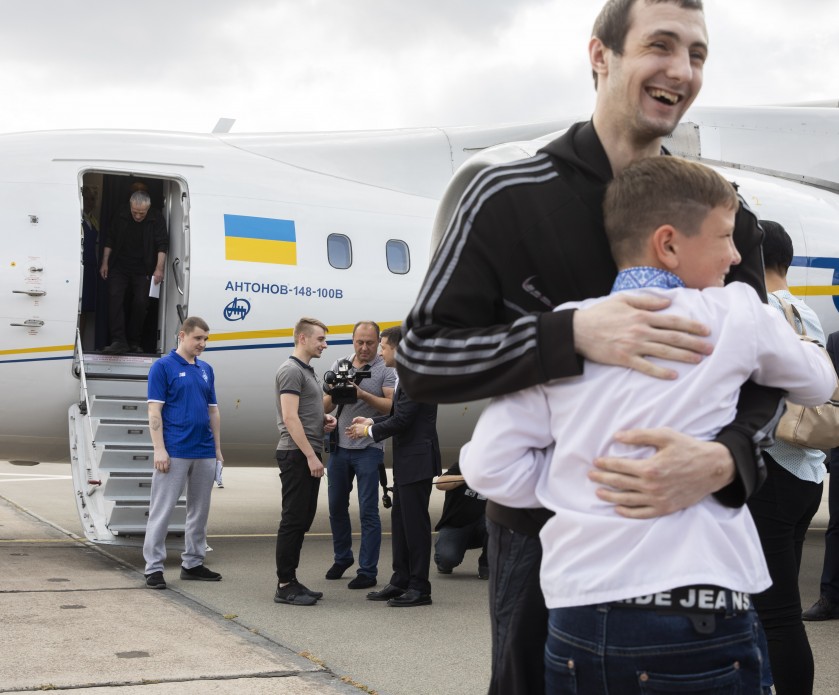
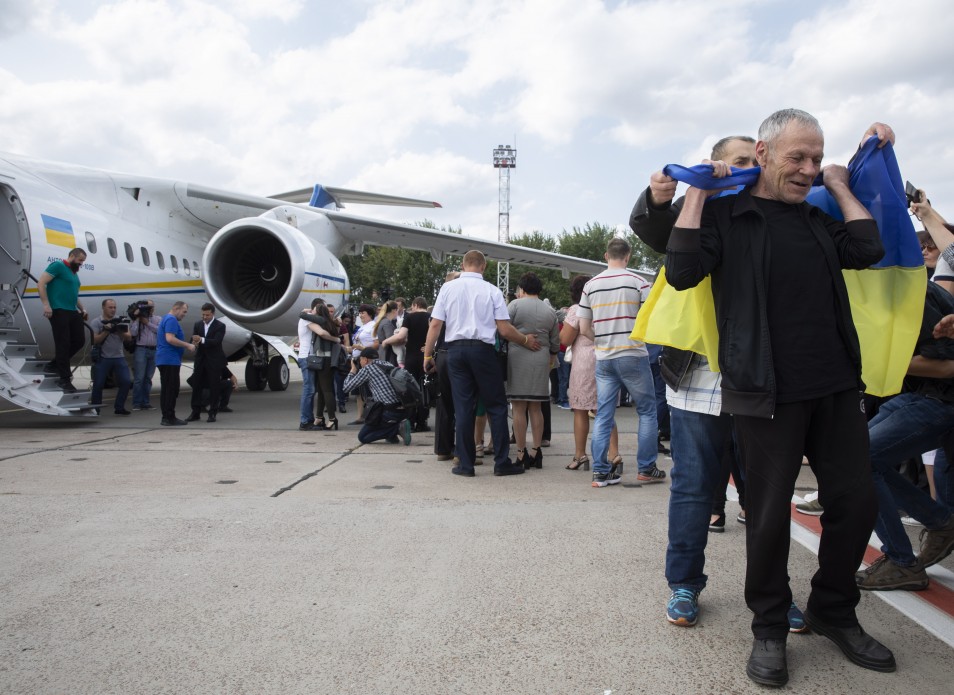
KYIV — The Russia Ukraine prisoner swap completed on Friday is, by the standards of this war, a large one: 270 people in each direction, confirmed by both capitals. Zelenskyy said most of the returned Ukrainian servicemen had been in captivity since 2022, that most of them had defended Mariupol in the siege that opened the full-scale invasion, and that many had been, in Kyiv’s words, illegally sentenced in Russia. The returnees include National Guard personnel — among them fighters of the Azov formation — border guards and territorial defence troops, and members of the Navy, the Ground Forces, the Air Assault Forces and the State Special Transport Service, alongside the nine civilians. On the Russian side, the Defence Ministry in Moscow said the 270 freed servicemen were in Belarus, where they were receiving medical and psychological assistance before transport to Russia for treatment and rehabilitation; Reuters-syndicated reporting of the ministry’s statement said Russia’s human rights commissioner, Yana Lantratova, was working with the group. Belarusian state media reported the handover at the Novaya Guta crossing on the Belarus–Ukraine border.
Track it live: Ukraine war map — live tracker
What happened on Friday
The exchange closed a gap of roughly two months in one of the war’s few functioning channels. The last large swap in the current combined process took place on August 19, when 103 Ukrainians returned home, with 10 more released later in August; Kyiv describes Friday’s handover as the third stage of that same combined process rather than a standalone deal. That staging matters for how the number should be read: 270-for-270 is not a sudden breakthrough negotiated this week, but the largest single instalment so far of a rolling arrangement that both sides have kept alive, in stages, since the summer — through a period in which almost every other point of contact between Moscow and Kyiv has been frozen or fought over.
The mechanics, as each side described them, were symmetrical and deliberately unglamorous. Russian state agencies, citing the Defence Ministry, reported the handover and the onward route through Belarus; the ministry credited the United Arab Emirates with humanitarian mediation, continuing a pattern in which Gulf intermediaries have carried messages and logistics for exchanges that the two belligerents cannot easily arrange face to face. Ukraine’s account, delivered by Zelenskyy himself, concentrated on who had come home rather than how: the service branches represented, the nine civilians, the Mariupol connection — and the five names that, until Friday, had been on a very different list.
Five names came off the list of the dead
Five of the Ukrainians who returned on Friday had previously been believed killed in the explosion at the Olenivka detention facility in July 2022, where prisoners captured at the Azovstal steel works in Mariupol were being held. Their return does not resolve what happened at Olenivka — it deepens the uncertainty around it, because it demonstrates that at least part of the record of that night, as it existed outside Russia, was wrong. Ukrainian officials presented the five as survivors of the facility who had been held elsewhere, or held unacknowledged, in the years since; the practical consequence for families is stark and simple — five households that had mourned a death learned instead that a son, husband or father was alive and coming home.
Kyiv has long maintained lists of the Olenivka dead built from Russian announcements, witness accounts and the limited access granted to the site. If five names on those lists were wrong, the obvious question — pressed by Ukrainian commentators within hours of the announcement — is how many other entries rest on the same uncertain foundations, and whether further survivors may be among the Ukrainians still held. Russian officials have not commented on the five individually. What Friday establishes, neutrally and verifiably, is narrower than either side’s narrative: five men listed as dead in 2022 are alive in 2026, and both governments now proceed from that fact.
Background: Olenivka, July 2022
On the night of July 28–29, 2022, an explosion tore through a barracks at the detention facility near Olenivka, in Russian-occupied Donetsk region, where Ukrainian prisoners of war — most of them defenders of Mariupol captured when the Azovstal garrison surrendered that May — were being held. Dozens of prisoners were killed. The two governments’ accounts have never converged. Ukraine says the explosion was a deliberate Russian attack on prisoners it calls a war crime. Russia says Ukrainian forces fired on the camp. Independent investigators were not given the access that would settle the question, and no agreed account of responsibility exists; this article states both claims and adopts neither.
That unresolved dispute is the backdrop against which the five returns land. For Ukraine, Olenivka is among the most charged episodes of the war — an atrocity allegation attached to the most symbolically important garrison of 2022. For Russia, it is an allegation it rejects and reverses. Friday’s exchange does not adjudicate any of it. But it does change the human arithmetic: the facility’s story now includes not only the dead whose names both sides published, but living men whose survival neither side had publicly established in more than four years.
Background: the exchange channel since 2022
Prisoner exchanges are one of the few areas where Moscow and Kyiv have maintained on-off contact since February 2022, as Reuters noted in reporting Friday’s swap, and thousands of prisoners have been exchanged over the course of the war. The channel has survived events that might have ended it — disputed incidents, collapsed talks, escalations on the front — partly because it serves a concrete interest on both sides: each government holds people the other wants back, and each faces domestic audiences for whom the return of prisoners is among the most visible goods a wartime state can deliver. The staged structure of the current process — a combined exchange begun on August 19, executed in instalments, of which Friday’s 270-for-270 is the third — is the channel’s mature form: fewer announcements, larger tranches, mediation carried by third parties such as the UAE.
The channel also operates alongside, not instead of, the fighting. The same week as the swap, both sides traded major strikes, including the overnight Russian attack on energy facilities in six Ukrainian regions that cut power to more than 500,000 people, as we reported in our coverage of the energy-grid strikes. That simultaneity is the defining feature of the exchange track across four years: it has never required a ceasefire, a thaw or even a pause, and its continuation is therefore weak evidence of anything beyond its own usefulness to both sides — a point worth holding onto when the swap is read, as it inevitably will be, as a diplomatic signal.
Why this matters
First, scale and composition. A 270-for-270 exchange is among the larger single handovers of the war, and Ukraine’s tranche is weighted toward the war’s longest-held prisoners — men captured in 2022, in the Mariupol campaign, rather than recent battlefield captures. Each such exchange shrinks the oldest and most politically sensitive part of Kyiv’s prisoner ledger, the part attached to Azovstal, to the Azov formation and to families who have campaigned for four years. The nine civilians matter in a different register: civilians in the exchange system have historically been the hardest category to move, and their inclusion, even in single figures, signals the channel can still carry more than uniformed prisoners.
Second, the Olenivka five. Their return is the rare development that cuts against both governments’ settled stories at once: it neither proves Ukraine’s account of the explosion nor Russia’s, but it establishes that the public record of the dead was incomplete in a way neither side announced. For the families of the still-missing, that fact alone reopens questions that official lists had closed. For investigators, it is a reminder that the Olenivka file — names, counts, causes — remains open in the most literal sense.
Third, timing. The swap followed talks with U.S. negotiators earlier this week and lands amid signals that U.S.-mediated talks could resume in November. Prisoner exchanges have repeatedly served as the confidence-building currency of this war’s diplomacy — deliverable, photographable and reversible in a way territory is not. A completed 270-for-270 handover in late October gives any November table an early, verifiable product to point to; it also, read the other way, may simply be the exchange channel doing what it has done since 2022, on its own schedule, while the guns fired the same week.
Who gains, who loses — and what the critics say
On the ledger as each side keeps it: Ukraine gains the return of long-held Mariupol defenders and nine civilians, a domestic morale event of the first order, and a demonstration — days after Zelenskyy publicly pressed Ukraine’s case with Washington, as we reported in our coverage of his CNN interview — that the exchange track still produces results. Russia gains 270 of its own servicemen, the same domestic good in mirror image, and an Emirati-mediated process that presents Moscow as a party that honours staged agreements. The mediators gain standing; the channel itself gains another completed tranche, which is the strongest predictor of a next one.
The critics’ angles run in both directions and should be stated as their holders state them. In Ukraine, critics of the staged process note that exchanges, however welcome, return a fraction of those held, that civilians and the severely wounded are chronically underrepresented in the tranches, and that each celebration risks normalising a system in which Kyiv must trade for people it says were illegally sentenced in the first place. In Russia, hardline commentators periodically attack exchanges as concessions that return Ukrainian fighters to a state still at war, and question the publicity given to Ukrainian accounts of the handovers. International observers tend to a narrower point: the exchanges comply with, and are encouraged by, the laws of armed conflict, and their continuation is one of the few humanitarian facts of the war that requires no adjective. Between those positions, the verifiable residue is Friday’s: 540 people changed sides of the line, and five of them had been counted among the dead.
The numbers in context
The headline figure — 270 each way, 540 people in total — is best read against the process it belongs to. The August 19 stage of the same combined exchange returned 103 Ukrainians, with 10 more later in August; Friday’s stage is more than two and a half times that size on the Ukrainian side alone. Within Ukraine’s 270, the composition breaks down as 261 service personnel and nine civilians. The five Olenivka survivors are five people, and also a measurable correction: set against the dozens reported killed at the facility in 2022, they represent a significant fraction of a death toll that was never independently verified. And the cumulative counter remains the largest number in the story: thousands of prisoners exchanged since February 2022, across dozens of handovers, in a channel that has now run for most of the war’s duration without ever becoming a peace process in itself.
What happens next
The near-term question is whether the combined process has a fourth stage. Kyiv framed Friday’s handover as stage three of an arrangement begun in August, language that implies a structure with room to continue; neither side has published a schedule, and exchanges in this war are typically confirmed only when they happen. The composition of any further tranche will be its own news: families of civilians, of the wounded and of the remaining Azovstal defenders will read the next list for the categories Friday’s only began to reach.
The wider question is the November window. The swap followed talks with U.S. negotiators earlier this week, and signals of possible resumed U.S.-mediated talks in November give Friday’s handover a diplomatic afterlife beyond its humanitarian one. The plausible scenarios bracket quickly: exchanges widen into the talks as an early deliverable, exchanges continue on their own track regardless of the talks, or the channel stalls again, as it did for the two months before Friday, while the fighting sets the tempo. Four years of precedent support the middle reading — the channel endures because both sides need it, not because the war is ending. But 270 families on each side, and five families who got back someone they had buried, will measure Friday by a different standard than the diplomats do.
Related reading: our report on Russia’s overnight strikes on Ukraine’s energy grid, which cut power to more than 500,000 people in the same week as the exchange, and our coverage of President Zelenskyy’s CNN interview on sanctions, the Trump relationship and Ukraine’s diplomacy with Washington.
Sources: Reuters (October 23, 2026) — Russia and Ukraine exchanged 270 prisoners of war each, Russian state news agencies reported, citing the Defence Ministry; the freed Russian servicemen are in Belarus receiving medical and psychological assistance before transport to Russia, the ministry credited UAE humanitarian mediation, and thousands of prisoners have been exchanged since February 2022 in one of the few channels of on-off contact between Moscow and Kyiv; President Volodymyr Zelenskyy, statement on X (October 23, 2026) — “270 of our people are home”: nine civilians among the returnees, most of the servicemen held since 2022 and most of them Mariupol defenders, many illegally sentenced in Russia, returnees drawn from the National Guard (including Azov fighters), border guards, territorial defence, the Navy, Ground Forces, Air Assault Forces and the State Special Transport Service, and five returnees previously believed killed in the July 2022 Olenivka explosion; Reuters-syndicated reporting via The AWB News (October 23, 2026) — the exchange described by Kyiv as the third stage of a combined process begun August 19, the handover reported at the Novaya Guta crossing by Belarusian state media, and Russia’s human rights commissioner Yana Lantratova working with the freed Russian servicemen. Ukraine describes the Olenivka explosion as a Russian attack and a war crime; Russia says Ukraine fired on the camp; no agreed account exists, and none is adopted here.