Russia strikes Ukraine energy grid targets in the largest overnight wave of the autumn campaign so far — more than 500,000 people left without power across six regions, a DTEK thermal power plant forced offline, and Poland's air defenses activated as 176 drones crossed Ukraine.
Six Regions in the Dark, One Plant Offline — and the Cold Has Not Yet Arrived
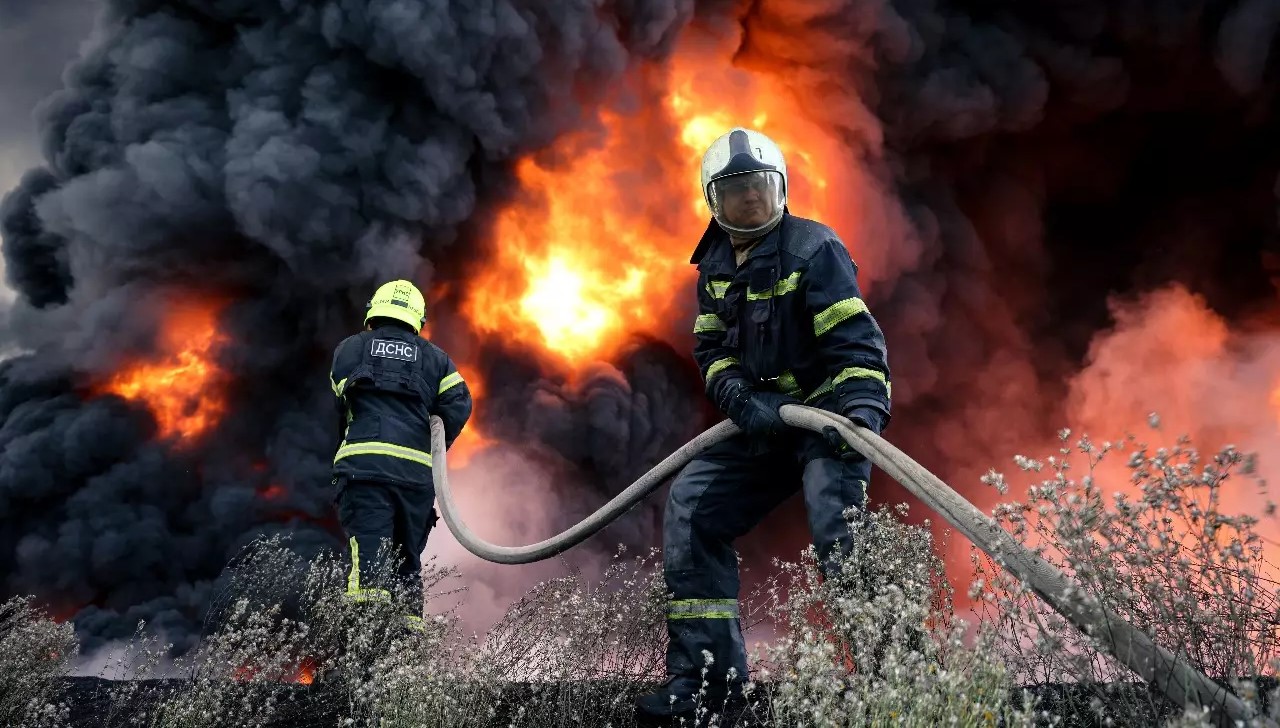
KYIV — The pattern is now a rhythm, and Friday morning it repeated at scale. Russia strikes Ukraine energy grid infrastructure in waves timed for the cold season, and Ukrainian officials spend the following day counting the dark. Overnight into Friday, October 23, Russian forces attacked energy facilities in six Ukrainian regions and knocked out power for more than 500,000 people, Reuters reported, citing Deputy Energy Minister Artem Nekrasov. Ukraine's largest private energy company, DTEK, said a massive attack on one of its thermal power stations caused serious damage and forced the plant to stop generating electricity altogether. Wire reporting aggregated from Ukrainian official statements on Friday morning put the overnight drone count at 176 launched, of which Ukrainian air defenses neutralized or suppressed 140 — a large interception effort that still left strikes recorded against energy, transport and civilian infrastructure, with people injured. No confirmed death toll for this wave had been reported as of Friday morning, and none is claimed here.
Track it live: Ukraine war map — live tracker
What happened overnight
The night's arithmetic, as Ukrainian officials presented it on Friday morning, is this: 176 attack drones launched at Ukraine, 140 of them neutralized or suppressed by air defenses, and the remainder — together with the weapons that accompanied them — enough to damage energy, transport and civilian infrastructure across six regions and injure people. Deputy Energy Minister Artem Nekrasov, cited by Reuters, gave the human total: more than 500,000 people without electricity. Those figures are Ukrainian official claims, reported by Reuters and aggregated by wire services from the morning's official statements; they describe a night in which the target set was the grid first and everything else second.
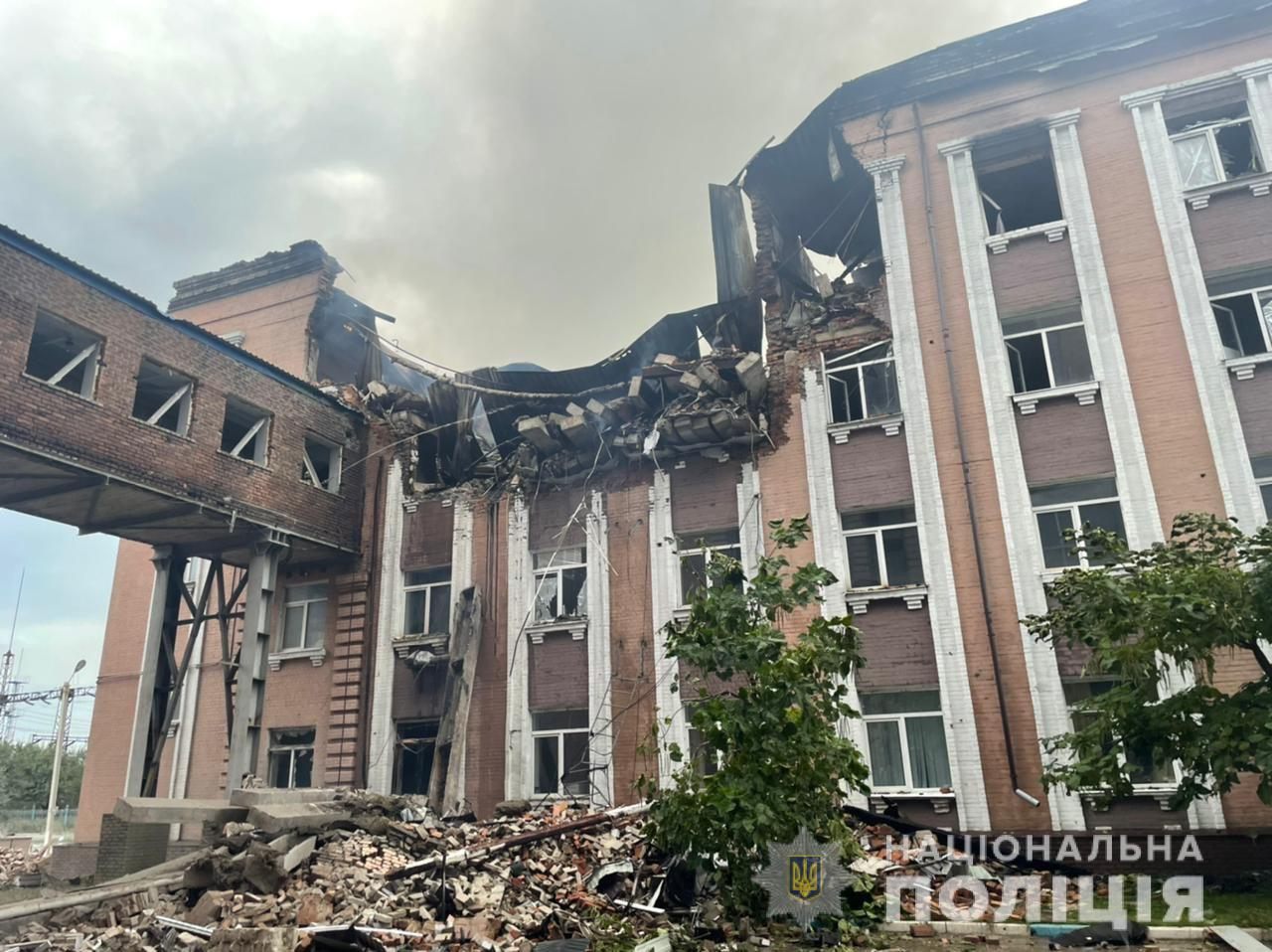
The wave did not arrive in a quiet week. It followed, by roughly a day, the October 21–22 barrage on Kyiv in which Ukrainian officials counted 21 ballistic missiles and 210 drones, with two people killed and 34 injured in the capital, according to Ukrainian officials cited by CNN and Reuters — the attack that dominated our Day 1702 briefing. It also came three days after Reuters reported, on October 20, that Russia had expanded its energy strikes into previously untargeted western regions — Kirovohrad, Zhytomyr, Lviv, Rivne, Ternopil, Khmelnytskyi and Odesa — a geographic widening that Friday's wave, reaching far enough west to trigger a Polish response, appeared to continue. On the ground, the war ran in parallel: Ukraine's General Staff reported 165 combat engagements over the past day, heaviest on the Pokrovskyi, Kostiantynivka and Huliaipole directions — a reminder that the air campaign is layered on top of, not instead of, an active front.
A DTEK plant goes offline
The night's single most consequential hit, on the company's own account, was the one DTEK described in an official statement published on October 23. A massive attack on one of its thermal power stations caused serious damage and forced the plant to stop generating electricity — in grid terms, a drop to zero at a facility built to feed hundreds of thousands of consumers. Preliminary information indicated that no staff were injured, DTEK said. The company withheld the plant's location for security reasons, a standing practice intended to deny targeting information for follow-up strikes. Its teams, the statement said, were clearing debris and coordinating repairs with Ukrenergo, the national grid operator — the two organizations whose joint tempo, repair against re-attack, now largely decides how much of Ukraine stays lit.
DTEK placed the strike in a longer count. Its thermal power plants, the company said, have been attacked more than 230 times since the full-scale invasion began in 2022. And it described what it called a sustained campaign since mid-August against thermal, combined heat-and-power and hydroelectric plants — the three categories of generation Ukraine can least spare heading into winter, because combined heat-and-power plants produce not only electricity but the hot water that heats apartment blocks in Ukrainian cities. A thermal plant forced offline is a generation problem; a heat-and-power plant forced offline in January is a humanitarian one. That distinction is the whole logic of the calendar both sides are now working against.
Poland activates its air defenses
The night's second signal came from outside Ukraine's borders. As strikes hit western Ukraine, Poland issued alerts, raised aircraft and activated air-defense measures, according to wire reporting of the morning's official statements. Warsaw has done this before during large western-Ukraine strike packages — fighters scrambled as a precaution, ground-based air defenses brought to readiness, airspace monitored for anything crossing the line. It is a defensive ritual, but it is not routine in what it communicates: a NATO member on Ukraine's western border now treats a Russian energy-strike night as an event its own air force must physically answer.
What it signals runs in two directions. To Moscow, it signals that the western-Ukraine target set — the regions Reuters listed on October 20 as newly struck, Lviv, Rivne, Ternopil and Khmelnytskyi among them — sits close enough to NATO territory that each wave carries an escalation-management cost, however carefully both sides handle it. To Kyiv's partners, it signals that the air war's western expansion is pulling allied air defenses into a standing overnight posture, with the attendant wear, cost and accident risk. Polish activations do not intercept anything over Ukraine, and no incursion was reported on Friday; their significance is positional. The grid war now has a NATO border inside its blast radius of attention, every single night it runs.
Why this matters
First, the grid has become a front line in the literal sense: it has a tempo, a geography and an attrition logic of its own, fought between Russian strike planners and Ukrainian repair crews, and its territory is measured in megawatts and heated apartments rather than kilometres. Friday's wave — 500,000-plus people cut in a single night, one plant at zero — is what a successful night on that front looks like from the attacking side, and what an expensive one looks like from the defending side even when 140 of 176 drones are stopped. An interception rate near 80 percent still concedes a fifth of the sky, and a fifth of 176 is more than enough to keep damaging a grid that cannot be moved, hidden or armored at scale.
Second, the contest underneath the headlines is repair capacity against strike tempo. Ukraine does not need to make its plants invulnerable; it needs to restore them faster than Russia can re-damage them, with transformers, switchgear and turbine parts that are scarce, heavy and slow to replace. DTEK's statement — debris being cleared, repairs coordinated with Ukrenergo — is the sound of that race being run in real time. Every week the race holds, winter demand is met; every plant that drops to zero and stays there narrows the margin the whole system runs on when temperatures fall and consumption peaks.
Third, the timing is diplomatic as much as meteorological. The strikes come as U.S.-mediated trilateral talks are discussed for mid-November, and pressure applied to a civilian grid in October is leverage priced for a negotiating table in November. The Institute for the Study of War, in its October 22 assessment, described a Kremlin pattern of launching large strike packages in the days around major peace-talk moments, and assessed that Moscow's interest in negotiations is aimed substantially at securing economic concessions while the war continues. Readers do not have to adopt that assessment to see the structure: a grid campaign that peaks just before talks begin raises the cost to Kyiv of refusing terms, and lowers the relative cost to Moscow of offering a pause it can resume at will. Ukraine's counter-leverage is the same repair race — a grid that survives October is a fact no negotiator can argue with in November.
Context and background: the winter energy war
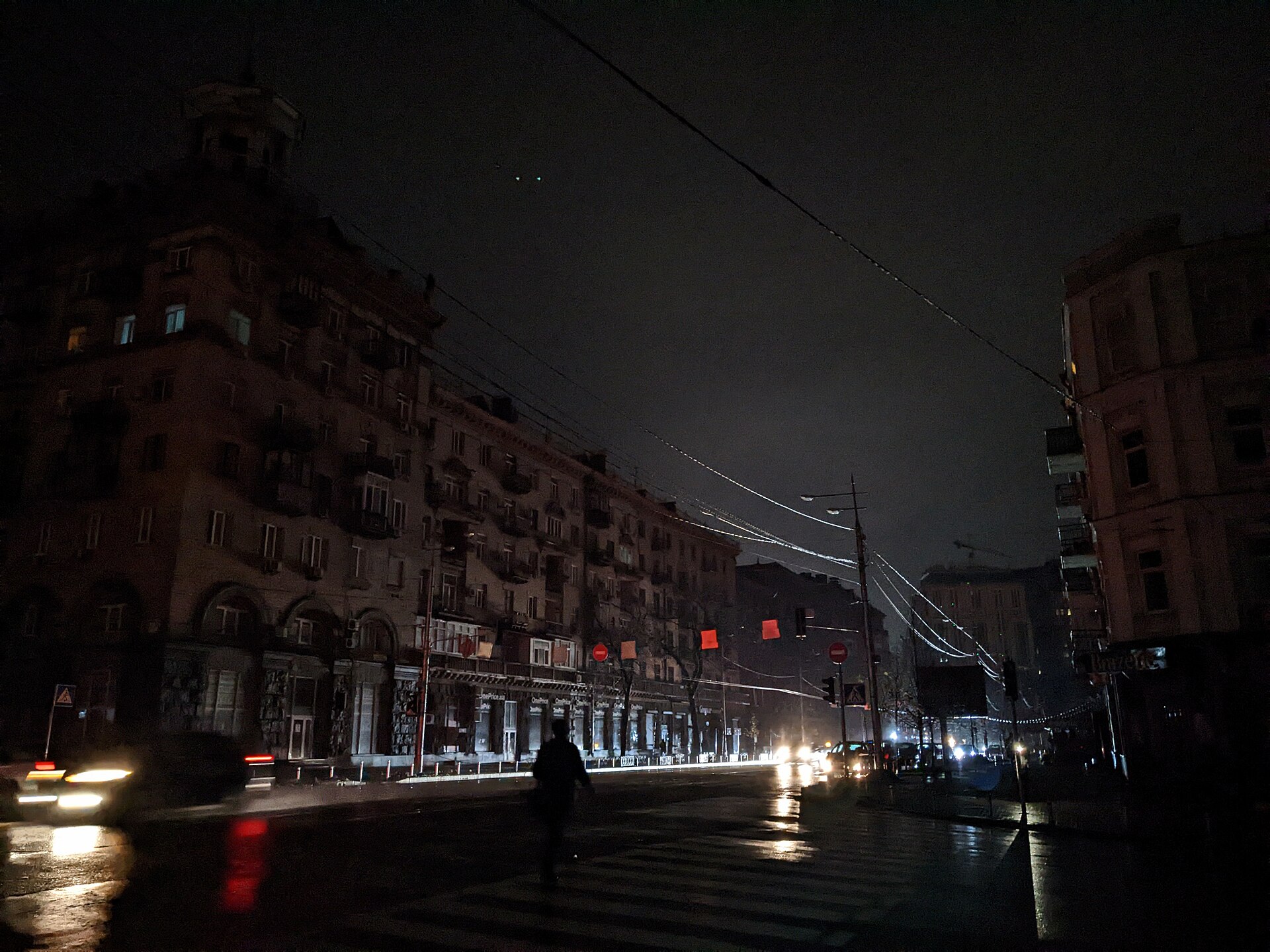
None of this is new in kind; it is new in accumulation. Russia has run an autumn-and-winter campaign against Ukrainian energy infrastructure in every heating season since 2022, on the logic — stated by Ukraine and its partners — that cold magnifies every megawatt destroyed. This autumn's campaign, on DTEK's account, began in sustained form in mid-August, earlier than previous years, and on Reuters' October 20 reporting it has widened west into regions that earlier campaigns largely spared. President Volodymyr Zelenskyy has said Russia struck more than 170 Ukrainian energy facilities since October 11 — the date he associates with the announcement of an energy ceasefire understanding — a count Kyiv presents as proof that the understanding, as Ukraine understood it, was never honored in practice. The ceasefire claim itself is disputed terrain: an energy halt was announced in Washington, welcomed in principle in Kyiv, and never confirmed as binding by Moscow, and each side's account of what was actually agreed differs. What is not disputed is the observable record since October 11, which is a strike tempo that rose rather than fell.
The two sides' stated positions on the campaign itself are irreconcilable and should be reported as stated. Russia says its forces target military-linked infrastructure — facilities serving Ukraine's defense industry and armed forces — and frames energy strikes within that category. Ukraine and its partners say the campaign targets civilian heating and power: the plants hit include combined heat-and-power stations whose output is district heating for residential districts, and the timing, they argue, is chosen for maximum civilian hardship ahead of winter. Between those framings sits the verifiable residue — 230-plus attacks on one company's thermal fleet since 2022, a plant at zero on Friday, half a million people dark — which readers can weigh against both claims.
Who gains, who loses — and what the critics say
On the ledger as each side keeps it: Russia gains a pressure instrument that costs it drones and missiles but no territory and no soldiers, degrades Ukraine's economy and morale simultaneously, and appreciates in value as the November talks window approaches. Ukraine loses generation margin it cannot quickly buy back, diverts air-defense interceptors — already in critical shortage for ballistic threats, as the October 21–22 Kyiv barrage showed — toward nightly drone defense, and spends scarce engineering capacity re-fixing what was fixed before. Ukrainian civilians, who appear in neither side's targeting statements as intended beneficiaries, absorb the difference: in the dark, in the cold, in the queue for the generator-powered shop.
The critics divide predictably but not identically. Ukrainian officials and Ukraine's partners describe the campaign as a deliberate attempt to freeze civilians into pressure on their government, and cite the heat-and-power target set as the evidence. Russian officials reject that characterization and restate the military-infrastructure framing, pointing in turn to Ukrainian long-range strikes on Russian energy facilities — a campaign Kyiv openly conducts against refineries and depots — as the mirror image Moscow claims to be answering. Independent analysts tend to land on the mechanics rather than the motives: whatever the intent, a grid is a civilian system by function, its degradation is measurable, and its repair race against strike tempo is the variable that will decide how this winter reads — a judgment that assigns the hardship without needing to settle the argument about its purpose.
The numbers in context
Friday's headline figure — more than 500,000 people without power in one night, per Deputy Energy Minister Nekrasov via Reuters — is large, and it is not the autumn's largest. In the October 16 wave, more than one million consumers were cut, according to Ukrainian officials; Friday's total is roughly half that, which in this campaign counts as a middleweight night. Three days before the western expansion was reported, on October 20, DTEK said 32,700 families in Odesa region alone remained without electricity after strikes on three of its facilities there — the regional grain out of which national totals are built. The drone arithmetic cuts both ways at once: 176 launched against 140 neutralized is, for Ukraine's air defenses, a strong interception night in percentage terms and, for Ukraine's grid, still 36 drones' worth of leakage against fixed, fragile targets. And the cumulative counters keep their own argument: 230-plus attacks on DTEK thermal plants since 2022, more than 170 energy facilities struck since October 11 alone on Zelenskyy's count, 165 combat engagements on the ground in the past day on the General Staff's. The campaign is not an event. It is a rate.
What happens next
The immediate question is repair: how much of Friday's damage is distribution-level — substations and lines that crews restore in hours to days — and how much is generation-level, like the DTEK plant at zero, where serious damage to turbines or boilers can mean weeks to months and a permanent subtraction from winter capacity. DTEK and Ukrenergo's Friday language — debris clearing first, repairs coordinated, site secured — describes the front end of that process, and the company's history of returning plants to service will be tested against damage it has so far only called serious. Watch for Ukrenergo's outage schedules over the coming days: shrinking scheduled cuts would signal the repair race being won this round; expanding emergency cuts would signal the opposite.
The second question is winter demand, which is a date, not a decision. Ukrainian consumption peaks with the cold, and every week of October strikes lands on a system with less slack than the week before. The third question is interceptors: Ukraine's shortage is worst against ballistic missiles, as Kyiv's October 21–22 experience showed, but mass drone nights also burn through the cheaper layers of air defense at a rate suppliers have struggled to match, and each 176-drone night is drawn against that stock. The fourth is the November window. If trilateral talks convene in mid-November, the plausible scenarios bracket quickly: strikes pause as a goodwill down payment, strikes continue as leverage through the talks themselves, or strikes intensify in the days immediately before the table is set — the pattern ISW's October 22 assessment identified around previous negotiating moments. Friday's 500,000 darkened homes are, among everything else they are, a data point in that sequence: the campaign is still accelerating into the window, not winding down toward it.
Related reading: our Day 1702 briefing on the Kyiv ballistic barrage and the November talks window, and our report on Zelenskyy's count of Russian strikes on Ukraine's energy facilities and the disputed energy ceasefire.
Sources: Reuters, via Devdiscourse (October 23, 2026) — Russia attacked energy facilities in six Ukrainian regions overnight, knocking out power for more than 500,000 people, per Deputy Energy Minister Artem Nekrasov; DTEK official statement (October 23, 2026) — massive attack on a DTEK thermal power plant caused serious damage and halted generation, no staff injured, location withheld, repairs coordinated with Ukrenergo, thermal plants attacked more than 230 times since 2022, sustained campaign since mid-August; Institute for the Study of War, Russian Offensive Campaign Assessment (October 22, 2026) — Kremlin negotiation posture and the pattern of large strike packages around peace-talk moments; wire reporting aggregated from Ukrainian official statements (October 23, 2026) — 176 drones launched, 140 neutralized or suppressed, damage to energy, transport and civilian infrastructure, Polish air-defense activation; Reuters (October 20, 2026) — expansion of strikes into western regions and 32,700 Odesa families without power per DTEK. All combat and casualty figures are attributed to their official sources; no confirmed death toll for the October 23 wave had been reported at publication.