War · Ukraine · Zaporizhzhia / Kramatorsk
The Russian strike Zaporizhzhia clinic staff never saw coming hit a medical building that was not even open. Three people were killed at the private clinic, regional governor Mykhailo Semikin said. In Kramatorsk, in eastern Ukraine, a vehicle marked as evacuating residents was struck and two more people died. Two cities, two strikes, one day — and both targets sit at the very centre of what the laws of war say must never be hit at all.
Track it live: Ukraine war map — Live Global Trackers · Wars tracker — Live Global Trackers
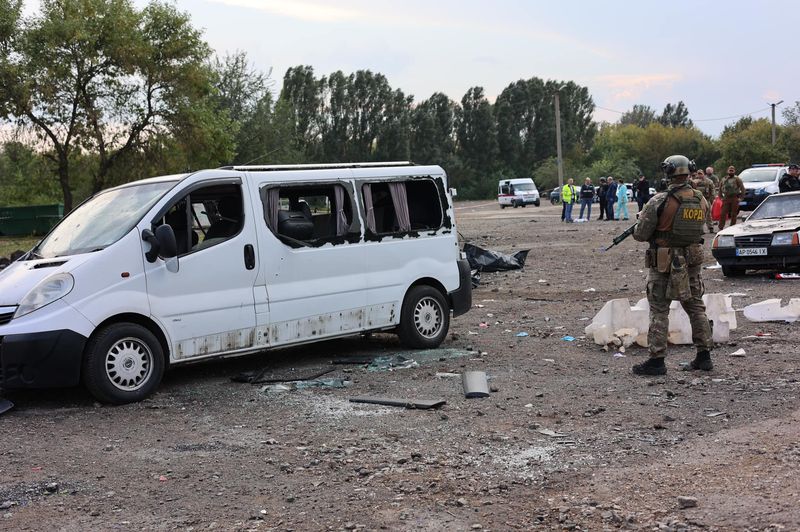
ZAPORIZHZHIA, Ukraine, November 23, 2026 — A Russian strike hit a private clinic building in Zaporizhzhia, in southeastern Ukraine, on Monday, killing three people, regional governor Mykhailo Semikin said, in reporting carried by Reuters, which verified the location and the details of the attack. The clinic was not operating at the time of the strike, Semikin said — a detail that narrows, but does not answer, the question of who the three dead were and why a medical building that was closed was hit at all. In Kramatorsk, in eastern Ukraine’s Donetsk region, Russian forces struck a marked vehicle that was evacuating residents from the front-line city, killing two people, according to Associated Press reporting. Ukrainian officials, cited by the Ukrainian outlet 112.ua and UATV, said the vehicle was hit by an FPV drone and that two further people were wounded in Kramatorsk; that FPV and wounded detail comes from Ukrainian officials and had not been independently confirmed at the time of publication. Five people killed across two cities in a single day, in other words — and every one of the figures in this article is attributed to the source that reported it, because on a day like Monday, precision about who says what is the difference between reporting and rumour.
What happened in Zaporizhzhia: a clinic that was not open
Russian strike Zaporizhzhia clinic: the Semikin account
The Zaporizhzhia governor Semikin clinic strike account is, at this stage, the core of what is known. Governor Mykhailo Semikin said a Russian strike hit a private clinic building in the city and that three people were killed. He said the clinic was not operating at the time. Reuters reported the governor’s account and verified the location and details of the strike, which gives the report a firmer footing than a single official statement: the wire’s verification work on imagery and geography is the process by which a claim about a strike becomes a confirmed strike. What Reuters’ reporting does not yet supply — and what readers should hold open — is the weapon used, the intended target if there was one, and the identities and roles of the three people killed. A private clinic that is not operating is still a building people pass through: guards, maintenance staff, patients collecting records, neighbours. The toll of three is a floor established by the governor and carried by Reuters, not a final accounting of the building and its surroundings.
Russia strikes Ukraine clinic: why “not operating” matters
The detail that the clinic was closed cuts in two directions, and both matter. For Ukraine’s account, it removes the most common justification offered after strikes on medical buildings — that the facility was being used for a military purpose at the time. A clinic that is not operating is not treating wounded soldiers, storing materiel in an active ward or hosting a command post in any ordinary sense; it is a shuttered medical building. For a complete picture, the other direction must be stated too: a closed building can still be struck by error, by a weapon aimed at something adjacent, or by debris and blast from a strike nearby, and none of those possibilities has been established or excluded by the reporting available on Monday. What has been established is narrower and sufficient: a Russian strike hit a private clinic building in Zaporizhzhia, three people are dead according to the regional governor, and Reuters verified the location and details. When Russia strikes Ukraine clinic buildings, the argument that follows is usually about use and intent. Monday’s strike, on the facts reported, will be argued on exactly that ground.
Kramatorsk: the evacuation vehicle strike
Kramatorsk evacuation vehicle strike: two killed in a marked vehicle
The Kramatorsk evacuation vehicle strike is, in its reported outline, the starker of the two attacks. According to Associated Press reporting, Russian forces struck a marked vehicle that was evacuating residents from Kramatorsk, killing two people. Marking is not decoration. An evacuation vehicle is marked so that it can be identified — by drones, by artillery observers, by anyone with a sight picture of the road — as a civilian vehicle carrying civilians out of danger. Evacuations from Kramatorsk are not an abstraction: the city sits on the Donetsk axis, within reach of Russian glide bombs, artillery and drones, and the residents who remain are disproportionately those who are old, ill, poor or caring for someone who is. The vehicle that was hit was performing the single most protected journey in the laws of war: carrying non-combatants away from the fighting.
Kramatorsk FPV drone evacuation claim: what Ukrainian officials say
Ukrainian officials, cited by 112.ua and UATV, added two specifics: that the vehicle was struck by an FPV drone, and that two more people were wounded in Kramatorsk. This article attributes those details to Ukrainian officials because that is what they are — they had not been independently confirmed by Reuters or AP at publication. The distinction matters analytically, not just editorially. An FPV drone is not an area weapon. It is flown by an operator who sees, through the drone’s camera, what the drone sees, up to the moment of impact. If the Kramatorsk FPV drone evacuation account is confirmed, the strike on a marked evacuation vehicle was not a matter of coordinates fed into a tube or a bomb released from altitude; it was a weapon steered onto its target by a person watching it. That is why the confirmation question is not pedantry. A glide bomb that lands long is a tragedy of inaccuracy. An FPV drone that hits a marked evacuation vehicle is a decision. Which of those Monday’s strike was remains, for now, a Ukrainian-official claim awaiting independent verification — and this article will update when that verification arrives.
The numbers, kept separate
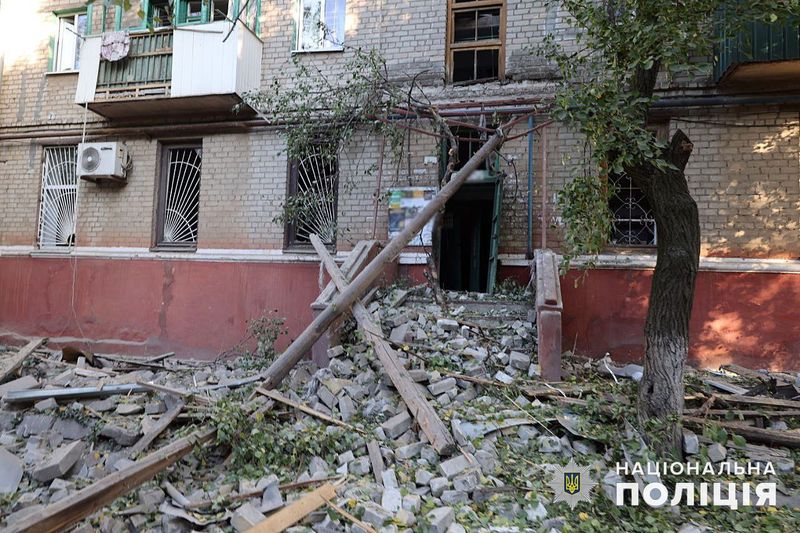
Zaporizhzhia and its region have been struck so often this autumn that the tolls blur, and blurring them is how tolls get inflated. So, precisely: Monday’s clinic strike in the city of Zaporizhzhia killed three people, according to Governor Semikin via Reuters. Monday’s strike on the evacuation vehicle in Kramatorsk killed two people, according to AP, with two more wounded according to Ukrainian officials. Those are the figures this article reports. They are distinct from the separate Zaporizhzhia-region toll reported on November 21 — two killed and 22 injured, including a child — and from this newsroom’s earlier coverage of a Russian strike on a Zaporizhzhia apartment building. Different days, different targets, different counts. Adding them together would produce a bigger number and a worse article.
Ukraine civilian casualties November 2026: the toll in context
Context, properly used, is not addition but scale. The UN has documented that Ukraine’s civilian toll is accelerating rather than fading as the war lengthens: as Signal Post News reported earlier this month, the UN counted 372 civilians killed in October 2026 alone, and 2026’s confirmed civilian death toll passed the whole of 2025 before the year was out — see our report, “Ukraine’s Civilian Toll Is Accelerating: 372 Killed in October, and 2026 Has Already Passed All of 2025, the UN Says”. Against that background, five deaths on a Monday is not a rounding error; it is the daily texture of a toll that now runs at roughly a dozen confirmed civilian deaths a day. The clinic and the evacuation vehicle also belong to a specific subset of that toll — deaths in the places and vehicles that exist to keep civilians alive — which is why they draw scrutiny out of proportion to their number.
Why this matters
A Russian strike on hospital Ukraine facilities: the protected status of medicine
Medical facilities are not merely civilian objects that happen to contain sick people. Under the Geneva Conventions, hospitals and clinics carry a specific protected status: they may not be attacked, and that protection is lost only if they are used, outside their humanitarian function, to commit acts harmful to the enemy — and even then, only after warning. A Russian strike on hospital Ukraine infrastructure therefore triggers a legal and evidentiary argument that a strike on an apartment block, however criminal, does not trigger in the same form. Monday’s facts, as reported, are stark in that frame: a private clinic, not operating, hit by a Russian strike, three dead, per the governor and Reuters. No claim that the clinic was being used for military purposes accompanied the reporting available on Monday. That does not close the legal question — it opens it, and it places the burden of explanation on the side that struck a medical building. Ukraine’s hospitals and clinics have been struck so repeatedly across this war that the World Health Organization has maintained a running verified count of attacks on health care since 2022; Monday’s clinic joins that ledger.
Marked evacuation vehicle attacked Ukraine: the road out is a target set
The marked evacuation vehicle attacked Ukraine case carries its own, parallel weight. Evacuation is the mechanism by which a front-line city’s civilians are supposed to become safe. Every element of it — the marked vehicle, the announced routes, the assembly points, the trains west — depends on the attacking force treating the machinery of departure as off-limits. When an evacuation vehicle is struck, the damage is doubled: the people killed in the vehicle, and the people who will now not get into the next one. Evacuation organisers in Donetsk region have described this deterrent effect after every strike on a bus, a convoy or a station: residents who were wavering decide to stay, in homes that are becoming less survivable by the week, because the road out looked more dangerous than the basement. Zaporizhzhia knows this from its own history. The photograph at the top of this article is from September 30, 2022, when a missile strike on a humanitarian convoy in Zaporizhzhia killed 30 civilians who were queueing to cross into occupied territory to reach relatives. The convoy was the evacuation machinery of its day. It was hit anyway.

What it signals: pressure on two axes at once
Read as a map, Monday’s strikes sit on the war’s two most active civilian-pressure fronts. Zaporizhzhia is the great city of Ukraine’s southeast: a regional capital within glide-bomb and drone range of the southern front, hosting displaced people from across the occupied south, and struck repeatedly this autumn — including the apartment-block strike this newsroom covered earlier, “Zaporizhzhia Strike October 2026: Deadly Overnight Exchange Hits Both Sides of the Ukraine-Russia Border”. Kramatorsk is the de facto administrative capital of Ukrainian-held Donetsk region and the anchor of the Kramatorsk–Sloviansk agglomeration that Russia’s eastern offensive is grinding toward; its bus stop was bombed in a strike this newsroom covered in October, “Kramatorsk Bus Stop Bombing Kills at Least 30 in Deadliest Single Strike of 2026”. Strikes on a clinic in the southern capital and an evacuation vehicle in the eastern one do not, by themselves, prove a coordinated design. But they fit the campaign’s observable logic: make the cities that sustain the front unliveable, make departure dangerous, and let winter, distance and fear do the rest. That is analysis, not attribution — the fact is the two strikes; the pattern is what four years of similar strikes suggest they mean.
Context: how we got here
Russia Ukraine war civilian infrastructure strikes: a four-year pattern
The Russia Ukraine war civilian infrastructure strikes pattern did not begin on Monday. It runs from the siege of Mariupol and the strike on its maternity hospital in March 2022, through the April 2022 missile strike on Kramatorsk’s railway station that killed dozens of evacuees waiting for trains, through the September 2022 Zaporizhzhia convoy strike pictured above, and into the systematic campaigns against power, water and heating infrastructure that have defined the war’s recent winters. Each episode produced the same sequence: a strike on a place civilians had reason to think was protected, an official Russian denial or counter-claim, a Ukrainian and Western condemnation, documentation by investigators — and then, overwhelmingly, no individual consequence. The cumulative effect is the point. A clinic here and an evacuation vehicle there are not aberrations from the campaign; on the documented record, they are among its most consistent features. Monday’s strikes are news because five people died. They are significant because of the list they join.
Who gains, who loses, and what the critics say
The gains from strikes like Monday’s are narrow and mostly atmospheric. Terrorising the population of a front-line city can serve an advancing force’s purpose: every family that flees Kramatorsk is a family the defence no longer has to feed but also a city emptied of the people who give the defence its meaning, and Russian doctrine has treated depopulation as a tool rather than a side effect. Against that, the losses are concrete. Each verified strike on a clinic or a marked vehicle adds to the evidentiary files being assembled by Ukrainian prosecutors and international investigators; each one hardens the case, in Western capitals, for the air-defence deliveries Ukraine requests after every attack; and each one costs Russia the residual benefit of the doubt in the argument over intent. Critics of Ukraine’s framing note, correctly, that attribution in the first hours rests heavily on Ukrainian officials and that the FPV detail in Kramatorsk is unconfirmed — which is why this article labels it as such. Critics of Russia’s conduct answer that the pattern no longer needs any single episode to be proven: after four years, the burden has shifted. Both critiques can be held at once, and honest reporting holds them at once: verify each strike on its own evidence, and read it against the record that precedes it.
What happens next
Identification and accounting. Expect the Zaporizhzhia toll to be revisited as the clinic site is fully searched and the three dead are identified; expect, too, a fuller Ukrainian account of the Kramatorsk vehicle — who was driving, who was being carried, and what marking the vehicle bore — and, critically, whether independent verification of the FPV-drone claim emerges. If it does, the Kramatorsk strike moves from the ledger of wartime tragedy to the much smaller, much graver ledger of apparently deliberate attacks on marked evacuation transport.
The official argument. Kyiv will present Monday’s strikes to partners as further evidence for air-defence and long-range strike requests, and Ukrainian prosecutors will log both episodes in the war-crimes documentation effort. Moscow’s response, on the established pattern, will be denial, silence or a counter-claim about military use; the clinic’s closed status, stated by the governor on the day, is the fact that response will have to work around. Watch whether any Russian claim about either target is specific enough to be checked — checkable claims are the ones that move the argument.
The cities. For Zaporizhzhia and Kramatorsk, the operational question is whether Monday changes behaviour: whether evacuations from Kramatorsk slow because the road out now carries a demonstrated risk, and whether Zaporizhzhia’s remaining medical network — already the refuge system for the whole southeast — absorbs the loss of another facility. Winter is arriving on both axes. The strikes that matter most in this war are increasingly the ones aimed not at trenches but at the systems that let civilians endure: heat, power, medicine and the road out. On Monday, two of those systems were hit in a single day. Follow the front on our Ukraine war map tracker and the wider conflict on the wars tracker.
Read next: Zaporizhzhia Strike October 2026: Deadly Overnight Exchange Hits Both Sides of the Ukraine-Russia Border · Kramatorsk Bus Stop Bombing Kills at Least 30 in Deadliest Single Strike of 2026 · Ukraine’s Civilian Toll Is Accelerating: 372 Killed in October, and 2026 Has Already Passed All of 2025, the UN Says
Sources
Reuters, reporting that a Russian strike on a private clinic building in Zaporizhzhia killed three people and that the clinic was not operating at the time, according to regional governor Mykhailo Semikin, with the location and details verified by Reuters (November 23, 2026), via Devdiscourse: devdiscourse.com. Associated Press, reporting that Russian forces struck a marked vehicle evacuating residents from Kramatorsk, killing two people (November 23, 2026), syndicated via WVLT: wvlt.tv. 112.ua / UATV, reporting Ukrainian officials’ account that the Kramatorsk vehicle was hit by an FPV drone and that two further people were wounded; that detail is attributed to Ukrainian officials throughout this article and had not been independently confirmed at publication. Casualty figures are attributed to their sources throughout: three killed in Zaporizhzhia (Governor Semikin, via Reuters); two killed in Kramatorsk (AP); two wounded in Kramatorsk (Ukrainian officials, via 112.ua/UATV). This article does not merge Monday’s tolls with the separate November 21 Zaporizhzhia-region toll (two killed, 22 injured including a child) or with earlier Zaporizhzhia strikes covered separately by this newsroom.