Track it live: Live war tracker · Oil price forecast tracker
What happened
Moscow began importing gasoline by sea in July 2026, according to the Financial Times reporting carried by UNITED24 — itself a marker of how far the situation had already moved by midsummer. The tankers have been routed to northern ports, on the Baltic coast near St Petersburg and along the White Sea coast, deliberately avoiding the Black Sea because of the danger from drones. By October, that improvised supply line had grown into the record flow of 390,000 tonnes in a single month on the FT/Kpler gasoline-by-sea series — the highest in that series, and the figure behind the “record” in the headline.
The sea route is only part of the inflow. Overland, Russia has imported more than 600,000 tonnes of gasoline from Belarus since the summer, plus 8,000 tonnes from Kazakhstan, according to estimates by the Beroc research centre cited in the same reporting. A separate, CREA-based account puts Belarusian supply higher still — at more than 1 million tonnes across January–September, with a monthly record of 212,000 tonnes in July. Those two Belarus figures are different estimates covering different periods, and this article presents them as such rather than merging them: what they agree on is the direction and the scale, not a single total.
The government’s own posture confirms that the inflow is policy, not accident. A complete ban on gasoline exports has been in place since April, keeping every litre produced at home. On Tuesday, November 17, Deputy Prime Minister Alexander Novak instructed officials to expand gasoline imports further — and, in a step that underlines the tightness of supply, to secure additional fuel that falls below Russia’s own emissions standard. Novak had already signalled the duration in October: “We’ll be importing at least until the end of the year.”
The numbers
Context is what turns 390,000 tonnes from a large number into an extraordinary one. In the CREA series reported elsewhere, Russia’s seaborne gasoline imports ran at 416,000 tonnes in August and 234,000 tonnes in September — against a monthly peak of only about 5,000 tonnes across 2023–2025. In other words, before 2026, Russia essentially did not import gasoline by sea at all; in a typical month the flow rounded to zero. One precision matters here, and it is worth stating plainly: the FT/Kpler and CREA series differ in coverage and method, so their monthly figures are not directly comparable, and no single month’s number from one series should be set against another’s. But every series tells the same structural story — imports running at many times pre-2026 levels, with the 5,000-tonne monthly peak of 2023–25 set against hundreds of thousands of tonnes a month now.
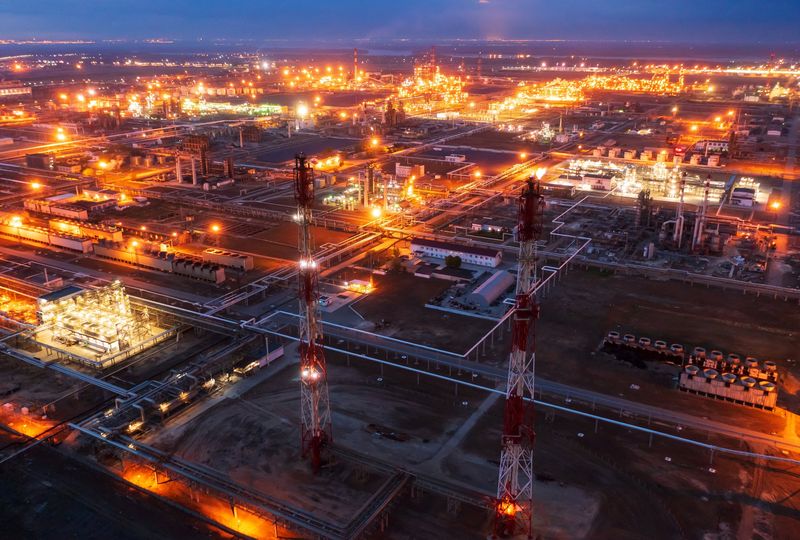
Behind the imports sits the processing collapse that made them necessary. Reuters estimates that Russia’s daily crude processing fell from about 700,000 tonnes in late October to about 500,000 tonnes in mid-November — a drop of roughly 30% in a matter of weeks; Signal Post News examined those figures in our report on how Ukrainian drones have nearly halved Russia’s oil refining. Since late October, Ukraine has hit about 10 of Russia’s 35 major refineries, by the Kyiv Post’s count, and the mid-November wave struck at least nine refineries in two weeks, disrupting facilities responsible for roughly 55% of Russia’s commercial gasoline production, according to Sergey Vakulenko of the Carnegie Russia Eurasia Center. The plant-level picture, as described by Michael Bohnert of RAND, is stark: the Yaroslavl and Nizhny Novgorod refineries reportedly at a standstill, Ryazan running at about 10% of capacity, and Omsk — Russia’s largest refinery — at roughly half.
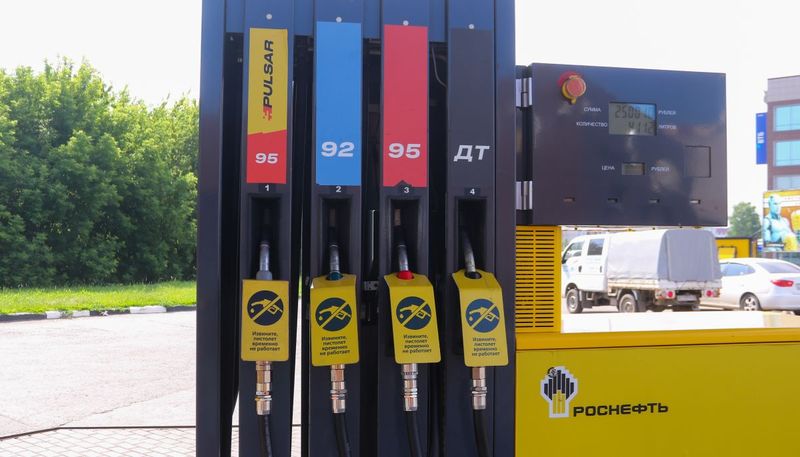
At the pump, the shortage has become administrative. Purchase limits are in force at Rosneft stations, which account for about 10% of Russia’s filling stations, according to the FT; at least eight regions are reporting shortages and at least six have imposed caps, mostly around 30 litres per day, with caps of 50 litres per vehicle reported at Rosneft stations in Moscow. On the St Petersburg exchange, gasoline trading fell 31% in a week, with the benchmark AI-92 grade down 33%. And the buffer is thin: Vakulenko estimates that Russia’s gasoline reserves cover about a week of national consumption.
Why this matters
The analytical point is the distinction between crude and refining. Russia’s problem is not producing oil — its wells and pipelines continue to deliver crude, much of it for export. The pressure point Ukraine has found is the conversion step: the refineries that turn crude into the petrol, diesel and jet fuel the domestic economy actually runs on. Crude that cannot be refined can be shipped abroad; petrol that was never made cannot be conjured at a filling station in Kazan or Krasnodar. A campaign against refineries therefore lands where a campaign against oilfields would not — on motorists, farmers, hauliers and regional governments — and the import figures are the receipt.
Imports are also the expensive way to solve the problem. Finished gasoline bought on international markets costs more than gasoline refined at home from domestic crude, and at times Indian gasoline has been offered at twice the Russian exchange price. The export ban compounds the fiscal cost from the other side: product that would normally earn export revenue is held at home, while the state’s fuel-damper mechanism — the subsidy system that compensates refiners for selling domestically below export parity — grows more expensive as the gap it must cover widens. Every tonne imported is thus paid for several times over: in the purchase price, in forgone exports, and in the budget cost of keeping pump prices politically tolerable.
Context: a campaign that found its target
Ukraine’s refinery campaign has run, in waves, through 2026, and its logic has been consistent: refineries are large, fixed, flammable and spread across a territory too vast to defend everywhere at once. The summer of 2026 brought the first broad shortages and the tightening of export restrictions that culminated in the complete gasoline export ban in place since April; the autumn brought a change of tempo, with the late-October escalation and the mid-November wave that struck at least nine refineries in two weeks, including the strikes on the Afipsky and Ilsky refineries in the Krasnodar region and targets around Belgorod that Signal Post News covered as they happened.
The fiscal strain has a paper trail of its own. Ukraine’s Foreign Intelligence Service — an interested source, and its figures are presented here as an intelligence assessment rather than an audited account — estimates that Russia’s fuel-damper payments rose from about $2.30 billion in August to about $3.56 billion in September. Even treated with caution, the direction of that series matches the import data: a state spending more each month to hold its domestic fuel market together while its refining base shrinks. The pressure is also part of the wider financial contest over the war, as European governments weigh measures such as the proposed €45 billion loan for Ukraine — a reminder that the refinery campaign is one front in an economic war being fought on several balance sheets at once.
Multiple angles
Who benefits: the refiners and traders on the other side of the flow
Every emergency import programme creates winners, and this one’s are outside Russia. Refiners and traders in Morocco, India, Turkey and Belarus are selling finished gasoline into a market that, two years ago, did not exist — at prices that, in the Indian case, have at times reached twice the Russian exchange level. Belarus, whose refineries have supplied the largest overland volumes on both the Beroc and CREA-based estimates, has acquired a new form of leverage over its larger neighbour: Moscow now needs Minsk’s product in a way it did not before the strikes. For the trading houses moving cargoes to Baltic and White Sea ports, Russia’s shortage is a premium market created by someone else’s drones.
Who loses: motorists, farmers and hauliers
The costs land at home. Russian motorists face the daily reality behind the statistics — purchase caps of around 30 litres a day in at least six regions, 50-litre limits reported even in Moscow, stations with grades unavailable, and exchange prices for AI-92 down a third in a week on collapsing trading volumes, a sign of a market rationing by availability rather than clearing by price. Farmers and hauliers, whose demand cannot be deferred the way a private car trip can, face the same caps on the diesel and petrol their work depends on. A reserve buffer of about a week’s consumption, on Vakulenko’s estimate, leaves little room for a cold snap, a logistics failure or another bad fortnight of strikes.
The sceptics: how much of this is real?
The counterpoints deserve equal weight, because the data environment is genuinely poor. Russian regional authorities have downplayed the damage — officials in Bashkortostan said the Salavat facilities were operating normally. Bohnert of RAND, while cataloguing the plant-level damage, also notes the system’s remaining scale: Russia still refines about 3.7 million barrels a day against domestic demand of 3.2–3.8 million barrels a day, which is why the shortage shows up regionally and by grade rather than as a uniform national collapse. Economist Janis Kluge cautions that empty-station data may be skewed by reporting behaviour — stations and motorists report outages more readily than normal operations, so the visible picture can overstate the average one. Ukraine’s claim that more than half of Russia’s refining capacity has been knocked out cannot be independently verified. And the FT itself reports that the overall domestic fuel situation remains, for now, mostly under control — a system under severe, visible strain is not the same thing as a system that has failed.
What happens next
The winter will arbitrate between those readings. Demand for fuel shifts with the season, heating and logistics loads rise, and the repair race becomes the central variable: every refinery unit restored subtracts from the import requirement, and every repeat strike adds back to it. Novak’s instruction on November 17 to expand imports further — including fuel below Russia’s own emissions standard — suggests Moscow expects the gap to persist rather than close, and his October commitment to import “at least until the end of the year” sets the minimum duration. Three scenarios follow from the variables already in view. If repairs outpace strikes, imports plateau at a high but manageable level and the caps loosen region by region. If the strike tempo of the past two weeks is sustained, the import bill, the damper costs and the rationing map all grow together into the new year. And if reserves of about a week’s consumption are ever tested by a simultaneous shock — a major plant lost outright, a port closed, a cold snap — the rationing that is now regional and grade-specific could become general. Which of those futures arrives will be visible first not in communiqués but in the same place this story began: the tanker schedules into Baltic and White Sea ports, and the tags on the pumps.
Figures are attributed to their sources throughout. The 390,000-tonne October figure and the “record” characterisation belong to the FT/Kpler gasoline-by-sea series as reported by UNITED24 Media; CREA and Beroc figures are separate estimates with different coverage and periods, and are not directly comparable with the FT/Kpler monthly figures. Ukraine’s claim that more than half of refining capacity is knocked out cannot be independently verified, and the fuel-damper figures are an assessment by Ukraine’s Foreign Intelligence Service.
Sources
Sources: Financial Times reporting via UNITED24 Media (Nov. 18, 2026); Business Insider reporting on Russian gasoline imports and Deputy Prime Minister Novak (Nov. 18, 2026); Reuters processing estimates and reporting on refinery strikes, rationing and imports (Nov. 18, 2026); CREA and Beroc estimates as cited in the reporting above.