A Kharkiv drone strike kills two elderly residents in the settlement of Korotych overnight, Ukrainian officials said, as Russia launched 98 drones and six missiles across Ukraine hours before a US envoy was due to sit down with Vladimir Putin.
World / An 81-year-old woman and an 83-year-old man dead in a village outside Kharkiv, a university building burning in Kremenchuk, fires in Kyiv — and, a few hours later, an American envoy on a plane to St. Petersburg carrying a peace proposal.
Track it live: Ukraine war tracker — live map and latest developments
Update — October 21, 2026: Overnight Toll Rises to Four Killed Across Ukraine
Ukraine's prime minister, Sergii Koretskyi, said on Wednesday that four people were killed in the overnight Russian strikes, Reuters and AFP reported — a countrywide toll that includes the two Korotych deaths reported above. Two of the dead were in Kyiv, where a drone hit a 24-storey residential building, Ukrainian police said; the other two were the elderly couple, aged 81 and 83, killed in the Kharkiv region, whose bodies emergency services found under the rubble of their destroyed house, Kharkiv regional head Oleh Synegubov said. Track it live: Ukraine war map.
Koretskyi said the strikes hit energy facilities in the Kyiv, Volyn, Odesa and Mykolaiv regions, as well as civilian enterprises, a university building and a shopping centre, with injuries reported in the Poltava, Lviv, Cherkasy and Chernihiv regions, and he said a drone attacked a merchant vessel in the Black Sea. Kyiv power company DTEK said emergency power outages were imposed on three parts of the capital alongside planned cuts elsewhere in the city. Russia's defence ministry said its forces had hit a drone-storage warehouse in Poltava, a Kyiv power substation and a ship carrying military cargo toward Odesa; those claims, and Ukraine's account of the night's toll, are each reported here as the statements of the side that made them.
What happened overnight
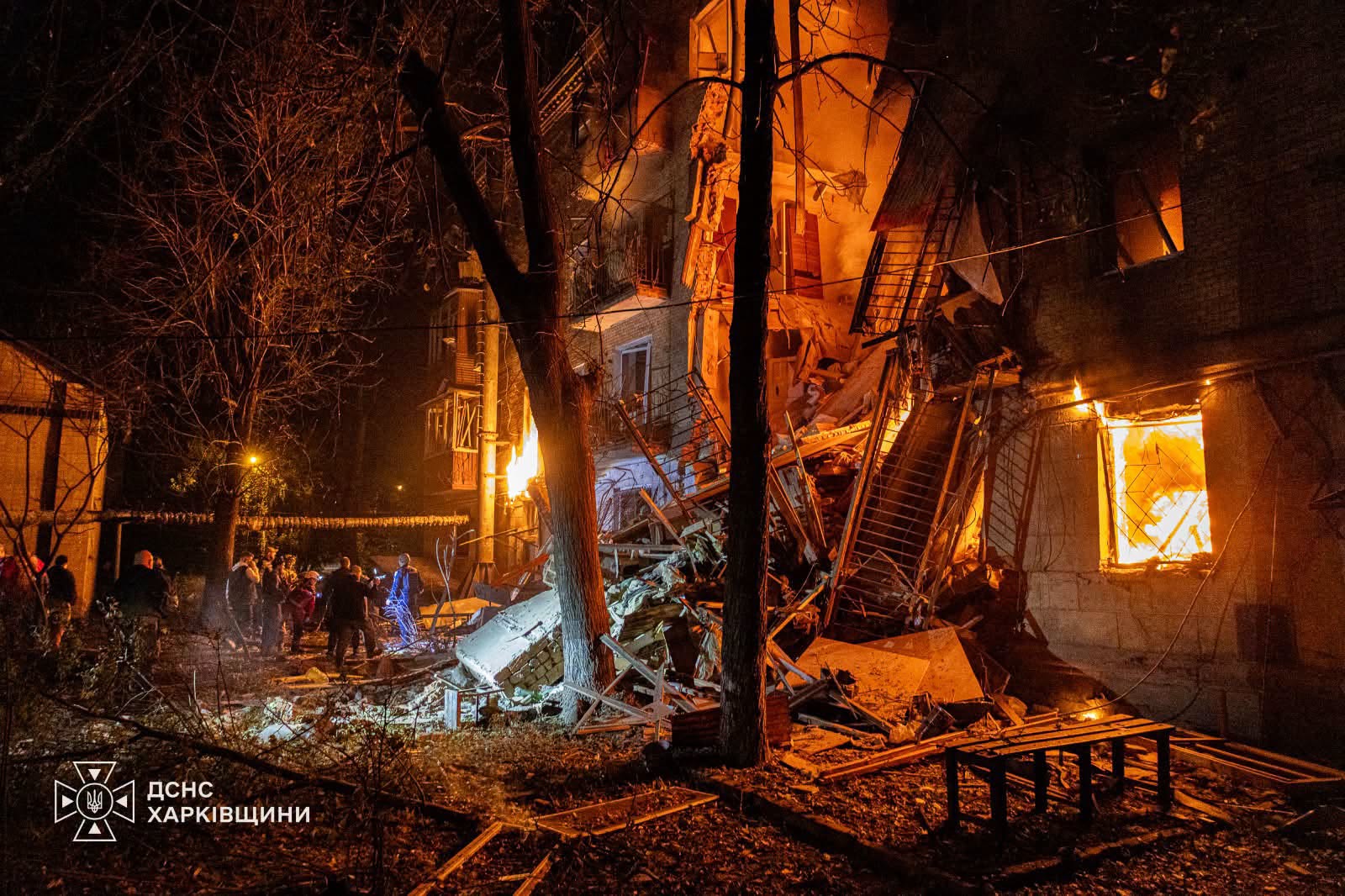
The dead were in Korotych, a settlement in the Kharkiv district west of the city itself. Governor Oleh Synehubov, writing on Telegram on Wednesday morning, said Russian drones killed an 81-year-old woman and an 83-year-old man there, and that 11 more residents — including a two-month-old baby and an eight-year-old girl — suffered acute stress reactions and received medical assistance. Thirteen private homes were damaged, along with a vehicle, and one outbuilding burned down. Reuters, reporting the same attack from the governor's statement, described two people killed near Ukraine's second-largest city and 11 people suffering stress reactions in a strike on private houses. Emergency services worked through the aftermath, responding to fires and assessing damage to homes. Neither report described a military target in Korotych, and no Russian account of the strike had been published alongside them.
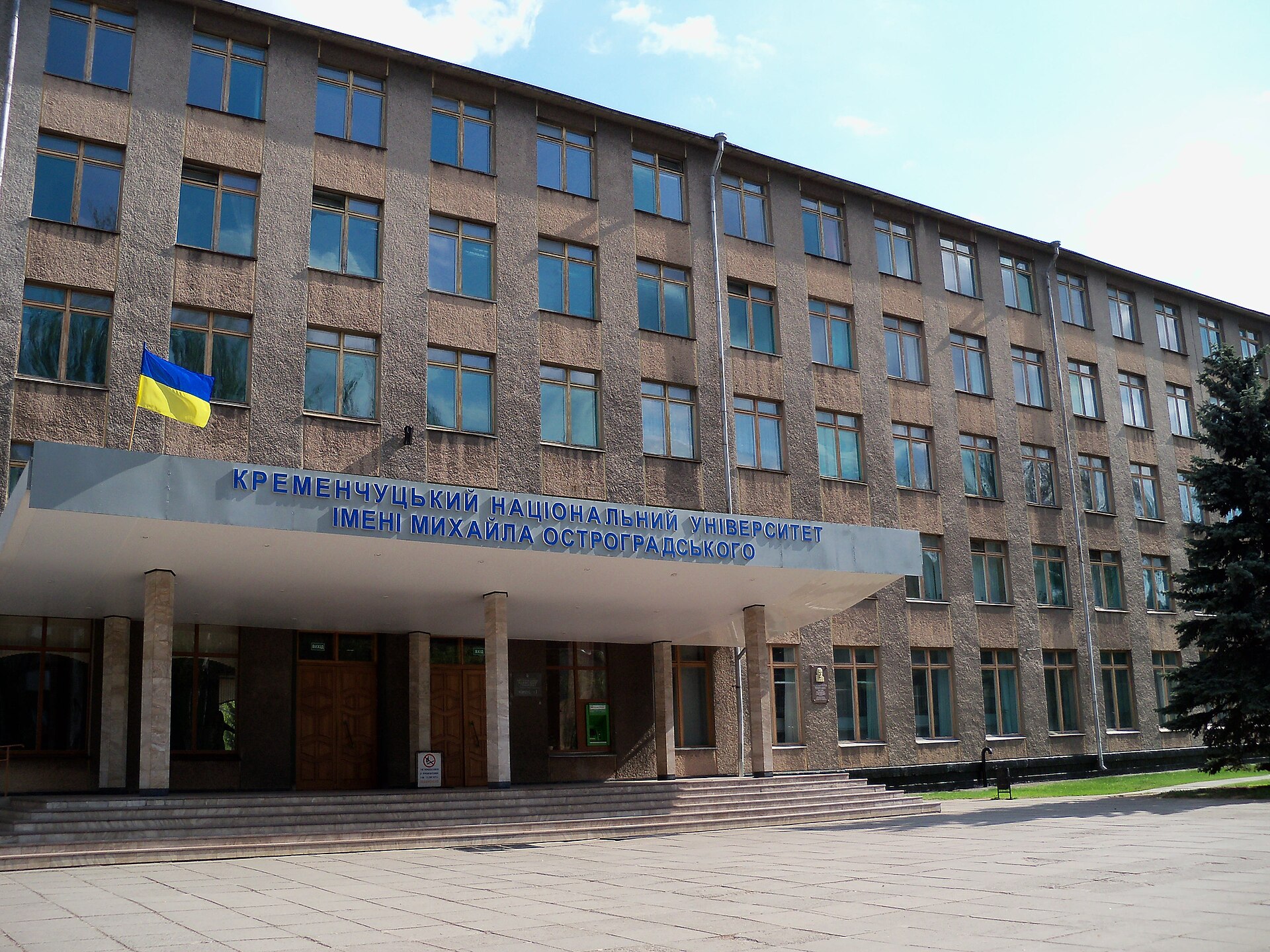
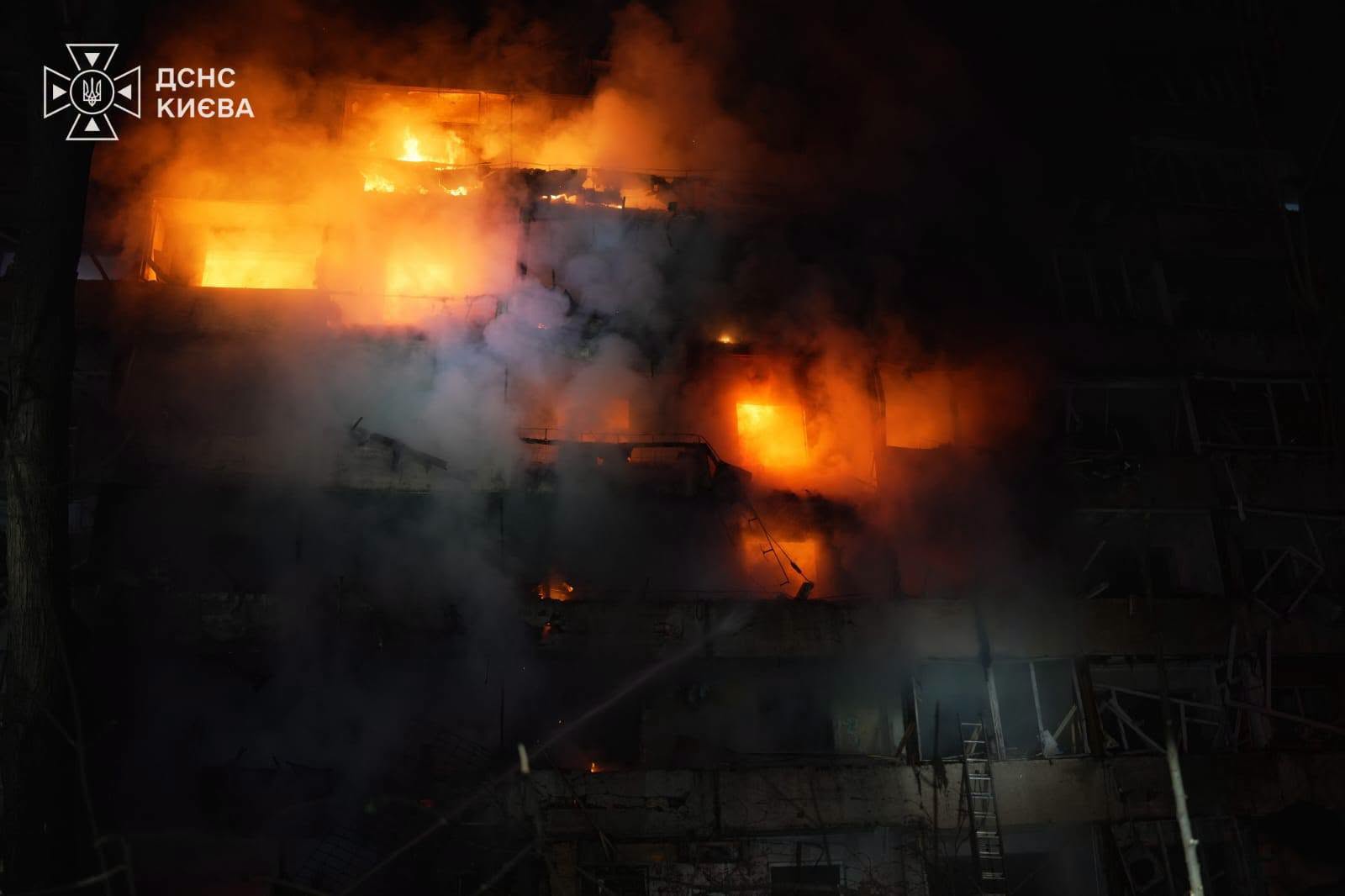
The barrage was far wider than one village. The Ukrainian Air Force said the overnight attack comprised two Iskander-M/KN-23 ballistic missiles, four S-300 missiles and 98 drones, of which roughly 70 were Shahed-type attack drones. By 8:30 a.m. on Wednesday, air defences had shot down or electronically suppressed 58 drones. Missiles and 37 attack drones struck 10 locations, and debris from intercepted drones fell at two further sites. The Air Force warned, as the morning began, that the attack was still continuing, with several Russian drones still in Ukrainian airspace. In Kyiv, Mayor Vitalii Klitschko said a Russian strike hit a high-storey apartment building and transport infrastructure and caused fires; shortly after midnight he had reported a drone strike on a transport facility in the capital's Solomianskyi district, with drone debris also falling in the Sviatoshynskyi district and in a non-residential area of Solomianskyi. In Kremenchuk, Poltava regional governor Vitalii Diakivnych confirmed shortly after midnight that a drone had struck an educational institution: "A strike by an enemy UAV on an educational institution building was recorded in Kremenchuk. A fire broke out. All services are working at the scene." The institution was the Mykhailo Ostrohradskyi National University. Regional reporting put the injured at two — one in moderate condition, and a 16-year-old teenager hospitalised with symptoms of concussion and contusion; the fire was quickly extinguished. One wire account put the Kremenchuk injured figure at "at least one"; the regional administration's figure of two is the one carried here, with that discrepancy noted in the Sources section.
The day that led into the night
Wednesday's barrage did not arrive out of a quiet sky. It closed a Tuesday in which, by the account of Kyiv's own mayor, Russian drones struck residential districts and infrastructure across the capital through the day, killing one person and injuring 21 — twelve of them hospitalised, three in serious condition — and damaging energy infrastructure. On Tuesday evening, in the southern Mykolaiv region, a Russian drone struck an Epicentr home-improvement superstore in Pervomaisk, injuring eight people — five women aged 28 to 56 and three men aged 23 to 43, two of the women hospitalised in moderate condition, according to acting regional governor Heorhii Reshetilov. In the north, a drone hit transport infrastructure in Chernihiv on Tuesday evening and started a fire; no casualties were reported there. Read together, Tuesday and the small hours of Wednesday describe a single rolling effort against places Ukrainians live, shop, study and travel — homes in Korotych and Kyiv, a superstore in Pervomaisk, a university in Kremenchuk, transport facilities in two cities — rather than a set of isolated incidents. That pattern is the context in which two deaths in a village outside Kharkiv should be read: not as an aberration in the war's 1,701st day, but as its most ordinary product.
Why this matters
Two elderly people killed in their village is, by the arithmetic of this war, a small number. Its significance lies in the timing and in what the night's numbers reveal about where the air war now stands. The strikes were launched on the one night this autumn when diplomacy was visibly in motion: Steve Witkoff had spent Tuesday in Oslo with President Volodymyr Zelenskyy and European leaders shaping an updated proposal to end the war, and was due in St. Petersburg on Wednesday to hand it to Vladimir Putin. A US official called the Oslo talks "constructive" and said Ukraine had presented new ideas that were discussed in detail, with "significant progress" toward a framework. Whatever Moscow intended by the timing — and no Russian statement on these strikes accompanied the barrage, so intent cannot be established from the record — the sequence is the fact: a 104-weapon night against Ukrainian homes, a university and the capital's transport network, delivered in the hours between the drafting of a peace proposal and its presentation. In this war, the negotiating table and the launch pad have repeatedly operated on the same clock, and each side reads the other's salvos as part of the negotiation. Ukrainians will read Wednesday's barrage as the answer that arrived before the question; the Kremlin, if precedent holds, will say nothing about Korotych at all.
The second significance is defensive arithmetic. Ukraine's air defences neutralised 58 of 98 drones — a majority, and still not enough: 37 attack drones and the night's missiles reached 10 locations. A defence that stops six in ten incoming drones is simultaneously a success and a guarantee that, at this volume, something gets through almost every night. What got through on Wednesday was not, on the reporting available, aimed at the front line. It hit a residential settlement, an apartment block, a university and transport infrastructure. The gap between "most drones stopped" and "a village lost two of its oldest residents" is where this war is actually lived, and it is a gap that widens or narrows with air-defence supplies — the interceptors and intelligence support that were themselves on the Oslo agenda. Every percentage point of interception is, in the end, a street in Korotych that does or does not burn.
How we got here
Kharkiv, Ukraine's second city, sits about 30 kilometres from the Russian border — close enough that it has been shelled, bombed and droned since the first week of the full-scale invasion in February 2022, and close enough that warning times for some weapons are measured in seconds. Its surrounding settlements, Korotych among them, live inside the same envelope. This month alone, the region has buried six people — three of them children — killed by a drone in a park in Nova Vodolaha, and has taken repeated strikes on its power and heating infrastructure as the heating season begins. Wednesday's dead were killed not by a weapon aimed at an army but, on the Ukrainian account, in their homes; the governor's office itemised houses, a vehicle and an outbuilding. For the wider country, the overnight barrage is one entry in a sustained autumn campaign against energy, transport and residential targets that Ukrainian officials say is designed to make the winter harder to live through, and that Russia generally describes — when it describes its strikes at all — as aimed at military and energy infrastructure supporting Ukraine's war effort. On the Korotych and Kremenchuk strikes specifically, Moscow had made no public statement in the reports available at publication; its Wednesday claim, in the update below, listed other targets.
Multiple angles: the proposal, the pressure, and the village
From Washington's side of the table, the night sits inside a deliberate sequence. The Oslo talks were built to produce a unified framework — security guarantees for Ukraine and a postwar economic plan were among the subjects, according to the US official who briefed on them — that Witkoff could physically carry to Putin, with Jared Kushner joining the St. Petersburg meeting virtually and Russian envoy Kirill Dmitriev meeting Witkoff at the airport, according to sources cited by Reuters. President Donald Trump, speaking on Tuesday, framed the moment as one for a settlement and put the onus on Kyiv: Zelenskyy, he said, "has to want to settle this war," while Russia "would like to get it done" — describing Russia as "a big machine" that "just keeps grinding forward" with "an unlimited supply of people." He also complained that the United States had given "tremendous amounts" to Ukraine and "got nothing back" other than "high diesel." From Kyiv's side, Zelenskyy said after Oslo that the next step should be a leaders' meeting — himself, Putin and Trump in one room — a format Russia has so far rejected; Ukraine presented new proposals in Oslo and, on the US account, left with "strong operational alignment" on next steps. And from the third angle — the one with no seat at any table — Korotych's night is a reminder of what the framework is about: whether a village 30 kilometres from the border can sleep without drones. Critics of the current track, including European officials who have said US negotiators pressed Ukraine toward Putin's terms, argue that a proposal drafted under the pressure of nightly barrages prices Ukrainian land and security in a currency set by those barrages. Supporters of the track answer that the barrages are exactly why a settlement cannot wait. Both arguments were available before Wednesday; Wednesday's dead are now part of both.
The numbers, in context
The night's figures, all of them Ukrainian official figures as reported by Reuters and the Kyiv Post, are these: 104 weapons launched in total — 98 drones and six missiles. Of the drones, 58 were shot down or electronically suppressed, an interception rate of about 59 percent; missiles and 37 drones hit 10 locations, with debris at two more. In Korotych: two dead, aged 81 and 83; 11 with acute stress reactions, the youngest two months old; 13 homes damaged. In Kremenchuk: two injured, one of them a 16-year-old. Set against the day before — one killed and 21 injured in Kyiv on Tuesday, eight injured at the Pervomaisk superstore — the rolling 24-hour civilian toll from the reports is at least three dead and more than 40 injured or treated, spread across four regions. Two absences in the data are worth naming. The Air Force's morning summary, as reported, gave no interception figure for the six missiles, two of them ballistic — the weapon class Ukrainian officials have repeatedly said is hardest to stop and shortest on warning. And in the two strike reports themselves there is nothing from the Russian side for Korotych or Kremenchuk: no claimed targets, no claimed results. The numbers describe one side's night completely and the other side's not at all, which is itself a fact about how this war is documented.
What happens next
The immediate test is in St. Petersburg. Witkoff's meeting with Putin — with Dmitriev in the room and Kushner on a screen — will show whether the updated proposal moves the process toward the direct, possibly trilateral, talks Washington says it wants, or whether it joins the year's earlier frameworks in the category of documents the war outlasted. Watch for three things: any Kremlin readout language about a leaders' meeting, which Zelenskyy has demanded and Moscow has resisted; any change in the tempo or targeting of the overnight barrages in the nights that follow the meeting, which both sides will read as a signal regardless of intent; and the state of Ukraine's air-defence ledger — interceptor stocks and the restored US intelligence sharing Zelenskyy described this week — because Wednesday's 59 percent is the number that decides how many Korotychs a 98-drone night produces. The war's next day, its 1,702nd, begins with a village burying an 81-year-old woman and an 83-year-old man, and with diplomats in St. Petersburg deciding whether the proposal in Witkoff's briefcase is a path out of nights like this one — or another paper the drones fly over.
Related coverage: Ukraine War, Day 1700: The Daily Briefing · Kharkiv Park Drone Strike Kills Six in Nova Vodolaha · Russia's Overnight Strikes on Kharkiv and Sumy
Update — October 21, 2026: Witkoff Lands in St. Petersburg; Rubio Calls the Oslo Talks "Positive"; Moscow Issues Its Own Claim
US special envoy Steve Witkoff arrived in St. Petersburg on Wednesday to meet President Vladimir Putin, two sources familiar with the visit told Reuters, and Russian state agency TASS also reported the arrival. Russian special envoy Kirill Dmitriev was expected to meet Witkoff at the airport and to take part in the meeting, travelling in from the Oslo talks a day after Witkoff met President Volodymyr Zelenskyy in Norway. No outcome or readout from the Putin meeting had been announced when this update was added. Track it live: Ukraine war map.
Secretary of State Marco Rubio, speaking to reporters in Mumbai on Wednesday, called the Witkoff–Zelenskyy meeting "positive," with "nothing unexpected" and "nothing surprising" in it. "He will now, armed with those ideas, be able to go to St. Petersburg and share them with the Russian side, and let's see if we can make some progress," Rubio said, adding: "These things are complex, and if this was an easy war to solve, it would have been solved a long time ago." On the Starlink dispute, Rubio said "with certainty" that neither the president "nor anyone in our system" had ever requested changes to the system, that Washington "cannot direct a private company," that there was "no foreknowledge" of the decision, and that the service is governed by a private commercial contract. He also said that without US assistance "there would be no Ukraine right now." Those statements sit alongside a different account from SpaceX owner Elon Musk, who said last week that because the systems are owned and controlled by the US government, any limits are decided by the US military or the president; AFP reported that the Wall Street Journal reported on Tuesday that Musk himself ordered the slowdown in the military-grade service. Kyiv says the receptors stopped working on fast-moving objects such as its drones. Neither side's account of who ordered what has been independently established.
Russia's Defence Ministry, in a statement reported by Reuters on Wednesday, said its drones had hit a cargo vessel carrying military cargo to Ukraine en route to the port of Odesa, a warehouse complex used for drone storage in Poltava, and an electric power substation supplying Ukraine's defence and industrial sector and logistics centres in Kyiv. The claim is Moscow's, attributed here as a claim: it was not independently verified in the reports available, Ukraine had not confirmed those specifics, and the statement as reported did not mention Korotych, Kharkiv or the university building in Kremenchuk.
Sources
Reuters (October 21, 2026): Russian drones killed two people near Kharkiv overnight, Regional Governor Oleh Syniehubov said on Telegram on Wednesday; another 11 people suffered stress reactions in an attack that struck private houses; in Kyiv a Russian airstrike hit a high-storey apartment building and transport infrastructure, causing fires, Mayor Vitalii Klitschko said; a strike on a university in Kremenchuk injured two, local authorities said; the strikes came ahead of the Wednesday meeting between US envoy Steve Witkoff and President Vladimir Putin, and a US official said Witkoff had "constructive" talks with President Volodymyr Zelenskyy in Norway on Tuesday. Full report: https://www.reuters.com/world/europe/russian-drones-kill-two-people-near-ukraines-kharkiv-overnight-governor-says-2026-10-21/ Kyiv Post (October 21, 2026): the Korotych strike — an 81-year-old woman and an 83-year-old man killed, 11 others including a two-month-old baby and an eight-year-old girl suffering acute stress reactions, 13 private homes, a vehicle and an outbuilding damaged or destroyed; the Ukrainian Air Force figures (two Iskander-M/KN-23 ballistic missiles, four S-300 missiles, 98 drones including about 70 Shahed-type; 58 drones shot down or suppressed by 8:30 a.m.; missiles and 37 attack drones hitting 10 locations, debris at two more; the attack continuing); the Kremenchuk educational-institution strike (Governor Vitalii Diakivnych's statement; "at least one" injured in Kyiv Post's own wording, against the regional administration's figure of two carried by Reuters and Ukrainian regional reporting — the two-injured figure is used in this article and the difference is recorded here); Kyiv's Tuesday toll of one killed and 21 injured (Mayor Klitschko), the overnight Solomianskyi transport-facility strike and debris in Sviatoshynskyi and Solomianskyi; the Pervomaisk Epicentr strike injuring eight (Acting Governor Heorhii Reshetilov); and the Chernihiv transport-infrastructure strike with no casualties. Full report: https://www.kyivpost.com/post/87679 Reuters (October 21, 2026, Moscow): Witkoff to arrive in St. Petersburg on Wednesday for a meeting with Putin, per two sources; Kirill Dmitriev to meet him at the airport and take part in the meeting; Witkoff travelling from Norway after meeting Zelenskyy and other officials. Axios, via LaPresse and Newsmax reporting (October 20–21, 2026): Witkoff to present Putin with an updated proposal to end the war, per a US official; Jared Kushner to join virtually; Ukraine "presented new ideas and proposals, which were discussed in detail," with "significant progress" and "strong operational alignment" on next steps, per the US official; Washington hoping the proposal creates a path toward direct trilateral and broader multilateral talks; Zelenskyy saying the next step should be a trilateral leaders' meeting, a format Russia has so far rejected. Trump's Tuesday remarks (the "big machine" / "unlimited supply of people" / "has to want to settle" / "nothing back" other than "high diesel" passages) are as reported by European and agency coverage of his White House remarks on October 20, 2026. All casualty and weapons figures in this article are Ukrainian official figures as reported by the outlets above; they had not been independently verified on the ground at publication, and no Russian statement specifically on the Korotych or Kremenchuk university strikes had been reported; the Defence Ministry's Wednesday claim is covered in the October 21 update below.