War · Estonia · Russia
The Russia Estonia open war warning delivered in Moscow on Monday is the sharpest language Russia has aimed at a NATO member state in this border dispute — a formal protest, a summoned envoy, and a list of accusations Tallinn flatly rejects. The words are escalatory by design. What they are designed to do — deter, divide, or prepare opinion for something else — is the real question on NATO’s northeastern border.
Track it live: Wars tracker — Live Global Trackers
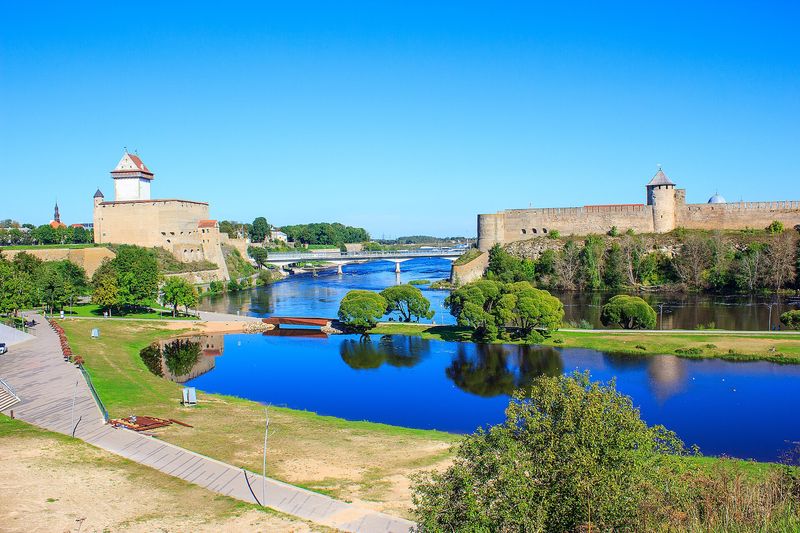
MOSCOW / TALLINN, November 23, 2026 — The Russia Estonia open war warning was delivered through the oldest instrument in diplomacy: a summoned envoy and a written protest. Russia’s Foreign Ministry summoned Estonia’s chargé d’affaires in Moscow on Monday — named by Reflect.ee as Marek Juhtegi — and lodged a formal protest over Tallinn’s decision to close its border crossings with Russia, Reuters reported on November 23. In its statement, the ministry said Estonia’s “provocative and extremely dangerous actions are on the verge of triggering open war with Russia,” and said Russia “reserves the right to take comprehensive political and diplomatic measures” in response. Estonia’s Foreign Ministry rejected the accusations: it denied that Estonia has allowed its territory to be used for another country’s military operations — “never allowed, and will never allow” — and dismissed Moscow’s narratives as propaganda. No military move accompanied the language on either side; what changed on Monday was the register, from friction to a phrase — open war — chosen to be heard in every NATO capital.
What Moscow said — and what it accused Tallinn of
Russia summons Estonia charge d'affaires: the protest, in full
The Russia summons Estonia charge d’affaires step is a calibrated one: summoning a chargé — the senior diplomat present in the absence of an ambassador — signals serious displeasure without breaking relations, and it guarantees the protest a headline. The substance, as set out by the Russian Foreign Ministry and reported by Reuters, was a catalogue of grievances attached to the border-closure decision. Moscow accused Estonia of allowing Ukraine to use its airspace and territory; of obstructing Russian cargo ships in the Baltic; of banning the transit of Russian and Belarusian grain; of seeking a ban on the Russian language; and of threatening the Russian Orthodox Church. Each of those is a claim by the Russian Foreign Ministry, presented here as such; Estonia disputes the framing, and several describe Estonian policies — language law, church legislation, sanctions enforcement at sea — that Tallinn defends as sovereign decisions taken in response to Russia’s war against Ukraine and to hybrid attacks on Estonia itself. The ministry’s conclusion tied the catalogue together: the actions were “provocative and extremely dangerous,” on the verge of triggering open war, and Russia reserved the right to respond with comprehensive political and diplomatic measures.
Tallinn’s answer: denial and the word ‘propaganda’
Estonia’s Foreign Ministry answered the central military accusation directly. Estonia, it said, has never allowed its territory to be used for another country’s military operations and will never allow it — a denial aimed at the most serious item in Moscow’s list, the claim that Ukrainian operations run through Estonian airspace and soil. Tallinn characterized the broader Russian narratives as propaganda. That word choice matters: Estonia is not treating the protest as a negotiating document to be answered point by point, but as an information operation to be named and rejected wholesale. Between the two statements there is no shared factual ground except the event itself — a border is closing, an envoy was summoned, and the two governments describe the same week in incompatible terms.
Background: the closure that set this off
Estonia closes Russia border December 1
The immediate cause is Tallinn’s decision, covered in our earlier reporting, that Estonia closes Russia border December 1: all of Estonia’s road border crossings with Russia — at Narva in the northeast and at Luhamaa and Koidula in the southeast — will close to pedestrians and vehicles from December 1 for at least six months. The Narva border crossing closure is the most consequential of the three: Narva is Estonia’s third-largest city, overwhelmingly Russian-speaking, facing the Russian town of Ivangorod across the river, and its crossing has for decades been the human seam between the two states — the place where the geopolitics of the border is also a matter of families, shopping, work and funerals. Closing it for half a year, together with the two southern crossings, converts a controlled frontier into a sealed one, and does so on a date certain that Moscow has now chosen to contest publicly rather than merely note.
Threod Systems arson attack GRU: the accusation behind the closure
Tallinn did not present the closure as routine. Estonia accused Russian security services of an attempted arson attack on Threod Systems, an Estonian defence company that makes drone systems — the Threod Systems arson attack GRU allegation, attributing the plot to Russian military intelligence. Russia has denied involvement. The sequence is the dispute in miniature: Estonia says it closed the border because Russia’s hybrid campaign — sabotage plots, airspace violations, pressure at sea — made an open frontier untenable; Russia says the closure, and the accusation beneath it, are themselves the provocation. Both claims cannot be independently settled from the public record available on Monday, and this article attributes each to the government that made it. What is not in dispute is the direction of travel: each side is now describing the other’s defensive measures as offensive acts, which is the rhetorical precondition for escalation whether or not escalation follows.
Why this matters
Language as an instrument: what ‘on the verge of open war’ is for
Diplomatic language is graded like seismic scale, and “on the verge of triggering open war” sits near the top of the non-military range. States use such phrases for audiences beyond the room. For Moscow, the phrase raises the perceived cost of Estonia’s closure and of every similar decision being weighed in Riga, Vilnius, Helsinki and Warsaw: if a border closure draws an open-war warning, the next government contemplating one must price in the same storm. It also speaks to a domestic Russian audience, for whom the Baltic states are a standing narrative of encirclement and disrespect, and to Ukraine’s supporters generally — a reminder that Russia claims the right to define other states’ border policies as acts of war. For Tallinn, the danger of the phrase is precisely that it cannot be unanswered and cannot be matched: a small state that answers in kind sounds hysterical; one that stays silent can be made to look cowed. Estonia’s chosen answer — a flat factual denial plus the word propaganda — is an attempt to refuse the frame entirely: to treat the warning as noise in an information war rather than signal in a military one.
Baltic NATO border tensions: a frontier being rebuilt in real time
The protest lands in the middle of the fastest militarization of a European border since the Cold War. Baltic NATO border tensions are no longer an abstraction of communiqués: Estonia, Latvia and Lithuania are building a joint Baltic defence line of bunkers and obstacles along their Russian and Belarusian frontiers; Finland, NATO’s newest long-border member, has closed its own Russian crossings indefinitely; and Poland — where, as we reported this week, a Russian drone entered Polish airspace and Warsaw authorized a shootdown before holding its fire — is hardening its eastern border under its Eastern Shield programme. Estonia’s closure belongs to that pattern: the frontier between NATO and Russia is being converted, crossing by crossing, from a commercial interface into a military obstacle belt. Moscow’s protest is, among other things, an objection to that conversion — delivered, notably, in the language of war rather than the language of trade.
Russia Estonia hybrid war: the contest below the threshold
The Russia Estonia hybrid war is the context that makes a border closure a security decision rather than an administrative one. Estonia has spent the war years dealing with the full hybrid catalogue: sabotage and arson plots attributed to Russian services, GPS jamming affecting aviation over the Baltic, airspace violations, undersea infrastructure incidents in the Gulf of Finland, and sustained information operations aimed at its Russian-speaking population, concentrated in Narva and the northeast. Viewed from Tallinn, the crossings are not neutral infrastructure in that contest; they are access routes, and closing them is counter-intelligence by concrete. Viewed from Moscow, each closure is another panel in a wall being built to isolate Russia from Europe, accompanied — in the ministry’s telling — by linguistic, religious and maritime pressure on Russians and Russian interests. The hybrid war framing explains why a six-month road closure can draw an open-war warning: in a contest defined by pressure below the threshold of war, every move is read as a move in the whole game.
Who gains, who loses
In the short term, the warning costs Russia little and is aimed at raising others’ costs. Estonia loses the quiet life of a border region: Narva’s residents lose their crossing, cross-border families lose their route, and the city’s economy loses what remained of its Russian-facing trade — costs Tallinn has judged worth paying, but costs nonetheless. NATO gains a test it did not ask for: the alliance’s deterrence on its northeastern flank rests on the proposition that pressure on Estonia is pressure on all 32 members, and every unanswered escalation in language probes that proposition cheaply. Ukraine, named in Moscow’s accusations as the supposed beneficiary of Estonian territory, gains nothing it did not already have and is handed a new Russian claim to rebut. And the residents of the border region on both sides — the people who actually use the Narva, Luhamaa and Koidula crossings — lose the most concrete thing in the entire dispute: the road.
What happens next: three scenarios
Words, then routine. The protest is filed, the closure takes effect on December 1, the crossings stay shut for the announced six months, and the open-war phrase joins the archive of warnings that marked a deterioration without causing one. Russia takes the “comprehensive political and diplomatic measures” it reserved — expulsions, further downgrading of representation, trade and transit friction — and the border settles into its new, sealed normal. This is the most likely path, and the one both foreign ministries’ behaviour on Monday — a protest, a denial, no military movement — is consistent with.
Pressure in the grey zone. Moscow answers not at the border it is protesting but around it: intensified GPS jamming, airspace probes, maritime harassment of Estonian-linked shipping in the Baltic, cyber operations, or a new sabotage plot of the kind Tallinn attributes to the GRU. Estonia responds with further closures, expulsions and allied consultations. The open-war warning then reads in retrospect as preparation — not of a war, but of an alibi: a record that Russia warned the West before the pressure campaign that followed.
A NATO signalling round. The warning triggers visible alliance reassurance: statements from NATO and key capitals, enhanced Baltic air policing, and public reaffirmation that Estonia’s border decisions are sovereign and allied-backed. That raises the cost of the second scenario and lowers its likelihood — which is, in the end, what Estonia’s whole border policy is designed to purchase. The December 1 closure will be the first concrete fact in this sequence; watch whether it passes as an administrative event or a contested one, and whether the next Russian statement about Estonia is delivered to an envoy — or to an audience.
For the full background to the closure itself, see our earlier report: Estonia Closes All Russia Border Crossings December 1 After Drone Factory Sabotage Plot. Follow the wider conflict on our wars tracker.
Sources
Reuters, “Moscow accuses Estonia of hostile actions on verge of triggering open war” (November 23, 2026), reporting the Russian Foreign Ministry’s summons of Estonia’s chargé d’affaires, its formal protest over the border-closure decision and its listed accusations, and Estonia’s Foreign Ministry response: reuters.com. Reflect.ee, reporting naming Estonia’s chargé d’affaires in Moscow as Marek Juhtegi (November 23, 2026). Background on the December 1 closure of the Narva, Luhamaa and Koidula crossings and the Threod Systems arson allegation is as previously reported by Signal Post News; Russian accusations are attributed to the Russian Foreign Ministry and Estonian denials to Estonia’s Foreign Ministry throughout.