War · Ukraine · Kyiv
Three drones, one facility, and a capital divided by a river learned again how tightly its water is bound to its power: on Friday evening the whole left bank of Kyiv lost its water supply, three right-bank districts were cut off with it, three more were left on reduced pressure — and, in the only mercy of the night, no casualties were reported.
Three Russian drones struck the same critical infrastructure facility in Kyiv on the evening of Friday, October 30, knocking out power to the capital's water-distribution infrastructure and leaving the city's entire left bank without water, according to Mayor Vitali Klitschko and the Kyiv City State Administration. Klitschko said three unmanned aerial vehicle strikes hit one of the capital's critical infrastructure facilities. The loss of power at the facility fed straight through into the water network: pressure dropped across the city, supply failed completely in six districts, and residents in three more were left with reduced pressure. No casualties were reported in the evening attack — a point Kyiv's authorities stated clearly, and one this report states just as clearly: as of the reports available on Friday night, this strike damaged infrastructure and a residential building's glazing, and hurt no one.
Track it live: Ukraine war map — live tracker
What we know: three strikes on one facility
The defining fact of Friday night's attack is its concentration. This was not a broad wave spread across the capital's districts; by the mayor's own account, three drone strikes landed on a single critical infrastructure facility. The Kyiv City State Administration reported that the strikes knocked out power to water-distribution infrastructure, and the effect registered almost immediately in the network that Kyivans actually experience — not at a power station fence line, but at their taps. Water pressure fell citywide as the pumps and distribution systems that depend on that power lost it.
The attack also came on the second consecutive night of strikes on Ukrainian infrastructure. Only the night before, Russia had launched a combined attack of 113 drones alongside missiles that hit 17 locations across Ukraine, killing one person in Kyiv and leaving some 350,000 households without power in Dnipro — events Signal Post News reported in its account of Russia's overnight strike on Kyiv and Dnipro. Friday's strike was far smaller in weapon count and far narrower in aim, and it still shut off water to roughly half a capital city. That contrast — three drones against the previous night's hundred-plus — is the analytical heart of this story, and it is examined in the “Why this matters” section below.
District by district: the water map of a divided city
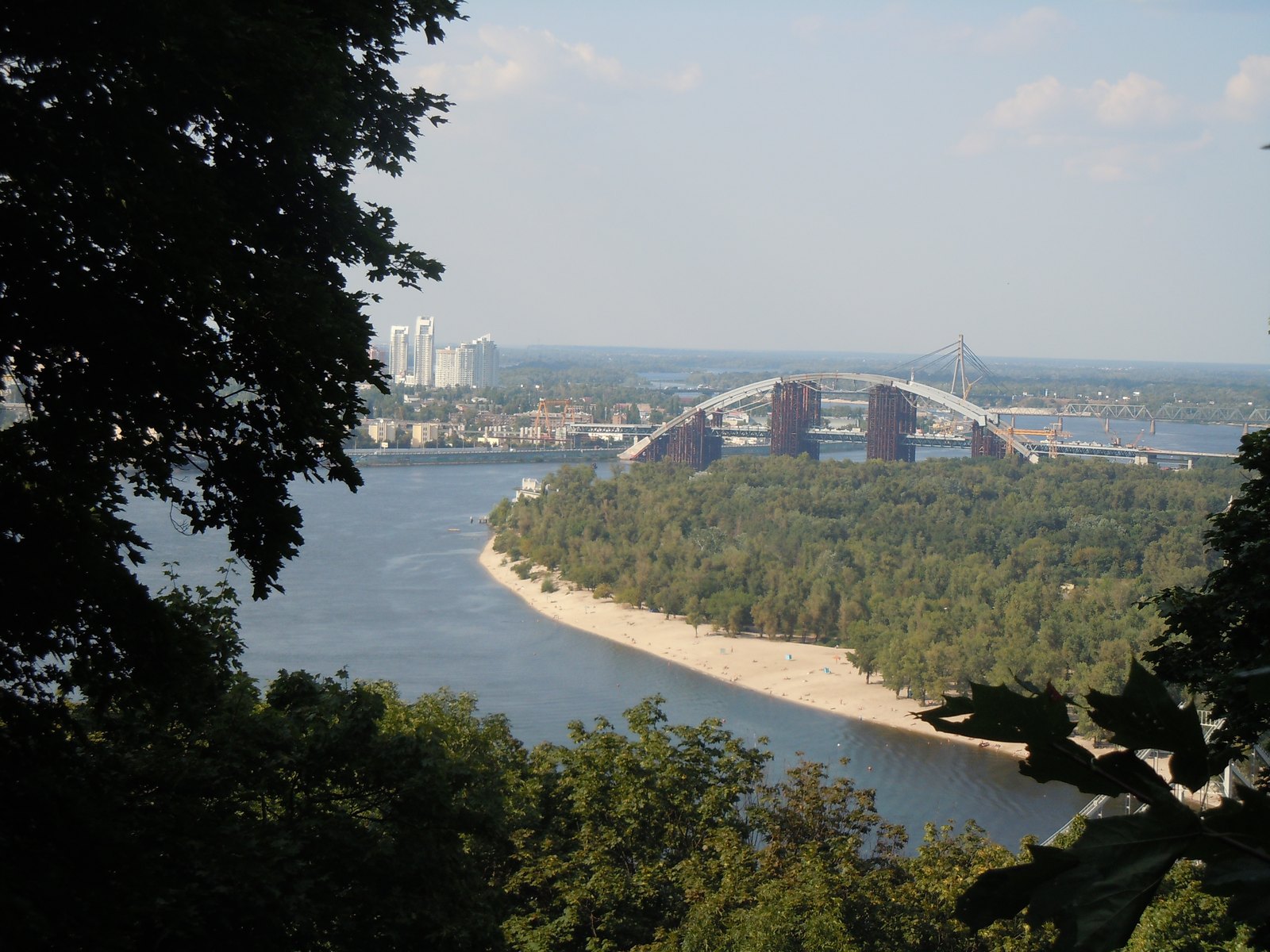
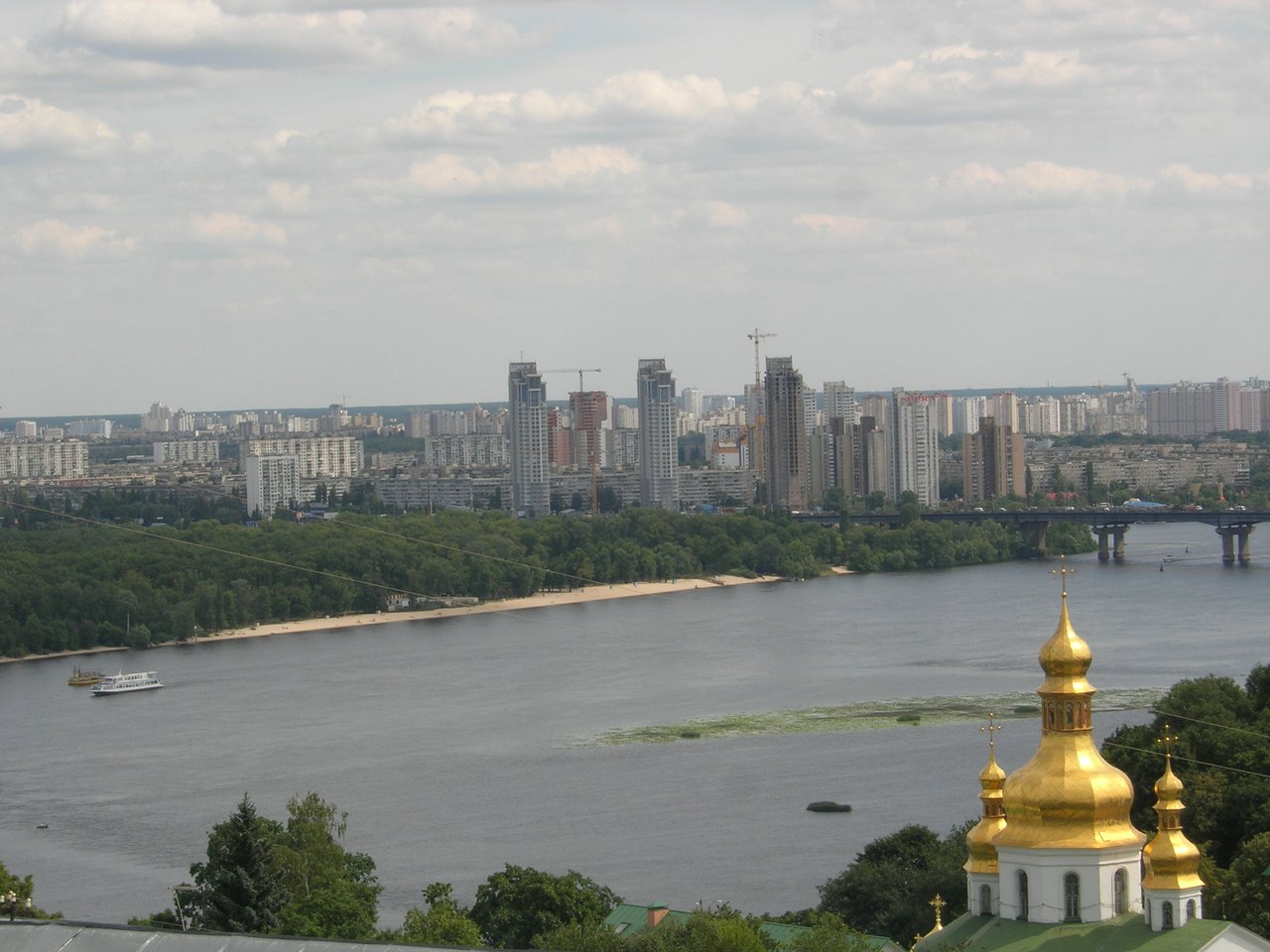
Kyiv is a city organised by its river. The Dnipro splits the capital into a historic right bank and a largely residential left bank, and Friday night's outage followed that geography almost exactly. According to the Kyiv City State Administration and Kyiv24's reporting, the districts left without water were:
- The entire left bank — Darnytskyi, Dniprovskyi and Desnianskyi districts;
- Pecherskyi district, on the right bank;
- Solomianskyi district, on the right bank;
- Holosiivskyi district, on the right bank.
A second group of districts kept their supply but at reduced pressure: Sviatoshynskyi, Podilskyi and Shevchenkivskyi. Reduced pressure is not a footnote for the people living under it — in a city of Soviet-era and modern high-rise blocks, pressure is what decides whether water reaches the upper floors at all, so a district on reduced pressure can mean dry taps at the top of a tower and a working tap at its base. The first district to come back was Obolonskyi, on the northern right bank, which the authorities reported as restored first as crews worked through the network.
The water failure arrived with a power failure layered underneath parts of it. DTEK, Ukraine's largest private energy company, reported that Obolonskyi, Darnytskyi, Desnianskyi and Podilskyi districts were partially without electricity. Note the overlap and the mismatch, because together they describe how these cascades actually work: the districts without water and the districts without power are not identical lists, because the water outage was driven by the loss of supply to the water infrastructure itself, not only by whether a given street's lights were on. A household could have electricity and no water, or water pressure and no power, depending on which node of which network it sits behind.
Shevchenkivskyi: broken glass, no fire, no casualties
The evening's one reported strike effect on a residential building came in Shevchenkivskyi district, in the city centre. There, glazing on the sixth and seventh floors of a 14-storey residential building was damaged, according to Kyiv24. There was no fire. Set against the casualty tolls Kyiv has recorded on other nights this month, Friday evening's human ledger was, remarkably, empty: no deaths and no injuries were reported for this attack in the accounts published by the Kyiv City State Administration, Kyiv Post or Kyiv24. Signal Post News claims none. In a month in which the capital's residents have repeatedly been killed in their homes, a night that ends with broken windows, dark districts and dry taps — and no names on a casualty list — is both a relief and, as the sections below argue, not necessarily a sign of restraint: the target set was infrastructure, and infrastructure was what burned through the city's services.
The restoration effort
Restoration began the same evening. Utility crews worked to reroute power and restart the water-distribution system, and the first visible result was Obolonskyi district, reported restored ahead of the others. The authorities' Friday-night reporting did not set a public deadline for full restoration across the six districts that lost supply, and neither Kyiv Post nor Kyiv24 reported a confirmed timeline — the honest position at the time of writing is that the order of restoration is known (Obolonskyi first) and the completion time is not. That pattern is familiar from previous Kyiv outages: pressure returns district by district as pumping capacity is reconnected, upper floors recover last, and official “restored” announcements describe the network, sometimes hours before every building on it feels the difference. Residents in the districts still without supply faced the standard improvisations of Kyiv's fourth wartime autumn — bottled water, courtyard collection points and neighbours on lower floors — while the city raced to beat the cold that makes a water outage a heating outage too, since much of Kyiv's district heating depends on the same water and power systems.
Why this matters
Analysis: Friday's strike is a case study in how modern infrastructure war actually works, and it rewards a slow reading. A city's water supply is not a thing that sits in a reservoir waiting to be knocked over; it is a chain — electricity powers pumps, pumps create pressure, pressure moves water through mains to districts, and treatment and distribution facilities sit at the joints of that chain. Break the chain at a powered joint, and the water fails in places the weapon never touched. That is what Kyiv's district map shows: three drones hit one facility, and six districts went dry. The strike did not need to damage a single water main. It needed only to find a node where the power network and the water network hold hands, and squeeze.
The cost-exchange arithmetic follows directly. A one-way attack drone is among the cheapest weapons in Russia's inventory; a combined strike of more than a hundred drones and missiles, like the previous night's, is a major operation. Friday's attack achieved a citywide service effect — in the capital, on a Friday night, heading into winter — with three. Defenders must weigh that asymmetry carefully: it argues that the vulnerability is not primarily a shortage of interceptors over Kyiv but the concentration of critical functions in facilities whose loss propagates across networks. Hardening, dispersing and rapidly bypassing such nodes buys resilience that no plausible number of additional interceptors can, because even a defence that stops 97 of 100 drones loses the night if the three that arrive were aimed at the right joint. Kyiv's authorities, who have spent successive autumns asking residents to endure exactly these cascades, understand the arithmetic; the open question is how much physical redundancy a wartime budget can build faster than an attacker can map it.
Timing compounds the point. This was the second consecutive night of infrastructure attack, and it landed at the threshold of winter, when water, heating and power failures stop being inconveniences and become health risks. The same day, in a different register entirely, a local humanitarian ceasefire around Oleshky in the Kherson region held — an arrangement, covered by Signal Post News in its report on the Oleshky ceasefire, under which aid could move while, a few hundred kilometres north, the capital's taps ran dry. The contrast is the war in miniature in late October 2026: negotiated quiet is possible in one grid square, on one day, for one purpose — and it coexists, without contradiction in either capital's strategy, with a deliberate strike on the systems that keep three million people washed, heated and lit.
Context and background: Russia's autumn energy campaign
Friday's strike did not begin a campaign; it continued one. President Volodymyr Zelenskyy has said that Russian forces carried out more than 30 strikes on significant grid targets in the second half of October alone — a rate of roughly two significant energy strikes a day across the month's back half. The October 29–30 combined attack, with its 113 drones, its missiles and its impacts at 17 locations, was the campaign's largest recent expression; Friday's three-drone strike was among its smallest, and the pairing of the two nights describes the campaign's method better than either does alone: mass to saturate defences and spread damage, precision to exploit the specific nodes whose loss cascades.
Kyiv has been here before, and the precedents shape how Friday night was experienced. In each autumn and winter of this war, Russia has turned to Ukraine's energy system as temperatures fall, and Kyiv's residents have learned the accompanying routines — outage schedules, pressure drops, the geography of which districts fail first — the way residents of other cities learn weather. What is newer is the explicit extension of the cascade from power into water: earlier campaigns were measured by Ukrainians in hours without electricity and heat, and a strike that takes water from half the capital in one evening widens the measure to the most basic service of all. It also widens the recovery problem, because water systems, once depressurised, cannot simply be switched back on everywhere at once; they must be refilled, repressurised and checked, which is why restorations roll across districts over hours rather than arriving with the returning current.
The same day's diplomacy underlined how slowly the defensive side of this equation moves. On Friday the United States approved a $2.1 billion sale of 500 Patriot PAC-3 interceptors to Ukraine — the single most relevant air-defence reinforcement imaginable for a capital under drone and missile attack — and Zelenskyy immediately warned that deliveries may begin only in a few years. Ukraine's own long-range campaign, meanwhile, continued on its parallel track: this week Kyiv's forces struck the Novokuybyshevsk refinery in Russia's Samara region, ending a pause in refinery strikes, as Signal Post News reported in its account of Ukraine's strike on the Novokuybyshevsk refinery. Each side, that is, spent the same 48 hours attacking the energy system the other side's civilians and war effort run on — a symmetry of method, whatever the differences of scale and stated intent that each capital insists upon.
Multiple angles
Kyiv: a deliberate strike on civilian systems ahead of winter
Ukrainian authorities describe the infrastructure campaign as deliberate: an effort, in their telling, to make Ukrainian cities unliveable as winter arrives and to pressure Kyiv's government by pressuring its population. Klitschko and the Kyiv City State Administration framed Friday's attack in exactly those terms — a strike on a critical infrastructure facility whose predictable, indeed inevitable, consequence was to cut water to hundreds of thousands of homes. From Kyiv's side, the absence of casualties does not soften the characterisation: a weapon aimed at the joint between power and water, they argue, is aimed at the civilian population that joint serves.
Moscow: denial of intent, and silence on this facility
Russia's leadership denies intentionally targeting civilian objects, and that denial is its standing position on the energy campaign as a whole. On this specific strike, in the reports available on Friday night, Moscow had not commented on the Kyiv facility or on the water outage that followed it. Critics of the Kremlin answer that a denial of intent sits awkwardly beside a pattern — 30-plus strikes on significant grid targets in half a month, by Zelenskyy's count, repeated at the edge of winter — whose effects are foreseeable regardless of the intent claimed for them. Defenders of Moscow's position answer that Ukraine's own deep strikes on Russian refineries and energy facilities, Novokuybyshevsk included, are celebrated in Kyiv as legitimate pressure, and that a rule against striking energy systems would have to bind both capitals to be a rule at all. Both arguments were being made, in almost those words, within hours of Friday's outage.
Residents and utilities: who actually pays
The costs of Friday night were not distributed by argument. They were paid by the left-bank family filling bottles at a courtyard pump, by the hospital and care-home managers checking reserves, and by the utility crews who spent the night repressurising a system designed for a peacetime city. Who benefits is a colder calculation: an attacker who can impose those costs with three drones gains leverage at negligible expense; a defender gains whatever resilience it can build between strikes. The residents in the middle gain neither, and their adaptation — the bottled water stacked by the door, the charged power bank, the learned map of which district fails first — is itself one of the war's quiet strategic facts: Kyiv has absorbed these cascades for successive autumns without the political collapse the campaign appears designed to produce, and Friday night, with no casualties and crews already restoring supply before midnight, added one more data point to that record even as it exposed how thin the margin at the network's joints remains.
What happens next
The immediate unknown is the restoration timeline. Obolonskyi was restored first; at the time of writing, no authority had published a confirmed time by which Darnytskyi, Dniprovskyi, Desnianskyi, Pecherskyi, Solomianskyi and Holosiivskyi would all be back, or by which Sviatoshynskyi, Podilskyi and Shevchenkivskyi would return to full pressure, and DTEK's partial power outages in four districts will set their own parallel clock. Watch for the sequence rather than a single announcement: pressure returning district by district, then the heating implications as temperatures fall.
The larger exposure is winter itself. Zelenskyy's figure — more than 30 significant grid strikes in the second half of October — describes a tempo that, sustained into December and January, will test every redundancy Ukraine has built. Friday's strike suggests the test will not only be about volume: it will be about whether Kyiv can harden or duplicate the specific facilities where its networks intersect. And over both hangs the interceptor timeline Zelenskyy himself flagged on Friday: the 500 PAC-3 missiles approved in Washington are a commitment measured in years, while the campaign they are meant to answer is measured in nights. Between those two clocks — the few-years clock of deliveries and the every-night clock of October's strike tempo — sits the whole of Kyiv's winter. Three drones found one facility on Friday. The question the season will answer is how many such facilities remain to be found, and how fast a city can learn to live without any single one of them.
Sources
- Kyiv Post — post/88725 (October 30, 2026): three Russian drones hit one critical infrastructure facility in Kyiv; the district-by-district water and power outages, Klitschko's statement and DTEK's reporting.
- Kyiv24 — two reports (October 30, 2026): water pressure and supply by district, the restoration of Obolonskyi, and the glazing damage on the 6th–7th floors of the 14-storey residential building in Shevchenkivskyi district, with no fire.
- Kyiv City State Administration / Mayor Vitali Klitschko, via Telegram (October 30, 2026): three UAV strikes hit one of the capital's critical infrastructure facilities; power to water-distribution infrastructure knocked out and water pressure dropped citywide; no casualties reported.
- DTEK, via Kyiv Post (October 30, 2026): Obolonskyi, Darnytskyi, Desnianskyi and Podilskyi districts partially without electricity.
- CNN (October 30, 2026): context on the Oleshky humanitarian ceasefire in the Kherson region holding locally the same day.
This article is based on Kyiv Post reporting (post/88725), two Kyiv24 reports, statements by the Kyiv City State Administration and Mayor Vitali Klitschko, and DTEK's reporting as published by Kyiv Post, all of October 30, 2026, with context from CNN's reporting on the Oleshky ceasefire. No casualties were reported for the October 30 evening attack in any of those sources, and none are claimed here. Russia's leadership denies intentionally targeting civilian objects; Moscow had not commented specifically on this facility in the reports available at publication. The two photographs show the Dnipro River and Kyiv generally; they are not photographs of the struck facility, and no verified eyewitness photograph of it has been published. Analysis is by Signal Post News.