Diddy solitary confinement Fort Dix

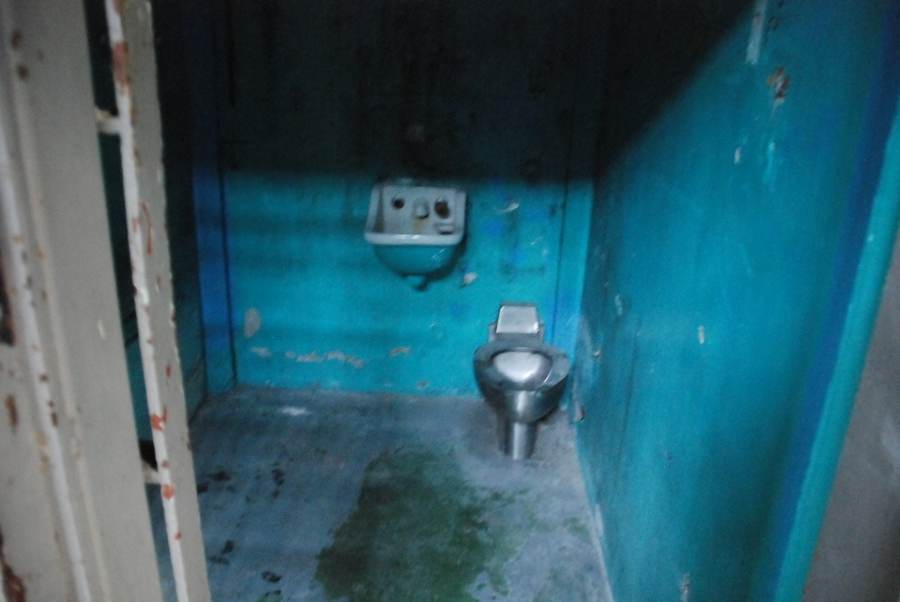
NEW YORK — The Diddy solitary confinement Fort Dix story is the latest turn in the long, strange afterlife of Sean Combs's fall from music-industry royalty to federal inmate. On October 1, TMZ reported that Combs had been moved to the Special Housing Unit — the SHU, the Bureau of Prisons' term for solitary — while officials investigate explosive claims about his life inside FCI Fort Dix in New Jersey. The move, described as standard procedure during an internal probe, follows an NBC News investigation published September 29 that alleged Combs was receiving pampered treatment from fellow inmates and guards alike.
Combs, 56, is serving a 50-month federal sentence after a July 2026 trial in which he was convicted on two counts of transportation to engage in prostitution and sentenced that October. The jury acquitted him of the heavier charges — racketeering conspiracy and sex trafficking — but the two convictions were enough to put him behind bars at Fort Dix, where he chose to enroll in a drug-treatment program. His spokesperson pushed back hard on the scrutiny: "The continued scrutiny of every mundane detail of Sean Combs' life in prison has reached the point where the media characterizes ordinary prison life as news... Sean continues to serve his sentence while awaiting the court's decision on his appeal." The Bureau of Prisons, for its part, does not discuss individual housing assignments.
What NBC reported: the pampered-life allegations
The NBC News investigation, built on accounts from four men who lived in Combs's unit, painted a picture of celebrity privilege imported into the cellblock. Inmates allegedly cooked for him, cleaned for him, and made his bed. He allegedly received massages. He allegedly had a contraband cellphone — scrolling Instagram, viewing nude photos from an ex — and a stash of Hennessy liquor allegedly smuggled in by guards. He was reportedly taking the antidepressant Remeron, had a tablet for watching movies including 50 Cent's "Sean Combs: The Reckoning," and ate meals like curry chicken, pizza, and empanadas prepared by fellow inmates.
Every one of those claims deserves the same analytical treatment: they come from inmates, they describe a world the public can't see, and they are being investigated, not established. Inmate-sourced accounts of celebrity prisoners have a built-in credibility problem — the sources may have grievances, may be trading stories for attention, or may simply be telling the truth about a two-tier system everyone in prison knows exists. The Bureau's investigation will determine which. But the pattern of the allegations — contraband facilitated by staff, labor extracted from weaker inmates — matches the known economics of prison celebrity, where fame is a currency that buys services the system officially forbids.

Why this matters: celebrity justice and the Bureau's credibility
The SHU move matters less as punishment than as signal. Solitary confinement during an internal probe is standard Bureau procedure — it isolates the subject, preserves the investigation, and prevents witness tampering — but the optics are unavoidable: the most famous inmate in the federal system is now in the box while the Bureau examines whether he was running a shadow economy inside his unit. Whatever the investigation finds, the Bureau's credibility is on trial alongside Combs.
The deeper issue is the two-tier prison. The allegations describe a system in which wealth and fame purchase a different incarceration — not just comfort, but control: other inmates laboring, guards smuggling, contraband flowing. If true, it means the punishment the court imposed was being quietly renegotiated inside the prison, with the Bureau's own staff as brokers. That is a corruption story, not a celebrity story, and it implicates far more than one inmate. If false, it means four inmates fabricated a detailed fiction that fooled NBC's standards desk — which would be its own story about the prison rumor economy.
Background: from the MDC to Fort Dix, from trial to the SHU
Combs's carceral journey has been headline fodder since his arrest. He was held at the Metropolitan Detention Center in Brooklyn — a facility notorious for its conditions — through his trial, then transferred to FCI Fort Dix, a low-security facility in New Jersey, where he opted into the residential drug-abuse treatment program. The program choice was widely read as strategic: successful completion can shave time off a federal sentence, and for a 56-year-old with an appeal pending, every month counts.
This is his second SHU stint. The first came in July, after a prison fight — a reminder that even in low-security facilities, the dynamics of incarceration apply to celebrities too. The current stint is different in kind: not a disciplinary response to violence, but a procedural move during an investigation into privilege itself. The symmetry is hard to miss — the man accused of receiving too-comfortable treatment is now in the least comfortable place in the prison.
Multiple angles: the claims, the contraband economy, the appeal clock
On the claims themselves, the honest position is suspension of judgment with a thumb on the scale of plausibility. Inmate labor for a celebrity — cooking, cleaning, bed-making — is one of the oldest dynamics in prison life; fame concentrates deference, and deference gets monetized. Contraband cellphones are endemic in federal facilities. The Hennessy-by-guard allegation is the most serious because it implicates staff corruption, and it is also the hardest to prove without a paper trail or a caught guard. The investigation's findings will be the story; until then, the allegations are allegations.
On the contraband economy, the case is a window into a system the Bureau rarely lets the public see. Every federal prison has a shadow market; the question is always who runs it and who profits. If guards were smuggling liquor for Combs, the natural follow-up is what else moves through Fort Dix's back channels and for whom. One celebrity's cellphone is a headline; a smuggling pipeline is an institutional crisis.
On the appeal clock, the timing is delicate. Combs is appealing his conviction and sentence to the 2nd Circuit while facing more than 100 pending civil suits. The SHU stint, the investigation, and the media circus all play against a legal strategy that presumably wants him to look like a model inmate earning his way home. Every "pampered prisoner" headline makes the "rehabilitated man" narrative harder to sell — to judges, to the public, and to the civil plaintiffs' lawyers taking notes.
The numbers, in context
The sentence math is worth doing. Fifty months imposed, with release scheduled for February 2028 — behavior-dependent, and potentially accelerated by the drug-treatment program. That timeline means Combs has roughly 16 months left to serve as of this writing, a number that concentrates the mind: every development inside Fort Dix now carries weight proportional to how little time remains. A second SHU stint doesn't just look bad; in a system where good behavior buys freedom, it is expensive.
Then there is the scale of the legal exposure beyond the criminal case: 100-plus civil suits pending, each a potential financial and reputational landmine, each proceeding on its own timeline. The criminal conviction covered two counts; the civil docket covers the empire. The SHU story is a footnote in that larger accounting, but footnotes have a way of becoming exhibits.
What happens next
Three tracks to watch. First, the Bureau's internal investigation: its findings will determine whether the pampered-life claims were fact, fiction, or something in between — and whether any staff face consequences. The Bureau's silence on individual housing assignments is standard, but the pressure for a substantive answer will grow. Second, the appeal: the 2nd Circuit's decision on the conviction and sentence will define the next phase of Combs's legal life, and the prison narrative will color it. Third, the civil suits: more than 100 cases moving through courts, each generating its own headlines, each chipping at whatever remains of the Combs brand.
The spokesperson's complaint — that "the media characterizes ordinary prison life as news" — is worth taking seriously and then setting aside. Ordinary prison life is news when the prisoner is Sean Combs, because the public has a legitimate interest in whether justice is being served equally. Solitary confinement is the Bureau's answer to that interest, for now. Whether it becomes the Bureau's answer to the allegations is the question that will define this story's next chapter.
Sources
- TMZ — reporting on Combs's move to the Special Housing Unit at FCI Fort Dix, October 1, 2026.
- Page Six — "Sean 'Diddy' Combs back in solitary confinement after pampered prison life exposed," September 30, 2026.
- Consequence — "Sean 'Diddy' Combs back in solitary confinement," October 2026.
- WBLS — "Diddy to head back to solitary confinement," October 2026.
- HOT 97 — "Sean 'Diddy' Combs back in solitary after pampering rumors," October 2026.
- NBC News — September 29, 2026 investigation into Combs's alleged treatment at FCI Fort Dix, based on four former unit-mates.