Rubio Athens Acropolis speech
From the Pnyx hill beneath the Parthenon, the Secretary of State tied ancient Greek ideals to Trump's America First doctrine — and Washington is reading it as a 2028 audition.
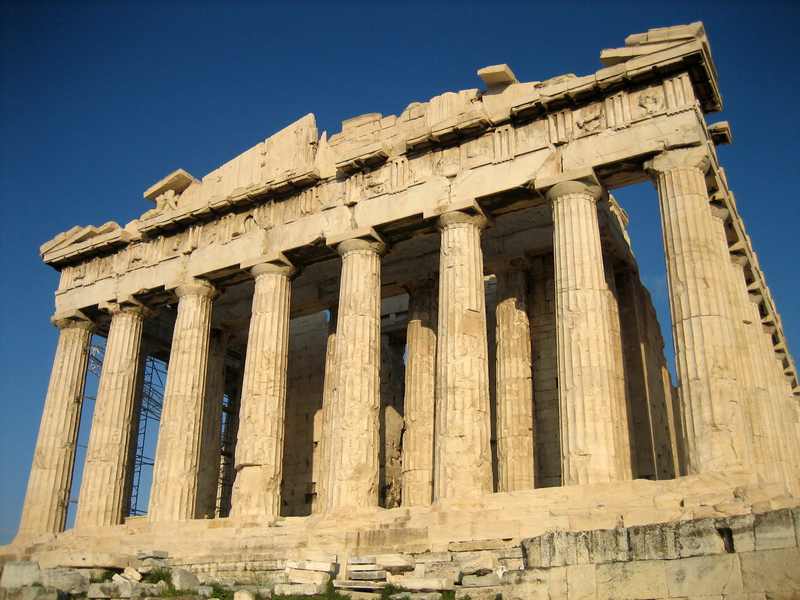
Standing on the Pnyx — the worn stone hill where ordinary Athenians gathered to govern themselves 2,500 years ago — with the Parthenon lit golden behind him, Secretary of State Marco Rubio delivered Wednesday evening the most ambitious speech of his tenure: a nearly 30-minute declaration that Western civilization has reached "an inflection point" and must choose between a "great renewal of the Western spirit" and a future of "atrophy, servitude, and decline."
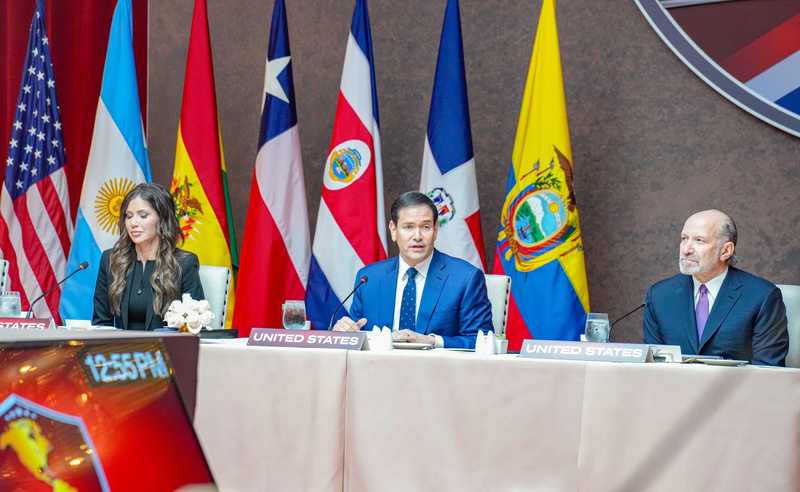
The address, delivered in Athens on the final leg of a three-nation NATO tour, was the Trump administration's fullest attempt yet to give "America First" a philosophical foundation — and, in the reading of much of Washington, the clearest signal yet that Rubio is auditioning for 2028.
Why this matters
Rubio 2028 presidential speculation moves onto the world stage
This was not a routine diplomatic address — it was a doctrine speech. For the first time, the administration tried to systematize President Donald Trump's instincts into a civilizational narrative: that the West's crisis is not merely about defense budgets or trade balances but about confidence itself. Whether or not one accepts the premise, the speech reframes the transatlantic argument from burden-sharing to survival — and that reframing, if it sticks, will shape every U.S.-Europe negotiation for years. It also matters as personnel: CNN noted the golden-hour staging "will surely reignite speculation around his future presidential intentions," positioning Rubio as both heir to and modernizer of the America First movement just weeks before the 2028 race comes alive after the midterms.
What Rubio actually said
The Rubio Pnyx hill speech and an America First foreign policy for Europe
Speaking from the Pnyx, where ancient Athens held its democratic assembly, Rubio depicted the West as a continuous inheritance from ancient Greece to modern America — defined, he said, by "fierce individuality and relentless ambition; daring exploration and invention." But he warned that a civilization "ashamed of its achievements and embarrassed by its past" risked decline. His core lines, as reported by multiple outlets: "We are at an inflection point, an inflection point not only in the history of my nation, but an inflection point in the whole of our civilization." He called on Europe to "awaken from its long slumber and rekindle the fire that was here millennia ago."
On policy, Rubio said: "Under President Trump, the United States has made its choice. We choose the unapologetic pursuit of national power: to take back control of our critical supply chains, to reindustrialize our economy, to rebuild our defense." He argued "it has become fashionable today to believe that enlightened foreign policy means prioritizing the 'global community' over one's own people," insisting there is "nothing selfish or wrong about loyalty to your nation." And: "'Nationalism' became a dirty word" — followed by a critique of open borders, outsourced industry, and withered militaries.
He closed the loop with alliance language: "We want to win together; we must win together," and "We must rebuild our institutions and alliances." The address wove in allusions to Achilles and the Alamo, and cited Lincoln and Kennedy.
How we got here
From the Vance Munich speech to Trump's national security strategy for Europe
The Athens speech did not come from nowhere — it is the third major installment in the administration's "the West is in peril" argument. The first was Vice President JD Vance's blistering February 2025 address at the Munich Security Conference, which cast Europe's challenges as a retreat from shared Western values and drew sharp rebukes from European leaders. The second was Trump's November 2025 National Security Strategy, which warned Europe faced "civilization erasure" from migration and challenges to national sovereignty. Rubio's speech takes that critique and gives it marble columns: where Vance scolded, Rubio historicized.
The immediate context was a reassurance tour with an edge — Rubio visited three European NATO allies, Iceland and Greece followed by Portugal's Lisbon on Thursday, aimed at steadying allies rattled by the wars in Ukraine and the Middle East.
The Marco Rubio Greece visit and U.S.-Greece Strategic Dialogue
In Athens, the visit coincided with the sixth U.S.-Greece Strategic Dialogue, where Washington and Athens signed new defense and intelligence-sharing agreements, and Rubio met Prime Minister Kyriakos Mitsotakis and Foreign Minister George Gerapetritis on defense, energy, trade, and counterterrorism.
Who benefits, who loses — and what the critics say
A Western civilization decline debate with domestic stakes
The winners are easy to name. Rubio himself: the Washington Examiner wrote the speech "stopped Washington cold" and "stopped the news cycle in its tracks," and Rep. Nicole Malliotakis proclaimed on X that he is "the future of both our party and our nation" — the kind of earned media presidential hopefuls pay millions to manufacture. Europe's nationalist and sovereigntist right gets validation from Washington's top diplomat. Greece gets elevated bilateral ties and fresh defense deals. And Western defense establishments get another push for rearmament.
The critics' case deserves equal weight. European diplomats have heard this sermon before: after Rubio's February 2026 Munich speech, the Financial Times cited a German diplomatic source calling it "not the response we were expecting" and aimed at "a domestic U.S. audience rather than at us as allies." Internationalist foreign-policy hands argue that lecturing allies about civilizational decay deepens the very transatlantic friction the tour was meant to soothe, and that "unapologetic pursuit of national power" is a slogan in search of a strategy.
The supporters' rebuttal is that the speech names real, measurable problems — hollowed industrial bases, chronic underinvestment in defense, and migration pressures straining social contracts — that polite communiqués have failed to fix. Both readings can be true at once: a speech can be sincere philosophy and shrewd positioning.
The numbers behind the moment
The speech ran nearly 30 minutes. It capped a three-nation tour and the sixth U.S.-Greece Strategic Dialogue. It lands 27 days before the November 3 midterm elections — after which, as CNN put it, the 2028 race "roars into life." Washington has pressed NATO allies to lift military budgets toward 5% of GDP, a demand that gives Rubio's "rebuild our defense" line concrete budgetary teeth.
And the 2028 math is unavoidable: Rubio is widely regarded as a leading Republican contender to succeed Trump, even as he insists he will not challenge Vice President Vance if Vance runs. A sunset address from the birthplace of democracy, rich with civilizational language, is not how secretaries of state with no further ambitions spend their evenings.
What happens next
First, Lisbon: Rubio concludes the tour Thursday with Portuguese officials, and the reception there — warm or wary — will indicate whether the Athens message travels. Second, the midterms: with early November voting nearly upon the U.S., the speech's domestic resonance will be tested at the ballot box before any 2028 machinery engages.
Third, the real examination is whether European capitals answer with higher defense spending, industrial policy, and border enforcement, or with the same polite applause and quiet irritation that greeted the Munich speech. And fourth, the doctrine question: does the "unapologetic pursuit of national power," wrapped in Periclean marble, become the Republican Party's post-Trump foreign-policy consensus — or does it remain one gifted speech on a beautiful hill? The Parthenon has watched 2,500 years of such auditions. It can afford to wait.
Sources
- Reuters — U.S. Secretary of State Marco Rubio's Athens speech preview and excerpts.
- CNN — “Marco Rubio uses a dramatic backdrop to sketch a post-MAGA foreign policy.”
- New York Post — “Marco Rubio declares West is 'at an inflection point' in Acropolis of Athens speech.”
- Washington Examiner — “Rubio's stunning Athens speech stops Washington cold.”