RSF drone strikes Port Sudan
RSF drone strikes Port Sudan over two consecutive days have carried Sudan's civil war into the Red Sea city that had functioned as its safest rear area. Military and security sources speaking to Reuters said drones attacked a military base and other targets near Port Sudan Airport on Sunday, September 27 — the first time the Rapid Support Forces had reached the wartime capital. No casualties were reported. The RSF has not claimed responsibility, and Signal Post News has not independently verified the attribution.
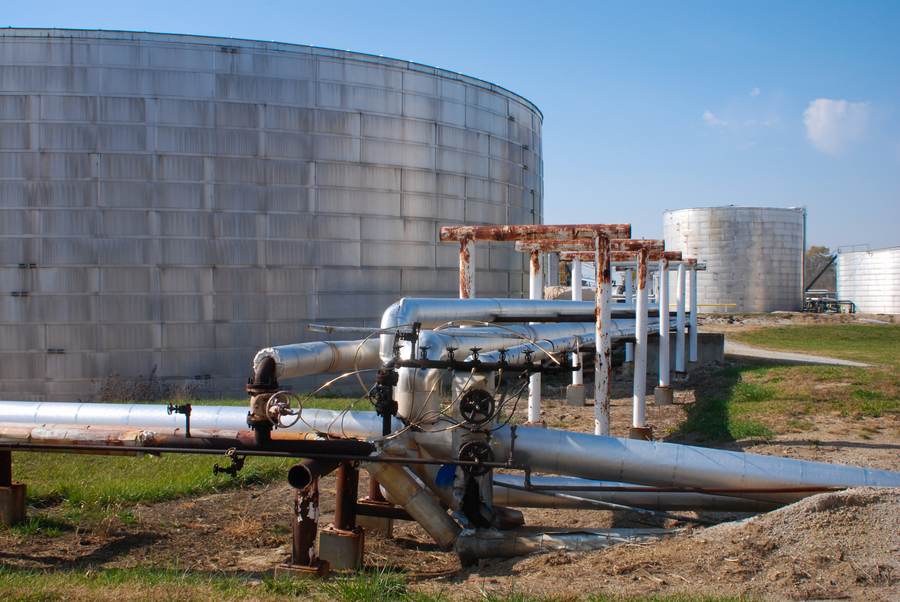
At dawn on Monday, September 28, a second strike hit fuel depots in the city. A diesel depot caught fire and flames spread to nearby tanks, sending large plumes of smoke and fire above the area well into the afternoon while civil defense teams worked to contain the blaze. The physical damage was concentrated at the storage site, but the target carried a broader warning: the infrastructure keeping army-held eastern Sudan supplied is now within drone range.
Energy and Petroleum Minister Mohiedienn Naiem Mohamed Saied, speaking from the site, said the attack “reflects a deliberate attempt by these militias to paralyse life and target citizens' basic needs.” He condemned it as a “terrorist operation” aimed at crippling essential services and warned that a spreading fuel fire could produce a wider disaster in the densely populated area. That is the government's account; it is not an independent determination of who launched the drones. The RSF's silence leaves the central attribution dependent on military and security sources rather than an admission by the force itself.
Why this matters
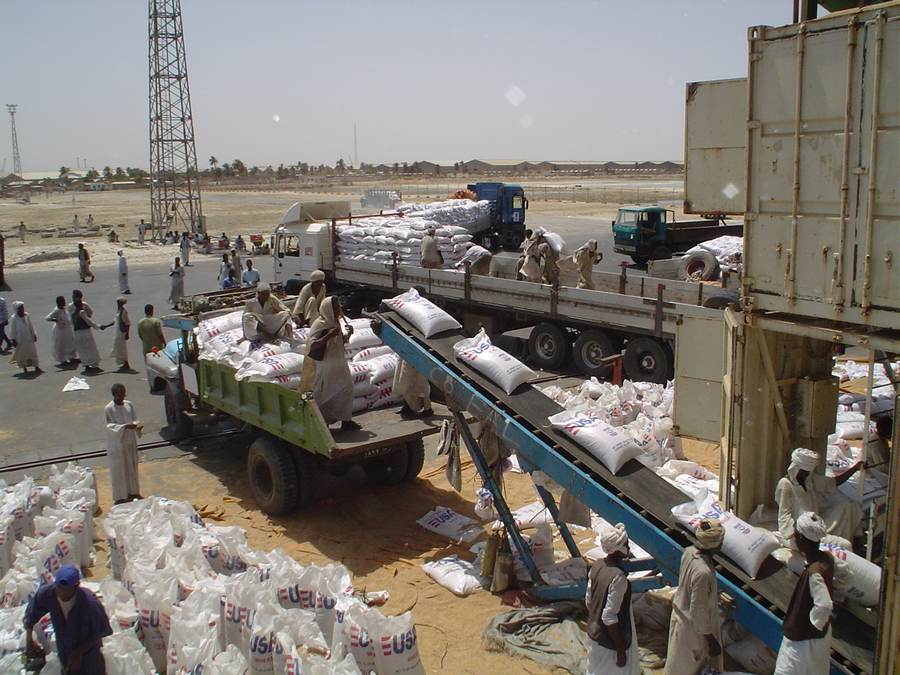
Port Sudan is not simply another city on Sudan's long front line. It is the seat of the army-aligned government, the location of the country's main seaport and airport, the home of the armed forces' top command and the hub through which diplomats, aid workers and relief supplies have operated since Khartoum became a battlefield. The war's eastward expansion therefore threatens more than symbolic government authority. It puts the logistics of the humanitarian response inside the strike envelope.
The operational message is equally stark. A city treated as the country's “safe” capital can no longer be assumed to sit beyond RSF reach. The September 24 attack reported at Merowe offered an earlier precedent: long-range drones could pressure strategic installations far from the ground fighting. Port Sudan raises the stakes because the rear area is also a densely populated civilian center. Fuel depots may support military mobility, but they are civilian-adjacent infrastructure; a major secondary explosion, prolonged fire or supply disruption would be borne by households, hospitals, transport operators and aid agencies.
For the army, the two-day sequence challenges the idea that territorial control creates strategic depth. Holding the coast is not the same as protecting it. For the RSF, if the attribution is correct, the strikes deliver reach without a ground offensive. But that leverage comes with a reputational and legal cost whenever attacks on dual-use infrastructure expose civilians to foreseeable harm.
How we got here: Port Sudan, the wartime capital
Sudan's war began in April 2023 as a power struggle between the Sudanese Armed Forces and the paramilitary Rapid Support Forces. As fighting consumed Khartoum, the army-aligned government relocated its ministries and diplomatic activity to Port Sudan. The city became the de facto capital, the country's principal external gateway and the main corridor for aid moving through the Red Sea coast.
That concentration created a paradox. Port Sudan's distance from the western and central fronts made it comparatively stable, yet the movement of command, fuel, aviation and relief functions into one place also made the city strategically valuable. Until this week's attacks, it had been spared a direct strike attributed to the RSF. The latest events suggest distance is no longer a durable defense.
The escalation fits a wider September campaign against infrastructure and energy. Drones were reported against Ed Damazin on September 14, against the Merowe dam and air-base complex on September 24, and against the Umm Alila fuel depot near Wad Madani on September 27. The first Port Sudan attack came that same Sunday; the depot fire followed a day later. Each incident has its own evidentiary limits, but together they show an accelerating pattern: pressure the systems that allow army-held territory to function.
The September drone campaign, by the numbers
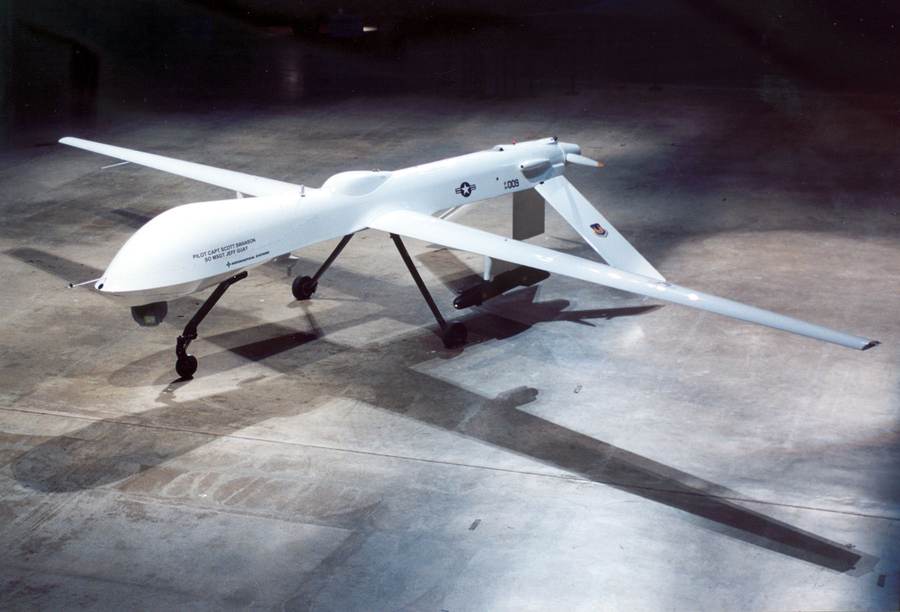
The cadence is compressed: Ed Damazin on September 14; Merowe on September 24; Umm Alila on September 27; then Port Sudan on September 27 and 28. The sequence matters more than any single target. A campaign that reaches from Blue Nile State to Northern State, El Gezira and the Red Sea coast is testing not one local air-defense network but the army's ability to protect widely separated nodes at once.
Fuel infrastructure appears repeatedly in that pattern. Ed Damazin, Umm Alila and Port Sudan each involved energy or storage sites, according to the reporting assembled for this analysis. Attacks on tanks and depots can impose outsized costs: the aircraft may be relatively cheap, while the fuel loss, fire response, transport disruption and security redeployment multiply the effect. They also blur the line between battlefield logistics and the basic services civilians use.
The human scale leaves little margin for another disrupted corridor. United Nations figures put displacement since April 2023 above 12 million people and describe about half of Sudan's population as facing acute hunger. The UN has also said drone strikes killed more than 1,000 civilians in the first five months of 2026. Those numbers do not establish responsibility for this week's Port Sudan attacks; they establish the environment in which another strike on fuel, aviation or port infrastructure would land.
Drones collapse the distance between front and rear. A city can remain hundreds of kilometers from a ground battle and still lose the protection that geography once provided. That is the strategic change Port Sudan now has to absorb.
Who gains, who pays
The RSF, if it launched the attacks, gains cheap strategic leverage. Reaching the army's seat of power signals that command centers and supply hubs cannot rely on distance, forces the army to redistribute air defenses and keeps the conflict nationally visible even where the RSF cannot seize ground. The cost is reputational: a fuel fire in a crowded city reinforces concerns about civilian harm and the use of attacks whose effects cannot be neatly contained within a military perimeter.
The army faces an embarrassing protection failure. Its political center, principal port and top command now appear exposed. Officials' “terrorism” framing emphasizes the civilian services at risk, while critics will ask whether fuel sites supporting military operations can also be considered military objectives. That debate does not remove the obligation to distinguish targets and minimize foreseeable harm to civilians.
Civilians and aid operations pay the most immediate price. Port Sudan's fuel network supports transport, power generation and the movement of goods from the seaport and airport. Even without reported casualties, a depot fire can interrupt supply, raise costs and complicate the delivery of food and medicine. The location in a densely populated area magnifies the risk of a technical failure becoming a neighborhood disaster.
Independent observers face a basic verification problem. The RSF has not claimed responsibility. Access to strike sites is constrained, the government is a party to the war and military sources have an obvious interest in attribution. The Reuters-sourced account is significant, but it should not be treated as a substitute for an independent forensic finding.
What happens next
Three near-term scenarios deserve attention. First, aid agencies may reassess staffing, warehousing and contingency plans in Port Sudan. A full withdrawal would deepen the humanitarian crisis; a quieter dispersal of supplies and personnel could still slow a corridor that millions depend on.
Second, the target set could move closer to the seaport or airport itself. Neither site was reported disabled in the two-day sequence, but attacks near aviation facilities and on fuel storage raise the possibility of direct attempts to interrupt arrivals, departures or cargo handling. That would turn a military pressure campaign into a national supply shock.
Third, the army is likely to reposition air defenses and may answer with strikes of its own. Retaliation could restore deterrence, or it could accelerate an exchange in which each side attacks infrastructure farther from the front. Regional and international diplomacy will increasingly have to address drones, launch sites and external supply chains — not only ceasefire lines on the ground.
The immediate fires may be contained. The strategic question is harder to contain: after two consecutive days of strikes, is Port Sudan's era as an insulated wartime capital over?
Sources
- Reuters reporting via The Eastleigh Voice
- Anadolu Agency reporting on the Port Sudan fuel-depot fire and the energy minister's statement.
- Radio Tamazuj reporting on the two-day Port Sudan drone escalation.
- Africa Center for Strategic Studies daily media review, September 29, 2026.
- theworldradar event verification.
Attribution of the strikes to the RSF rests on military/security sources speaking to Reuters and has not been independently verified by Signal Post News; the RSF has not claimed responsibility; the harbor, drone and tank images are file photos and do not depict the actual strikes.