Sudan RSF drone strike
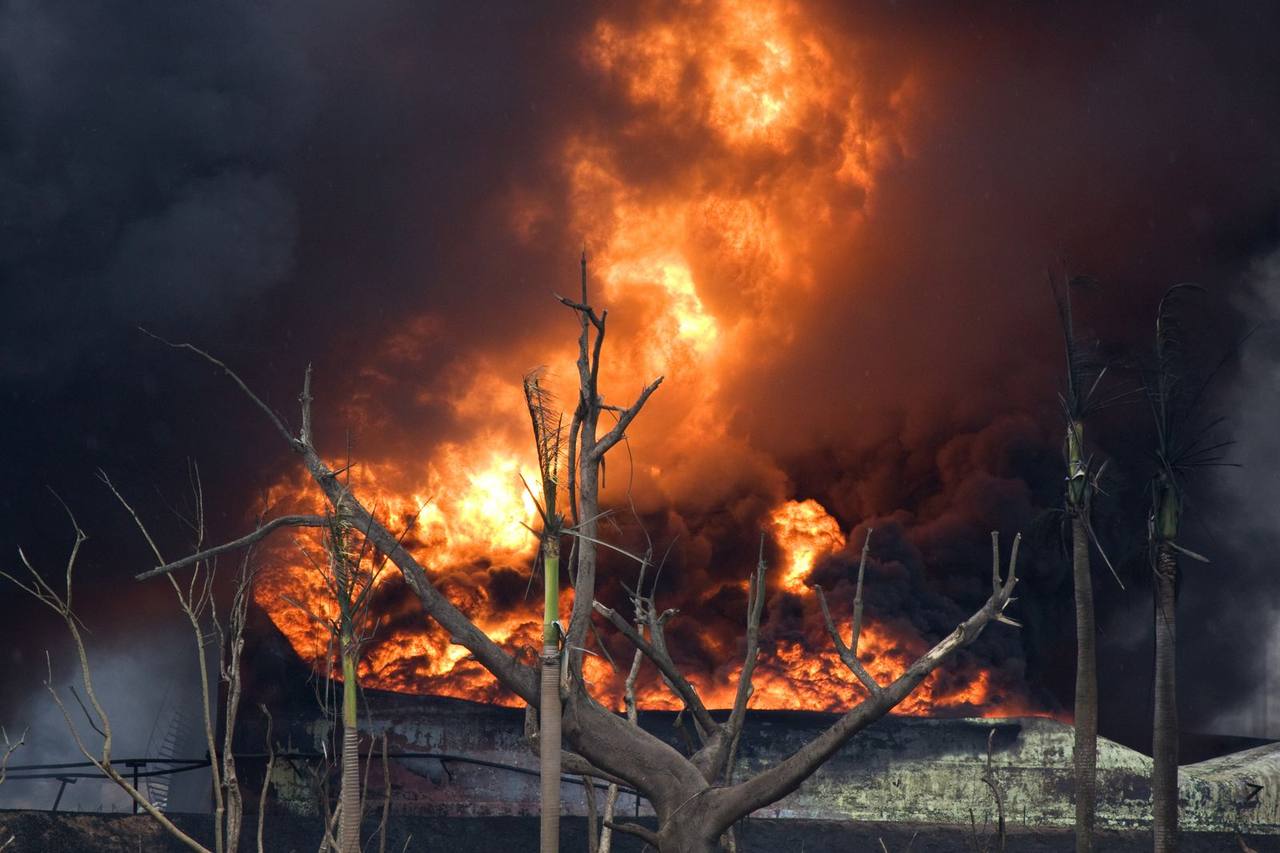
Sudan RSF drone strike — drones operated by the Rapid Support Forces struck the Umm Alila fuel depot east of Wad Madani, in Sudan's El Gezira state, early Sunday, September 27, 2026, setting storage tanks ablaze in the latest attack on energy infrastructure in the country's grinding civil war, according to Dabanga Radio TV Online and an AllAfrica summary of the incident.
Residents heard several explosions shortly after dawn prayers in Abu Haraz, about 20 kilometres northeast of Wad Madani, Dabanga reported. Videos circulating online showed flames across parts of the depot, and Civil Defence teams worked to contain the blaze. The facility stores and distributes petrol and diesel across El Gezira state. Sudan's Civil Defence contained the fire and prevented it from spreading to other tanks, Dabanga reported, limiting the damage to the petrol and diesel storage tanks.
No casualties were reported in the initial accounts of the strike. Both sides reported further drone activity across the country on Sunday, with each claiming to have shot down the other's drones, according to AllAfrica.
Why this matters
Fuel is the circulatory system of a war economy: it powers hospital generators, water pumps, farm machinery, aid convoys and military vehicles alike. El Gezira is Sudan's breadbasket, and the Umm Alila depot is the node that stores and distributes petrol and diesel across the state. Set it on fire and the consequences ripple outward — into fuel prices, into the planting and harvest calendar, into the trucks that carry humanitarian aid, and into the army's ability to move mechanized forces across one of the war's critical front lines.
That is why analysts cited by AllAfrica describe the RSF's drone campaign as a deliberate targeting of infrastructure and energy sites, and why they warn that attacks on fuel depots directly affect civilian life and humanitarian logistics. This is economic warfare conducted from the sky: the RSF cannot hold El Gezira on the ground — Wad Madani came under army control in recent months — but it can still reach into army-held territory and set its fuel alight. Territorial control, Sunday's strike shows, no longer equals security.
What happened at Umm Alila
The details, as reported by Dabanga, are straightforward. Shortly after dawn prayers on Sunday, residents in Abu Haraz heard several explosions. The blasts came from the Umm Alila fuel depot to the east of Wad Madani. Videos posted online showed flames across parts of the depot. Civil Defence teams responded and, according to Dabanga, contained the fire before it could spread to the depot's other tanks — limiting the damage to the petrol and diesel storage tanks that were hit.
The strike did not happen in isolation. Both sides reported further drone activity across Sudan on Sunday, each claiming shootdowns of the other's aircraft. Earlier in the week, the Sudanese Armed Forces said it had shot down two RSF FH-95 long-range drones in North Kordofan. The competing claims cannot be independently verified, but the tempo is unmistakable: drones are now a daily instrument of the war, striking targets far from any front line.
El Gezira: the front line that keeps burning
El Gezira's strategic weight is hard to overstate. The state sits between Khartoum and the south, feeds much of the country, and its capital, Wad Madani, was one of the war's early prizes — seized by the RSF in December 2023, then retaken by the army in a campaign that shifted the war's momentum. AllAfrica notes that Wad Madani remains one of the civil war's critical front lines even after coming under army control in recent months.
Sunday's strike is the RSF's answer to that reality. Unable to retake the city on the ground, it is waging a campaign of reach: drones against fuel depots, earlier strikes against the Merowe Dam and air base in the north, and a wave of drone attacks across North Kordofan that hit courts, colleges and a hospital. The logic is attritional — degrade the infrastructure that sustains army-held areas and the civilian life within them, and make the cost of holding territory unbearable even where the RSF cannot fight for it directly.
The drone war, by the numbers
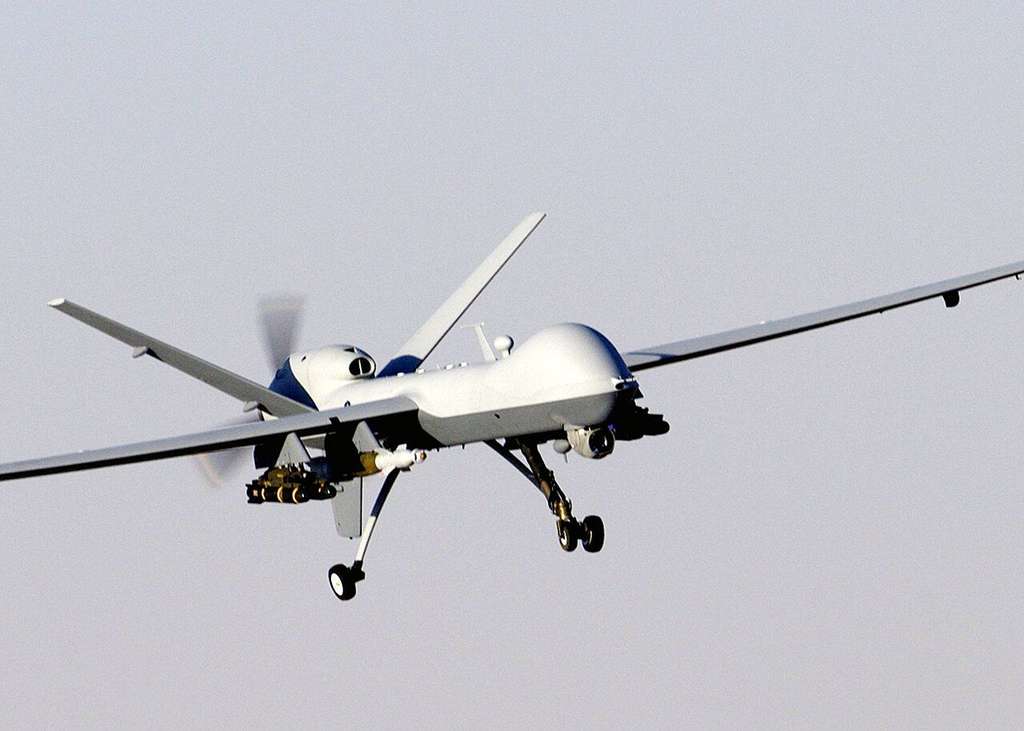
The United Nations High Commissioner for Human Rights has said drone attacks killed more than 1,000 civilians in the first five months of 2026 alone — a figure that captures how thoroughly unmanned aircraft have reshaped this war. Drones are cheap, deniable and precise enough to hit a fuel tank while being indiscriminate enough to kill bystanders when they miss. They have collapsed the distance between front lines and rear areas: a depot 20 kilometres from a state capital is no longer a rear area at all.
The numbers also reveal an asymmetry. The RSF, which lacks an air force, has leaned hardest into drones — the FH-95 long-range platforms the army says it shot down in North Kordofan, the kamikaze munitions hitting infrastructure, the persistent campaign against energy sites. The army has its own drones and its own air defences, and both sides now routinely claim shootdowns neither can prove. What neither side can do is stop the other's drones entirely — which is why fuel depots, dams and power infrastructure have become the war's most exposed targets.
Who gains, who pays
For the RSF, the strike is cheap leverage. A handful of drones, launched from far away, produced burning tanks, panicked residents and a news cycle — all inside territory the army claims to control. It signals to the army that no rear area is safe, to civilians that the state's protection has limits, and to the RSF's own supporters that the paramilitary remains a potent force despite its territorial losses. The cost is reputational: every strike on civilian-adjacent infrastructure deepens the humanitarian case against the RSF and hardens international attitudes.
For the army, the fire is an embarrassment wrapped in a warning. On Saturday, army chief Abdel Fattah al-Burhan told a rally at Khartoum Stadium that he rejected U.S. truce pressure and would eliminate the RSF “no matter the cost,” according to Radar Africa and Sudan Tribune. Sunday's burning depot is the gap between that rhetoric and reality: total war promised, rear areas unprotected. The United States has meanwhile declared both faction leaders unfit to govern — a designation that squeezes both sides diplomatically while changing nothing on the ground.
For civilians, the arithmetic is the simplest and the cruelest. The 1,000-plus dead from drone strikes this year are only the most visible cost. Behind them sit the fuel queues, the darkened hospitals, the stalled aid trucks and the farmers of El Gezira wondering whether their harvest will reach market. The depot at Umm Alila stored the fuel that moves all of it. The Civil Defence contained the fire; nobody can contain what the fire means for the price of everything it touched.
What happens next
Three paths branch from the smoke over Umm Alila. The first is escalation: the RSF sustains its drone tempo, pushing strikes deeper into army-held infrastructure — more depots, more dams, more of the energy grid — until the army is forced to divert scarce air defences to guard fuel instead of fighting. The pattern of the last month, from Merowe to North Kordofan to El Gezira, points this way.
The second is adaptation: the army hardens its rear areas, deploys air defences around fuel and energy sites, and the Civil Defence's success at Umm Alila — containing the blaze before it spread — becomes the template. Rapid response cannot prevent strikes, but it can limit their damage, and the depot's survival as a facility matters as much as the tanks that burned.
The third is diplomacy, and it looks the thinnest. Burhan's Saturday rejection of truce pressure, the U.S. “unfit to govern” designation of both leaders, and a drone war that kills a thousand civilians in five months all point away from negotiation. Drones have given both sides a way to keep fighting cheaply and at a distance — which is precisely why wars fought this way tend to burn long. Umm Alila is unlikely to be the last fuel depot to catch fire. The question is how many more will burn before either side runs out of drones, fuel, or reasons to keep striking.
Sources
- Dabanga Radio TV Online (via BlackNews): RSF drones strike El Gezira fuel depot as both sides report shootdowns — the Umm Alila strike, explosions heard near Abu Haraz after dawn prayers, videos of flames at the depot, Civil Defence containing the blaze, damage limited to petrol and diesel tanks.
- AllAfrica (via Vesper): RSF Drones Strike El Gezira Fuel Depot As Both Sides Report Shootdowns — the depot stores and distributes petrol and diesel across El Gezira; Wad Madani under army control in recent months and a critical front line; analysts on the RSF drone campaign targeting infrastructure and energy and its effects on civilian life and humanitarian logistics; both sides' shootdown claims.
This article is based on reporting by Dabanga Radio TV Online, an independent Sudanese news outlet, as carried by BlackNews, and an AllAfrica summary of the incident. The strike has not been independently verified by Signal Post News. No casualties were reported in the initial accounts. Claims by either side about shooting down the other's drones could not be independently verified. The figure of more than 1,000 civilians killed by drone strikes in the first five months of 2026 is attributed to the UN High Commissioner for Human Rights as reported in September 2026. Positions attributed to Gen. Abdel Fattah al-Burhan are as reported by Radar Africa and Sudan Tribune.