Sports / Hockey — Ron Duguay dies at 69 after a battle with stage 4 colon cancer, and the tributes tell you what the numbers alone cannot: for a generation of New York Rangers fans, he was not just a 40-goal scorer, he was the face of the team — helmetless, hair flying, impossible to miss.
Ron Duguay, the flashy forward who played 12 seasons in the National Hockey League, most of them for the New York Rangers, died on Thursday at the age of 69. A spokesperson for the Rangers said his family had informed the team of his death, the Associated Press reported, and Reuters, NHL.com and USA Today all carried the news within hours. Duguay had been living with stage 4 colon cancer. He told the New York Post the disease originated in his colon, that he had battled it for more than a year, and that it had cost him his appendix and his gallbladder. In February, he announced the diagnosis publicly, and his daughters set up a fundraising campaign to help with the cost of travel and treatment. On Thursday, the Rangers called him "one of the most popular players in franchise history," and anyone who watched Madison Square Garden in the late 1970s will understand why that line is not boilerplate.
The facts of the career are strong enough on their own. Drafted 13th overall by the Rangers in 1977 out of his hometown Sudbury Wolves, Duguay jumped straight from junior hockey to the NHL and scored 20 goals as a rookie. He finished with 620 points — 274 goals and 346 assists — in regular-season play, plus 53 points in 89 playoff games, across spells with the Rangers, the Detroit Red Wings, the Pittsburgh Penguins and the Los Angeles Kings. His best season was 1981-82, when he led the Rangers with a career-high 40 goals and played in his only NHL All-Star Game. And on April 6, 1980, he scored nine seconds into a game against the Philadelphia Flyers — a goal that still shares the Rangers' record for the fastest from the start of a game, tied with marks set in 1927 and 1971. But Duguay's place in New York memory was never only about the stat line, and the speed of Thursday's tributes — team, league, alumni, family — showed it.

What is confirmed, and how it was confirmed
Because this is a death, the sourcing matters, so here it is plainly. The Associated Press, in a report by Stephen Whyno, said a Rangers spokesperson confirmed Thursday that Duguay's family had informed the team of his death, and that he had died of cancer at 69. Reuters, carrying Field Level Media's report, gave the same core facts independently: death on Thursday at 69, the stage 4 colon cancer diagnosis he had announced in February, and the loss of his appendix and gallbladder. NHL.com published its own obituary the same day with the league's statement — "The NHL mourns the passing of Ron Duguay, a charismatic figure who made a lasting impression on the game" — and USA Today published a matching obituary with the Rangers' statement in full. His daughter Shay Thomas posted that her father had died on Thursday "after a hard fought battle with cancer," People reported, writing: "Our hearts are broken. We love you forever, Dad." Four separate reporting lines and two family confirmations agree on the central fact. Where reports differ on small career totals — some wires give 864 career games, NHL.com gives 860 regular-season games — this article uses the NHL's own figures and says so, rather than blending the two.
Sarah Palin, the former Alaska governor and 2008 Republican vice-presidential nominee, who had been Duguay's partner for about four years, confirmed the death on her Instagram Stories. "It's with a shattered heart, but also deep peace knowing Ron is with Jesus now," she wrote. "He fought so hard. Love never ends." People reported that only days earlier she had shared a photograph of herself holding his hand in a hospital bed, asking followers for prayers, and that a celebration of his life will be announced at a later date. Per the New York Post, cited by Reuters, Duguay is survived by his daughters Shay Thomas and Amber Stavros, his son Noah Duguay, and five grandchildren.
The player: speed first, everything else after
Duguay arrived in New York in 1977 as a teenager from Sudbury, Ontario, where he had been a junior star: his 134 points for the Sudbury Wolves in 1975-76 helped them win the Hamilton Spectator Trophy for the best regular-season record, and he played for Canada at the 1977 world junior championship before the Rangers took him in the first round. The Winnipeg Jets had also taken him third overall in the rival WHA draft a year earlier; he chose the NHL, and New York. What the Garden saw first was the skating. In an era when many forwards still lumbered, Duguay flew — upright, fast, and, famously, helmetless, his long curly hair streaming behind him as he came down the ice. The Rangers' statement on Thursday reached for exactly that image: his "signature skating style — with his hair flowing as he moved down the ice — captivated The Garden Faithful."
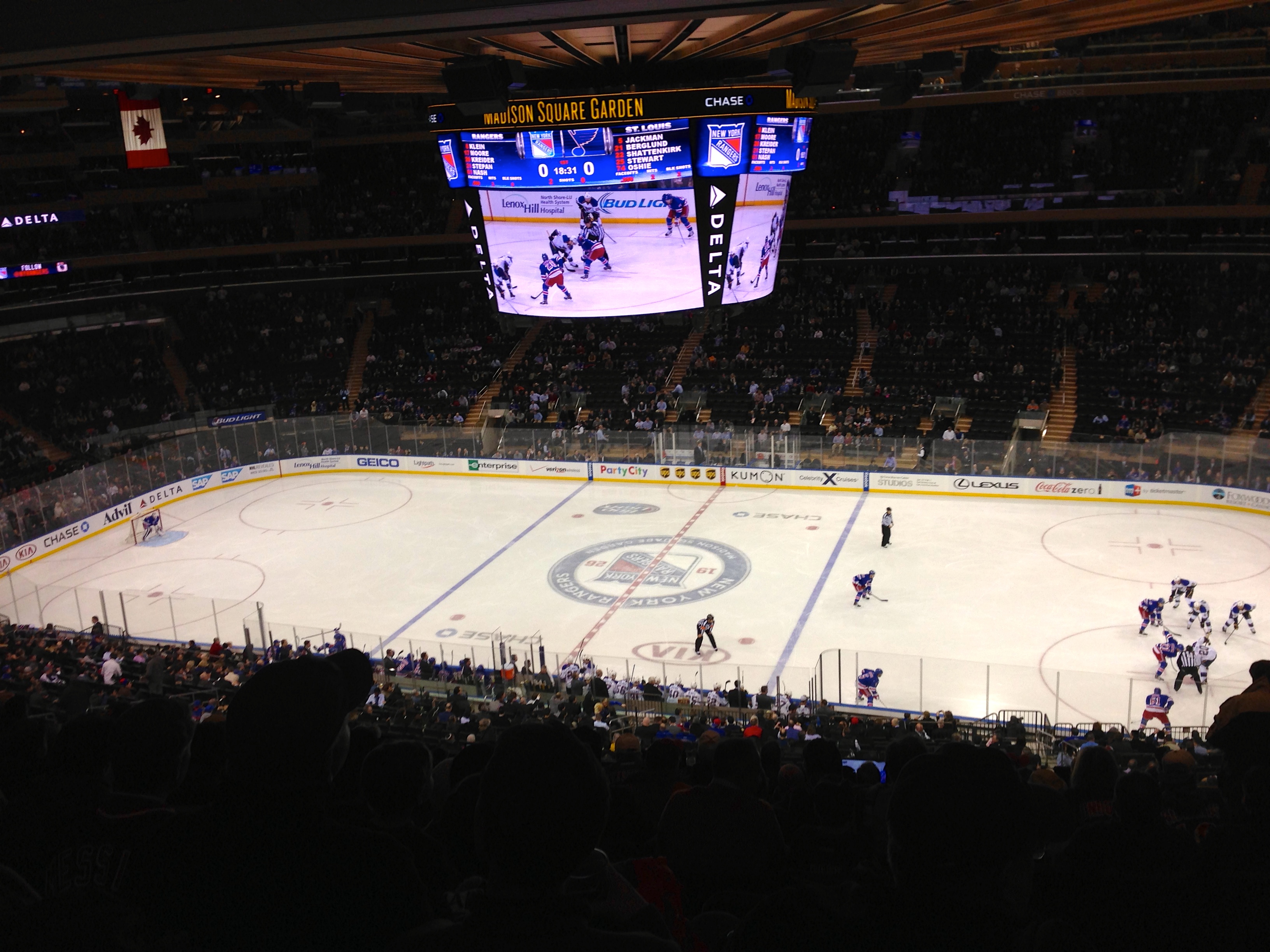
The peak team came quickly. The 1978-79 Rangers, coached by Fred Shero and built around Phil Esposito and a young core that included Duguay, Ron Greschner, Steve Vickers and the Maloney brothers, reached the Stanley Cup Final, upsetting the top-seeded New York Islanders in the semifinals before losing the Final to the Montreal Canadiens in five games. Duguay was 21. It was as close as that Rangers generation ever came — the franchise's long championship drought, dating to 1940, would not end until 1994, years after Duguay's last Rangers game — and it fixed him in the city's sporting memory at exactly the age when first impressions harden into folklore.
The record that still stands, and the season that defined him
Two numbers from his prime still do real work. The nine-second goal against Philadelphia on April 6, 1980, in an 8-3 win at the Spectrum, tied a franchise record that had been set by Fred Cook in 1927 and matched by Jean Ratelle in 1971 — meaning Duguay's name sits in the Rangers' record book alongside players from the club's original era and its most beloved 1970s team. And the 1981-82 season, 40 goals and an All-Star selection, was his one year as a genuine point-a-game star, the season the AP singled out in its obituary. Injuries interrupted his progress in other years, as NHL.com's history notes, and he never quite stacked a second season on top of that one. But a Rangers fan does not need a second 40-goal season to remember him. One was enough, at that speed, in that building.
Why this matters
It would be easy to file this as a routine sports obituary, and that would miss what Thursday actually showed. Duguay belonged to the last generation of NHL players who became celebrities in their city in the way film stars were celebrities — through presence, style and nightlife as much as through performance. He skated without a helmet in an era that still allowed it, appeared with teammates in the famous 1979 Sasson jeans commercial ("Oo La La! Sasson"), and was a fixture of New York's social pages. The Rangers of his era did not win the Cup. They were, for stretches, not even the best team in their own city — the Islanders' dynasty saw to that. Yet Duguay's obituary led national sports coverage within hours of his death, ahead of players with longer résumés, because popularity is its own statistic and his was enormous.
There is a second, quieter reason this story travelled. Duguay spent his final year doing something athletes of his generation rarely did: talking publicly, and in financial detail, about what a stage 4 cancer fight costs. His daughters' February fundraising appeal said the family had seen "firsthand the weight this battle has placed on him, both physically and financially." A man who played 12 NHL seasons, worked 12 more years as a television analyst, and remained a public figure into his late sixties still faced treatment and travel costs his family chose to crowdsource. Whatever a reader thinks of the economics of modern medicine, that is a fact about American life in 2026 delivered inside a hockey obituary, and it is part of why the story reached well beyond hockey audiences on Thursday — including, via Palin's tribute, into political media that rarely covers the NHL at all.
After the NHL: the long second career
Duguay's playing story did not end when his NHL career did in 1989. He kept playing — in Germany and in the minor leagues — and NHL.com records that he finally retired from hockey in 2008-09, two decades after his last NHL game, a measure of how completely the sport was woven into his life. In between, he coached, including a spell in charge of the Jacksonville Barracudas. But his most visible second act was in the broadcast booth: he joined MSG Networks as a Rangers analyst in 2007 and stayed through the 2017-18 season, 12 years of studio work that introduced him to a generation of fans who never saw him play. That second career matters to the obituary arithmetic. A player remembered only by people who saw him live fades on a schedule set by memory. A player who spent 12 years on the local broadcast becomes part of the furniture of fandom — which is one reason Thursday's reaction spanned fans in their seventies and fans in their thirties.

Both sides, stated fairly: the star and the almost
An honest obituary holds two truths at once. The first is the one in Thursday's statements: Duguay was genuinely, unusually beloved — "one of the most popular players in franchise history," in his own club's words, and the NHL Alumni Association's tribute stressed the man over the player: "an extraordinary passion, an infectious smile, and a heart that was truly larger than life," a compassion that "always extended far beyond himself." The second truth is the career that might have been. He was a 13th-overall pick who produced one All-Star season, was traded away in his prime in 1983, came back, and finished with good — not great — career totals for someone of his talent and fame. Contemporary accounts are candid that injuries stalled him, and his celebrity at times outran his production in ways that irritated purists of the era. Neither truth cancels the other. Hockey history is full of players with better numbers and smaller footprints. Duguay's footprint was never really about the numbers, and pretending otherwise — in either direction — would misread why Thursday felt the way it did in New York.
What is not known yet
Several things remain unreported, and this article will not guess at them. No cause-of-death statement beyond the cancer he had publicly described has been issued by the family or the team; reports that the cancer had spread to his liver come from the New York Post's earlier coverage of his illness, not from a Thursday medical statement. Funeral and memorial arrangements have not been announced — Palin said a celebration of his life will be announced later. The Rangers have not yet said whether or how the club will honour him at an upcoming home game; teams in this position commonly hold a moment of silence and a video tribute, but nothing has been confirmed, and any such plan will be reported when the club announces it. His No. 10 is not among the Rangers' retired numbers, and there is no reporting that Thursday's news changes that.
What happens next
Expect the tributes to continue through the weekend: former teammates from the 1979 Final team and the early-1980s Rangers are the voices hockey media will seek first, and the Sudbury Wolves — whose arena still hangs his No. 10 banner from his junior years, 1973 to 1977 — are the other institution with a claim on his memory. In Sudbury he was a hometown boy who made it; in New York he was a star who made an era watchable even when it ended without a parade. A player gets to be one of those things in a career, usually. Duguay, improbably, was both — the kid from the nickel city whose hair flew down the ice at the Garden, and who, nearly fifty years after his first Rangers game, could still stop a sports day cold with the news that he was gone.
Related reading: our obituary of country music Hall of Famer John Anderson, who died this month at 71, and our report on the death of Chicago Bears coaching legend Mike Ditka at 86.
Sources
Associated Press (Stephen Whyno, October 22, 2026 — Rangers spokesperson confirmation, career summary, Palin quote, GoFundMe background); Reuters / Field Level Media (October 22, 2026 — death at 69, February diagnosis announcement, MSG 2007 to 2017-18, survivors per the New York Post); NHL.com (October 22, 2026 — league statement, 860 regular-season games, 620 points, 53 playoff points in 89 games, junior career, nine-second goal record, 1979 Final run); USA Today (October 22, 2026 — Rangers-only totals, MSG analyst years); People (October 22, 2026 — Shay Thomas post, Palin hospital photograph and celebration-of-life note, daughters' February statement). Career totals follow NHL.com where wires differ.