On September 30, 2026, Russia put a nuclear threat against NATO in writing. In a diplomatic note sent to the alliance and seen by Reuters, Moscow said it would be ready to use its “entire arsenal of forces and capabilities,” including nuclear weapons, if NATO countries attempted to isolate Kaliningrad, the heavily militarised Russian exclave on the Baltic Sea. A day later, Vladimir Putin personally tied the warning to Russia’s nuclear doctrine at the Valdai Forum in Moscow. NATO’s secretary-general shrugged it off. A senior European defence official called it the gravest Russian threat since the Cold War.
This explainer — distinct from our news report on Putin’s Valdai remarks — unpacks the three things the headlines skip: the doctrine clause Moscow says it is invoking, the map that makes Kaliningrad different from every other piece of Russia, and why NATO is split on how seriously to take it.
The non-paper: what Russia put in writing
Diplomats call it a non-paper: an informal written communication that carries no treaty status but signals an official position. According to Reuters, which reviewed the document, Russia’s note accused NATO of a “dangerous and reckless course” entailing “high risks of the outbreak of a direct armed conflict.” Its central passage reads:
“Russia will be ready to use the entire arsenal of forces and capabilities at its disposal, including nuclear weapons, in order to defend its territory should NATO countries undertake any attempt aimed at isolating the Kaliningrad Region from the rest of the country.”
The note went further, raising the prospect of “Russian strikes against decision-making centers in the alliance’s member states right from the outset” of any conflict — language that points, however vaguely, at capitals from Warsaw to Washington. Russian embassies in at least three European countries posted near-identical statements over three days accusing NATO of reckless behaviour near the exclave. Kremlin spokesman Dmitry Peskov described them as reminders to “hotheads in Europe,” while Foreign Ministry spokeswoman Maria Zakharova wrote that Western figures guilty of “Russophobia” needed to be “brought back down to earth,” adding: “If Europe attacks Russia, it will be a completely different sort of war – a very short war.”
The doctrine clause: why Moscow says this is not a bluff
Peskov said it was “completely natural that our diplomats are trying to remind the ‘hotheads’ in Europe of our foundational documents on this matter.” The reference is to Russia’s November 2024 nuclear doctrine revision, which did two relevant things. First, it lowered the threshold for nuclear use from a “threat to the existence of the state” to a “critical threat to sovereignty or territorial integrity.” Second, it listed “actions by a potential adversary aimed at isolating part of the territory” among the military dangers that Russia’s nuclear deterrent is meant to counter.
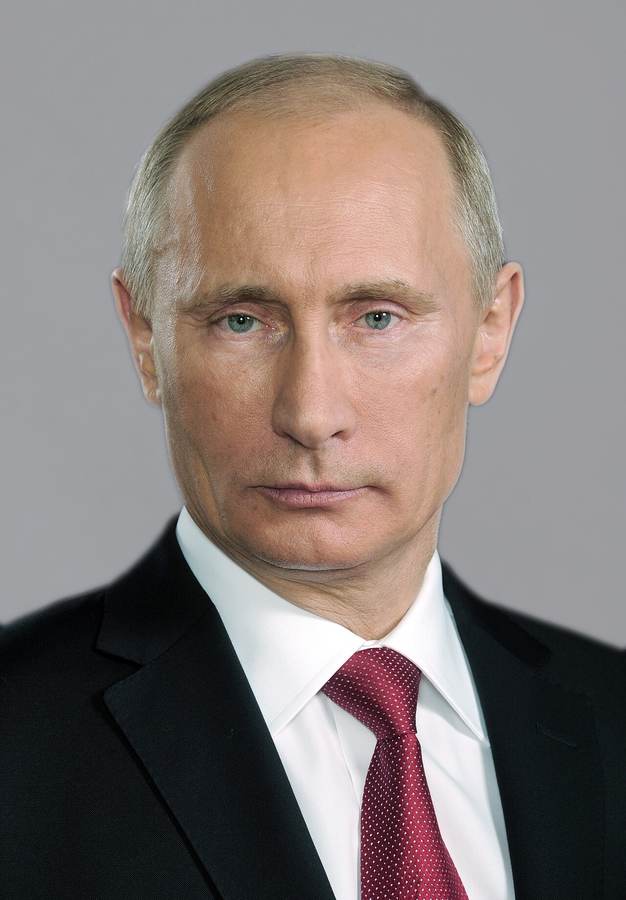
Experts link that “isolation” clause to Kaliningrad because it is the only Russian region physically separated from the mainland. On October 1, Putin made the link explicit at Valdai: a direct attack on Russia, he said, would put the use of “all the weapons at our country’s disposal” on the agenda “inevitably and immediately” — and he was referring, he added, to Kaliningrad “and perhaps other territories as well.” He also insisted: “We are not threatening anyone.” Whether the doctrine is a genuine tripwire or a rhetorical shield is the central unanswered question; what is new is a Russian leader naming the territory the clause covers.
The map: why Kaliningrad is different
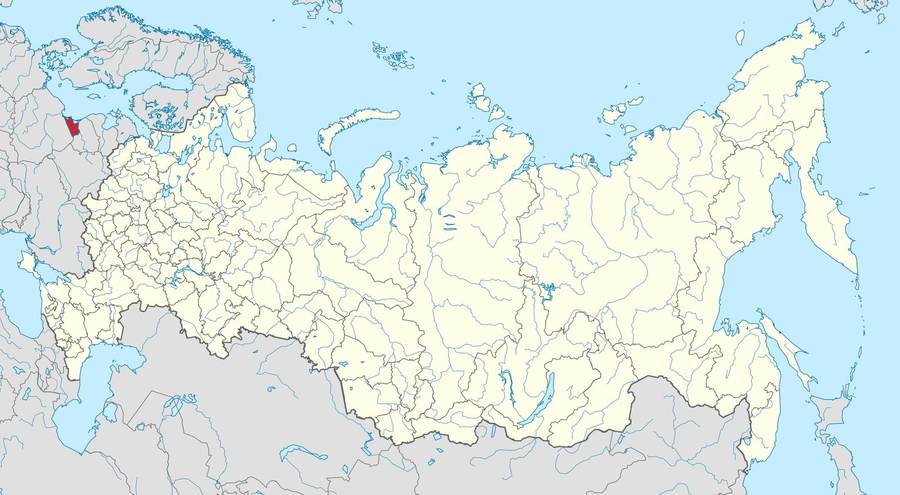
Kaliningrad is a Russian exclave of roughly 15,000 square kilometres on the Baltic Sea — slightly bigger than the U.S. state of Connecticut — wedged between NATO members Poland to the south and Lithuania to the north and east. It has no land border with mainland Russia. The narrow Suwalki Gap, a roughly 100-kilometre corridor between Kaliningrad and Belarus, is the only land link between the Baltic states and the rest of NATO — and the strip of ground alliance planners worry about most.
The exclave is also one of Russia’s most militarised patches of ground. It hosts the headquarters of Russia’s Baltic Fleet and nuclear-capable Iskander missile systems with a range of about 500 kilometres — enough to reach Warsaw, Vilnius, Riga and much of northern Poland from Kaliningrad soil. That geography cuts both ways: Moscow calls the exclave uniquely vulnerable to a NATO blockade; NATO calls it a forward platform from which Russia can hold alliance capitals at risk. Both descriptions are true at once, which is why the territory concentrates the standoff.
Why Moscow says it is warning now
Russia cites several NATO activities as provocation. These include exercises near the Suwalki Gap; Polish Foreign Minister Radosław Sikorski’s September 11 suggestion that allies could exercise near Kaliningrad to pressure Moscow; and Baltic Sea manoeuvres that Putin said pose “serious threats” to the exclave. Moscow also claims it has information the alliance is preparing an air and naval blockade of Kaliningrad — a claim NATO rejects. One more irritant, reported in the British press: the Sky miniseries The Wargame, aired in September, which dramatised a hypothetical Russian attack on the UK including allied operations against Kaliningrad. None of these amounts to an actual blockade plan, but together they gave Moscow the pretext — or, in the Kremlin’s telling, the evidence — for putting the warning in writing.
The split: Rutte shrugs, others don’t
NATO’s response has been two-track. Secretary-General Mark Rutte, speaking September 30 on the sidelines of the Euronews Defence & Space Summit in Brussels, dismissed the warning outright. Asked whether the risk of Russian nuclear use against alliance members was now real, he said: “No, it’s not. Putin knows that he can never win (against) NATO, so I don’t take this that seriously.” NATO answered Moscow in writing — spokeswoman Allison Hart confirmed receipt of the Russian note — declaring: “We are a defensive alliance. And stop the nuclear threats. This is absolutely not called for and not helpful.” The alliance’s reply added that none of its exercises threaten Russian territory and urged Moscow to end its invasion of Ukraine and cease “irresponsible nuclear rhetoric.”
But a senior European defence official told Reuters the opposite: “It’s the first time since the Cold War that Russia is threatening us like this. So this is serious.” The gap captures NATO’s dilemma. Dismissing the threat as bluster risks normalising nuclear coercion; treating it as a genuine red line risks handing Moscow a veto over alliance exercises near the exclave. Rutte’s public posture is deterrence — we are not intimidated — while behind closed doors, officials acknowledge the warning formalises a scenario planners must now price in.
What the language signals
Three phrases in the Russian messaging deserve attention. First, “decision-making centers”: a longstanding Russian euphemism for political and military command targets, now attached to a nuclear warning for the first time in this context. Second, “right from the outset”: a rejection of any ladder of escalation, implying massive retaliation would not wait for a conflict to develop. Third, Putin’s “and perhaps other territories as well”: a deliberate ambiguity that extends the logic beyond Kaliningrad without naming where — a classic deterrence formulation that maximises uncertainty for the other side.
Why it matters
The warning does not mean a nuclear strike is imminent; no Western intelligence assessment made public suggests Russia is preparing one. What it does mean is that Moscow has operationalised its 2024 doctrine in a specific geography, converting an abstract clause about “isolation” into a named tripwire around Kaliningrad. That raises the stakes of every future NATO exercise near the Suwalki Gap, every Polish or Lithuanian airspace incident, and every Baltic Sea manoeuvre — because Russia has now said, in writing, what it claims the consequence would be. It also tests alliance cohesion: the public split between Rutte’s dismissal and the European official’s alarm is exactly the kind of seam Moscow’s signalling is designed to probe.
What to watch next
Three things will show whether this was coercive theatre or a genuine doctrinal shift. First, NATO’s October exercises near the exclave: if they proceed unchanged, the alliance is calling the bluff; if they are scaled back or moved, Moscow’s note worked. Second, whether Russian officials repeat the Kaliningrad formulation or let it fade — repetition would suggest it is now standing policy. Third, any movement on the arms-control front: with the Ukraine war grinding on and the Baltic incidents of September still fresh, the Kaliningrad warning adds a nuclear dimension to a confrontation that had, until now, stayed carefully below that threshold.
Sources: Reuters, Sept 30, 2026 (via LA Post); Reuters, Sept 30, 2026 (via gCaptain); Crisis.Zone, Oct 1, 2026; Open Chronicle, Oct 1, 2026. Doctrine details per Russia’s published November 2024 revision as analysed by Crisis.Zone. Facts are a fixed October 2, 2026 reporting snapshot and do not update live.
Related coverage
- Putin: Any Attack on Kaliningrad Would Trigger Russia’s ‘All Weapons’ Vow
- Russia Nuclear Warning NATO Kaliningrad: What the Non-Paper Signals
- Russia Warns European Arms Factories Supplying Ukraine Are Targets