Moscow named the factories arming Kyiv as "potential military targets" — the bluntest threat yet to NATO territory's industrial base — hours after its biggest strike on Ukraine's power grid in months. NATO called it irresponsible rhetoric and changed nothing.
What happened
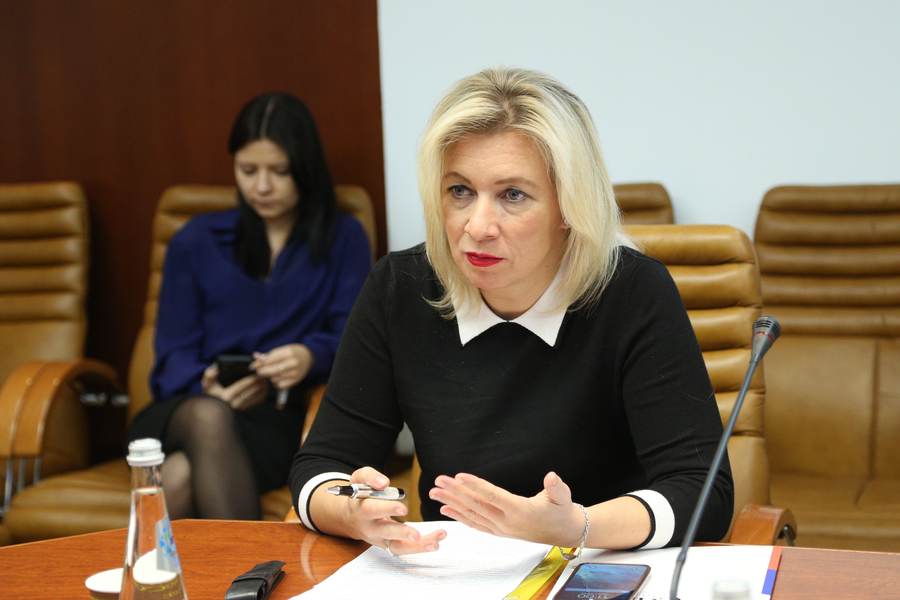
On Wednesday, September 30, Russian Foreign Ministry spokeswoman Maria Zakharova told a press briefing in Moscow that factories in Europe producing arms for Ukraine are "legitimate and potential military targets" for Russia. She was answering a question about Poland's apparent readiness to host a factory producing Patriot interceptor missiles for Ukraine.
"Weapons factories in European countries that produce arms for Ukraine are potential military targets for Russia, and one should not assume that military factories outside Ukrainian territory which produce weapons for the Kyiv regime will be safe. Anyone who thinks so is mistaken," Zakharova said.
She framed the warning as a consequence of European involvement: "European countries are directly involved in the Ukrainian conflict. They are not merely providing aid. By opening arms factories and joint ventures, they are fully involved. And this only delays a resolution to the conflict rather than bringing it closer, as some forces in Europe think or imagine."
The statement landed within hours of two related developments. Overnight, Russia launched a massive combined strike — nearly 190 attack drones plus ballistic missiles, according to Ukrainian President Volodymyr Zelensky — aimed primarily at energy infrastructure in and around Kyiv, killing at least three civilians. And the same day, Reuters reported on a Russian document sent to NATO warning Moscow would be ready to resort to nuclear weapons if the alliance attempted to cut off Kaliningrad, the Russian exclave between Poland and Lithuania.
NATO's answer to both messages was calm dismissal. Secretary General Mark Rutte, speaking at a Euronews event in Brussels, said there was "no imminent threat" to NATO territory and that the alliance's threat assessment was unchanged from three weeks, three months, and a year ago. "Basically what we said is: 'Hey, listen, we are defensive alliance and stop the nuclear threat,'" Rutte said. He added that any Russian move against Finland, the Baltic states, Poland, or another ally would be preceded by a visible military build-up, underlined that the United States remains committed to defending Europe by conventional and nuclear means, and said NATO would continue supporting Ukraine and investing in its own defence. He also said Vladimir Putin has shown no interest in negotiating an end to the war: "It takes two to tango. So far, it doesn't seem that Vladimir Putin is willing to tango when it comes to a peace deal."
A note on sourcing: Zakharova's remarks and Rutte's response are confirmed by original Reuters reporting from Moscow and Brussels, with the Zakharova statement additionally carried by the Australian Associated Press. The Kaliningrad nonpaper's contents are as reported by Reuters, which said it had seen the document; Reuters could not independently verify Russia's battlefield claims about its overnight strikes.
Why this matters
This is not the first time Moscow has threatened consequences beyond Ukraine's borders — but it is the most specific naming of targets inside NATO territory to come from an official Russian podium in this war. There is a meaningful difference between warning of "consequences" and declaring weapons plants in allied countries to be "military targets." The first is atmosphere; the second is a targeting list, or at least the public performance of one.
First, it moves the rhetorical front line onto NATO soil. Until now, Russia's strikes on Western arms flows have stayed inside Ukraine — depots, rail hubs, and the logistics tail of aid deliveries. European factories have been the safe rear area of the entire Western support effort: the place where artillery shells, air-defence interceptors, and armoured vehicles are built beyond the reach of Russian missiles. Zakharova's statement is an attempt to erase that sense of sanctuary, to make a factory manager in Poland or Germany calculate risk the way a depot commander in Lviv already does. Whether Moscow could or would act on the threat is a separate question; the psychological objective — injecting doubt into Europe's industrial mobilisation — is achieved the moment the sentence is uttered.
Second, the timing is the message. The warning did not arrive alone. It came on the same day as the nuclear nonpaper over Kaliningrad and hours after the largest combined strike on Ukraine's energy system since the last heating season. Three signals, one day: a battlefield demonstration (we can still hit Kyiv's grid at scale), a strategic threat (we will go nuclear over Kaliningrad), and an industrial threat (your factories are not safe). Read together, they look less like improvisation and more like a coordinated pressure campaign — aimed, most plausibly, at the exact European debate Zakharova named: whether to deepen the continent's arms-industrial commitment to Ukraine, starting with the Patriot factory question in Poland.
Third, it tests the thing NATO claims is unbreakable: the Article 5 tripwire. An actual Russian strike on a factory in Poland or Germany would be an attack on allied territory — the scenario the alliance was built to deter. By voicing the threat publicly, Moscow probes how seriously that deterrent is taken and how unified the response is. Rutte's answer — calm, unchanged assessment, continued support for Ukraine — was designed to project exactly that unity. The exchange is a small, public stress test of deterrence, conducted in press briefings instead of on a battlefield.
Background: Europe's arsenal and Moscow's red lines
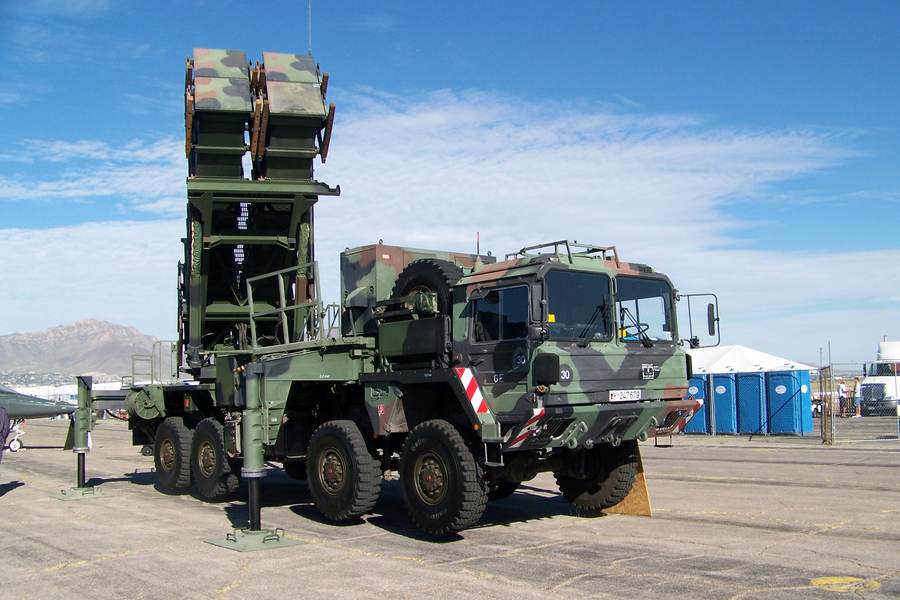
To understand why this threat landed now, follow the factories. Since 2022, Europe has been converting itself — unevenly, belatedly, but genuinely — into an arsenal for Ukraine. Defence budgets have risen across the continent, joint ventures between European arms makers and Ukrainian firms have multiplied, and production lines for artillery ammunition, air-defence systems, and armoured vehicles have been expanded or newly built. The Patriot interceptor factory reportedly under discussion in Poland would be a flagship of that trend: moving production of one of the war's most decisive defensive weapons closer to the front it defends.
Moscow has watched this industrialisation with open hostility and, until now, mostly indirect responses. Russian officials have repeatedly declared Western weapons shipments inside Ukraine to be legitimate targets — and Russian missiles have hit depots and infrastructure associated with them. What changed on September 30 is the geography of the threat: from the territory of the war to the territory of the alliance.
The pattern of Russian red-line rhetoric in this war is worth recalling with a clear eye. Western tanks, long-range missiles, F-16s, strikes inside Russia — each was at some point described by Moscow as an unacceptable escalation, and each was eventually delivered or carried out without triggering the threatened wider war. That history is precisely why NATO officials, in public at least, treat the latest warnings as "irresponsible rhetoric" rather than operational plans. But the same history contains a caution: the gap between rhetoric and action has sometimes narrowed without warning, and threats aimed at NATO territory — rather than at Ukraine — operate under different, far more dangerous rules.
Who gains, who loses — and what the skeptics say
Moscow's calculation is straightforward: deterrence by intimidation. If European governments, parliaments, or corporate boards hesitate over the next factory, the next joint venture, or the next production contract for Ukraine, the statement has paid for itself — at zero military cost. There is also a domestic audience: a Russian public enduring a long war is shown a government that speaks boldly about striking back at the suppliers, not just the battlefield. And there is a diplomatic audience: with US envoy talks and various peace feelers in the background, Moscow may be signalling that the price of continued Western support will keep rising.
Kyiv's interest runs the other way. Ukraine's survival depends on the uninterrupted flow of Western weapons, and interceptor missiles — the Patriots that shoot down Russia's ballistic missiles — are among the scarcest and most valuable items in that flow. A factory in Poland producing them would shorten supply lines and expand capacity. Anything that slows or complicates that project directly affects Ukraine's air defences in the months ahead. Zelensky's government has every reason to treat the threat as serious and to press allies to treat it as empty.
Europe's defence industry now faces a risk calculation it has not had to make before. Arms manufacturers operate on long contracts and thin political patience; the suggestion — however rhetorical — that their plants are "military targets" introduces security costs, insurance questions, and political pressure that did not exist last week. The likely industrial response, if the threat is taken at all seriously, is dispersal and hardening rather than retreat: more, smaller, better-protected sites rather than fewer large ones.
The skeptics' case is that this is theatre, and familiar theatre at that. Russia has issued dramatic warnings throughout the war without following through on the most escalatory versions; NATO's assessment is explicitly unchanged; and striking a NATO factory would invite the alliance response Moscow has spent decades avoiding. On this view, the statement is best understood as an information operation aimed at European public opinion — an attempt to make voters and investors associate support for Ukraine with personal risk. The counter to the skeptics is equally simple: dismissing a threat is not the same as disproving it, and the cost of being wrong about a strike on allied territory is catastrophically higher than the cost of being wrong about rhetoric.
The numbers in context
Put September 30 in sequence and the escalation pattern is visible. Hours before Zakharova spoke, Russia launched what Ukraine's prime minister called the first massive combined attack on the country's energy infrastructure since the end of the last heating season — nearly 190 drones and ballistic missiles in a single night, aimed at Kyiv's power grid. The same day brought the Kaliningrad nuclear nonpaper and the arms-factory warning. That is three distinct pressure instruments — battlefield, strategic-nuclear, and industrial — deployed within roughly 24 hours.
Set that against NATO's side of the ledger: one unchanged threat assessment, one public dismissal, and a continued commitment to arming Ukraine. The asymmetry is the story. Moscow is spending rhetorical and military capital at an accelerating rate; the alliance is spending none, publicly. Either NATO's calm is the correct read of an opponent whose threats have repeatedly outrun its actions — or it is the complacency that precedes a miscalculation. The data so far supports the first reading; the stakes argue for hedging against the second.
One more number matters: zero. Zero is the number of Russian strikes on weapons factories inside NATO territory to date. Every assessment of this threat — Moscow's credibility, NATO's deterrence, the industry's risk — turns on whether that number stays at zero, and why.
What happens next
Three scenarios are worth holding in mind. The most likely: rhetoric without action. The warning joins the long catalogue of Russian red lines that shaped headlines but not battlefields. European factory plans proceed, perhaps with added security reviews; NATO's assessment stays unchanged; the episode is remembered as a pressure tactic timed to the Patriot-factory debate. The middle case: hybrid pressure. Moscow acts below the threshold of open attack — cyber intrusions, sabotage, arson, or disinformation campaigns targeting defence plants and their supply chains — creating real costs and real fear without crossing the Article 5 line. European security services have warned about exactly this kind of activity before; the statement could be read as its rhetorical cover. The least likely and most dangerous: a direct strike. A missile or drone attack on a factory in Poland or elsewhere in NATO territory would be the gravest escalation of the war — the moment the conflict stops being "in Ukraine" in any meaningful sense. Nothing in Moscow's behaviour to date suggests it wants that exchange; everything about alliance doctrine suggests it would lose it.
What to watch in the coming days: whether Poland moves forward publicly on the Patriot factory question; whether NATO defence ministers address the threat directly at their next meeting; whether the Russian Defence Ministry echoes the Foreign Ministry's language (uniforms matter more than spokespeople); and whether the overnight strike tempo on Ukraine's energy grid continues — because the battlefield, as ever, will say more than the briefing room.
For now, the factories are still standing, the interceptors are still being discussed, and the number that matters is still zero. The question September 30 posed — how long that stays true, and at what cost — will not be answered in press briefings.
Related coverage
Sources
- Reuters (Dmitry Antonov, Maxim Rodionov) — "Russia says European arms factories supplying Ukraine are potential military targets for Moscow" (September 30, 2026)
- Australian Associated Press — "Arms makers supplying Ukraine potential targets: Russia" (September 30, 2026)
- Reuters (Charlotte Van Campenhout, Lili Bayer, Andrew Gray) — "No imminent threat to NATO territory from Russia, Rutte says" (September 30, 2026)