War · Africa · Sudan
Vladimir Putin urged a ceasefire and a political settlement in Sudan at the Kremlin on Friday, while Abdel Fattah al-Burhan offered Russia a free economic zone on the Red Sea for fuel and wheat storage, a railway from Port Sudan toward Chad, and investment in Sudanese gold and copper. No ceasefire was agreed — and the RSF, at war with Burhan’s army since April 2023, was not there and has not commented.
Track it live: Africa wars tracker, live — Signal Post News · Live war tracker
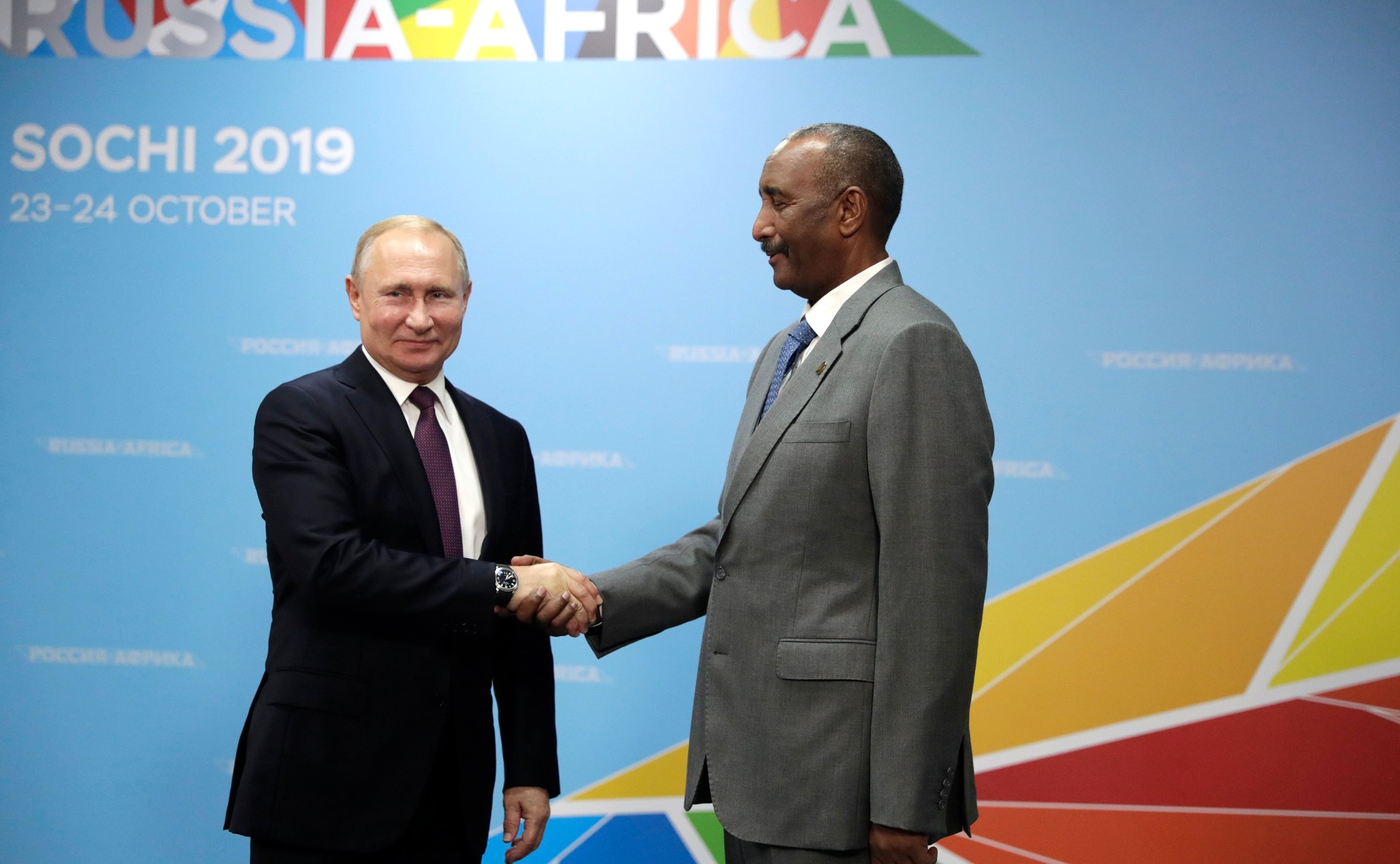
MOSCOW — The Putin Burhan Sudan ceasefire talks at the Kremlin on Friday, October 30, 2026 paired the strongest public call Moscow has made for an end to Sudan’s war with the most concrete offer Khartoum’s military government has yet put in front of Russia: a free economic zone on the Red Sea. President Vladimir Putin told Abdel Fattah al-Burhan, the head of Sudan’s Sovereignty Council and commander of the Sudanese Armed Forces (SAF), that Russia has consistently advocated a ceasefire and a political settlement to a conflict now in its fourth year. Burhan, in return, laid out an economic package — Red Sea storage facilities for Russian fuel and wheat, a railway from Port Sudan toward Chad, and Sudanese gold and copper deposits opened to Russian investment. The bilateral meeting, which began at 12:50 Moscow time, followed the third Russia–Africa Summit, held in Moscow on October 28–29. It produced language about peace and a list of proposals. It did not produce a ceasefire: none was agreed or announced, and the paramilitary Rapid Support Forces (RSF), the SAF’s battlefield enemy since April 2023, were not present and have issued no comment.
What Putin said: monitoring, aid, and a ceasefire call
According to the Kremlin’s official transcript of the meeting’s opening, Putin said Russia is closely monitoring the situation in Sudan, where armed conflict has been ongoing for over three years. He put the human scale of the war at the centre of his remarks: the number of refugees and internally displaced people has exceeded 13 million, he said, citing Russian data. Russia, he added, provides humanitarian aid to Sudan, including through the UN World Food Programme. His central line was political rather than military: Russia has consistently advocated a ceasefire and a political settlement in Sudan. The two leaders, Putin said, had agreed to hold a private one-on-one discussion on what more Russia can do. That framing matters for what it does not contain. There was no announced initiative, no named envoy, no timetable and no mechanism — and no suggestion in the public remarks that Moscow had extracted, or even sought, a specific commitment from Burhan on halting the fighting.
What Burhan offered: a free zone, a railway, and minerals
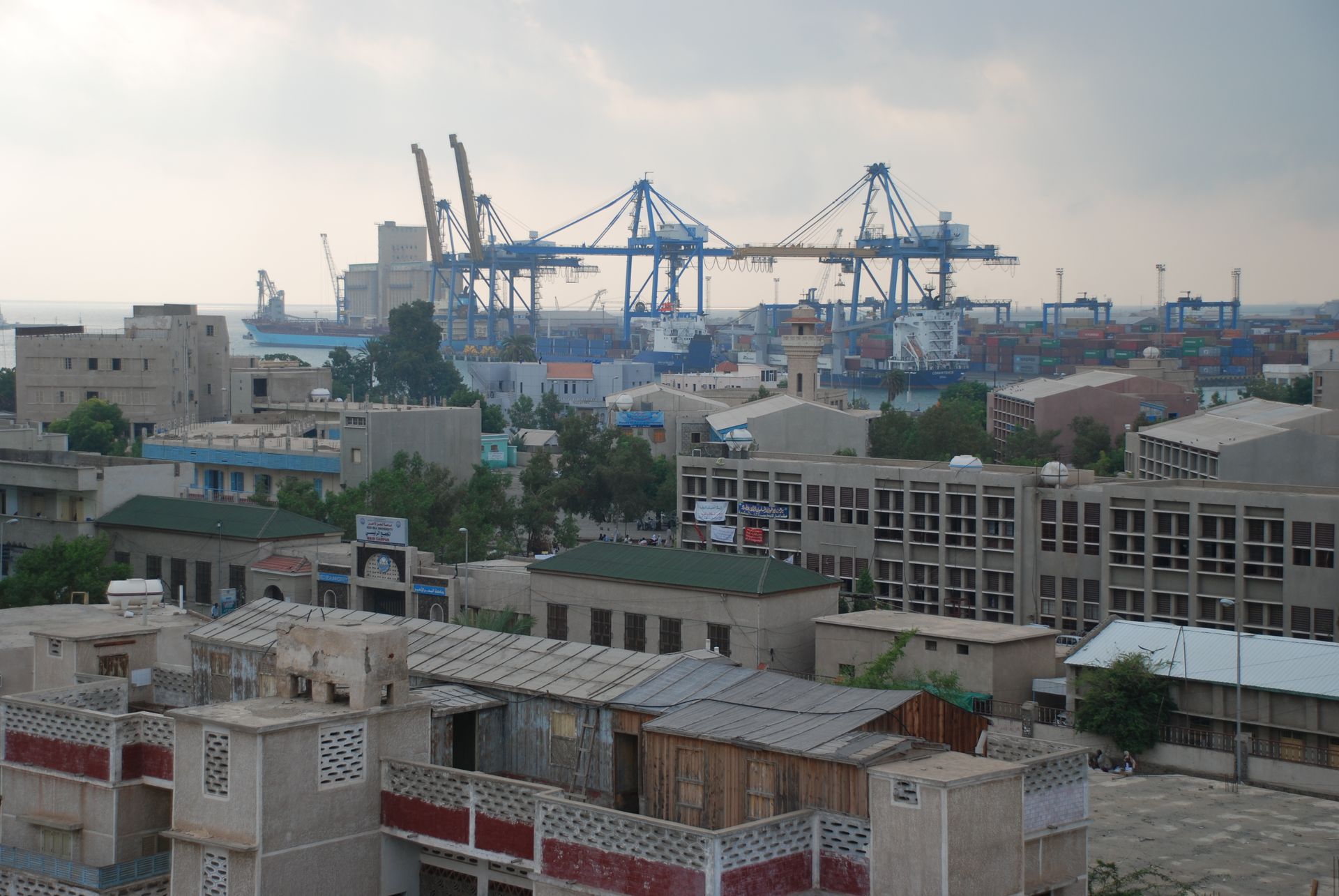
Burhan’s public remarks were a pitch for Sudan as Russia’s commercial doorway into the continent. Sudan, he said, serves as a gateway to Africa. Then came the headline proposal, in his own words: “We could establish a free economic zone in the Red Sea, where Russia could set up storage facilities for fuel and wheat.” He went further. Railway plans running from Port Sudan toward Chad, he said, could form the basis of a logistics network with Russian participation. And he offered Sudan’s gold, copper and other mineral deposits — deposits he described as already ready for development — for Russian investment. Read precisely, this is what the offer is and is not. It is a free economic zone proposal: civilian storage and trade infrastructure, raised in a speech, not signed in a document. It is not a naval base, not a military base, and not an agreed deal — no agreement was announced at the meeting, and nothing in either leader’s public remarks described one. Reporting that converts a proposed fuel-and-wheat storage zone into a Russian base on the Red Sea would be adding something neither leader said.
The backdrop: trade, students, and a 70-year relationship
The economic pitch did not come from nowhere, and Putin supplied the numbers to show it. Bilateral trade more than doubled last year, he said, and grew a further 25 percent in January–August 2026, leaving Sudan among Russia’s top ten trading partners in Africa. The two countries marked the 70th anniversary of diplomatic relations in January 2026. Russia’s quota for Sudanese students is rising from 100 to 140 places. And Putin presented Burhan with a cooperation roadmap spanning digital technology, healthcare, education, logistics, and industry and high technology. The structure of the meeting is worth noticing: the war was discussed in the language of concern and process, while the economic relationship was discussed in the language of figures, quotas and named sectors. For Moscow, Sudan is simultaneously a humanitarian file and a growing trade partner; for Burhan’s government, Russia is simultaneously a potential diplomatic backer and a source of investment that few other major powers are currently offering Khartoum.
No ceasefire, and no RSF in the room
Two absences define the limits of Friday’s meeting. The first is a ceasefire itself. Putin advocated one; Burhan did not announce one; no joint statement proclaimed one. The second is the other party to the war. The RSF was not present in Moscow and has issued no comment on the meeting — Signal Post News will not invent a response it has not given. Burhan’s own stated condition for peace, set out in his address to the Russia–Africa Summit and published in full by the Sudanese News Agency (SUNA) and carried by Fana News, is that any settlement must be Sudanese-led, without dictates or external interference. That condition cuts both ways: it is the language of national sovereignty, and it is also a standing objection to externally brokered processes of the kind that a Russian ceasefire call might eventually require. A ceasefire needs both armies. Friday’s meeting had one of them, a host who says he wants the war ended politically, and a set of commercial proposals that give that host new reasons to stay engaged — and it left every hard question, from sequencing to verification, untouched in public.
The war behind the meeting
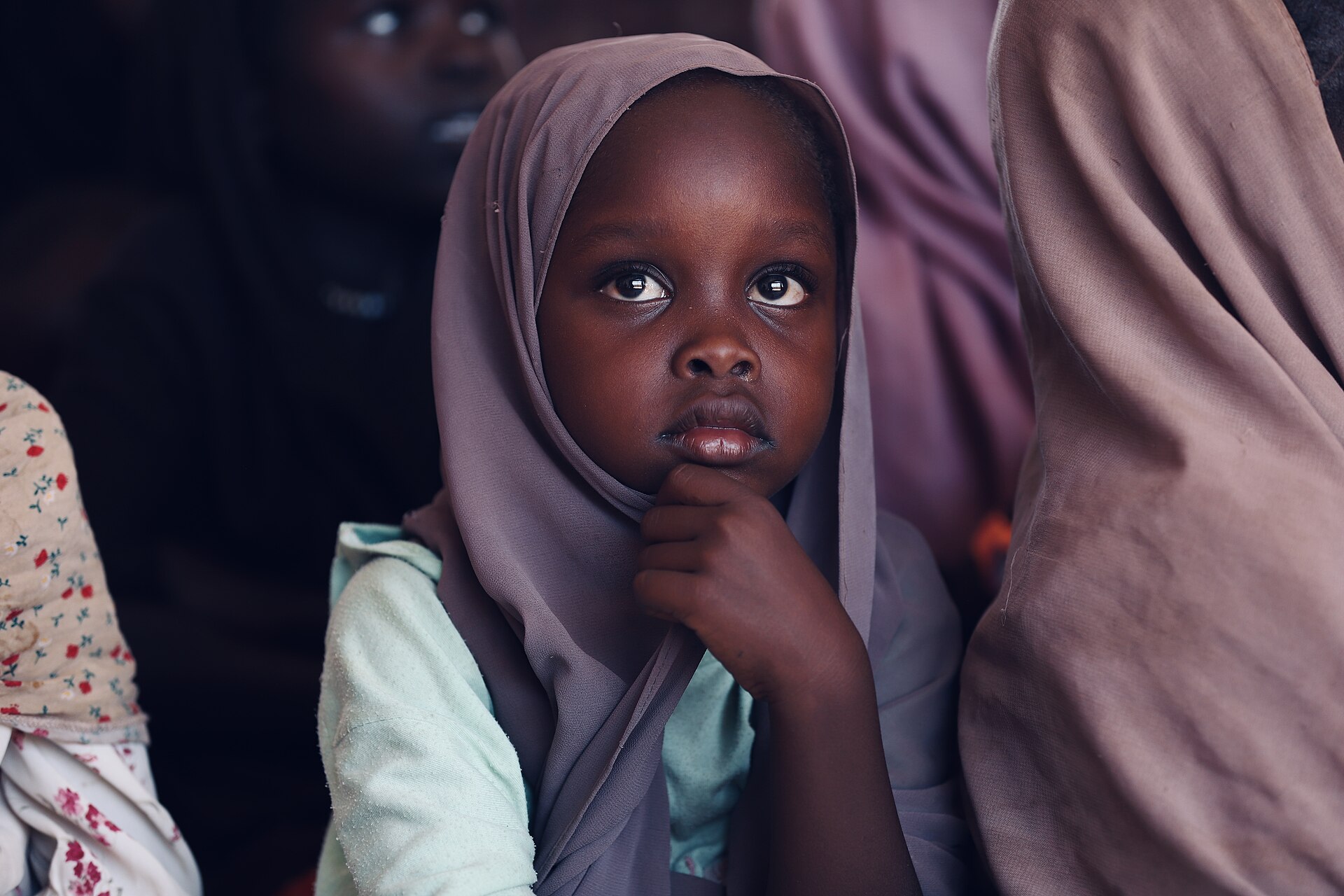
Sudan’s war began in April 2023 as a power struggle between the SAF, led by Burhan, and the RSF, led by Mohamed Hamdan Dagalo, known as Hemedti — former partners in government who turned their forces on each other in Khartoum and then across the country. More than three years on, the fighting has fragmented Sudan’s territory, wrecked its capital and driven the displacement Putin cited: over 13 million refugees and internally displaced people by the Russian figures he quoted. Darfur has borne some of the war’s worst violence; the fall of El Fasher, the SAF’s last stronghold in the region, which this site covered as El Fasher fell to the RSF and Burhan’s army withdrew, pushed still more civilians toward gathering points such as Tawila in North Darfur. Humanitarian access remains the war’s constant emergency: aid, including the Russian assistance channelled through the World Food Programme that Putin mentioned, reaches only part of a population whose needs keep growing faster than deliveries.
A harder line earlier this month
Friday’s diplomacy also has to be read against Burhan’s own recent words. Earlier in October, as this site reported, Burhan rejected peace talks and vowed to retake territory held by the RSF. Nothing in the Moscow remarks reverses that position on the record: Burhan did not renounce the goal of restoring state control, did not announce talks with the RSF, and restated in his summit address that peace must be Sudanese-led and free of external dictates. What changed in Moscow was the setting and the company, not the stated terms. A leader can hold a military objective and welcome a powerful partner’s ceasefire advocacy at the same time — particularly when the advocacy arrives with trade figures, student places and a cooperation roadmap attached, and when no one at the table asks him to choose between them in public.
Why this matters
The meeting matters less for what it settled than for what it aligns. For Russia, Sudan is the working proof of the pitch it made to the whole continent at the October 28–29 summit: Moscow presents itself as a partner that trades, builds and talks politics without the conditions it associates with Western engagement, and a Red Sea free zone — even as a proposal — extends that pitch to the one coastline that connects Africa to the world’s busiest shipping corridor. For Burhan’s government, a Kremlin embrace is diplomatic ballast at a moment when its war has cost it territory and international standing: a top-ten African trade relationship with Russia, a rising student quota and a roadmap are tangible in a way that communiqués are not. For the war itself, the significance is narrower and more fragile. A ceasefire call from a leader Burhan is actively courting carries a different weight than the same call from a distant capital — but weight is not a mechanism, and until the call is attached to a process the RSF has joined, it remains a sentence in a transcript.
Who gains, who loses
The clearest gainer, if any of this is implemented, is the Russia–Sudan economic relationship: storage facilities, a trans-African railway concept and mineral concessions would give Moscow durable commercial infrastructure on the Red Sea without the political cost of a base, and give Khartoum investment and a powerful patron. Sudanese civilians gain only on a condition that has not yet been met — that the diplomacy converts into aid at scale and an actual halt to fighting; a free zone does not feed a camp, and Putin’s own 13-million figure is the measure of how much depends on conversion. The RSF loses nothing concrete from a meeting it did not attend, but it faces a slow diplomatic squeeze if Khartoum’s partnerships multiply while it remains outside every room. Regional states watching the Red Sea gain a new fact to plan around: the competition for position on Sudan’s coast is no longer hypothetical, even if Friday’s proposal never leaves the page. And sceptics of the process, in Sudan and outside it, will note the pattern they have seen before — ceasefire language paired with expanding commerce, while the guns, for now, keep their own schedule.
What the numbers say
- 13 million: refugees and internally displaced people from Sudan’s war, by the Russian figures Putin cited — the human baseline against which every promise made in Moscow will be measured.
- Three years and counting: the armed conflict began in April 2023 between the SAF and the RSF and is now in its fourth year.
- More than doubled, then +25%: Russia–Sudan trade growth last year, and again in January–August 2026, per Putin — enough to put Sudan among Russia’s top ten African trading partners.
- 70 years: the anniversary of Russia–Sudan diplomatic relations, marked in January 2026.
- 100 to 140: the rise in Russia’s quota for Sudanese students, the kind of small, concrete number that signals a relationship being institutionalised, not just announced.
- 12:50, October 30: the Moscow start time of a bilateral held two days after the third Russia–Africa Summit closed — a scheduling choice that put Sudan near the top of the summit’s follow-up list.
What happens next
Four tests will show whether Friday was a photo opportunity with unusually good numbers or the start of something structural. First, the free zone: watch for any signed document, site selection or feasibility work on the Red Sea proposal — and for how other Red Sea states respond to even the outline of a Russian commercial foothold at Port Sudan. Second, the one-on-one: Putin said the two leaders agreed to discuss privately what more Russia can do; any follow-up statement, envoy appointment or aid announcement will reveal what that conversation contained. Third, the RSF: it has said nothing, and its eventual response — dismissal, counter-offer or silence maintained — will set the ceiling on what Moscow’s advocacy can achieve. Fourth, the battlefield test of Burhan’s two October messages: if operations to retake territory intensify while ceasefire language circulates, the Moscow meeting will be remembered as commerce conducted beside a war, not diplomacy conducted about one. Readers can follow the wider picture on our Africa wars tracker, which follows Sudan alongside the continent’s other active conflicts.
Related coverage
- Burhan Rejects Sudan Peace Talks, Vows to Retake Territory
- El Fasher Has Fallen: Sudan’s Army Abandons Darfur’s Last Stronghold as the RSF Takes Full Control
Sources
- Kremlin — official transcript of the Putin–Burhan meeting, Moscow, October 30, 2026 (Putin’s remarks on monitoring the conflict, the 13 million refugees and displaced, aid including via the UN World Food Programme, ceasefire and political-settlement advocacy, trade, the student quota and the cooperation roadmap; Burhan’s free economic zone, railway and minerals offers).
- Sudan Now — reporting of the Putin–Burhan Kremlin meeting, October 30, 2026.
- Fana News — SUNA (Sudanese News Agency) full text of Burhan’s address to the third Russia–Africa Summit, including his condition that peace be Sudanese-led without dictates or external interference.
- Daily8 — TASS-forum report of the meeting and the summit follow-up, October 30, 2026.
- Photos: Kremlin.ru (CC BY 4.0), Bertramz (CC BY 3.0) and Ahmed 222222 (CC0), via Wikimedia Commons, as credited in the captions. All three are file photographs — Sochi in October 2019, Port Sudan in November 2008 and the Dabba Naira camp in June 2025 — not photographs of the October 30, 2026 meeting.
This report is based on the Kremlin’s official transcript of the October 30, 2026 meeting, the SUNA text of Burhan’s summit address as carried by Fana News, and Sudan Now and Daily8 reporting of October 30, 2026. No ceasefire was agreed or announced at the meeting; the free economic zone is a proposal, not a signed agreement; and the RSF had issued no comment at publication. Analysis and scenarios are by Signal Post News.