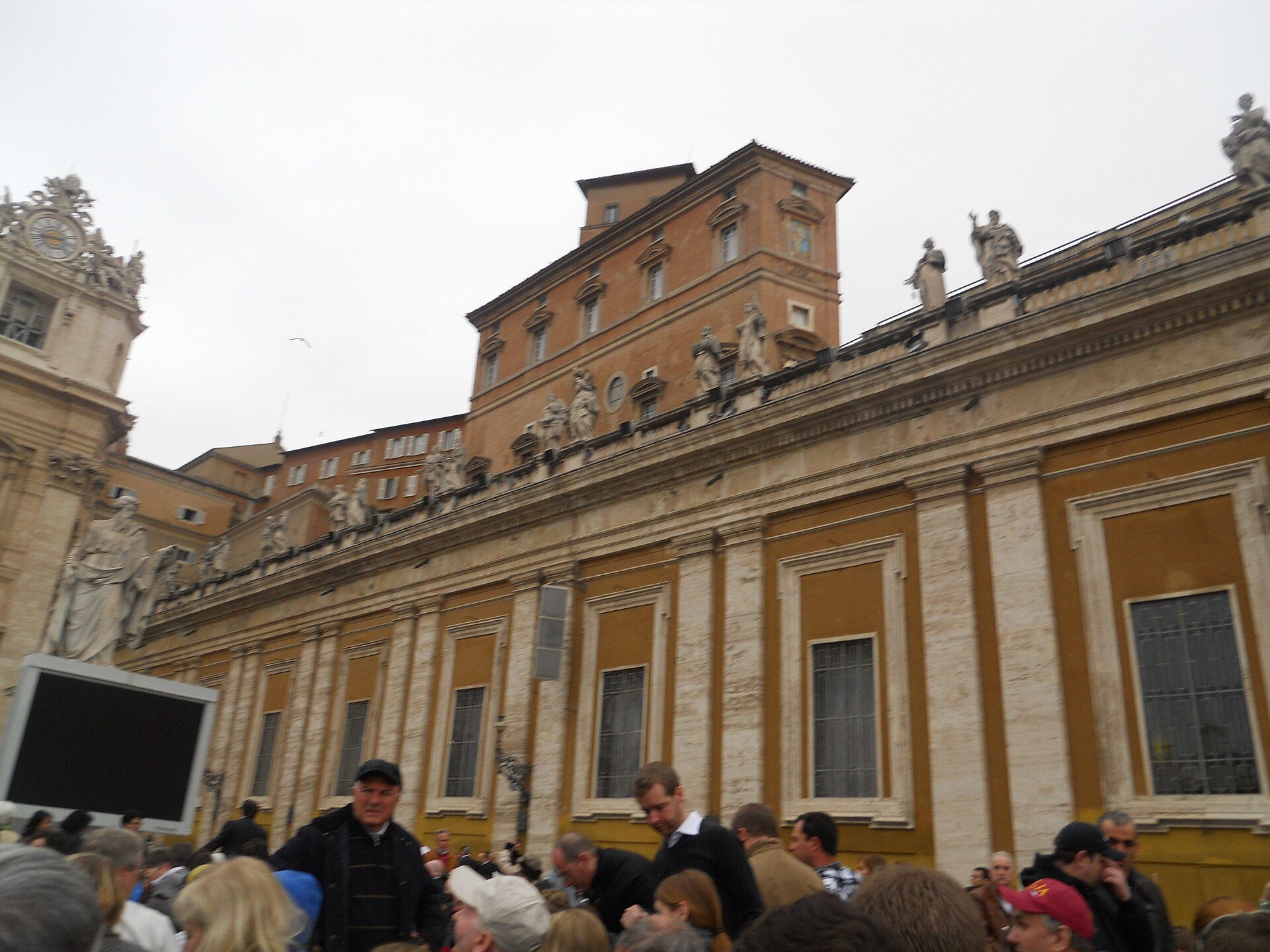
World / Vatican — Twelve days after surgeons removed the lower lobe of his right lung, Pope Leo XIV returned to the Apostolic Palace window on Sunday, October 25, 2026 for his second Angelus since the operation — and used it to make a heartfelt appeal for hostilities to stop in Yemen, singling out the besieged city of Taiz, where he said people are suffering for lack of food, water and medical care. He also prayed for the victims of Friday’s attack on Orthodox faithful in Jordan.
Track it live: the war in Yemen and the wider regional conflict, updated continuously.
The Pope Leo Yemen appeal came at noon on Sunday, in the most ordinary setting his office has — and that ordinariness was itself the news. Reuters, reporting from St Peter’s Square, described a 71-year-old pontiff who reached the window unaided, waved and smiled at the crowds, and spoke, in the wire’s words, in “a very firm and clear voice” — less than two weeks after surgery for lung cancer, and one week after his first public appearance since the operation drew thousands to the same square. This time, though, Leo did not dwell on his own health. He turned the window outward, toward two places where other people are suffering far worse than he has: Yemen, and Jordan.
What he said at the window
“I’m making a heartfelt appeal for the hostilities to stop, so that the people in Yemen and across the entire region can live in peace,” Leo said, according to Reuters. He told the faithful he was particularly concerned about the humanitarian situation in the southwestern Yemeni city of Taiz, “where the population suffers due to the lack of food, water and medical assistance.”
He then turned to Friday’s attack in Jordan. Reuters reported that the pope said he was praying for those killed and wounded in what he called the “terrorist attack against Orthodox faithful” at a church in Jordan on Friday. “I’m close to that community and the entire country, which is known for the peaceful and respectful coexistence of different religions,” he said. Vatican News, in its account of the same appeals, located the attack at a funeral at St George’s Orthodox Church in Jordan’s Karak governorate and reported nine people killed and about 40 wounded — the toll this site’s coverage of the Karak funeral attack has tracked as it rose through the weekend.
Finally, Leo asked the faithful to accompany with prayer a meeting of religious leaders gathering in Assisi on Tuesday to promote peace — an event, organised around the 40th anniversary of St John Paul II’s 1986 interfaith gathering, that he had been due to attend himself until the Vatican announced on Friday that doctors had advised him not to travel while he recovers. In his Angelus reflection on the Gospel’s greatest commandment, reported by Vatican News, he put the day’s theme in one line: “We cannot truly love God unless this love overflows into love for our brothers and sisters.”
Why Taiz, and why it matters that he named it
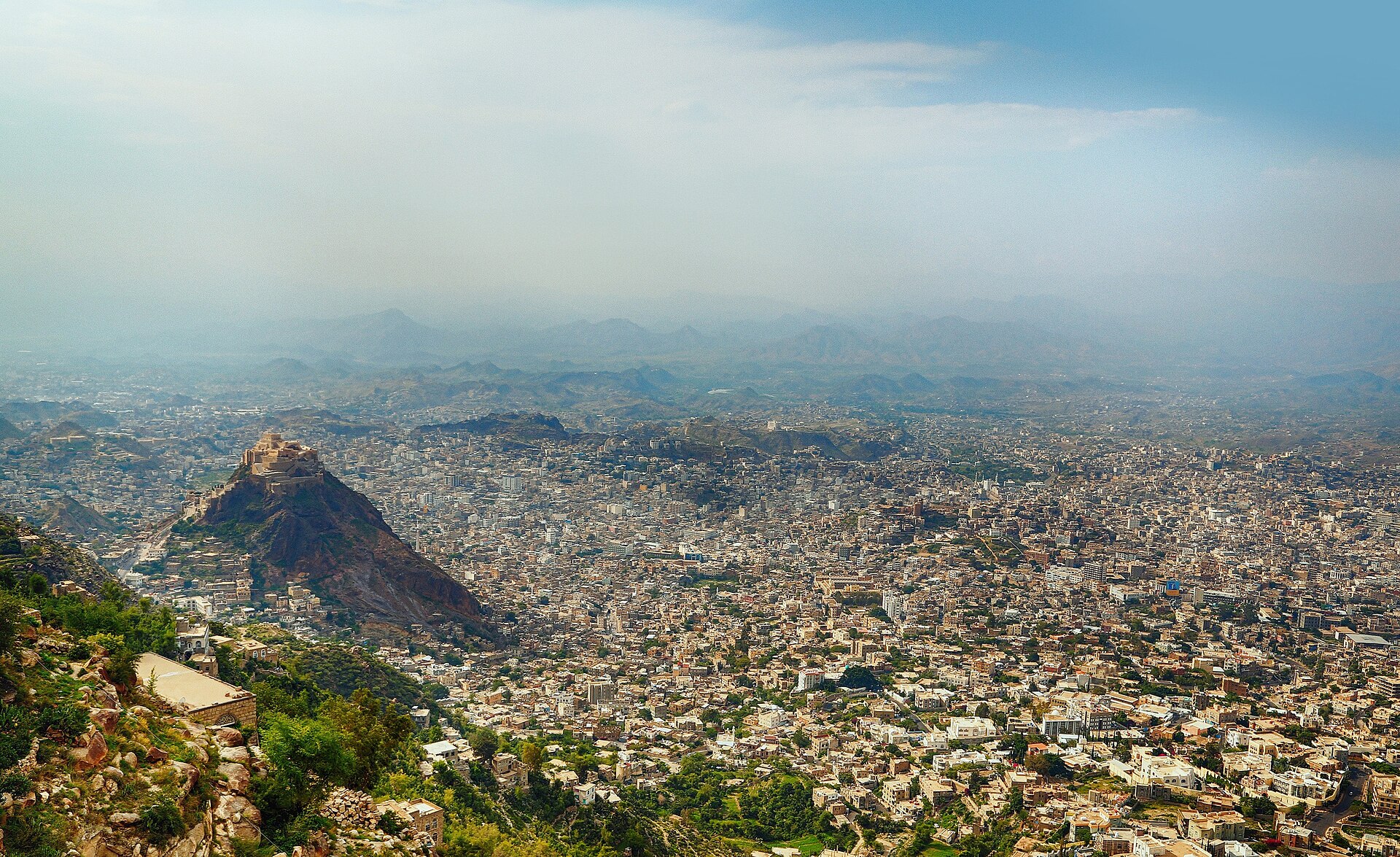
Popes appeal for Yemen often; they name individual Yemeni cities rarely. Taiz is not a generic stand-in for the war. It is a city of several hundred thousand people that has lived under siege conditions for a decade, split between government-aligned forces and the Houthis, its main roads cut, its hospitals battered, and its supply lines throttled — a crisis this site has followed through the renewed siege of Taiz and the fighting that has since cut off aid to hundreds of thousands across the country. In recent weeks the war Leo was describing has widened again, from the Bab el-Mandeb coast to the Saudi border, even as the world’s attention has been consumed by the Gulf crisis further north.
That is the context that gives a two-sentence appeal its weight. When the head of the world’s 1.4 billion Catholics spends his scarcest resource — his own voice, twelve days after a lobectomy — on Taiz rather than on the larger, louder war dominating the headlines, he is performing a deliberate act of triage: pointing at the emergency most at risk of being forgotten. Vatican appeals do not move artillery. But they do move the attention of Catholic aid networks, of European chancelleries that still take the Holy See’s calls, and of newsrooms deciding which of the region’s simultaneous wars gets covered at all. Leo knows the arithmetic of attention; he has spent this entire illness managing it, announcing his diagnosis, his surgery and his recovery himself, from this same window, on his own terms.
A pope still convalescing, working a reduced but deliberate calendar
Sunday’s appearance was the latest entry in a carefully staged return. Leo announced on October 11, from this window, that doctors had found a growth on his lung. On October 13 surgeons at Rome’s Gemelli Hospital removed the lower lobe of his right lung, and pathology confirmed adenocarcinoma, the most common form of lung cancer. He was discharged on October 17, led the Angelus on October 18, and returned to St Peter’s Square in the popemobile for his first general audience since surgery on October 21 — the day his doctors confirmed the cancer had been localised and that he would need no further treatment.
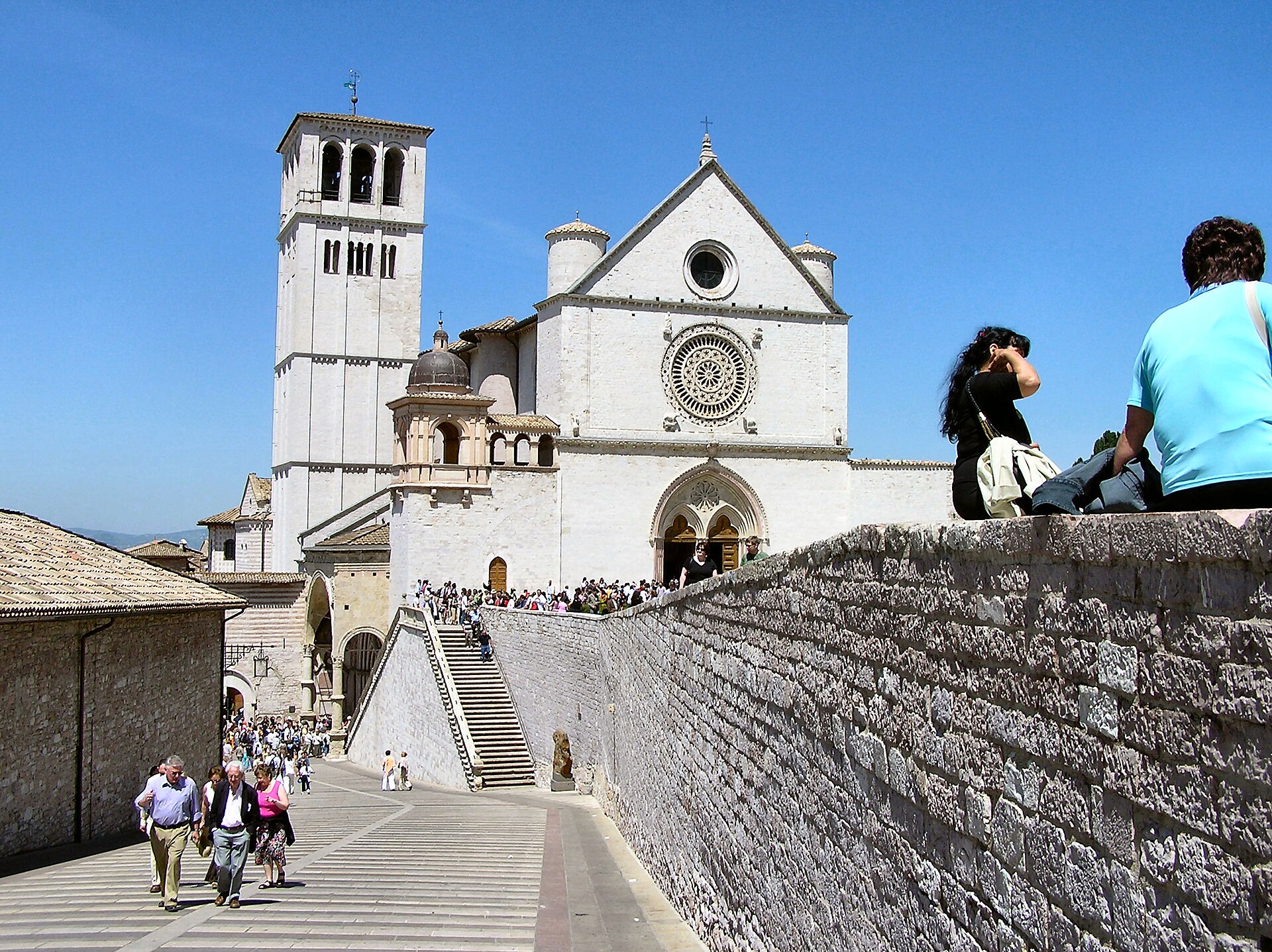
The one public casualty of his recovery so far is Assisi. On Friday the Vatican said Leo would not make Tuesday’s peace meeting, on doctors’ advice to avoid the travel — specifically the helicopter flight — so soon after thoracic surgery. Precision matters here, because the same announcement carried the opposite of bad news: a chest examination that week showed what his medical team called excellent progress. The cancellation is a precaution about altitude and exertion, not a setback in his condition — and Sunday’s firm-voiced, unaided appearance at the window was, among other things, the Vatican’s visual proof of that distinction. What remains undecided, and watched, is his scheduled November 6–17 trip to Uruguay, Argentina and Peru, which the Vatican has neither confirmed nor cancelled since the surgery.
Why this matters
Three threads meet in this short address. The first is Yemen itself: a war entering a new, wider phase, in which Taiz’s civilians — short of food, water and medicine, in the pope’s own summary — have the least voice of anyone in the region. A named appeal from Rome will not open a road into Taiz, but it raises the diplomatic cost of the siege for every government that claims to listen to the Vatican, and it puts the city back into a news cycle that had moved on.
The second thread is Jordan. An attack on a Christian funeral, in a country the pope praised precisely for its tradition of coexistence, is the kind of atrocity designed to crack a plural society along its seams. Leo’s response — closeness to the community, praise for the country’s model, prayer rather than retaliation rhetoric — is the Vatican’s standard playbook, deployed within 48 hours, aimed at keeping the seams closed.
The third thread is Leo himself. A pope’s health is never only a medical story; it is a question about the continuity of an institution that plans in decades. In fifteen days Leo has converted a cancer diagnosis into a demonstration of that continuity: every milestone announced by him, in public, in a firm voice, on schedule. Sunday added the final element of the pattern — a return not just to visibility, but to agenda-setting. He did not use his second Sunday back to reassure the world about himself. He used it to tell the world where to look instead.
What happens next
On Tuesday, the Assisi meeting goes ahead without him; Leo is expected to send a message to the religious leaders gathered there, and his words on Yemen and Jordan will be the backdrop against which it is read. The next health marker is the November Latin America trip: a confirmed departure on November 6 would close the recovery story; a cancellation would reopen every question Sunday’s appearance was designed to settle. And in Yemen, the test of the appeal is brutally concrete — whether food, water and medical aid reach Taiz any faster this week than last. On past form, the honest answer is that papal appeals change attention faster than they change logistics. Leo, who chose the city by name, appears to understand exactly that — and to have decided that attention, right now, is the thing Taiz is shortest of after food.
Sources
Reuters, October 25, 2026, “Pope Leo calls for Yemen violence to end, in address two weeks after surgery” (reporting by Joshua McElwee; writing by Valentina Za) — the Angelus appeals, the Taiz wording, the Jordan prayers, the Assisi cancellation and the surgical history. Vatican News, October 25, 2026, Angelus appeals and reflection (via Where Peter Is’ summary of the Holy See Press Office reporting) — the St George’s Orthodox Church, Karak governorate location, the nine killed and about 40 wounded, and the greatest-commandment reflection. Reuters and AP, October 23, 2026 — the Assisi cancellation on doctors’ advice and the chest examination showing excellent progress. Signal Post News live coverage — Pope Leo’s first Angelus since surgery (October 18), the popemobile general audience (October 21), the Karak funeral attack, and the renewed siege of Taiz.