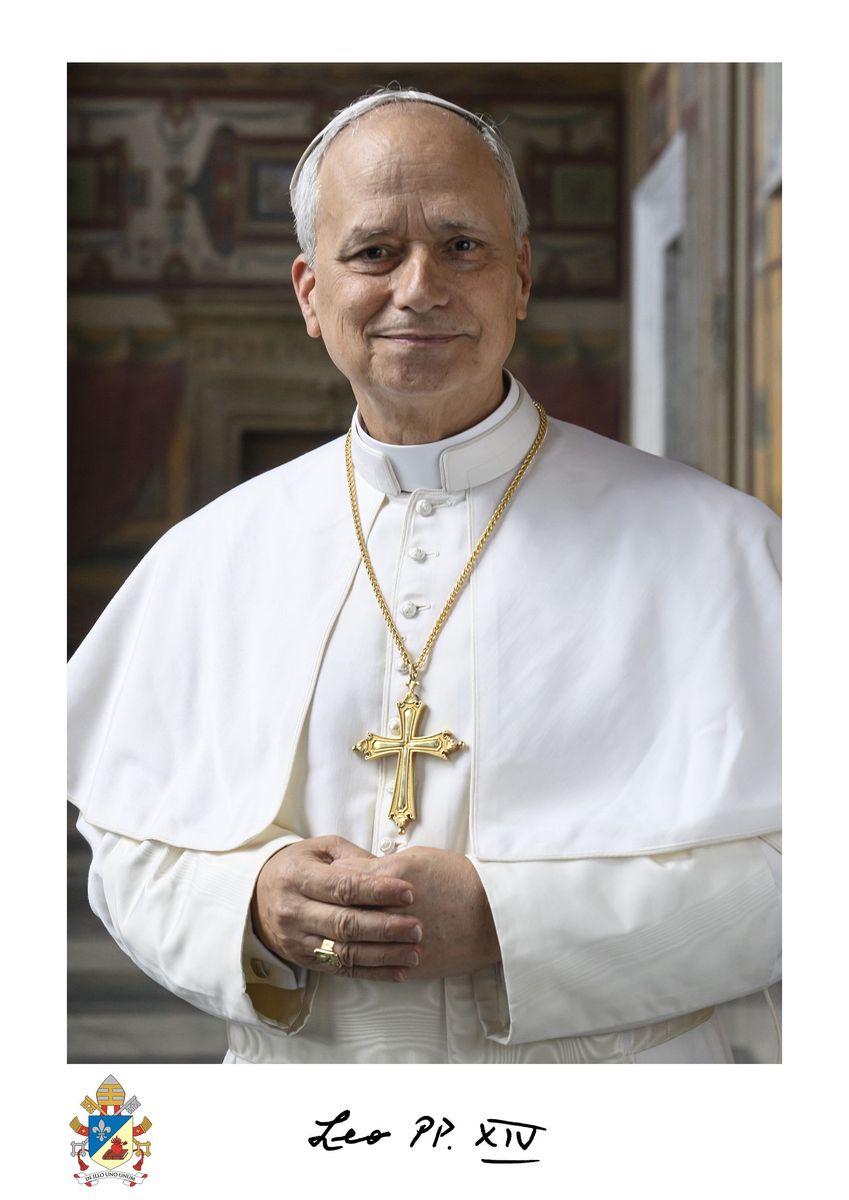
The Pope Leo XIV Paris visit begins with seven minutes of church bells and ends, four days later, with a message to Europe from Metz. Between those notes comes an itinerary designed at monumental scale: the Élysée and UNESCO, a popemobile procession through Paris, vespers inside the restored Notre-Dame, a youth vigil at the Stade de France, an open-air Mass framed by the Champs-Élysées, and a pilgrimage to Lourdes whose most important encounter may occur away from the crowds.
This is France's first official papal state visit in 18 years and makes Leo the tenth pope to visit Paris. More than one million people are expected across September 25–28, according to the Bishops' Conference of France. The spectacle is unmistakable. The deeper story is whether a country famous for keeping religion out of the state can make sense of an unexpected Catholic revival led by the young—and whether the Church can match its growing attendance with moral credibility.
Why this matters
A pope choosing France for this kind of mass public journey, 18 years after the last official visit, is a statement about scale and confidence. Paris offers images no institution could manufacture elsewhere: a rebuilt cathedral recognized around the world, a ceremonial avenue remade as a nave and a republic whose defining argument with Catholicism still shapes its public life. Leo is not arriving in a society that has suddenly abandoned secularism. He is arriving where secular habits and renewed religious interest now coexist more visibly.
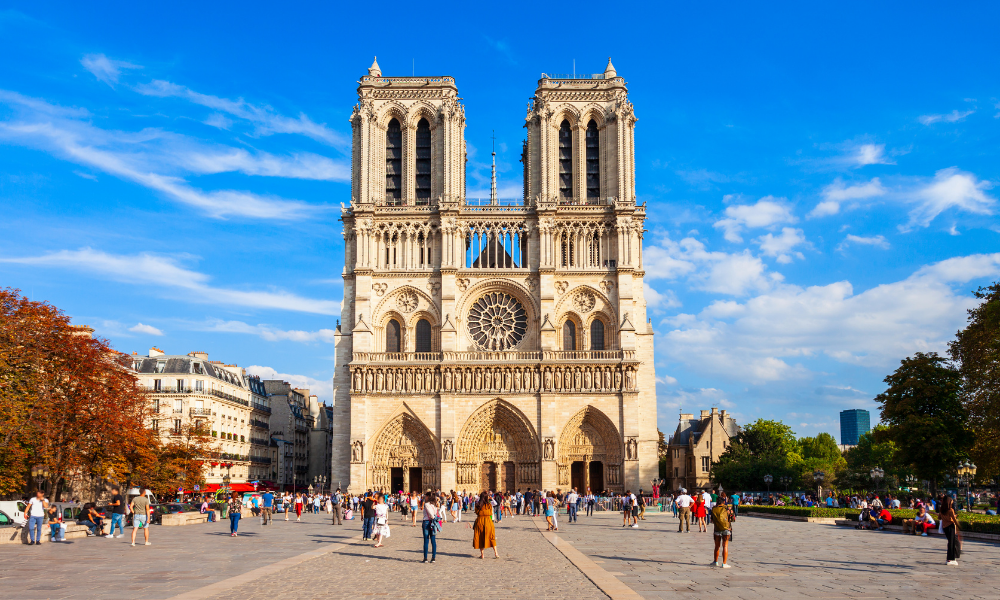
Day one's sequence is carefully balanced. The Pope Macron Élysée meeting puts church and state in the same formal frame, while the UNESCO address places culture, education and multilateralism at the center of the visit before the liturgy takes over. Then Notre-Dame supplies the most potent symbol: a cathedral restored in five years after the 2019 fire, reopened in December 2024, and now receiving a pope for the first time since that reopening. Architecture becomes argument. A damaged national monument was rebuilt; the Church wants the country to see an institution capable of renewal too.
Friday in Paris: diplomacy, procession and prayer
Leo is scheduled to arrive at Paris-Orly at about 10 a.m. on Friday, September 25. Church bells across France are to ring for seven minutes. At 11 a.m., President Emmanuel Macron receives him at the Élysée Palace for a meeting that also brings together public authorities, civil society and the diplomatic corps. The protocol matters because France's presidency is the secular republic's most visible office; hosting a pope there acknowledges religious influence without yielding constitutional ground.
At 3 p.m., Leo goes to UNESCO headquarters. The setting lets a pontiff elected in 2025 speak beyond Catholic doctrine—to diplomacy, education, heritage and the international system. It also gives the first day a civic and global arc rather than making it simply a sequence of devotional events.
Between roughly 4 and 5 p.m., the pope is expected to travel about 2.5 kilometers by popemobile from Notre-Dame-des-Champs church to Place Saint-Michel, with as many as 150,000 people along the route. Paris church bells are due to ring at 5 p.m. At 5:15 p.m., the Notre Dame papal vespers 2026 will gather about 8,000 priests, deacons, nuns, monks and seminarians. It will be the first time a pope has entered Notre-Dame de Paris since the cathedral reopened after reconstruction.
The day closes with the Stade de France youth vigil, where about 75,000 people are expected. That transition—from diplomats to clergy to a stadium of young people—is the day's clearest narrative. The Church wants the visit understood not only as institutional diplomacy or historical ceremony, but as a wager on its next generation.
Saturday's Champs-Élysées papal Mass
The largest event arrives at 3 p.m. Saturday, September 26. The Place de la Concorde papal Mass turns the avenue des Champs-Élysées into an open-air nave. Organizers report roughly 600,000 registrations, and 42 giant screens are planned to carry the liturgy down the route. The Champs-Élysées papal Mass September 26 is built to be seen collectively, even by people far from the altar.
Leo's other Saturday meetings complicate the triumphal imagery in useful ways. He is expected to meet migrants at the Maison Bakhita integration center and recently baptized Catholics. The first keeps migration and practical solidarity inside the visit's message; the second puts faces to the baptism figures that have surprised French church leaders. Traditionalists who would prefer an identity-first celebration may bristle at the migration emphasis. The Vatican's answer is that Catholic revival cannot be separated from Catholic social teaching.
Notre-Dame is closed to ordinary visitors from September 24 through September 26 for security and preparations. That is a practical inconvenience for tourists, but also a reminder that the cathedral is not merely a restored attraction. For these days it functions first as a place of worship and state-level security operation.
Visitor guide: watching the Paris events
Schedules and access can change for security reasons. Use official organizers and broadcasters for last-minute instructions, and do not arrive without checking whether registration or a controlled entry zone applies.
Friday, September 25
Orly arrival around 10 a.m.; Élysée meeting at 11 a.m.; UNESCO at 3 p.m.; popemobile route from roughly 4–5 p.m.; Notre-Dame vespers at 5:15 p.m.; Stade de France youth vigil in the evening.
Saturday, September 26
Open-air Mass at Place de la Concorde at 3 p.m., with viewing along the Champs-Élysées on 42 giant screens. Approximately 600,000 registrations have been reported.
Television and streaming
Coverage is expected on France 2, TF1, LCI and KTO, with Vatican channels also carrying events. Check each network's listings for regional start times and any schedule changes.
Access and registration
Registration does not eliminate security screening or capacity controls. Follow police routes, allow substantial walking time, carry minimal baggage and expect temporary station or street restrictions.
Notre-Dame closure
The cathedral is closed to ordinary visitors September 24–26. Vespers attendance is controlled; the popemobile route and outdoor screens offer the broadest public access.
After Paris
The visit continues in Lourdes on September 26–27 and concludes in Metz on September 28. Confirm travel arrangements locally before departing Paris.
France's Catholic revival, by the numbers
On Easter Sunday 2026, 21,386 people joined the Catholic Church in France. The total included 13,000 adults, up 28% year on year, and about 8,000 teenagers, up 10%. Baptisms among teenagers and young adults reached record highs for a second consecutive year. Those figures do not reverse decades of declining regular attendance, parish consolidation and weakening institutional authority. They do show that the direction is no longer uniformly downward.
The generational character matters. Young adults are not simply inheriting the habits of parents and grandparents; many are approaching Catholic life after growing up at a distance from it. Their routes vary—social media, pilgrimages, university chaplaincies, friendship networks, traditional liturgy, service projects—but the result appears in youth jubilees and crowded working-class parishes as well as in national totals.
Still, baptism counts are an entry measure, not proof of durable practice. The decisive questions come later: whether new Catholics find functioning local communities, continue participating after the ceremonies and become part of institutions able to serve neighborhoods rather than merely count momentum. A surge can be culturally significant without yet becoming institutional recovery.
Laïcité and the national metaphor of Notre-Dame
France's laïcité is often translated simply as secularism, but its political force comes from a longer struggle over authority, citizenship and public space. The state does not become Catholic because a president receives a pope, and a huge Mass does not erase the legal distinction between belief and government. Hard-line secularists will watch closely for any suggestion that national symbolism is being used to privilege one faith.
Notre-Dame complicates that objection because it belongs simultaneously to religious practice, national history and global culture. Its five-year reconstruction mobilized public power, private money, craft knowledge and international attention. The Notre Dame reopened pope visit therefore works as both liturgy and civic theater. The cathedral's rebirth offers a national metaphor that church leaders will use carefully: devastation followed by patient rebuilding, continuity achieved through renewal.
The contrast with Pope Francis is deliberate even if no one says so from the altar. Francis never set foot in Paris as pope. He visited Marseille in 2023 and Corsica in 2024, favoring margins and the Mediterranean, and he did not attend Notre-Dame's reopening. Leo's decision to center Paris signals a different use of the capital: not rejection of the periphery, but an effort to reclaim the symbolic center.
Who wins, who grumbles and what critics see
The Bishops' Conference of France is the clearest institutional winner. A successful four-day gathering gives it visibility, volunteer energy and a compelling story about growth. Catholic youth movements gain the rare experience of seeing themselves as a mass constituency rather than isolated parish groups. Paris tourism and hospitality benefit from the influx, although road closures, security zones and crowding will distribute gains and disruption unevenly.
Laïcité hardliners may object to the saturation of public space. Traditionalists may welcome the crowds but resist the migration outreach and Leo's insistence on social obligation. Abuse-reform campaigners will look past the screens and ask whether the Church's gestures produce accountability. Le Monde's central warning is that revival also exposes divisions inside French Catholicism: growth does not settle arguments over liturgy, politics, identity, migration or authority. It can intensify them by raising the stakes.
Lourdes is the moral center of the trip
The Pope Leo XIV Lourdes pilgrimage runs across September 26–27. Its most consequential scheduled encounter is with seven survivors of sexual abuse. The number is small compared with the scale of documented harm, but the meeting is not peripheral. It tests whether the visit can hold grief and institutional failure alongside celebration.
Survivors and reform advocates will judge substance: whether Leo listens without controlling the narrative, whether the meeting leads to transparent follow-up and whether bishops demonstrate that safeguarding is an operating system rather than a public-relations paragraph. A stadium vigil can show reach. The Lourdes meeting must show responsibility. Without that moral center, talk of revival risks sounding like institutional self-congratulation.
The political layer: France, Europe and a crowded crisis calendar
Macron hosts Leo days after the United Nations General Assembly, while the Iran-Hormuz crisis and Ukraine tensions dominate the news cycle. The timing ensures that private and public conversations will be read for foreign-policy meaning even when the Vatican speaks in moral language rather than government policy. The Élysée encounter can address peace, religious freedom and migration; the UNESCO speech adds heritage and multilateral cooperation; Metz on September 28 is expected to carry a message to Europe.
The pope's usefulness to political leaders lies partly in his different register. He cannot reopen Hormuz or settle Ukraine, but he can speak across blocs, frame civilian suffering as more than strategy and preserve channels governments find awkward to use. Macron gains the image of France as a diplomatic and cultural convening power. Leo gains a European platform at the end of a visit whose Paris crowds will already have demonstrated public reach.
The political context connects with Signal Post News coverage of Macron's UN diplomacy, France's growing security role in the Red Sea crisis and the wider debate over public leadership and technology.
What happens next
The immediate test is operational: whether a program designed for more than a million participants unfolds safely, accessibly and without turning worship into crowd management. The larger test begins when the motorcades leave. France's baptism records will matter only if local communities can sustain the people behind them. The bishops will need trained leaders, safeguarding credibility, open doors and enough institutional flexibility for converts whose lives do not match an older parish template.
A successful gathering would not make France a Catholic country again, nor should it be read as a referendum against laïcité. It would signal that Catholicism retains more capacity to organize public life than decades of decline suggested, especially among younger adults. It would also give competing groups inside the Church stronger reasons to argue over what that renewed weight should mean.
Leo, elected in 2025, is still defining his papacy. Paris gives him scale; Notre-Dame gives him history; Lourdes gives him a moral test; Metz gives him Europe. The visit's lasting meaning will not be measured by the widest camera shot on the Champs-Élysées. It will be measured by whether the Church can turn attention into practice, revival into responsibility and a rebuilt cathedral into something more demanding than a beautiful metaphor.
Sources and further reading
- Le Monde — Pope Leo XIV's visit shines a light on France's Catholic revival and its divisions
- National Catholic Reporter — France visit expected to attract more than one million people
- Notre-Dame de Paris — official information on Pope Leo XIV's visit
- Paris je t'aime — visitor information for the papal visit
- Sortiraparis — viewing times and channels for the giant Mass
Reporting basis: Fixed September 25, 2026 snapshot. Public schedules, crowd arrangements and broadcast plans may change for security or operational reasons.