World · US Politics · Religion
The Vatican confirmed on Friday that Pope Leo XIV, the Chicago-born first American pope, has submitted his mail-in ballot in Chicago for the November 3 midterm elections — the first time a pope has ever voted in a US election, and the latest act in a voting habit his own record shows he has practised for decades on two continents.
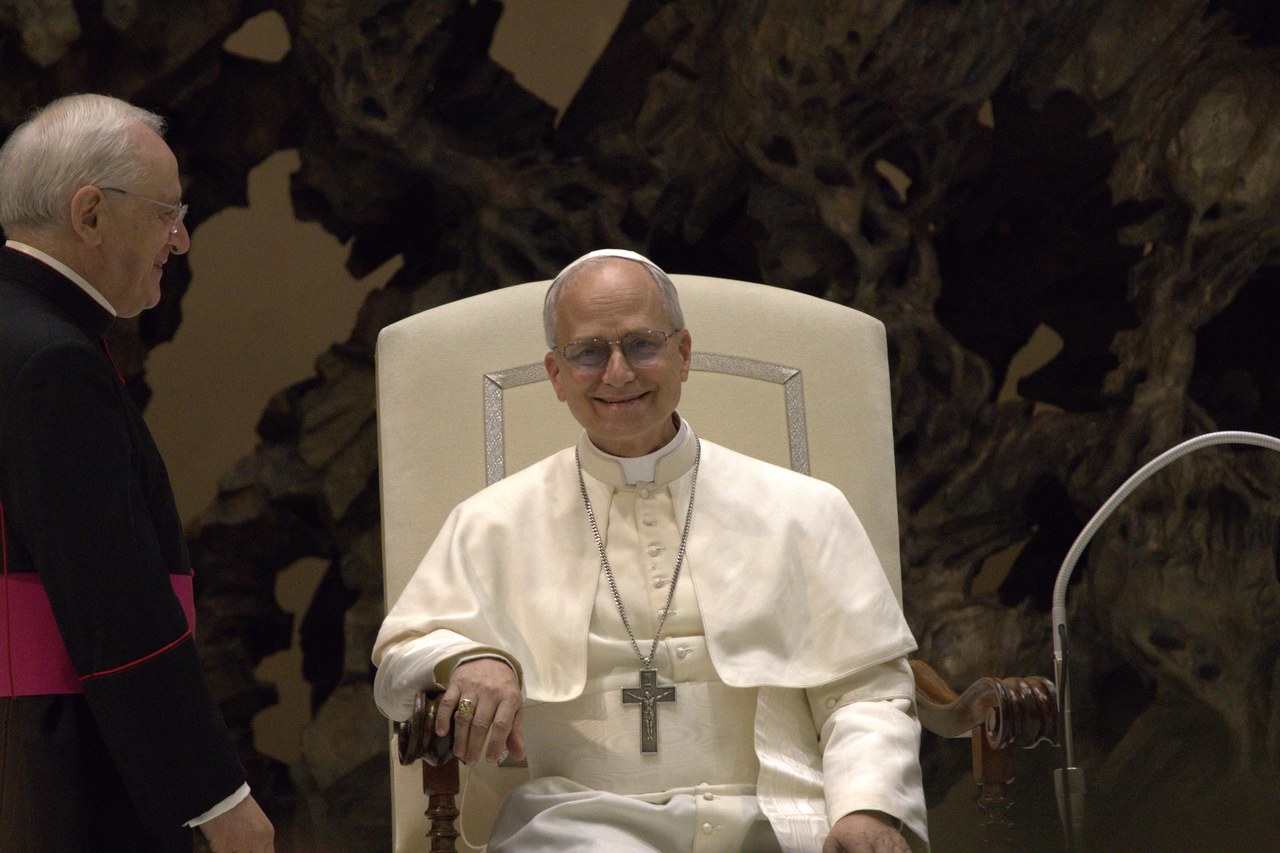
The Vatican press office confirmed on Friday, October 30, 2026, that Pope Leo XIV has submitted his mail-in ballot in Chicago for the United States midterm elections on Tuesday, November 3 — making him the first pope ever to vote in a US election. The historian Michael Walsh, speaking via CNN, put the milestone wider still: Leo is likely the first pope ever to vote in a secular democratic election at all. In nearly two thousand years of the papacy, and across the 250 years since the United States was founded in 1776, no holder of Leo’s office has before marked a ballot in one — for the simple reason that no pope before him was a citizen of a modern democracy in the way Leo, a 71-year-old born in Chicago, has been all his life.
Leo is the first American-born pope, elected in May 2025 to lead the world’s 1.4 billion Catholics. He is a citizen of the United States and also holds Peruvian citizenship, acquired across decades of ministry in Peru. His American ballot is an ordinary one in every mechanical respect: requested by mail, marked in private, and returning to be counted in Will County, Illinois, where he remains registered under his birth name, Robert Francis Prevost. What is not ordinary is the office of the man casting it — a sovereign head of state, and the spiritual leader of the largest Christian church on earth, personally taking part in another country’s democratic process, four days before an election that will decide control of both chambers of the US Congress.
What the Vatican said — and what it did not say
The announcement itself was short, careful and written to do exactly one thing: record the act, and frame it as citizenship rather than politics. “Pope Leo XIV has exercised his right to vote as a United States citizen, whenever he was eligible to do so,” the Vatican said. “In keeping with this long-standing practice of civic participation, he has submitted his mail-in ballot in Chicago.” And, in the line that carries the statement’s only argument: “The Holy Father expresses his belief in the right and the duty of citizens to participate in democratic processes.” The Vatican also confirmed that during his years of residence in Peru, Leo exercised his right to vote whenever he was eligible to do so — presenting the Chicago ballot not as a novelty of his pontificate, but as the continuation of a habit that long predates it.
What the Vatican did not say matters as much. It did not say which candidates Leo voted for, which party’s hopefuls he favoured in the Illinois races on his ballot, or why the announcement came on this particular Friday. No candidate was named, no party was endorsed or criticised, and no view was expressed on any issue before American voters. His choices are secret, as any voter’s are, and nothing in the record reported so far supports speculation about them. This article does not speculate either: the fact is the ballot; its contents are known to one man and, by design, to no one else.
The Chicago registration trail
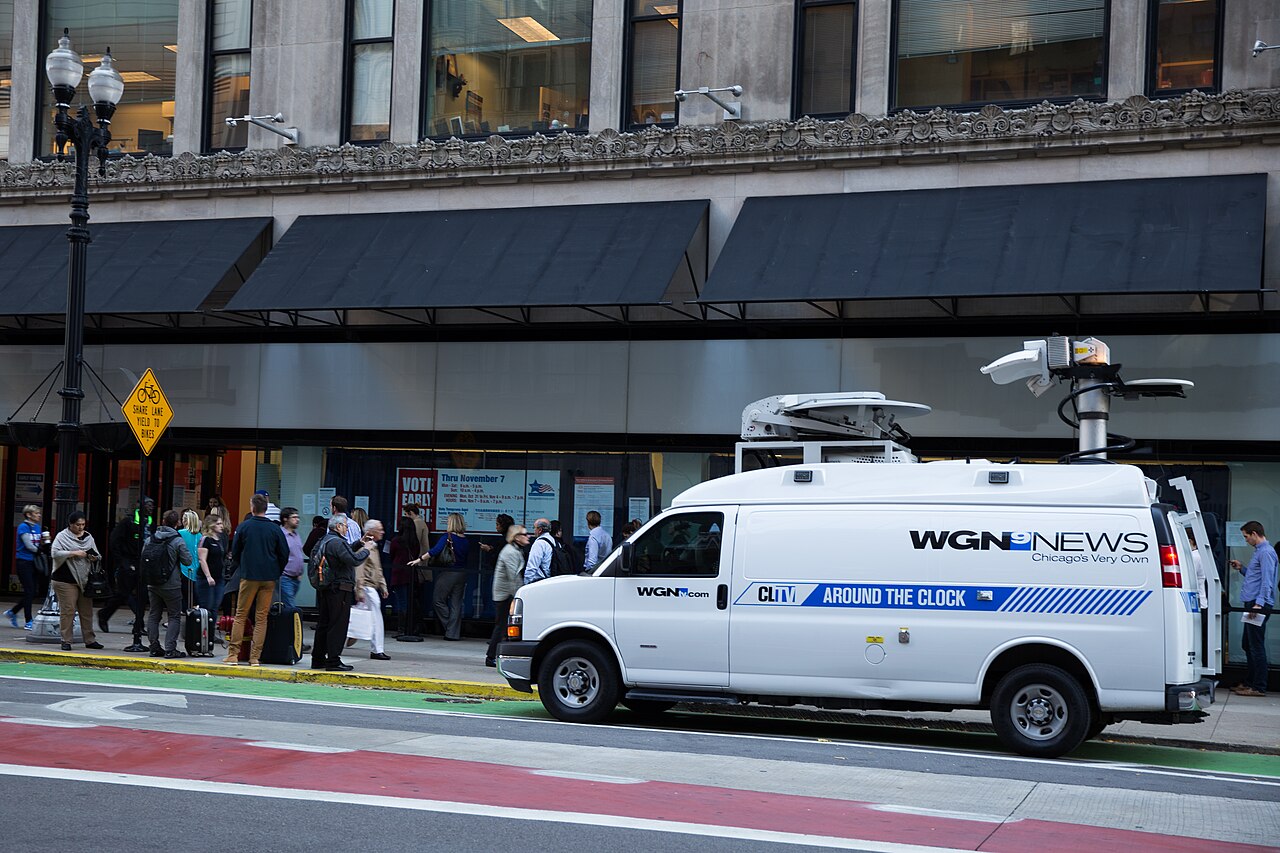
The paper trail runs not through the Vatican but through suburban Chicago. Leo is registered to vote in Illinois under his birth name, Robert Francis Prevost, at an address in New Lenox — the Chicago suburb where his brother John lives — according to the Will County Clerk’s office, in reporting by the Chicago Sun-Times. He requested a mail ballot on October 3. His brother John has been at the Vatican this week, travelling with pilgrims from St Jude’s parish in New Lenox, a detail reported by several outlets that underlines how short the distance is, in this pope’s life, between the Apostolic Palace and a parish hall in Will County. How the completed ballot travelled back to Illinois has not been established, and no outlet has verified a route; it would be wrong to claim one.
The legal frame, by contrast, is entirely routine, and election officials were quick to describe it as such. A spokesman for the Illinois State Board of Elections noted that US citizens living overseas can vote by mail under the Uniformed and Overseas Citizens Absentee Voting Act, the federal law that has long covered Americans abroad, from soldiers to missionaries. Illinois law separately allows any registered voter to vote by mail. A pope living in the Vatican City is, for the purposes of that machinery, one more American citizen residing overseas with a registration at his home address — unusual in every way except the one the law looks at.
Why this matters
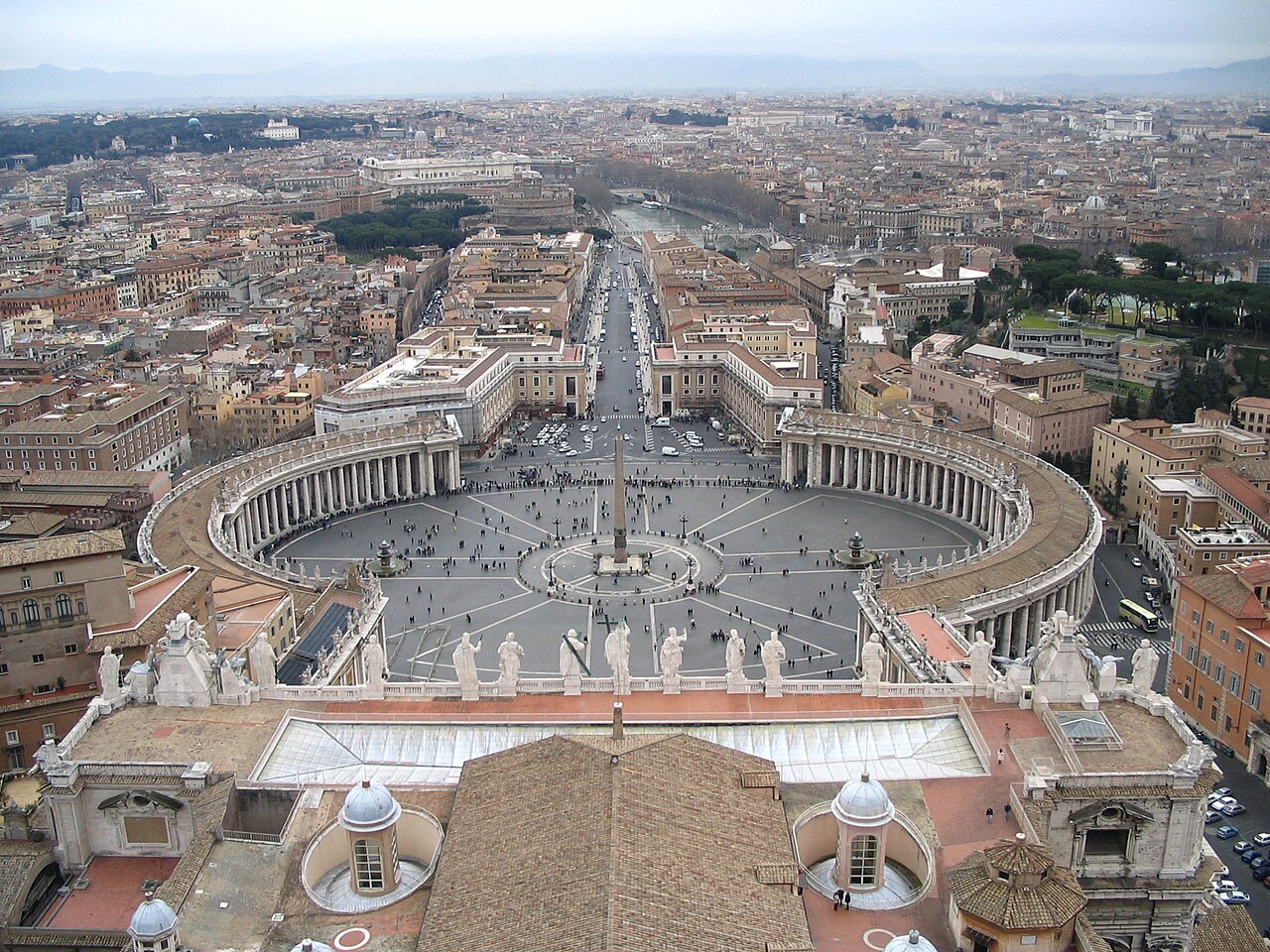
Start with the precedent, because there is none. Popes have blessed elections, prayed for nations, received presidents and, in Leo’s own pontificate, intervened directly in diplomacy — as in his October phone call with Vladimir Putin over aid for the town of Oleshky. But the modern papacy has always stood outside the ballot box, and deliberately so: the pope’s authority is meant to be universal, addressed to Catholics in every country and beholden to none. For a sitting pope to be a registered, participating voter in one specific country’s partisan election collapses a distance the institution has maintained for centuries — not because Leo sought an exception, but because, uniquely in the Church’s history, the conclave chose a man who came with a vote of his own.
The Vatican’s framing tells its own story about how the institution wants the act read. Catholic teaching has long treated voting not merely as a right but as a moral responsibility — a form of participation in the common good that the Church urges on the faithful. By describing Leo’s ballot as a “long-standing practice of civic participation” and pairing the right to vote with the “duty” to do so, the announcement places the pope inside that teaching rather than above it: the Church’s most senior figure doing, publicly, what the Church asks every Catholic citizen to do. Coming in a pontificate already marked by personal candour about his health — the Vatican confirmed his lung-cancer diagnosis and surgery this month, and he has since returned to public duties, delivering his first Angelus since the operation — the ballot reads as one more instance of a pope presenting himself, pointedly, as a person among persons: a patient, a citizen, a voter.
A habit, not a stunt: his voting record in context
The strongest evidence for the Vatican’s version of events is the record itself, assembled from Illinois voting data by the Chicago Sun-Times and reported by the Associated Press and others. Since 2000, Robert Francis Prevost has voted in five primary elections — taking Republican primary ballots in 2012, 2014 and 2016, and Democratic primary ballots in 2008 and 2010. Illinois voters do not register by party; at each primary they choose which party’s ballot to pull, and Prevost, across two decades, chose both. He voted in the general elections of 2012, 2014, 2018 and 2024 — though not in 2020 or 2022 — and he did not vote in Illinois’s March 2026 primary. Alongside the American record sits the Peruvian one the Vatican confirmed: during his years of residence in Peru, he voted there whenever he was eligible.
Read fairly, that is not the record of a partisan. It is the record of an intermittent but genuine participant — a priest and bishop, often living abroad, who voted when he could, in whichever primary engaged him, and sometimes did not vote at all. It is evidence that he has never been a one-party voter, and it is all the record can honestly be used for. It predicts nothing about the choices on the ballot he has just returned: a man who has pulled both parties’ primary ballots, and skipped elections entirely, has left no pattern from which a 2026 preference could responsibly be inferred. Anyone claiming the record reveals how Pope Leo voted this year is claiming more than the record holds.
The races on his ballot
The ballot itself is an Illinois ballot, and its biggest contests are substantial ones. At the top sits the race to succeed retiring US Senator Dick Durbin, a fixture of Illinois politics for a generation, whose open seat is among the most consequential in the country this cycle. Below it, Governor JB Pritzker is seeking a third term — a governor who knows the voter at the Vatican personally, having met Leo there in November 2025. Around those headline races sit the standard furniture of an American general election: a US House contest, state legislative and judicial races, and Will County offices. The pope’s ballot, in other words, was not ceremonial. It carried real choices in real contests, which is precisely why the Vatican’s silence about its contents is the only position available to it.
The national stakes need no embellishment either. Tuesday’s midterms decide control of both chambers of Congress, and Reuters has reported that President Donald Trump’s sagging popularity — amid voter discontent over the cost of living and the war with Iran — is hurting Republicans’ chances of holding their majorities. That is Reuters’ framing of the political landscape, attributed as such; the Vatican’s announcement made no reference to it, to any party’s prospects, or to the president. But the timing is a fact in itself: the first papal ballot in American history has been cast, and confirmed, in the final days of a midterm campaign in which every symbol is contested ground — which is why an act the Vatican describes as routine citizenship has been received, instantly, as news.
Who reads what into it
The favourable reading is straightforward, and it is the one the Vatican plainly intends. On this view, the most recognisable religious figure on earth has modelled the single act on which democratic systems depend, at a moment when election officials in many countries worry about turnout and trust. A pope who votes — quietly, by mail, without instruction to anyone — tells hundreds of millions of Catholic citizens that participation is worth the small effort it takes, and tells them so without asking for their agreement on anything else. Supporters of that reading note that the Church has taught exactly this for generations; Leo has simply made the teaching visible in his own person.
The uneasy reading deserves a fair hearing too. Critics of the announcement — and, more broadly, of any papal proximity to partisan politics — worry that in a polarised country, no papal act near an election stays neutral in its reception, whatever its intent. A ballot confirmed four days before voting, in a cycle this charged, will be claimed by partisans on more than one side as symbolism for their cause; the secret of the ballot protects Leo’s choices, but it cannot protect the fact of the ballot from being used. There is also a longer institutional question: the papacy’s moral authority has rested partly on its distance from any one nation’s politics, and an American pope who votes is, unavoidably, a participant in one nation’s politics — a precedent future conclaves, and future popes, will inherit whether they want it or not.
Both readings should be held against the limits of what is known. The facts are a registration, a request dated October 3, a confirmation on October 30, and a two-decade record of occasional, cross-party participation. The analysis — that this is a civic lesson, or a political risk, or both — is interpretation, and reasonable people will weight it differently. The central unknown is permanent: how Leo voted is his secret, protected by the same ballot secrecy that protects every other voter in Will County. A report can describe the first. It cannot fill in the second, and honest coverage should not try.
One ballot, in very large numbers
The numbers around this story are mismatched in a way that explains its pull. The Church Leo leads counts some 1.4 billion members, gathered over two millennia; the United States, founded in 1776, is 250 years old this year; and in all of that combined history, the overlap that produced Friday’s announcement — a pope who is also an American citizen of voting age, registered and willing — has occurred exactly once. Catholics make up roughly a fifth of the US population, tens of millions of voters, which is why a single ballot from Rome can land in American politics with symbolic force wildly disproportionate to its arithmetic weight. In the count in Will County, Leo’s ballot is worth precisely one vote, like his brother’s neighbours’. In the culture, it is something else: a turnout sermon no campaign could buy, delivered by return post.
That disproportion is also why the announcement will be studied beyond this cycle. Every future American cardinal elected pope — and there will, one day, be another — will face the question Leo has now answered by example: the citizenship continues, the registration continues, and so, apparently, does the voting. The precedent set on Friday is not that a pope endorsed anyone. It is that the papacy and the franchise, kept apart for two thousand years by the accident of geography, have now formally met — and the meeting was handled, by everyone involved, as though it were the most ordinary thing in the world.
What happens next
The immediate calendar is electoral. The midterms take place on Tuesday, November 3, with control of both chambers of Congress in the balance; Leo’s ballot, already submitted, will be processed and counted under Illinois’s normal rules for mail ballots, and the remaining factual question for the record is whether Will County confirms its receipt and counting in the ordinary course of its canvass. No special procedure applies to it, and none has been announced — which is, in the end, the Vatican’s whole point.
Three days after the election, the pope’s attention turns outward again: Leo is due to begin a tour of Latin America on November 6, The Times reported — a journey that will take the first American pope, and a citizen of Peru, back to the continent where he spent much of his ministry and where, the Vatican confirmed on Friday, he also used to vote. By then, the United States will know the results of the election in which its most famous expatriate cast a ballot. Whatever those results are, one small precedent will stand apart from them: the pope voted. In a Church that thinks in centuries, that sentence may outlast everything else decided on Tuesday.
Sources
Reuters, “Pope Leo becomes first pontiff to cast ballot in US election,” October 30, 2026: reuters.com — the Vatican confirmation, the first-pontiff framing, and the midterm landscape, including Reuters’ reporting on President Trump’s standing and Republican prospects. Associated Press, via the Reflector, October 30, 2026 — the confirmation and the Illinois voting-record context. CNN, October 30, 2026 — historian Michael Walsh’s assessment that Leo is likely the first pope to vote in a secular democratic election. Chicago Sun-Times, October 29, 2026 — the Will County registration record: the New Lenox address, the October 3 mail-ballot request, and the primary and general-election history since 2000. National Catholic Register, October 30, 2026 — the Vatican statement and Catholic reaction. The Times, October 30, 2026 — the November 6 Latin America tour. The Vatican press office statement is quoted verbatim in the text.
Photos: Edgar Beltrán / The Pillar (CC BY-SA 4.0), Mack Male (CC BY-SA 2.0) and Valyag (CC BY-SA 3.0), all via Wikimedia Commons, as credited in the captions. All are file photographs; the ballot itself was cast privately by mail and no photograph of it exists.