Poland air raid alarms Russian drones
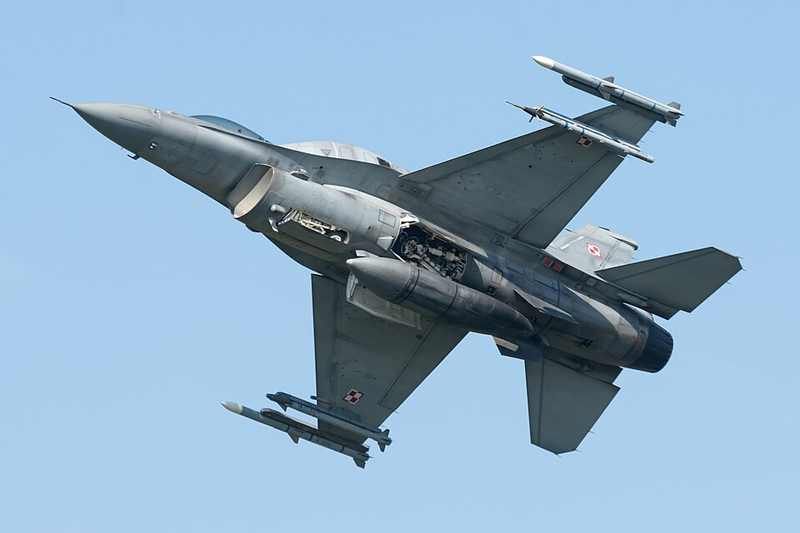
The Poland air raid alarms Russian drones story carried the language of an emergency, but its most important confirmed fact came after the alarms ended: Polish officials said no breach of the country's airspace had been recorded. The Operational Command of the Polish Armed Forces said military aviation was operating in Polish airspace on Thursday because Russia was striking western Ukraine. Air-raid alerts sounded in Lublin and Podkarpackie, the two southeastern provinces closest to the threatened Ukrainian border region, before the mission was concluded.
The sequence shows how little distance now separates a major Russian strike on Ukraine from a NATO air-defense response. Poland did not report an attack on its territory. It did not invoke NATO's collective-defense clause. But fighter aircraft were sent up, residents received warnings and commanders treated the risk seriously enough to move from monitoring to active protection.
A post by @visegrad24 on X said several Russian drones were flying toward the border and were “likely trying to target border crossing infrastructure on the Ukrainian side.” That targeting claim had not been confirmed by Polish authorities at publication time. It remains a report from visegrad24, not an established account of Russian intent or the drones' final objective.
What Poland confirmed — and what it did not
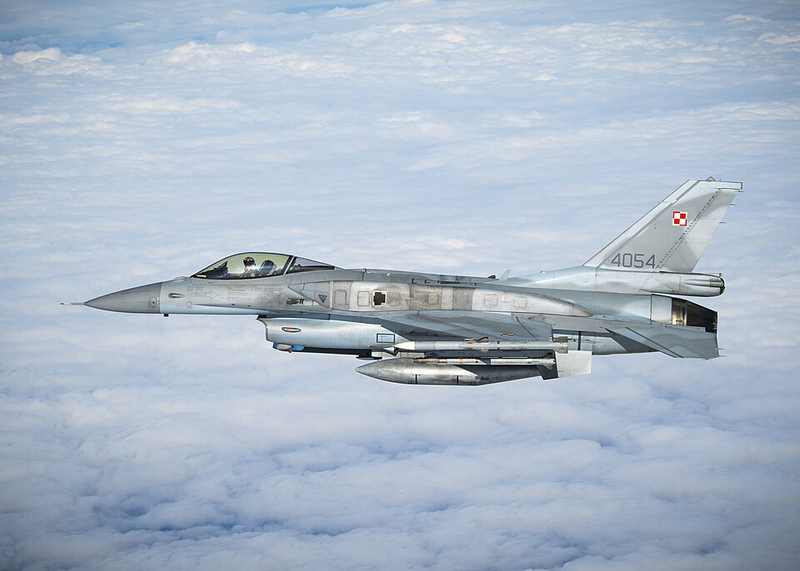
Poland scrambles fighter jets during strikes on western Ukraine
At 2:06 p.m. Pacific Time, the Polish Operational Command said military aviation had begun operating in Polish airspace because of Russian strikes on western Ukraine. Poland's Ministry of National Defence amplified the warning. A later Operational Command update said the operation had concluded.
Reporting at 4:14 p.m. Pacific Time from @theinformant_x said alerts had been issued in Lublin and Podkarpackie, military aircraft had scrambled, the alert was later stood down and no violation of Polish airspace was recorded. Poland's Government Security Center also warned residents in the two provinces.
Those official elements are significant on their own: Russian strikes were taking place in western Ukraine; Poland activated military aviation; warnings reached two border provinces; the operation ended; and the authorities did not record an incursion. They do not establish that Russian drones were deliberately heading for Polish territory, nor do they prove that any particular border facility was the intended target.
The eastern Poland air raid alert in video
The clip is valuable evidence of the alert environment, not a full reconstruction of the operation. Nighttime footage and sirens can show what residents experienced, but they cannot identify aircraft, plot flight paths or determine targeting. Those questions require radar tracks, military statements and, where available, wreckage or strike-site evidence.
Why it matters: NATO's eastern flank is on alert again
The immediate crisis passed without a recorded breach, yet the strategic problem did not. Russia's repeated attacks on western Ukraine bring weapons, air-defense activity and electronic-warfare effects close to the territory of Poland, Romania, Slovakia and Hungary. For NATO, the risk is not only a deliberate attack. It is also miscalculation, navigation error, a disabled drone crossing the frontier, debris falling after an interception, or commanders on either side misreading a fast-moving track.
Warsaw's answer has been to shorten reaction times. Poland scrambles fighter jets when the threat picture warrants it, temporarily changes airport operations when necessary and issues regional alerts rather than waiting for certainty. That posture costs money and creates disruption. It also reflects a calculation that a false alarm is less dangerous than a late response on the NATO eastern flank.
The timing adds another layer. Thursday's alert came 26 days before the November 3 U.S. midterm elections, when support for Ukraine, defense spending and the risk of escalation with Russia are all campaign issues. A border incident involving a NATO ally could quickly become an American political event even if no U.S. forces were directly involved.
Background: a pattern measured in weeks, not years
From the September 9 breach to September 17 airport closures
Reuters reported that Polish airspace was breached on September 9, a reminder that the theoretical spillover risk can become real. Eight days later, airport closures on September 17 showed how quickly a military precaution can affect civilian aviation. Signal Post News has also examined the reopening of Lublin and Rzeszów airports after a later security response.
These incidents do not all have the same cause or severity. A confirmed airspace breach, an airport restriction and an air-raid warning are different events. Put together, however, they describe an eastern border that now operates under a recurring wartime burden: radar surveillance, alert aircraft, rapid civilian warnings and repeated decisions about whether an unknown track is approaching, crossing or turning away.
September 28 and the Yahodyn border crossing question
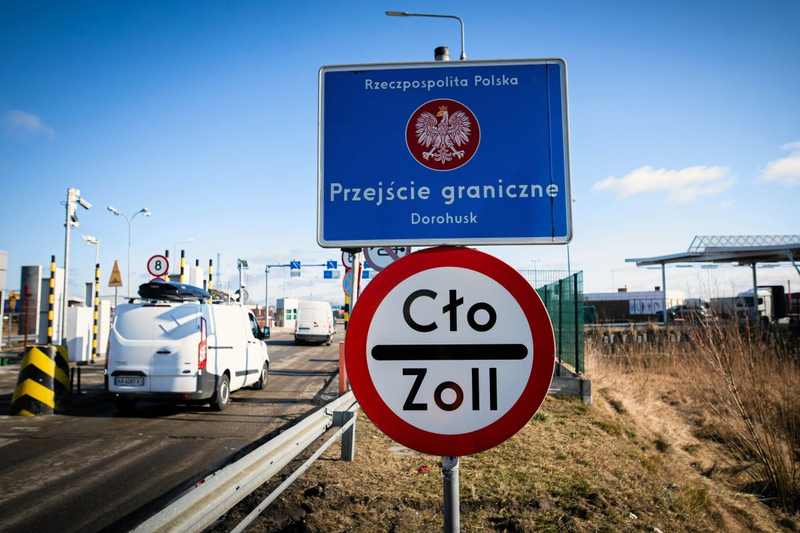
Reuters reported a September 28 incident around Yahodyn, on the Ukrainian side of the Yahodyn-Dorohusk corridor. The crossing is a key road link between Ukraine and the European Union, carrying civilian traffic, commercial freight and humanitarian movement. That is why the unconfirmed Thursday claim about border-crossing infrastructure drew immediate attention.
But strategic importance is not proof of targeting. The claim that drones were likely aiming at infrastructure on the Ukrainian side came from visegrad24. Polish officials confirmed the broader strike environment and their defensive response; they did not confirm that specific objective. Any later assessment should depend on Ukrainian strike-site reporting, recovered debris, flight-path data or a formal statement from Poland's Operational Command.
Lublin's Cold War shelter and the psychology of readiness
Reuters reported on October 2 that a Cold War-era shelter in Lublin had reopened. The decision is practical civil defense, but it is also a measure of how Russia's war has changed public life far beyond Ukraine. A city that once treated bunkers as historic infrastructure now has reason to review access, communications and emergency procedures.
That does not mean Polish officials expect an attack on Lublin. Preparedness is not prediction. It means the range of events considered plausible has widened enough to justify action that would have looked excessive before the full-scale war.

Warsaw's account and Moscow's past denials
Warsaw's public message on Thursday was restrained: aircraft were operating because of Russian attacks in western Ukraine; the operation later ended; no Polish airspace violation was recorded. That wording avoids both minimization and overstatement. It tells residents that the alert was real while making clear that Poland was not reporting a Russian attack on NATO territory.
Moscow has previously denied intending to strike NATO territory when Russian weapons or debris have been linked to cross-border incidents, and Russian officials have often challenged Western descriptions of such episodes. Intent and outcome must be separated. A weapon can cross a border without a deliberate order to attack the neighboring state; a dangerous approach can trigger defensive action without any crossing at all.
At publication time, no matched Reuters, Associated Press or BBC report had independently confirmed the details of Thursday's alert. That absence does not erase the Polish military's own statement, but it argues for discipline around claims that go beyond it.
Escalation management versus deterrence
The case for measured signaling
One school of thought says Poland's response worked as intended. Aircraft launched, civilian agencies warned the most exposed regions, commanders monitored the threat and the operation ended when the risk receded. No public accusation of a deliberate attack was made. That is escalation management: protect the border without turning every alert into a political ultimatum.
This approach preserves room for technical investigation and lowers pressure for immediate retaliation. It recognizes that air-defense decisions unfold in minutes while diplomatic judgments require evidence.
The case for a harder deterrent posture
A competing view holds that repeated alerts normalize unacceptable risk. If every large strike on western Ukraine forces Poland to launch aircraft or disrupt airports, Russia imposes costs on a NATO country without crossing the legal threshold of an armed attack. Supporters of stronger deterrence may argue for denser air defenses, more allied patrols, looser engagement rules or clearer warnings about weapons approaching the frontier.
Poland has already moved toward a more responsive posture. Our earlier analysis of Poland's updated shoot-down rules and Swedish Gripen deployment explains how Warsaw is trying to reduce the time between radar identification and a defensive decision. The difficulty is that faster authority can strengthen deterrence while increasing the consequences of a mistaken identification.
The numbers that matter
Two provinces — Lublin and Podkarpackie — were identified in reporting on the alert. Zero breaches of Polish airspace were recorded, according to the later account. One key road corridor, Yahodyn-Dorohusk, sits inside the strategic geography raised by visegrad24's unconfirmed targeting claim. And the event occurred 26 days before the U.S. midterms.
Those limited figures are more useful than invented precision. Polish officials had not publicly released a drone count, flight paths, engagement range or duration for each aircraft operation. Visegrad24 described “several” Russian drones, but that should not be converted into a precise number without corroboration.
What happens next
1. Watch the Polish Operational Command
The next authoritative step would be any further confirmation from the Operational Command: whether radar tracked drones toward the frontier, whether allied aircraft participated, and whether the no-breach assessment remains unchanged after review. Silence would leave the official account limited to a precautionary response during Russian strikes.
2. Check NOTAMs and airport status
Temporary flight restrictions and notices to airmen can reveal how military activity affected civilian routes around Lublin, Rzeszów and southeastern Poland. A NOTAM is evidence of an operational precaution, not proof of a hostile incursion. Airport departures and arrivals should likewise be read as logistics, not as a verdict on what the drones were doing.
3. NATO consultation is a ladder, not a switch
If later evidence showed a serious airspace violation, Poland could request consultations under NATO Article 4, which allows allies to discuss threats to a member's security. Article 5, collective defense, is a different threshold and is not automatic after every border incident. Allies could also increase patrols, reposition air defenses or share intelligence without invoking either article.
The most likely near-term outcome is more monitoring rather than a dramatic alliance declaration. But repeated incidents matter cumulatively. Each alert becomes part of the evidence Warsaw and NATO use to decide whether present defenses are sufficient.
4. Separate the confirmed event from the alleged target
The cleanest way to follow this story is to keep two tracks apart. The first is confirmed: Russian strikes on western Ukraine prompted Polish military aviation and regional alerts, then the operation ended without a recorded breach. The second remains unconfirmed: visegrad24's report that drones were likely targeting border-crossing infrastructure on the Ukrainian side. Future updates should close that gap with evidence, not repetition.
Sources and attribution
- Operational Command of the Polish Armed Forces — military aviation operating during Russian strikes on western Ukraine.
- visegrad24 — alert footage and the unconfirmed report about drones and possible border-crossing infrastructure targets.
- The Informant — alerts in Lublin and Podkarpackie, the stand-down and the no-breach report.
- Reuters reporting supplied background on the September 9 breach, September 17 airport closures, the September 28 Yahodyn incident and the October 2 reopening of a Cold War-era shelter in Lublin.
The article distinguishes between facts confirmed by Polish authorities and the unconfirmed claim from visegrad24 about the intended target of the drones.