World · Paraguay · Asunción
Paraguay Senate removes Peña — unanimously, and in a single day. After an impeachment trial that lasted less than ten hours, the Senate voted 44-0 on Friday evening to convict President Santiago Peña and remove him from office over the ueno bank collapse; minutes later prosecutors ordered him detained under house arrest, and before the night ended Vice President Pedro Alliana had been sworn in as Paraguay’s 52nd president.
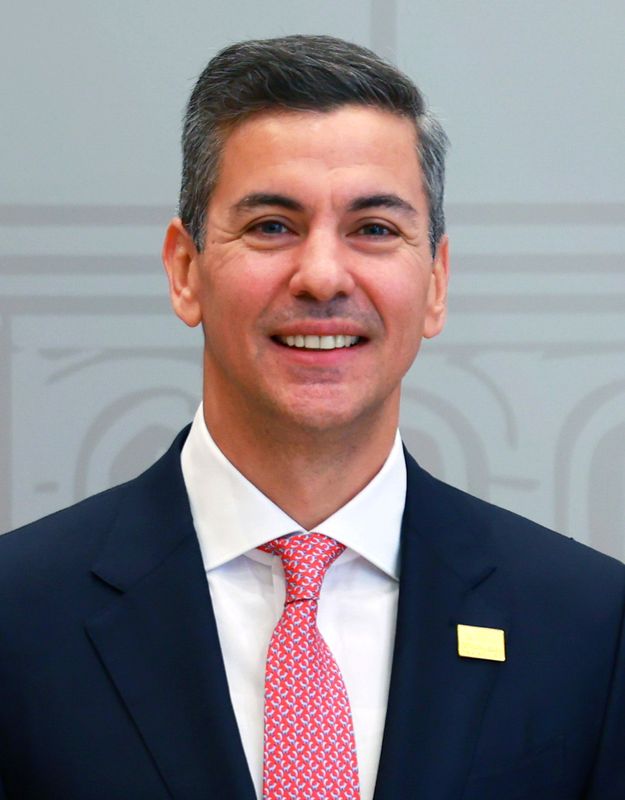
ASUNCIÓN, November 6, 2026 — It took Paraguay’s Senate less than ten hours to end a presidency. The impeachment trial of President Santiago Peña opened on Friday and closed the same evening: at 18:50 Asunción time, the roll call ended with senator after senator answering “¡Por la condena!” — for conviction — and the count stood at 44 votes to 0, with one senator, Guadalupe Aveiro, absent. Senate President Basilio Núñez then read the sentence into the record: “Se declara culpable al acusado Santiago Peña Palacios por mal desempeño en sus funciones y en consecuencia se lo separa de pleno derecho de su cargo de presidente de la República del Paraguay” — the accused is declared guilty of poor performance of his duties and is accordingly separated, by full operation of law, from the office of president of the Republic of Paraguay.
What followed moved almost as fast as the verdict. Within minutes, the public prosecutor’s office ordered Peña detained — house arrest at his Asunción home — on suspicion of breach of trust (lesión de confianza) and influence peddling tied to the collapse of ueno bank. And before the night was out, Vice President Pedro Alliana was sworn in as president, pledging that the savers ruined by the bank’s failure “serán compensados plenamente” — will be fully compensated. Peña, who did not attend his trial, has denied wrongdoing; the Senate’s verdict is a political judgement of poor performance, not a criminal conviction, and no criminal charges have yet been filed against him. The sequence completes the collapse Signal Post News has tracked from Peña’s attempted resignation on Thursday through the Senate’s refusal to accept it and the opening of the trial — and it makes Peña only the second Paraguayan president removed by impeachment, after Fernando Lugo in 2012.
Why Congress refused the resignation
To understand Friday, start with the road not taken. On Thursday, Peña presented his resignation. Had Congress simply accepted it, he would have left office quietly — and, under Paraguay’s arrangements, he would have carried into retirement the two protections former presidents normally receive: a lifetime seat in the Senate and the parliamentary immunity that goes with it. Lawmakers refused the resignation precisely so that impeachment could strip him of both. Conviction does what resignation would not: it removes the lifetime seat, removes the immunity, and leaves the former president exposed to ordinary criminal process like any other citizen.
That choice explains both the speed and the unanimity of what followed. The Chamber of Deputies had already voted 78-0 to approve the impeachment charges. In the Senate, the governing Colorado Party — Peña’s own party, the most durable political machine in South America — voted with everyone else. A president abandoned by his own party, facing a prosecution-minded Congress and a furious public of locked-out savers, had no parliamentary shelter left; the only question the trial had to answer was whether anyone would dissent. No one did.
The arrest: house arrest now, charges not yet filed
Minutes after the verdict, the Fiscalía — the public prosecutor’s office — ordered Peña detained. The order places him under house arrest at his home in Asunción on suspicion of breach of trust and influence peddling, and he must appear on Saturday morning before the Economic Crimes and Anti-Corruption Unit. The Attorney General has opened three criminal cases tied to the ueno bank collapse. Former central bank president Carlos Carvallo, who presided over the Banco Central del Paraguay while ueno slid toward failure, was also ordered detained.
Precision matters here, because the words “arrest” and “guilty” now sit side by side in the headlines and they do not mean the same thing. House arrest at this stage is a prosecutor-ordered detention at home pending a decision on charges; final criminal charges have not yet been filed, and the allegations against Peña remain suspicion, not proof. The Senate’s “guilty” verdict is a constitutional judgement — mal desempeño, poor performance of duties — delivered by politicians under impeachment rules, not a criminal conviction delivered by a court. Peña denies wrongdoing. In a written farewell he said he had not wanted his presence to be a cause of greater division or instability, and on X he summarised his Thursday resignation in one line: “Presenté mi renuncia para evitar más daño al país” — I presented my resignation to avoid more harm to the country. Congress, having refused that exit, has now chosen the harsher one for him.
The trial itself: an absent president, a rejected delay, a bank at the centre
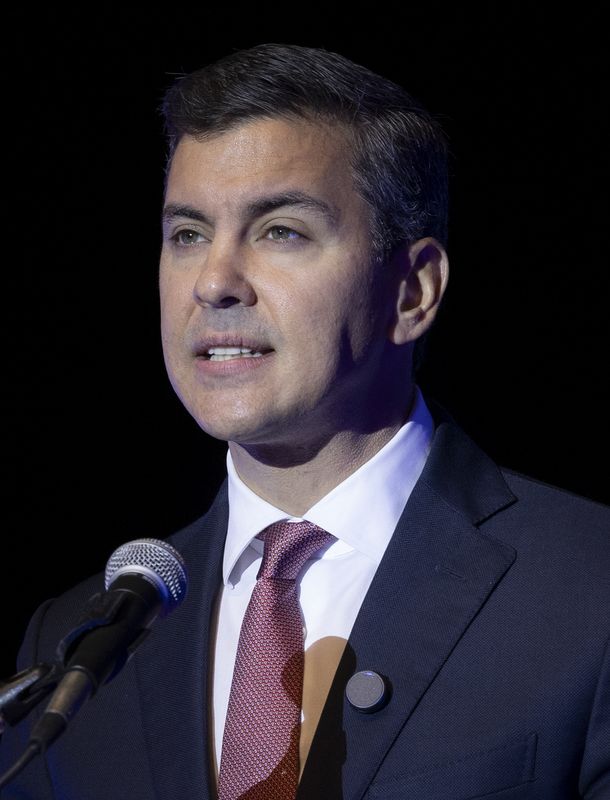
Peña never entered the chamber. His defence was argued by lawyers Ricardo Preda and Adolfo Ferreiro, who sought a 72-hour postponement; the Senate rejected the request and pressed on to a verdict the same day. The prosecution case, led by fiscal Rocío Vallejo, centred on the relationship between the presidency and Grupo Vázquez, the conglomerate founded by Miguel Vázquez that controlled ueno bank. Prosecutors allege — and this remains an accusation, tested so far in a political trial rather than a criminal court — that Peña maintained a commercial link to Grupo Vázquez lasting some 19 months into his presidency, and the impeachment charges alleged conflicts of interest, regulatory manipulation, misuse of public pension funds, with roughly $800 million in public funds alleged to be implicated, and an institutional cover-up as the bank failed.
The defence’s answer, in outline, was that the charges converted a banking failure into a political weapon: that regulators, not the president, supervised ueno; that the alleged links were mischaracterised; and that a same-day trial of a head of state, with a postponement refused, was a verdict in search of a hearing. The Senate was unmoved — 44 senators unmoved in exactly the same direction. Whatever the criminal courts eventually make of the evidence, the political system’s judgement was delivered on Friday, and it was total.
Alliana sworn in: ‘No los vamos a dejar solos’
The succession, at least, was orderly. Pedro Alliana — vice president since 2023, a former president of the Chamber of Deputies and a senior figure of the Colorado Party — was sworn in on Friday night as Paraguay’s 52nd president. He will serve the remainder of the term, through August 15, 2028. His first words in office were aimed past the politicians and at the savers: people affected by the ueno collapse “serán compensados plenamente” — will be fully compensated — and “no los vamos a dejar solos”: we will not leave you alone. He ordered immediate measures to reimburse savers, prioritising the least well-off.
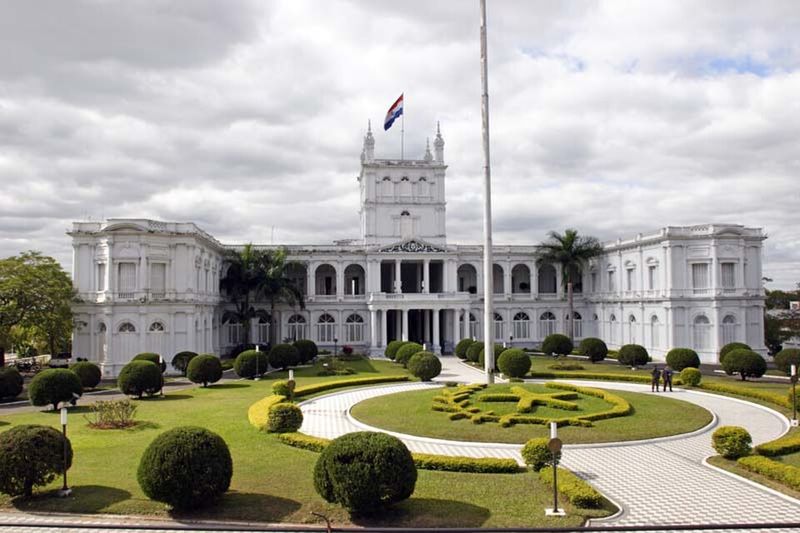
The pledge is the new government’s founding promise and its largest liability. Some 2.9 million customers were locked out of their accounts when ueno failed — in a country of under seven million people, a constituency of the ruined that no government can ignore. How full compensation will be funded, through what mechanism, and on what timetable are questions Alliana’s first days must answer in detail rather than in slogans; the promise has been made in the imperative mood, and it will be audited in public, saver by saver.
Background: how a bank collapse ate a presidency
The fall took four days. On November 3, the Banco Central del Paraguay began the resolution of ueno bank after its solvency fell below half the regulatory minimum — a mid-sized digital bank whose failure would ordinarily have been a financial story, until the locked-out accounts of some 2.9 million customers turned it into a national trauma and investigators began tracing the bank’s ownership and regulatory history toward the presidency itself, as Signal Post News reported in the bank that ate a presidency. The Chamber of Deputies voted 78-0 to approve impeachment charges alleging conflicts of interest, regulatory manipulation, misuse of public pension funds and cover-up around Grupo Vázquez. Peña presented his resignation on Thursday; Congress refused it, for the reasons set out above; the Senate opened his trial on Friday morning, in the chaotic session our earlier report described as chaos in Asunción; and by Friday evening he was a private citizen under house arrest.
What it means: the second removal, and a party that cut its own president loose
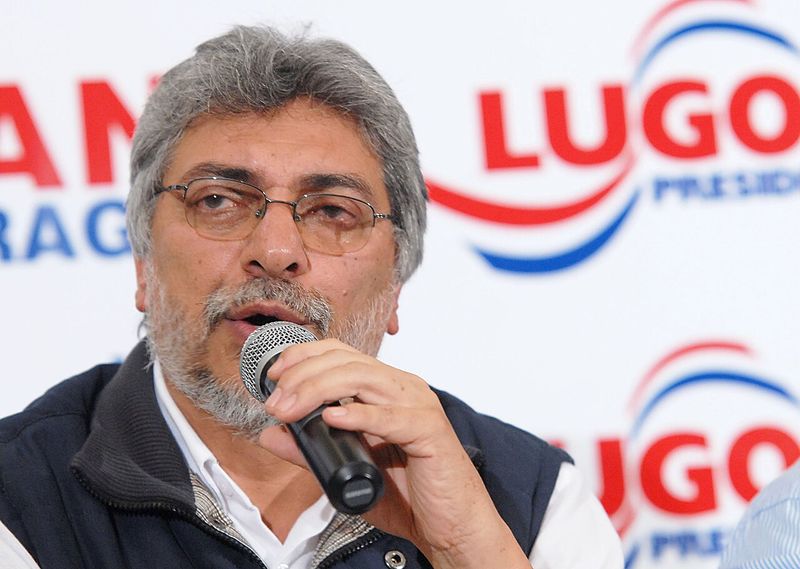
Analysis, clearly labelled. Paraguay has now removed two presidents by impeachment, and the comparison is instructive precisely because the cases differ. Fernando Lugo, the former bishop elected in 2008, was removed in 2012 in a lightning impeachment that much of the region condemned as a parliamentary coup against an outsider president. Peña’s removal is the mirror image: an insider — a former finance minister, the Colorado Party’s own candidate, governing with congressional majorities — destroyed not by his enemies’ numbers but by a concrete financial scandal with millions of identifiable victims, and removed with the votes of his own party.
That unanimity is the fact Alliana must now govern inside. The Colorado Party calculated that Peña had become more dangerous to it inside the palace than outside it, and it amputated. But Alliana is not a break with the fallen government; he is its vice president, a Peña ally elevated by the same ticket, now charged with compensating the victims of a collapse that happened on his own administration’s watch and with cooperating, at least formally, with prosecutors who may not stop at the palace’s former occupant. His room for manoeuvre is narrow: move too slowly on compensation and the street anger that consumed Peña finds a new address; move too aggressively against the old circle and he indicts the government he served in. Regionally, the episode will be read two ways at once — as proof that Paraguay’s institutions can hold even a president to account within constitutional forms, and as a warning of how quickly those forms can move when a party decides its leader is expendable. Both readings are available in Friday’s record; which one hardens will depend on whether the criminal process that now begins is seen to follow evidence rather than choreography.
What happens next
The immediate appointment is Saturday morning, when Peña must appear before the Economic Crimes and Anti-Corruption Unit. Prosecutors must then decide whether the suspicion that justified house arrest becomes formal criminal charges — against a former president stripped of immunity, a decision with no modern Paraguayan precedent to lean on — and a court must decide the conditions of his detention as the cases proceed. Former central bank president Carlos Carvallo’s parallel detention will test how far down the regulatory chain the accountability runs. In the palace, Alliana’s first government moves — the design and funding of the saver-compensation scheme, the treatment of the remaining ueno resolution, and the composition of a cabinet that must look different enough to mark a break while remaining Colorado enough to govern — will set the terms of his two and a half years. And in the background stands the number that made all of this happen: 2.9 million locked-out customers, whose compensation is now a presidential promise with a date implied and a country watching.
Sources
CNN, the Associated Press, Reuters and El País reporting on the Senate impeachment trial, verdict and swearing-in (November 6, 2026), including the roll-call result, Senate President Basilio Núñez’s declaration, the Fiscalía’s detention order and President Pedro Alliana’s swearing-in remarks; Signal Post News’ earlier reporting on the ueno bank collapse, Peña’s resignation and the opening of the Senate trial, linked above. Photos: Wikimedia Commons, as credited in the captions.