World · Latin America · Paraguay
President Santiago Peña announced his resignation on video on Thursday — but Paraguay’s Congress never accepted it, because the bicameral session called to do so was lifted for lack of quorum. So on Friday, November 6, the Senate opens his impeachment trial anyway, with senators sitting as a court, while thousands of protesters fill the streets of Asunción over the collapse of ueno bank, the failure that brought his government down in four days.
ASUNCIÓN, November 6, 2026 — Paraguay woke on Friday to a constitutional situation with no clean name for it. Its president has announced his resignation, on video, to the whole country. Its Congress has voted, unanimously, to impeach him. And yet Santiago Peña remains president — because the session meant to accept his resignation collapsed for lack of quorum, leaving the resignation formally unaccepted, the vice president unsworn, and the only path forward a Senate impeachment trial that opens at 10:00 a.m. on Friday with the president promising to appear and defend himself.
All of it happened in a single day, against the sound of tear gas outside. On Thursday, hours after party leader Horacio Cartes withdrew his support and turned Peña’s own Colorado Party against him, the president posted a resignation video on X while the Chamber of Deputies was already debating his impeachment. The deputies voted anyway: 78–0 to approve charges of poor performance of duties and conflicts of interest over ueno bank, the collapsed lender whose failure has locked 2.9 million customers out of their accounts. A parallel impeachment request against Vice President Pedro Alliana was rejected. And on the streets around the National Congress, for the fourth consecutive night, thousands of Paraguayans made clear that the crisis is no longer only about one man’s job — it is about their money.
The fourth night: Asunción erupts around Congress
Police estimated some 5,000 protesters filled the streets around the National Congress on Thursday night, the fourth straight night of demonstrations since the Central Bank of Paraguay placed ueno bank into resolution on Tuesday and every one of its services froze. The crowd’s demand was simple and personal: millions of ordinary depositors — in a country of fewer than seven million people, ueno’s 2.9 million customers amount to a substantial share of all adults — cannot reach salaries, savings or pensions held at the bank.
The night turned violent when protesters tried to breach the security fences around Congress. Police responded with tear gas and water cannon; protesters threw stones; injuries were reported on both sides, and preliminary reports said several people were detained. In downtown Asunción, a ueno branch at the corner of Nuestra Señora de la Asunción and Palma was attacked with stones and eggs, its windows smashed — the bank’s own storefront becoming the target of the anger its frozen accounts created. The unrest has a ministerial casualty already: Interior Minister Enrique Riera’s resignation was accepted late on Thursday, and Carlos Humberto Benítez González, the vice minister of Internal Security, is serving as interim interior minister as the security forces face the prospect of a fifth night.
A resignation announced — and not accepted
The sequence matters, because the whole crisis now turns on it. Peña’s resignation was announced, but under Paraguay’s constitutional process an announced resignation is not an accepted one: Congress must formally accept it. A bicameral session was called for exactly that purpose. It was lifted for lack of quorum — ruling-party lawmakers were absent — and so the session never voted, the resignation was never accepted, and it remains in limbo. Vice President Pedro Alliana has not been sworn in. He is not president. Peña, whatever his video said, remains the officeholder the Senate will now put on trial.
The distinction was lost in the first hours. Some English-language outlets prematurely reported that the resignation had been accepted and the succession completed. Paraguayan and Spanish-language reporting published overnight establishes the opposite: the acceptance session failed for want of a quorum, and no succession has taken place. Signal Post News is holding to that account, because the difference is not a technicality. If the resignation had been accepted, Alliana would be president this morning and the impeachment would be an argument about a former officeholder. Because it was not, Paraguay has both proceedings alive at once — a resignation suspended in mid-air and a trial about to begin — and which of the two finishes first will shape the rest of Peña’s life.
The Senate becomes a court
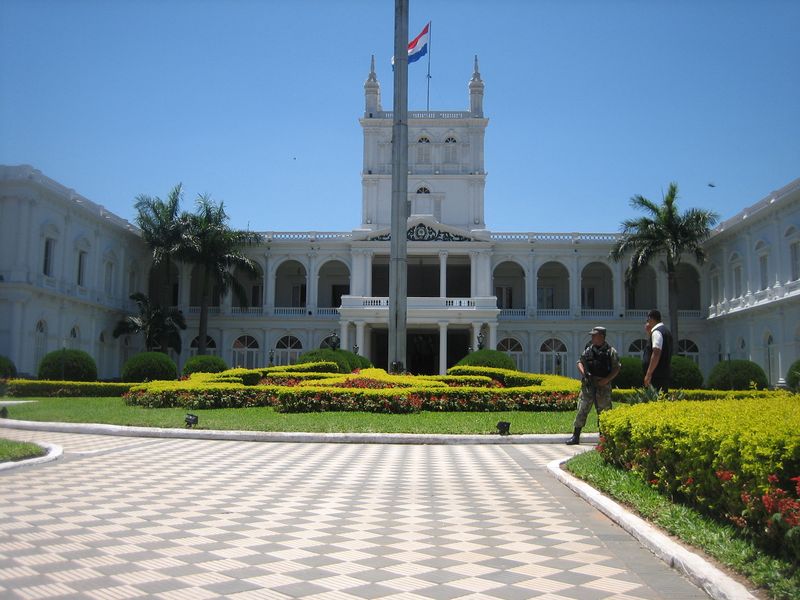
The impeachment track, unlike the resignation, is moving at full speed. The Senate met in extraordinary session on Thursday night, formally received the accusation approved by the Chamber of Deputies and recognized the deputy-prosecutors who will argue the case. On Friday at 10:00 a.m. Asunción time, the trial opens: senators will be sworn in as the trial court, and the chamber that normally writes laws becomes, for this purpose, a tribunal judging a president.
Peña has said he will appear before the Senate on Friday to exercise his right to a defense, presenting arguments and evidence. That decision is itself significant — a president who had fully exited would have little reason to litigate. Conviction requires two-thirds of the Senate, and its consequence is removal from office by verdict rather than by consent, with the legal and political disabilities that a conviction carries and a resignation does not. The charges the Senate will judge are the two the deputies approved unanimously: poor performance of duties, and conflicts of interest arising from Peña’s reported former stake in Grupo Vázquez — the conglomerate behind ueno — which he sold in April 2025.
Why the quorum failure matters
Two exits, two different futures
Paraguay’s constitution offers a president in Peña’s position two doors, and they do not lead to the same place. An accepted resignation is the quiet door: the office changes hands, the former president’s political story ends, and — this is the point the opposition keeps making — under Paraguay’s rules a former president becomes a senator-for-life, a status that carries legal protections. A conviction is the loud door: removal imposed by the Senate after trial, with consequences that can include disqualification and exposure that a resignation avoids. Whoever controls which door Peña walks through controls his future — which is why a failed quorum call in a half-empty chamber became the most contested fact in the country overnight.
What each side says happened
Opposition senator Esperanza Martínez and other opposition figures argue that the ruling Colorado Party is stalling the acceptance vote deliberately — in their account, delaying acceptance keeps the party’s options open and engineers a path to impunity, while an accepted-resignation outcome on managed terms would leave Peña eligible to become senator-for-life with its legal protections; they demand that the impeachment trial proceed and decide the matter in public. The ruling party frames its position differently: that constitutional processes should run their course, with each institution — Congress on the resignation, the Senate on the trial — completing its own procedure in order. Signal Post News reports both framings as their proponents state them; what is established as fact is narrower and undisputed between the two: the acceptance session was lifted for lack of quorum, ruling-party lawmakers were absent, and no acceptance vote has occurred.
There is also a harder institutional reading, and it cuts against everyone. A resignation that cannot be accepted because legislators do not attend is a failure of the acceptance mechanism itself, and it leaves the state in the worst-defined position available: a president who has told the country he is leaving, a vice president who cannot succeed him, a trial that may remove a man who has already resigned in every sense except the one the constitution counts. Friday’s Senate session is therefore not only a trial. It is the one proceeding in Asunción that is unquestionably, procedurally alive.
Background: how a bank collapse brought down a presidency
Four days ago, Santiago Peña was a president with a congressional majority. The collapse began at the Central Bank of Paraguay, which voted on Tuesday, November 3, to place ueno bank into resolution after its solvency fell below 50 percent of the regulatory minimum. All of the bank’s services froze at once — accounts, payments, access — for some 2.9 million customers. Central Bank president Carlos Carvallo resigned the same day, at Peña’s request. Prosecutors ordered the detention of eight top ueno executives, including the bank’s founder, Miguel Vázquez.
What converted a banking failure into a presidential one was the conflict-of-interest question. Peña has been reported to have held a former stake in Grupo Vázquez — Ueno Holding — the group behind the bank, sold in April 2025. The opposition’s charge, now one of the two articles the Senate will judge, is that a president with that history could not impartially oversee the system that let ueno grow, fail and be resolved. Peña and his allies have treated the stake as a divested, historical holding; his critics treat the timeline as the scandal itself. The political end came on Thursday morning, when Horacio Cartes — former president, Colorado Party leader and Peña’s political sponsor — withdrew his support. By Thursday night the deputies’ vote was unanimous, 78–0: when a president’s own party stops protecting him, impeachment arithmetic stops being arithmetic.
The depositors’ money question
For the crowds outside Congress, the constitutional drama is secondary to a simpler question: where is the money? Congress has moved on two fronts. It approved a new Central Bank president, Raúl Vera Bogado, to run the institution managing the resolution. And it set in motion the process to begin paying ueno depositors under the deposit-guarantee fund, which covers deposits up to roughly G. 228.3 million per depositor — about US$38,600. For savers below the cap, the promise is eventual full repayment through the guarantee scheme; for the many questions above it — businesses, institutions, public money — the answers are slower.
The exposure runs deeper than retail deposits. Paraguay’s public pension institute, the IPS, has exposure reported at around US$380 million, and public funds administered through ueno have been put at roughly US$850 million — figures that explain why the protests are not only about a failed bank but about whether workers’ pensions and state money were parked, under political protection, in an institution whose solvency was allowed to fall below half the legal floor. Those exposure figures are the numbers the Senate trial’s second charge ultimately points at: not merely that a bank failed, but who was watching, and who was connected, while it did.
What happens next
Friday’s 10:00 a.m. session is the fixed point. Watch, first, the trial’s opening formalities: senators sworn in as the court, the accusation read, and Peña’s promised appearance in his own defense — what he says, and whether he contests the charges’ facts or their framing, will set the trial’s terms. Watch the Senate arithmetic toward two-thirds: the deputies voted 78–0, but the Senate is the Colorado Party’s stronger chamber, and a conviction coalition there has to be built, not assumed. Watch whether the bicameral acceptance session is reconvened — and if it is, whether the quorum appears this time, because an acceptance voted mid-trial would change what the trial is deciding. Watch Alliana, who remains vice president and nothing more, and whose position — silent, supportive, or distancing — will be read in every direction. And watch the streets: a fifth night of protests, with a new interim interior minister in charge of the response, will test whether Thursday’s clashes were the peak or the pattern.
By Friday night, Paraguay may have a convicted president, an accepted resignation, or — the outcome Thursday produced — neither, extended. What it will not have is the situation English-language readers were briefly told it already had: a completed succession. That has not happened. The resignation is unaccepted, the vice president is unsworn, the trial is about to open, and the depositors are still waiting. Everything else is argument.
Sources
Paraguayan and Spanish-language reporting published overnight, November 5–6, 2026 — including ABC Color, Última Hora, La Nación and EFE — on the Chamber of Deputies’ 78–0 impeachment vote, the bicameral acceptance session lifted for lack of quorum, the Senate’s extraordinary session and Friday trial opening, the resignation of Interior Minister Enrique Riera, the approval of Central Bank president Raúl Vera Bogado, and the deposit-guarantee payout process for ueno depositors. Police crowd estimates and clash reports as carried in that reporting; detention figures are preliminary. Some English-language outlets prematurely reported the resignation as accepted; the quorum-failure account above is the one established by the overnight Paraguayan reporting. Photos: Wikimedia Commons, as credited in the captions; all are file photographs.