Sources: Reuters, Associated Press, CNN, The Wall Street Journal, Bloomberg and El País, November 5, 2026 (resignation video published on the president’s X account; Colorado Party withdrawal of support; impeachment debate under way in the Chamber of Deputies); Santiago Peña, recorded address to the Paraguayan people, November 5, 2026 (verbatim resignation statement, apology, refusal to accept responsibility for the banking crisis); Banco Central del Paraguay, November 3, 2026 (ueno bank resolution; solvency index below 50 percent of the legal minimum); Paraguayan and regional reporting, November 3–5, 2026 (35 impeachment signatories; eight ueno executives ordered detained; founder Miguel Vázquez surrendered; Peña’s April 2025 sale of Ueno Holding shares; Carlos Carvallo’s resignation at the president’s request).
The Paraguay president resigns story took seventy-two hours to detonate: a digital bank seized on Tuesday, 2.9 million savers locked out of their money, two nights of protests, an impeachment debate on the floor — and, on Thursday morning, the president’s own party walking away. By early afternoon, Santiago Peña had recorded the shortest political obituary of his career: his own.
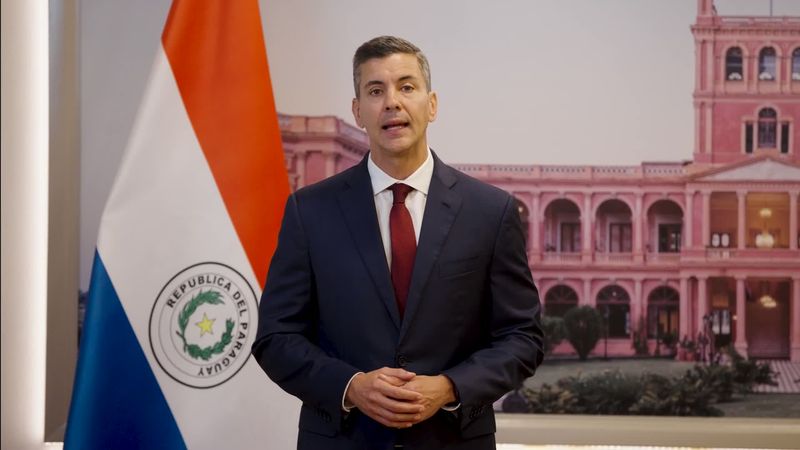
He did not hold a press conference. He did not face Congress first. At 47, two years and three months into a five-year term, Santiago Peña sat down in front of a camera, the Paraguayan flag at his shoulder, and read the words that ended his presidency: “I have made the decision to submit my resignation from the Presidency of the Republic. I do so thinking of the stability of our country, social peace and the need to preserve our democratic institutions.”
Track it live: Live markets tracker
The resignation now goes to Congress, which must accept it and which was set to receive it on Thursday afternoon in Asunción. Vice President Pedro Alliana is in line to succeed Peña and serve out the remainder of the term to August 2028. Peña apologised to Paraguayans in the address — “I also want to apologise to the people if at any moment I failed them; it was never my intention to betray the trust you placed in me” — but he pointedly did not accept responsibility for the banking crisis that destroyed him. That distinction, between stepping aside and owning the failure, is the space in which Paraguay’s next argument will happen.
This is the second half of a two-part story. The first half — how the central bank came to shut down the country’s largest digital bank on Tuesday, what the resolution means for the 2.9 million customers whose accounts froze, and the deposit-guarantee machinery now moving behind the scenes — is told in full in our companion report, Paraguay’s Biggest Digital Bank Went Dark. This article is about the politics: how a bank failure became a presidential resignation in three days, why the end came from inside Peña’s own movement, and what the country inherits next.
Seventy-two hours: from bank run to resignation
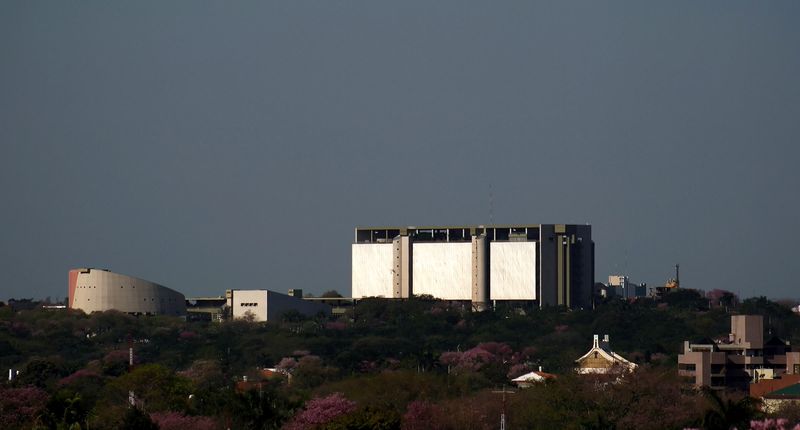
The chronology is brutal in its compression. On Tuesday, the board of the Banco Central del Paraguay voted unanimously to begin resolving ueno bank after the lender’s solvency index, once its financial statements were adjusted in a regularization process, stood below 50 percent of the legal minimum. Every ueno service went inactive. In a country of about 6.1 million people, 2.9 million customers — market vendors, pensioners, salaried workers, small businesses that had adopted the app as their first real bank — could not reach their own money.
Within hours, the crisis had a face, and it was the president’s. Peña had appointed Carlos Carvallo — a former head of Financiera Ueno, the finance company that grew into ueno bank — to run the central bank that supervised it. On Tuesday, Carvallo resigned at Peña’s own request, according to Reuters. Prosecutors ordered the detention of eight of ueno’s top executives; its founder and largest shareholder, Miguel Vázquez, surrendered to the authorities along with six senior colleagues. Crowds took to the streets of Asunción on Tuesday night, and again on Wednesday night, and were still gathering for a third straight day on Thursday.
On Wednesday, opposition and dissident lawmakers filed impeachment articles against Peña carrying 35 signatures, and the Chamber of Deputies took them up in an extraordinary session. The articles accused the president of conflicts of interest, misuse of pension funds and institutional cover-ups linked to ueno — accusations, it should be said plainly, that Peña has not accepted and that no court has adjudicated. But impeachment in a parliamentary fight is a numbers exercise before it is a legal one, and on Thursday morning the numbers collapsed. Horacio Cartes — former president, leader of the ruling Colorado Party, and the man whose movement made Peña president — withdrew his support. The Colorado bench in Congress backed the impeachment process. Basilio Núñez, the president of Congress, publicly demanded that Peña step down. While deputies debated the articles on the floor, Peña recorded his address instead.
Why this matters: the conflict at the centre of the state
Bank failures end presidencies when the public concludes the failure was not bad luck but bad faith, and the ueno case handed Peña’s critics that argument pre-assembled. As reported by Reuters and Paraguayan outlets, Peña formerly held a stake in Grupo Vázquez and Ueno Holding, ueno’s parent group; he sold his Ueno Holding shares in April 2025, well into his presidency. Ueno, meanwhile, was not a marginal lender: it administered roughly $850 million in public funds, held pension-system exposure measured in the hundreds of millions, and had become the everyday bank of nearly half the country. The president’s chosen central bank chief had run the institution’s predecessor. Each of those facts is individually explainable; stacked together in a week when 2.9 million people could not buy food with their own deposits, they became indefensible.
Peña’s defence, such as it was, ran on two tracks. In Wednesday’s first video message — before his party moved — he accepted no responsibility for the crisis and promised to protect savers. In Thursday’s resignation address he framed his exit as a sacrifice for stability: no office, he said, can stand above the wellbeing of Paraguay, and his overriding priority was “the peace of mind of the Paraguayans who entrusted their savings to our financial system — behind every deposit there are years of effort, sacrifice and family plans.” Supporters can fairly note that the central bank acted, that executives face detention, and that a president who resigns rather than cling to office through an impeachment war has chosen the less damaging exit. Opponents answer that the resignation arrived only when every other door had closed: the street, the Chamber and finally his own party. Both readings will be tested by the same evidence — what investigators now find inside ueno’s books, and how quickly savers are made whole.
The mechanics: what happens in the next hours and days
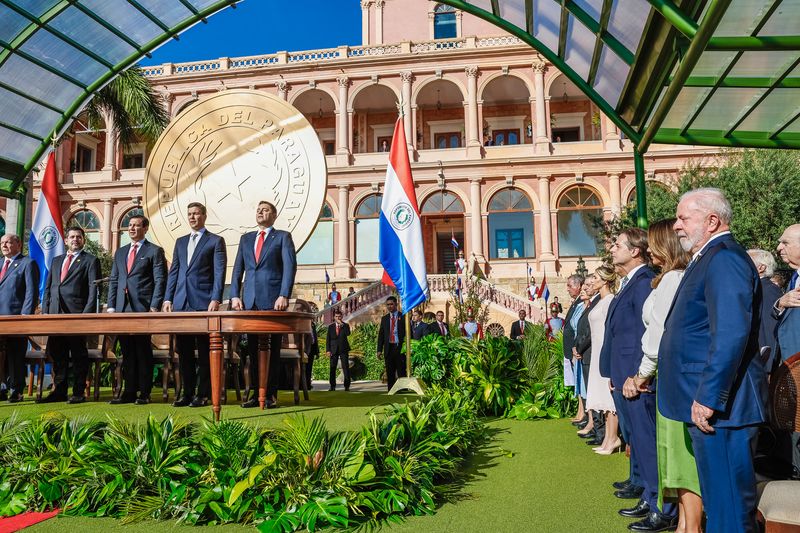
A presidential resignation in Paraguay is a congressional act, not a unilateral one. Peña has submitted his resignation; Congress must receive and accept it, with the Chamber that was debating his impeachment on Thursday now pivoting to the acceptance calendar. Only on acceptance does the succession trigger: Pedro Alliana, the vice president, assumes the presidency for the remainder of the term ending in August 2028. Until that vote, precision matters: Peña is a president who has resigned in a video, Alliana is a successor in line, and the formal transfer sits with the legislature.
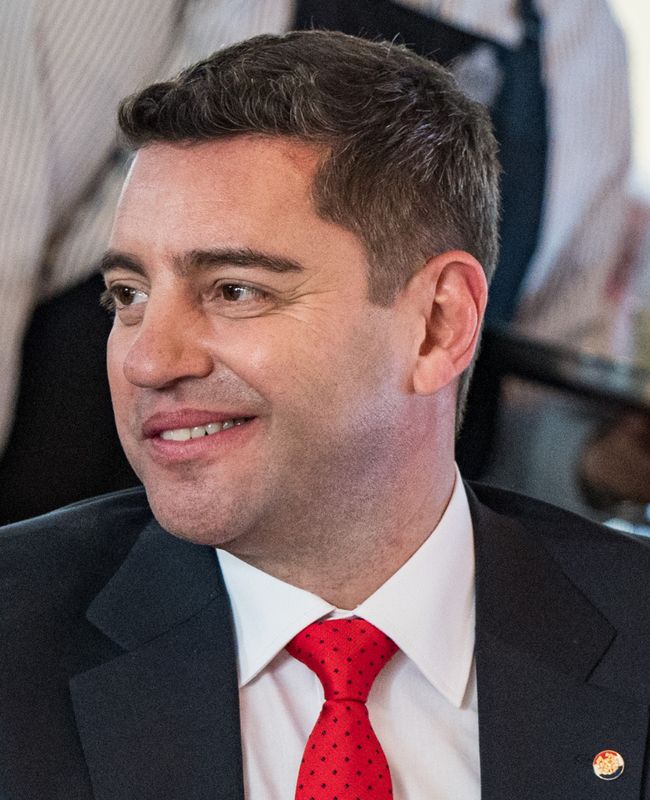
Alliana is no placeholder. A former president of the Chamber of Deputies and a central figure in the Colorado machine, he inherits three problems at once. The first is financial: the ueno resolution, the deposit-guarantee payouts and the pension system’s exposure do not pause for a change of president. The second is judicial: eight executives ordered detained, a founder surrendered, and an investigation whose threads run toward the presidency itself. The third is political: the impeachment coalition that formed against Peña does not automatically become a governing coalition for Alliana, and the Colorado Party has spent its unity to save itself. Whether Alliana governs as continuity or as cleanup will be the defining question of the succession.
The wider stakes: a warning written in deposit slips
Paraguay’s crisis will be studied well beyond Asunción, because its ingredients are everywhere in the region’s new financial landscape: a charismatic digital bank growing faster than its supervisors; public money and pension savings flowing into a politically connected group; a regulator led by a alumnus of the regulated. The numbers are the scandal’s real text. A solvency ratio below half the legal floor is not a marginal miss; it is a bank that, on adjusted numbers, was never close to sound. Roughly $850 million in public funds sat inside the group. Nearly one in two Paraguayans held an account that froze on a Tuesday. When a failure is that broad, the political question is never only who stole or erred — it is who was supposed to be watching, and the answer in Asunción pointed, fairly or not, at the presidential palace.
Internationally, the fall of Peña removes one of South America’s most Washington-aligned presidents mid-term and hands the continent a live demonstration of a new political law: in the age of the banking app, a financial crisis reaches every kitchen table in the country within hours, and the government’s half-life is measured in days. Peña took office in August 2023 as an economist promising modernization. He leaves — pending Congress’s acceptance — as the president of the frozen accounts.
The Colorado calculus: why his own party pulled the plug
The decisive actor in this story is not the opposition; it is Horacio Cartes. Paraguay’s Colorado Party has governed the country for most of the past seven decades, and its instinct, honed over generations, is that the movement survives by sacrificing the man before the man can sink the movement. Cartes, a former president who remains the party’s dominant figure and Peña’s political patron, read the week the way his party always reads a crisis: the bank was gone, the streets were filling for a third day, the impeachment articles had signatures from inside the tent as well as outside it, and every hour Peña stayed, the scandal’s surname risked changing from ueno to Colorado. Withdrawing support on Thursday morning was therefore not a conversion; it was an amputation, performed to save the party’s congressional majority, its 2028 prospects and its claim to be the natural party of government.
That logic also explains the speed of what followed. A party that has decided to cut loose its president does not haggle in public; the bench’s endorsement of the impeachment process and Núñez’s demand for resignation were choreographed as a single message: the exit is open, take it now. Peña, who owes his entire political career to the movement Cartes leads, took it within hours. The arrangement suits everyone except the man leaving: the party gets distance from the collapse, Congress gets a constitutional transfer instead of a bruising impeachment trial it might have won but could not have controlled, and Alliana — a party man to his core — gets the presidency with the machine intact behind him. What it does not settle is accountability. If investigators establish that public and pension money was steered into ueno by political hands, the question of who else in the movement knew will outlast the succession, and the party’s amputation may come to look like the first cut rather than the last.
What happens next
Three clocks are now running. The congressional clock: acceptance of the resignation and the formal swearing-in of Pedro Alliana, expected to move quickly given that the same majority that backed impeachment has no interest in a vacuum. The financial clock: interventors verifying ueno’s true position, the deposit-guarantee fund’s first payouts, and the pension system’s accounting for its exposure — the measures by which ordinary Paraguayans will judge whether Thursday changed anything. And the investigative clock: eight executives, a surrendered founder, and a paper trail that lawmakers say runs through public funds, pension money and the presidency’s own share history. Peña ended his address by asking history to judge events in their just dimension. History will; but Congress, prosecutors and 2.9 million depositors get to go first.
Signal Post News is following the congressional acceptance vote, the Alliana succession and the ueno depositor payouts as they develop. Our companion report on the bank failure itself: Paraguay’s Biggest Digital Bank Went Dark — and 2.9 Million People Cannot Reach Their Money.