Indonesia haze Palangka Raya: the Central Kalimantan capital woke to an orange sky on Wednesday as the province's air-pollution index passed 1,200 — four times the level classed as hazardous — in the worst Indonesian wildfire season in 11 years.
The Sky Turned Orange Over Palangka Raya
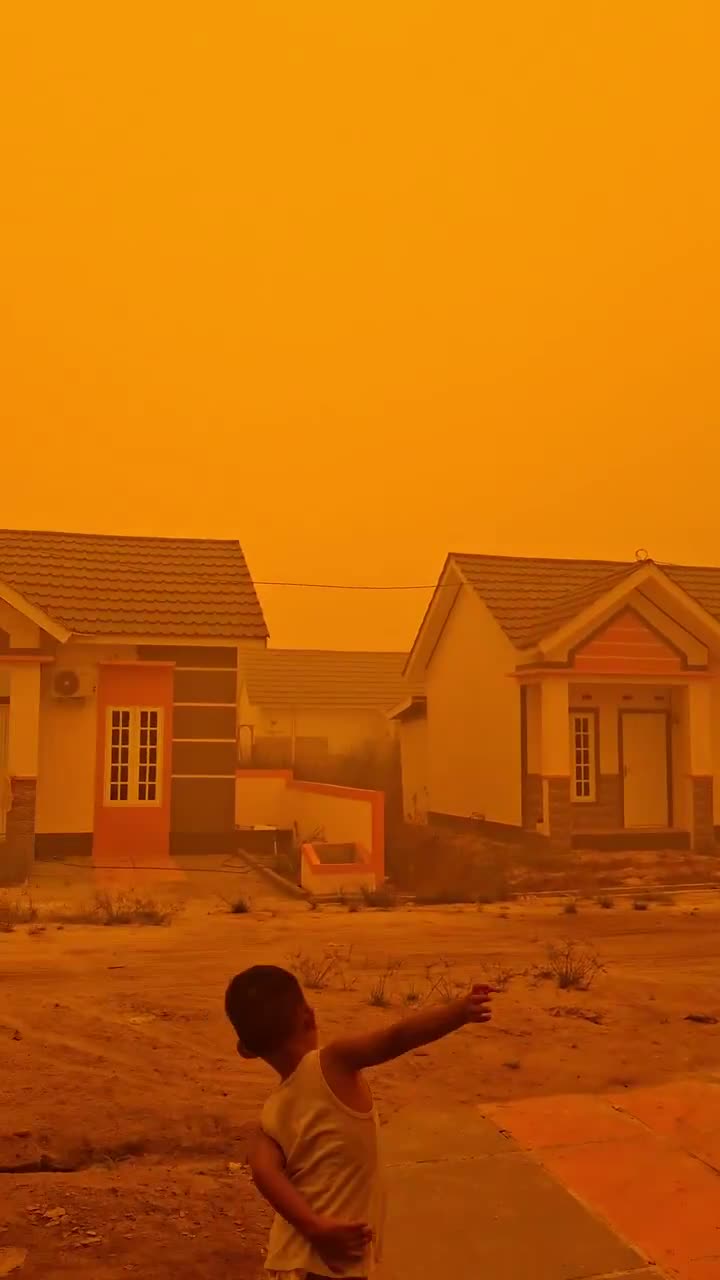
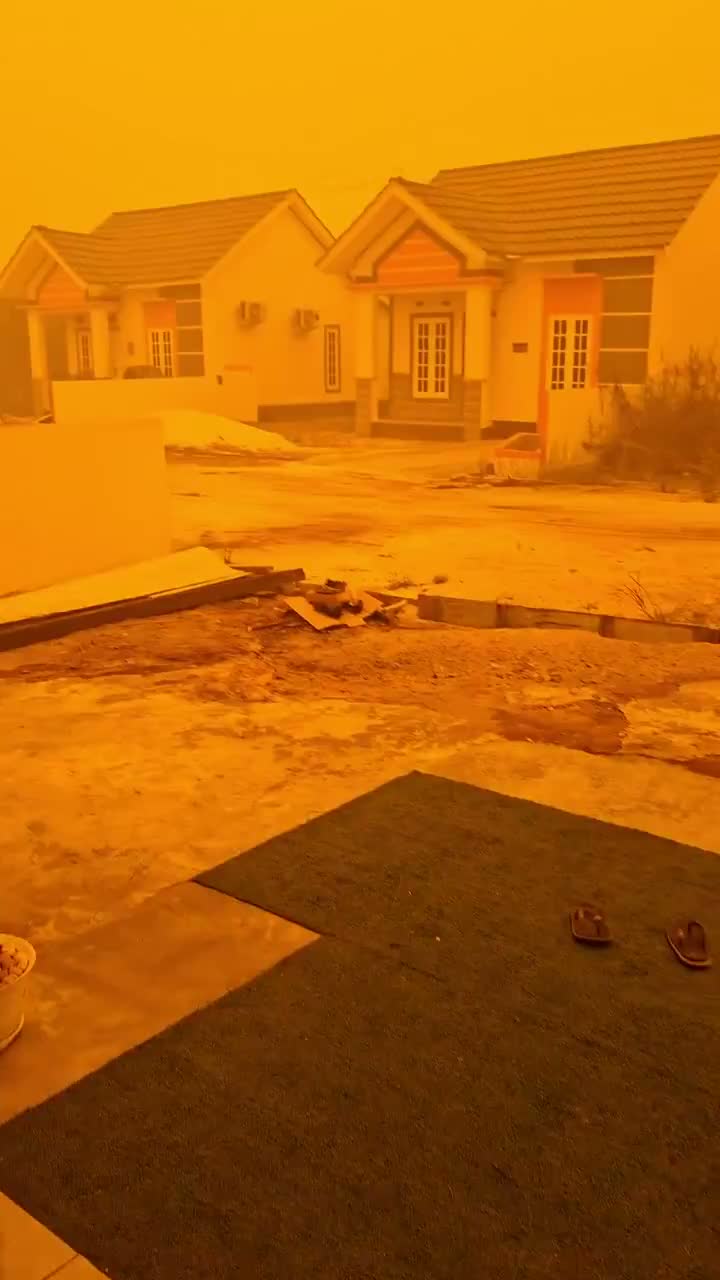
Indonesia's wildfire haze escalated sharply on Wednesday, October 14, as the city of Palangka Raya — the capital of Central Kalimantan province on the island of Borneo — disappeared under some of the worst air recorded anywhere in the world this year. The province's ISPU air-pollution index exceeded 1,200, according to Environment Ministry data reported by Reuters, on a scale where anything above 300 is already classed as hazardous to health. Visibility in the city fell to a minimum, residents posted video of an orange sky at midday, and police were seen hosing down peatland fires burning beside roads.
Track it live: follow active fires and burned-area data on our live wildfires tracker.
An index reading off the scale
The ISPU — Indonesia's pollutant standards index — is built so that the public can read danger at a glance: 0–50 is good, 101–200 is unhealthy, 201–300 is very unhealthy, and anything above 300 is hazardous, the point at which authorities are meant to treat the air itself as an emergency. A reading above 1,200 is not a marginal breach of that line; it is the line left behind entirely, four times over. Air at that concentration is loaded with fine particulate matter — PM2.5 and PM10 particles small enough to pass from the lungs into the bloodstream — along with carbon monoxide and other gases released by burning peat and forest.
Palangka Raya has lived through this before: the city sits amid the peatlands of southern Borneo and was one of the worst-hit places in the catastrophic 2015 haze crisis, the benchmark against which every Indonesian fire season since has been measured. What made Wednesday different was the combination — an index reading in four figures, a visibly orange sky in the provincial capital, and a health toll that, as the next section shows, has more than doubled in five weeks. President Prabowo Subianto, responding to the worsening fires and to anger at home and abroad, ordered additional resources deployed to fight them on Tuesday, Reuters reported.
Why this matters
A haze event becomes a crisis at the point where it stops being weather and starts being infrastructure failure — and by that measure this week is the turning point of the 2026 season. Until now, the story of this year's fires could be told as a serious regional problem: school closures in Malaysia, a smoky Grand Prix weekend in Singapore, orangutans rescued from burning forest in Borneo. Wednesday's numbers describe something bigger. When a provincial capital of more than 300,000 people records air four times beyond hazardous, when the regional illness count passes 277,000, and when a government on a different island — East Timor — closes its classrooms because of particles it did not produce, the event has become a transboundary public-health emergency, not a local fire story. The last time Southeast Asia faced a haze emergency on this trajectory was 2015, a disaster that the World Bank estimated cost Indonesia alone some $16 billion. The comparisons being drawn this week are not rhetorical; they are actuarial.
The health toll, in numbers
The human cost is best understood as a slope. Indonesia's Health Ministry counted 113,336 cases of respiratory illness linked to the fires on September 9. When Signal Post News covered the earlier phase of this crisis on October 8, the running total stood at roughly 175,000. As of October 12, the ministry's figure across seven provinces is 277,075 — more than double the September count in five weeks, and still climbing while the fires burn. These are clinic and hospital presentations for acute respiratory infections and related conditions in the fire-affected provinces: coughs and bronchitis at the mild end, asthma attacks and pneumonia at the severe end, with children, the elderly and people with existing lung or heart disease at greatest risk.
Two cautions belong with the headline number, and both cut the same way. First, 277,075 is a count of reported cases in seven provinces — a floor, not a ceiling, in a disaster spread across some of the most rural terrain in Indonesia, where many sufferers never reach a clinic. Second, respiratory illness is the measurable, short-term harm; the longer-term damage from weeks of exposure to very fine particles does not appear in any ministry tally and will be counted, if at all, in studies years from now. The number to hold onto is the rate of change: a toll that doubles in five weeks is a toll whose curve has not yet bent.
Why peat fires are so hard to put out
The reason this crisis resists the resources Prabowo has ordered into it is underground. Much of southern Kalimantan is peatland — waterlogged, partially decayed vegetation that, in a normal wet season, is too soggy to burn. Drained for agriculture and dried by the El Niño weather pattern now gripping the region, peat becomes fuel: dense, carbon-rich soil that catches fire and smoulders slowly, sometimes metres below the surface, for weeks or months. A peat fire can appear extinguished at the surface while its embers creep sideways underground and re-emerge hundreds of metres away. It produces disproportionate smoke for its size, because smouldering is incomplete combustion — which is precisely why peat regions generate the worst haze.
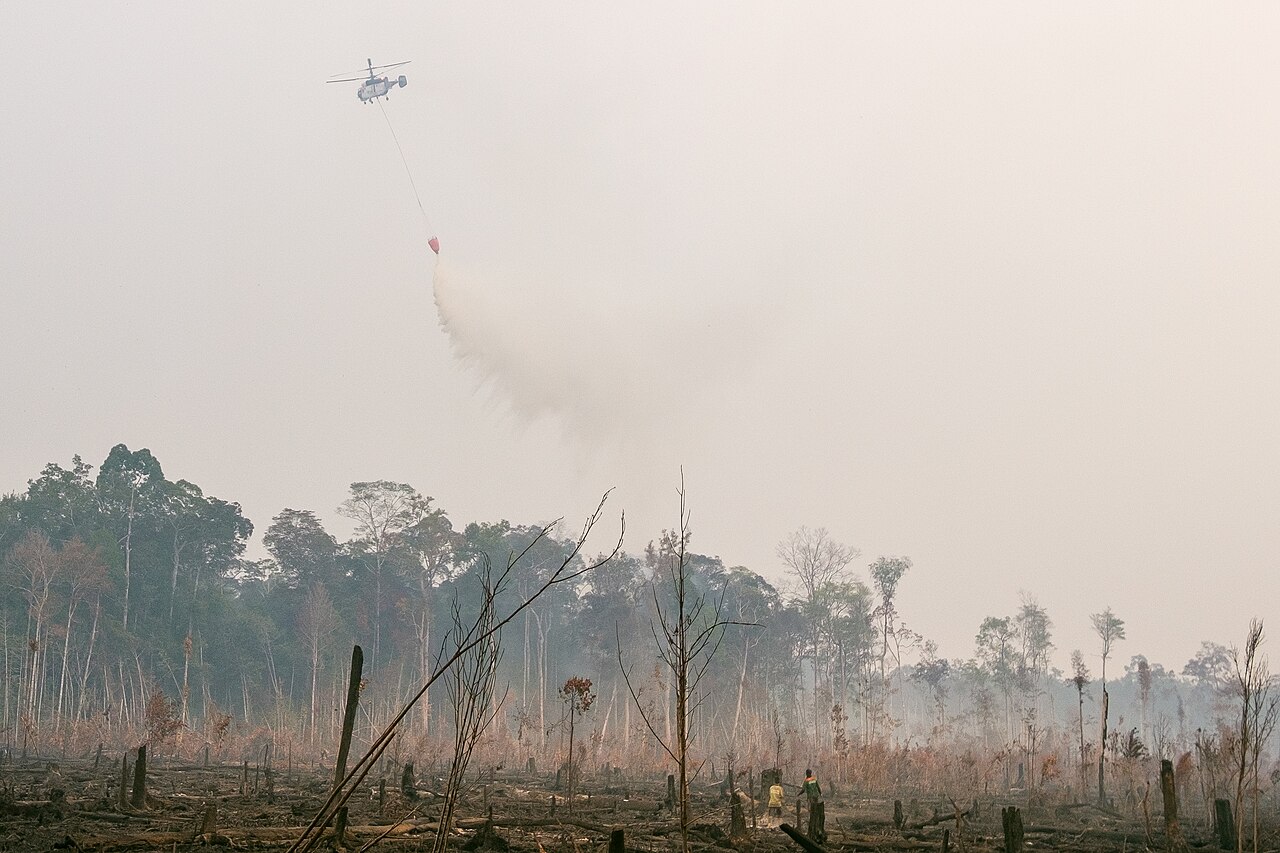
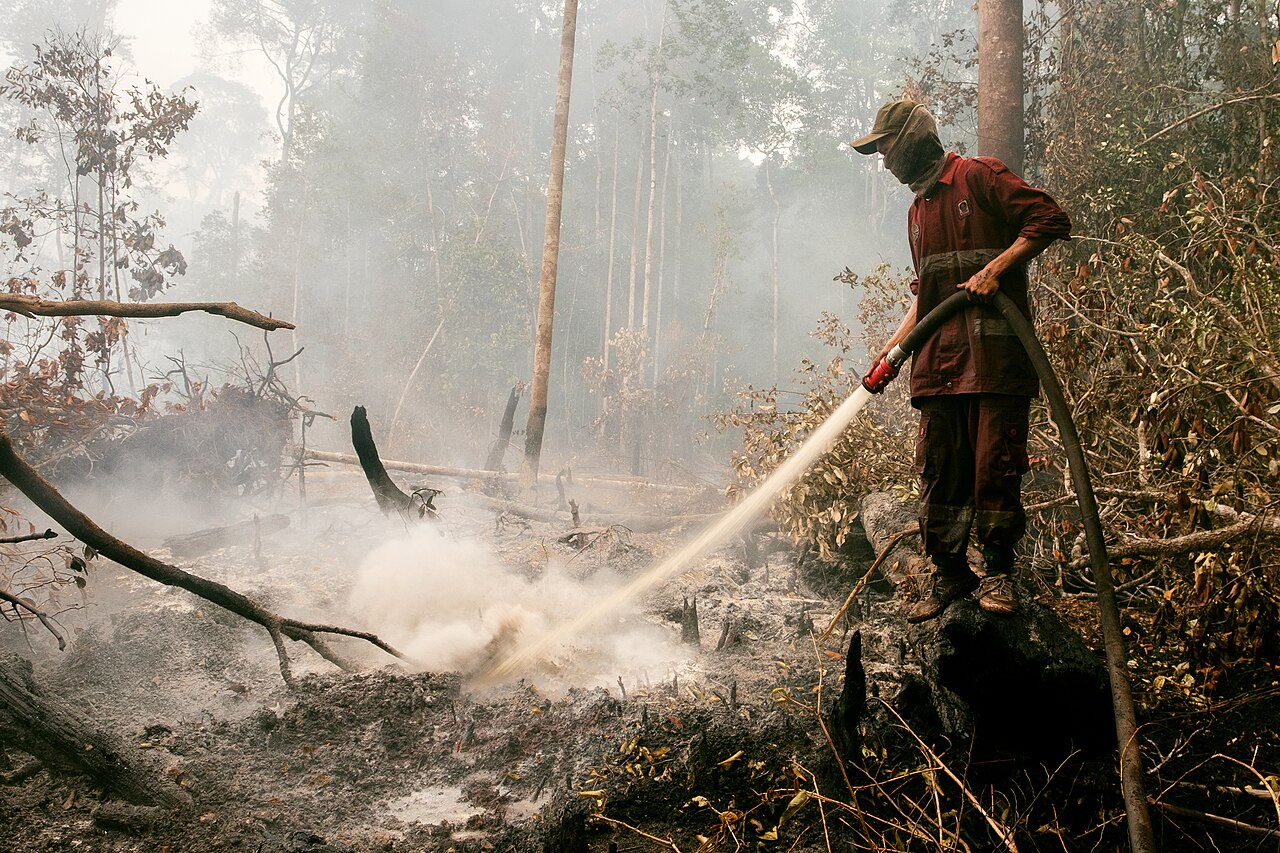
Fighting it is correspondingly slow work. Helicopters water-bomb the surface; ground crews — police among them, as seen on Palangka Raya's roadsides this week — hose and flood the peat itself, sometimes for days at a single hotspot, because the only reliable extinguisher is re-wetting the ground until the embers drown. Cloud-seeding can help where clouds exist. But in an El Niño dry spell, across hundreds of scattered hotspots in remote terrain, the arithmetic is brutal. Indonesia is battling its most intense wildfire season in 11 years — the worst since 2015 — and the season's defining variable is not firefighting capacity. It is rain.
A regional emergency, measured in three capitals
The clearest sign of escalation is that Wednesday's story was not only Indonesian. In Singapore, the one-hour PM2.5 concentration in the west of the island reached 284 micrograms per cubic metre — the highest reading of 2026 and the first time in this haze period that the city-state has entered the National Environment Agency's "very high" band. For scale: Singapore's worst modern reading, also in the west, was 471 µg/m³ during the 2015 crisis. Wednesday's figure is not 2015 — but it is on the same chart, in a year when, just over a week ago, the haze was a backdrop to a Formula 1 weekend rather than a health warning. Malaysia, which closed schools in several states as the smoke spread, has kept closures in force in affected areas.
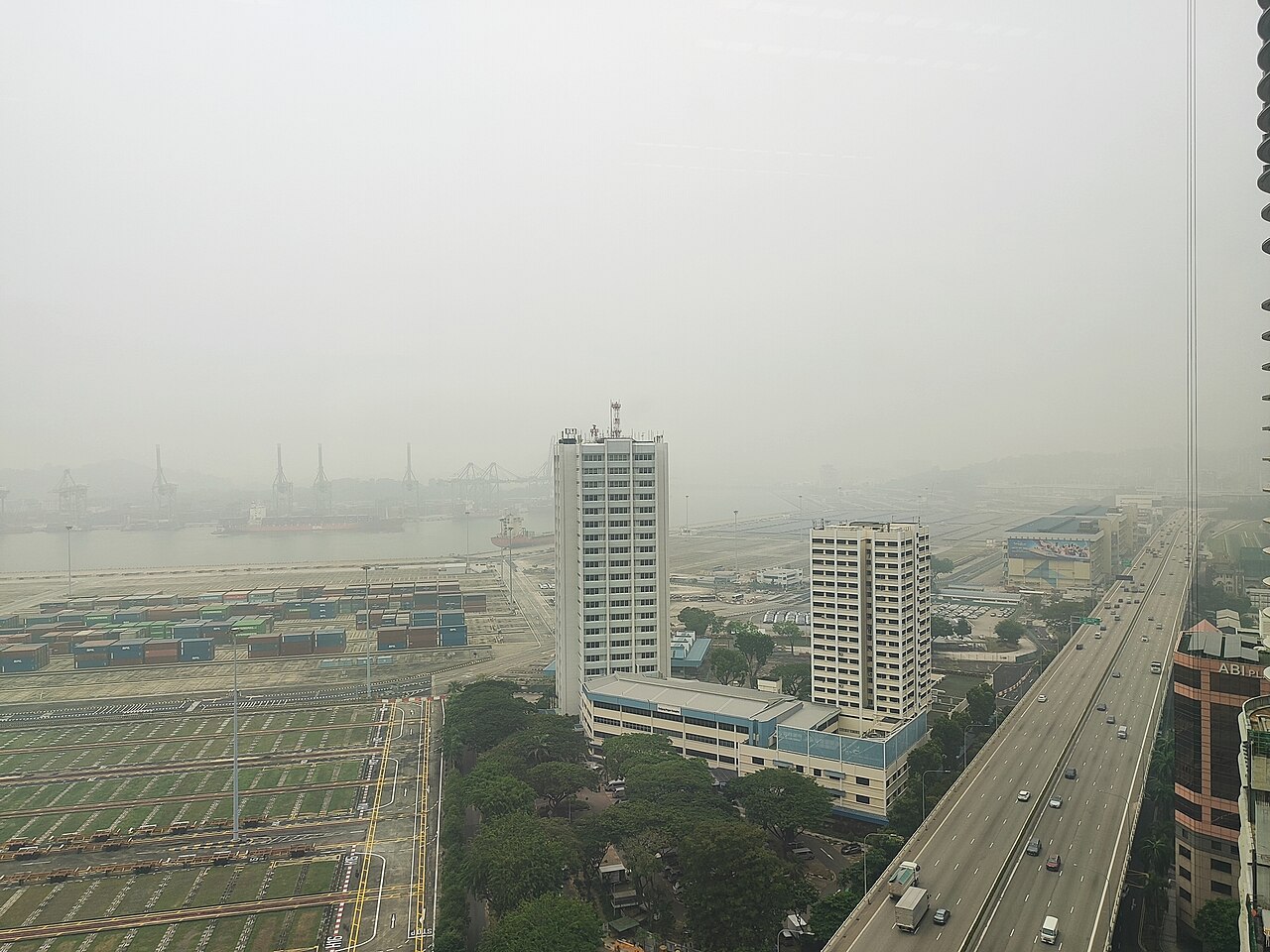
And then there is East Timor, the detail that marks how far the smoke's consequences now reach. Its government suspended face-to-face learning for three days from Thursday, October 15, citing particle contamination. Dili did not name Indonesia as the source. It did not have to: East Timor shares the island of Timor with Indonesia's East Nusa Tenggara province, where hotspots have been reported — a reminder that this haze does not respect the region's borders in either direction, and that the list of governments managing its effects now extends well beyond the three countries that usually dominate the story.
How much land has actually burned?
Ask how big the disaster is in hectares and the answer depends on who is counting — a gap that is itself part of the story. Indonesia's official burned-area figure, 202,000 hectares, has not been updated since July, deep into a season that has intensified sharply since. The environmental organisation Auriga Nusantara estimates more than 637,000 hectares burned between January and August alone. The Nusantara Atlas, which tracks fires from satellite data, puts the figure at roughly 900,000 hectares. These are estimates against a stale official number, and they should be read that way — satellite methods differ in what they count as burned, and ground verification in peat terrain is slow. But even the most conservative reading of the independent figures says the official tally is missing most of a fast-moving season, and the dispute matters for a practical reason: compensation, enforcement against companies whose concessions burned, and Indonesia's climate accounting all run off numbers that are currently months behind the fire.
The diplomacy is smoking too
Transboundary haze has strained Southeast Asian relations for decades, and this week the friction resurfaced on schedule. ASEAN environment ministers meet next month, with the haze certain to dominate; Malaysia has been the region's most vocal critic this season, and a remark by the head of Indonesia's Government Communication Agency — to the effect that Indonesia does not only send haze to its neighbours — drew public criticism in Malaysia for appearing to shrug off the damage. Jakarta's counter-position, stated in various forms across past crises and repeated in this one, is that the fires are being fought with national resources, that weather is the decisive factor, and that foreign-owned companies and regional demand are entangled in the land-clearing economy that creates the risk. Both things are true at once: Indonesia bears the overwhelming share of the firefighting burden and the health toll — 277,075 cases are Indonesian — and its neighbours bear costs they did not choose and cannot control. ASEAN's consensus-based machinery has managed that contradiction for a generation without resolving it. Next month's meeting will test whether an 11-year-worst season changes the choreography.
What happens next
Three things will decide how this ends. The first is weather: a sustained return of rain over southern Borneo and Sumatra would do in a fortnight what no deployment can, and until it comes, expect the illness count to keep rising past 277,075 and Singapore-style peak days to recur whenever winds align. The second is enforcement and accounting: whether Jakarta updates its burned-area figures, and what follows for the concessions and smallholders on whose land the fires burned, will signal whether 2026 produces reform or only relief. The third is the ASEAN meeting next month, where Malaysia's criticism and Indonesia's resource deployment will meet in the same room. For the people in the footage from Palangka Raya, though, the timeline is simpler. A child pointed at an orange sky on Wednesday because the sky was the wrong colour. Everything else — the indices, the hectares, the diplomacy — is an attempt to measure how wrong, and for how long.
Related coverage: Indonesia's haze chokes Southeast Asia: Malaysia shuts schools as Singapore gags ahead of F1 weekend · Orangutans rescued as Borneo wildfires close in
Sources: Reuters (October 13); Reuters (October 14), syndicated.