orangutans rescued from Borneo wildfires
The apes were pulled from burned-out habitat in August and September, then carried for nine hours to safety. It is a rare bright spot in Indonesia's worst fire season in 11 years — and a warning about how close the country's great apes are to the edge.
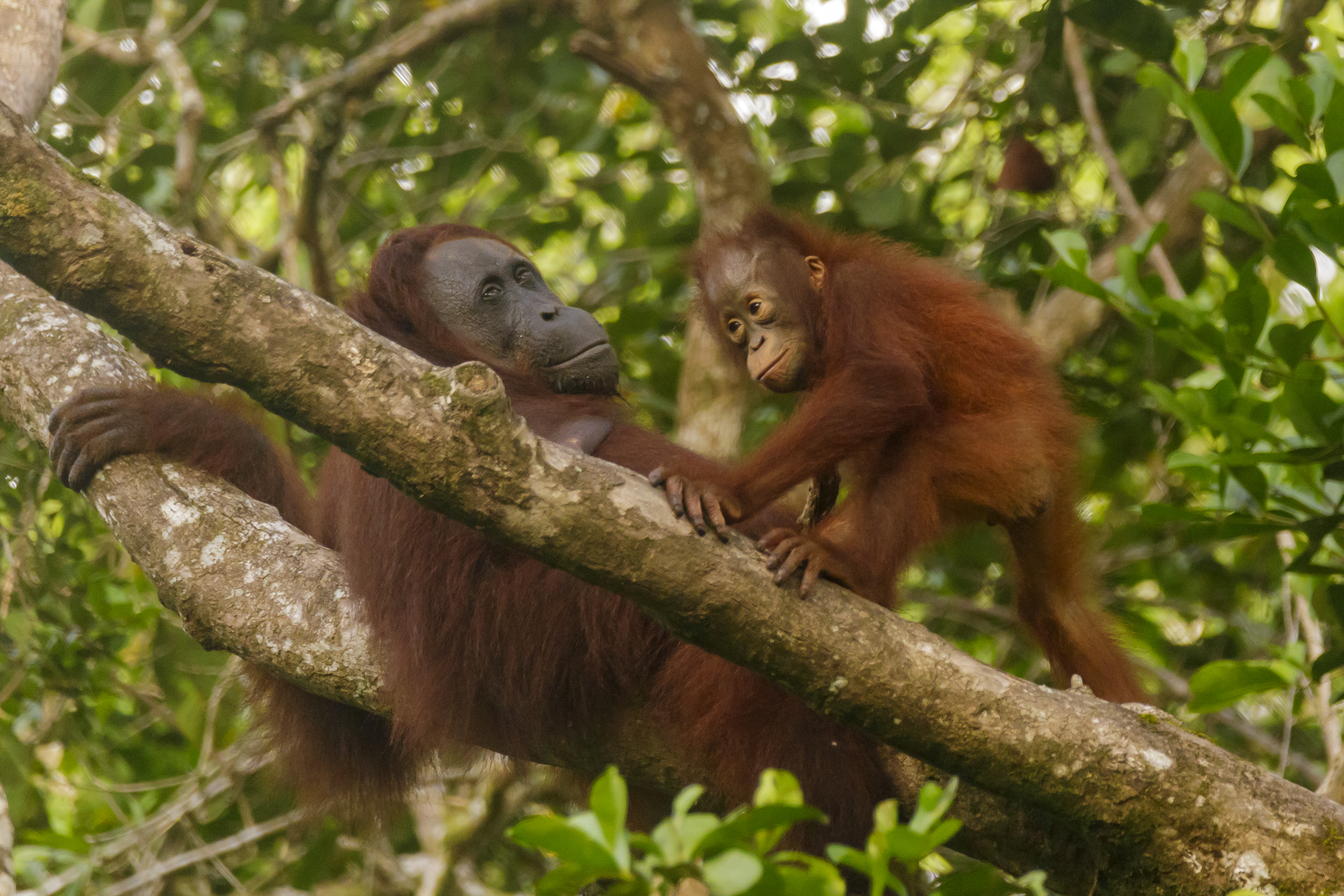
Orangutans rescued from Borneo wildfires are getting a second chance at the wild. Eight critically endangered apes — three mother-child pairs and two adolescent males — were moved to the protected Batu Nyambu forest in West Kalimantan after blazes destroyed their habitat in August and September, Indonesian authorities and the YIARI wildlife rehabilitation foundation announced Sunday. The operation took six hours by car, one hour by boat and two more hours on foot, with the orangutans carried in cages on bamboo poles.
Track it live: Live wildfire tracker
Why this matters
Eight orangutans is a small number. The significance of this story is not the count but what the count represents: the front line of a collision between one of the planet's most fire-prone landscapes and one of its most extinction-prone animals. Indonesia is fighting its most intense wildfires in 11 years, concentrated in Sumatra and Borneo, and the blazes are expected to continue until November, aggravated by the El Niño weather pattern. When fires eat through the last intact habitat of a critically endangered great ape — one that exists in the wild only on Borneo and Sumatra — a single bad fire season can undo decades of conservation work in weeks.
The rescue also matters because it is a proof of concept. Relocating endangered animals is controversial among conservationists: moving an animal away from its home range can disrupt social structures, spread disease, and simply postpone the problem if the new forest is also at risk. That the Indonesian government and YIARI carried out a nine-hour, multi-stage transfer — health checks first, then car, boat, and foot — signals an official judgment that these forests were no longer survivable at all. When rescue becomes preferable to in-place protection, the habitat situation has already crossed a threshold. That threshold is the real story here, and the eight apes are the faces of it.
The rescue: nine hours through burned forest
The eight orangutans were saved from several locations razed by fires — mostly plantations near their forest homes — in West Kalimantan province on the Indonesian side of Borneo, according to the joint statement from the forestry ministry and YIARI (Yayasan Inisiasi Alam Rehabilitasi Indonesia). They were rescued between August and September, held while their health was assessed, and relocated on Friday to the Batu Nyambu Protected Forest.
Batu Nyambu is a 23,000-hectare reserve of primary and secondary forest cover in West Kalimantan. The reserve was chosen because of the availability of food and water sources and its connectivity to other forests, said YIARI operational director Argitoe Ranting. "We want to ensure that rescued orangutans are not simply moved from one place to another, but actually have a chance to survive in their natural habitat," he said. The statement from the government and the foundation said the relocation is expected to give the eight orangutans "a chance to return to living naturally."
How a nine-hour wildlife evacuation works
The logistics read like a military operation. Six hours by car from the rescue sites, then one hour by boat, then two more hours on foot through terrain the fires had damaged. The orangutans traveled in cages carried on bamboo poles — the kind of labor-intensive, low-tech solution that works precisely where helicopters and trucks cannot reach. Before the move, YIARI conservationists checked the animals' health — a necessary step, since a stressed, smoke-exposed ape can carry infections that would endanger the resident population of the receiving forest.
YIARI chief executive Karmele Llano Sanchez called the relocation a "necessary step" for when habitat is no longer safe. "Protection of habitats will always be a top priority to ensure orangutans continue to have safe forests to live in, but as long as their habitat remains threatened, rescue is one of the best options we can take to help them survive," she said. That sentence deserves to be read as doctrine, not just commentary: it describes the fallback ladder of modern wildlife conservation — protect first, rehabilitate second, and when the forest itself is gone, carry the animals out by hand.
Background: how Indonesia's fires got this bad
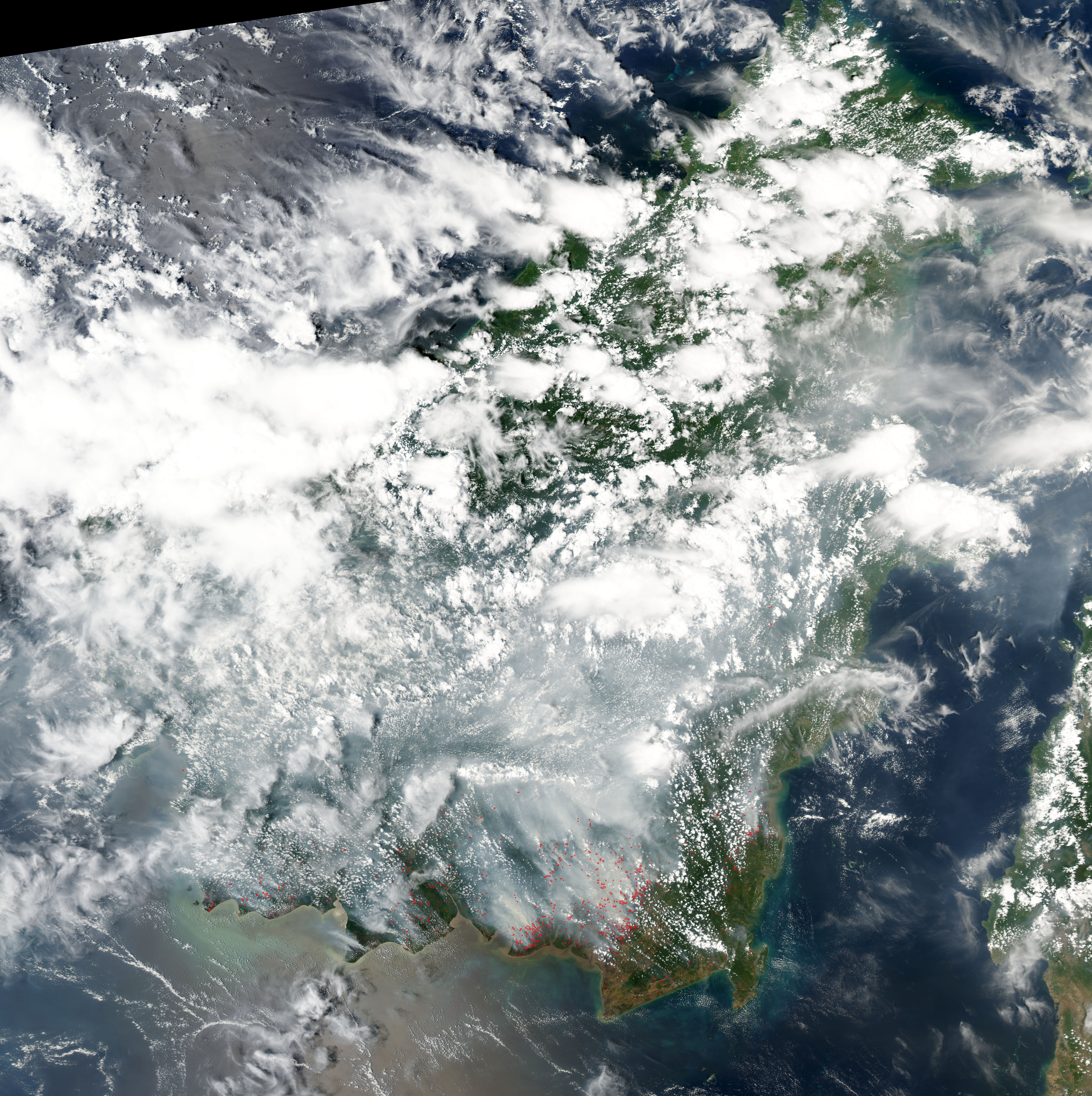
Indonesia's 2026 fire season is not a normal year. The country is battling its most intense wildfires in 11 years, concentrated on Sumatra and Borneo, and the government has warned the blazes could continue until November, aggravated by the El Niño weather pattern, which dries out peatlands and turns vast areas of drained land into tinder.
To understand the scale, put the figures in sequence. From January to July this year, fires burned around 202,000 hectares — roughly 500,000 acres — in Indonesia, according to official figures. No official data has been released for the subsequent months, but non-governmental organizations estimate at least 600,000 more hectares have burned since. If the NGO estimates hold, the 2026 total would be on the order of 800,000 hectares — an area larger than the island of Cyprus, burned in under a year. For comparison, that is roughly four times the area that burned in the official tally for the first seven months alone.
The haze emergency beyond the flames
Wildfire damage in Indonesia is measured in more than scorched land. The haze from the fires has caused 175,000 cases of respiratory illness in Indonesia, and the smog drifted across the strait to hit Singapore and Malaysia, where schools closed on Friday. This is the signature of Indonesian fire seasons: peatland fires smolder for weeks and release enormous volumes of smoke, and the haze routinely becomes a regional public-health and diplomatic crisis. The 175,000 respiratory cases are the human mirror of the orangutan story — the same fires that displaced the apes are filling clinics in West Kalimantan.
Since August, the West Kalimantan Natural Resources Conservation Agency and YIARI have rescued 46 orangutans affected by fires, agency head Murlan Dameria Pane said. That number matters in context: the eight moved to Batu Nyambu are about one in six of the total rescued in the province over roughly two months. It also tells you how sustained the fire pressure has been — 46 rescues in a single province is not a one-off incident response; it is a rolling emergency.
Why orangutans can't just bounce back
Orangutans are critically endangered great apes found in the wild only on the Southeast Asian islands of Borneo and Sumatra, and Indonesia is home to all three recognized species, according to the World Wildlife Fund. Their populations have declined from deforestation, wildfires, and poaching. Around 104,000 orangutans remain on Borneo and Sumatra, down from more than 230,000 a century ago, according to the conservation group WWF — a decline of more than half in roughly a hundred years.
Last month, the International Union for Conservation of Nature warned that fires were burning in habitats containing 52 percent of Borneo's orangutan population. Read that number twice: more than half of the island's remaining orangutans live in areas that were on fire, or adjacent to fire, during this season. That is why a story about eight apes is actually a story about the species. When the population base is 104,000 and shrinking, and over half of it sits inside the fire map, every rescue, every burned fragment of forest, and every month the blazes continue moves the arithmetic.

The biology that makes fire so costly
Orangutans are especially vulnerable to habitat loss because of how they live. They are largely solitary, fruit-dependent canopy dwellers with the longest birth intervals of any land mammal on Earth — mothers typically raise one offspring at a time over many years. That means a population hammered by fire cannot repopulate quickly even if the forest recovers; the math of their reproduction works against them. A fire that kills a handful of adult females removes decades of future offspring from the population trajectory.
There is also the question of what "survival" means after relocation. Batu Nyambu is a 23,000-hectare reserve — substantial, but a fragment in the context of Borneo's forest loss. Connected to other forests, with food and water available, it gives the eight apes a genuine chance. But the underlying dynamic — plantations near forest homes, drained peatlands, an El Niño pattern that keeps returning — is what put the apes in cages in the first place. Conservationists' consensus is that protecting remaining habitat is far more effective than rescue; rescue is what you do when protection has already failed.
Who benefits, who loses, and what critics say
The winners from this operation are obvious: the eight orangutans, YIARI and the West Kalimantan conservation agency (whose work gets rare international visibility), and the Indonesian government, which gets to attach a conservation success story to a fire season that is otherwise a public-health and diplomatic disaster. International donors and the NGO funding ecosystem also benefit — visible rescues sustain the conservation economy.
The losers are harder to name but real. The plantations near the apes' forest homes — where the fires burned mostly — represent the economic engine that keeps draining and clearing land around orangutan habitat. The broader orangutan population remains in the fire map. And arguably the rescue itself carries a cost: every dramatic animal evacuation risks becoming a substitute narrative for the unglamorous work of stopping the fires and enforcing land-use rules. Critics of relocation-style conservation make a related point: moving animals can relieve political pressure to address root causes — peatland drainage, plantation expansion, fire-setting for land clearing — because the public sees the rescue, not the policy failure that made it necessary.
The neutral read: the rescue is genuinely good for these eight animals and genuinely insufficient for the species. Both can be true at once, and conservation policy needs the second truth as much as the feel-good first one.
The numbers, in context
Put the figures side by side and the story sharpens. Eight apes relocated; 46 rescued in West Kalimantan since August — meaning about 17 percent of the province's rescued orangutans made it into this flagship transfer, while the rest remain in the rehabilitation pipeline. An estimated 800,000+ hectares burned nationally against a Batu Nyambu reserve of 23,000 hectares — the protected forest is roughly 3 percent of the burned area. A remaining population of about 104,000 orangutans, down from 230,000+ a century ago, with 52 percent of Borneo's population inside the 2026 fire map. And 175,000 human respiratory-illness cases — the fires are a mass-casualty event for people as well as wildlife.
The most important ratio may be the one nobody publishes: how many orangutans died or were displaced and never found. Forty-six rescues in two months in one province is the count of animals conservationists could reach. Fire kills quietly — smoke inhalation, starvation as fruit trees burn, displacement into plantation areas where apes are seen as pests. The rescue numbers are the floor, not the ceiling, of the damage.
What happens next: three scenarios
1. The fires end and the forest holds. If the El Niño pattern breaks and the government's firefighting effort brings the season under control by November as warned, Batu Nyambu's eight apes settle in, and the 46 rescued animals are gradually released or rehabilitated. The optimistic case: a bad season, a good response, lessons banked. Watch for: rain returning to Kalimantan, the official burn-area tally when (or if) it is finally published.
2. The season drags on and rescue becomes routine. The base case, given the November warning: more rescues through October, more provinces reporting, and the conservation agencies stretched thin. Each additional month of burning erodes the habitat base further and pushes more apes into the rehabilitation pipeline than the system can process. Watch for: rescue counts rising past 46 in West Kalimantan, new rescue operations in other provinces, more haze alerts in Singapore and Malaysia.
3. A breaking point for the species. The scenario nobody wants to name: a repeat of this fire intensity in 2027 or 2028, with half of Borneo's orangutan population already inside the fire map, pushes local populations past recovery. The honest forecast is that scenario two is most likely for this season — but scenario three is what scenario two eventually becomes if the underlying drivers (peat drainage, plantation pressure, burning as land clearance) are not addressed. The eight apes in Batu Nyambu will be fine either way. Their species' future depends on whether Indonesia treats this season as a warning or as weather.
Related coverage
Sources
- Reuters — Indonesia moves 8 endangered orangutans to safety after Borneo fires (October 11, 2026)
- The Leaders Online (Malay Mail wire) — Indonesia releases eight orangutans rescued from fires to protected forest (October 11, 2026)