Dera Ismail Khan blast
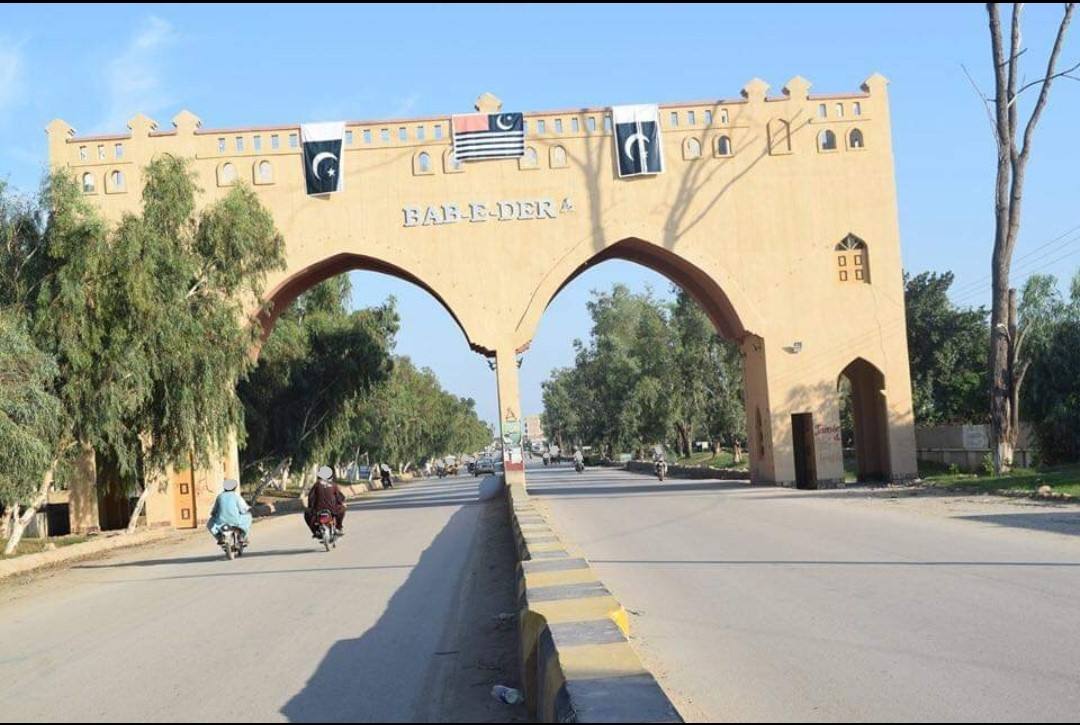
DARAZINDA, Pakistan — A suicide bomber detonated an explosives-laden vehicle at the Aman Mela police checkpoint on Saturday, September 26, tearing through a security post on the Dera Ismail Khan–Quetta Road and killing 11 people in one of the deadliest attacks in northwestern Pakistan this month. The blast struck near Mughal Kot and Darazinda, close to the boundary between Khyber Pakhtunkhwa and Balochistan and within reach of South Waziristan, a former militant stronghold.
The injury count was still unsettled in the first hours after the attack. Reports citing local officials put the number at at least 20, while the provincial emergency service Rescue 1122 said 30 people had been injured. The most accurate formulation is therefore that 11 people were killed and at least 20 were wounded, with Rescue 1122 reporting the higher figure of 30. That variance is not a minor bookkeeping detail: casualty totals after large explosions can change as hospitals reconcile admissions, transfers and duplicate reports.
Dawn-cited reporting identified the dead as eight men, two women and one child. The wounded included police officers, customs officials and civilians. Safdar Baloch, the local police chief, told the Associated Press that most of those killed or wounded were security personnel and passersby. The mix of victims captures the central reality of a checkpoint attack: the target may be the state, but the blast radius belongs to everyone using the road.
The Tehreek-e-Taliban Pakistan, commonly known as the TTP or Pakistani Taliban, claimed responsibility in a statement, according to Reuters and the Associated Press. The group also claimed that its fighters ambushed a reinforcement convoy after the explosion. That second assertion has not been independently verified. It should be treated as an unconfirmed claim by the organization responsible for the attack, not as an established account of what happened after the bomber struck.
What happened at the Aman Mela checkpoint
The known sequence begins with an explosives-laden vehicle approaching the Aman Mela checkpoint in Darazinda. The driver rammed the vehicle into the post and detonated the bomb. The explosion destroyed the checkpoint and damaged nearby structures and vehicles, according to the reports available Saturday. Investigators had not yet publicly described the explosive composition, the size of the charge or the route the bomber used to reach the installation.
Those unanswered questions matter. A vehicle-borne improvised explosive device is not an impulsive weapon. It requires access to explosives, a vehicle, assembly, concealment, a driver willing to die and enough reconnaissance to identify a route to the target. Whether the bomber exploited a routine checkpoint procedure, a gap in perimeter security or assistance from a local network will shape the official assessment of how the operation succeeded.
Rescue 1122 spokesperson Bilal Faizi said teams from the Darazinda station reached the scene and began relief operations. Additional ambulances and rescue personnel came from Karak and Hangu. Eighteen of the injured were referred to hospitals in Darazinda and to Mufti Mahmood Hospital in Dera Ismail Khan, according to Reuters and Dawn-cited accounts.
The response pattern indicates the pressure a mass-casualty bombing places on a district system. First responders must secure a scene that may still contain secondary hazards, recover victims, triage the wounded and distribute patients among facilities with different levels of surgical capacity. The movement of personnel from neighboring districts and the transfer of 18 patients show that this was not a contained local emergency. It became a regional medical operation within minutes.
Early reporting did not resolve whether the bomber detonated immediately upon contact, tried to breach deeper into the compound or was stopped at the outer checkpoint. Nor did it establish how many police officers were on duty. Those are precisely the details Pakistan's bomb-disposal and counterterrorism investigators will need to reconstruct before they can say whether the checkpoint's defenses failed, were overwhelmed or prevented an even larger loss of life.
Why the Dera Ismail Khan blast matters
Checkpoints are the tripwires of Pakistan's counterterrorism posture. They are designed to interrupt movement, expose weapons, make militants change routes and project the visible presence of the state along roads where police coverage is otherwise thin. Because they sit at the point where ordinary traffic meets armed authority, they are also unusually vulnerable. Their effectiveness depends on predictability for travelers and unpredictability for attackers — a balance that is difficult to sustain over months and years.
A successful vehicle bombing does more than destroy one post. It tests every other checkpoint in the region. Commanders must ask whether procedures are adequate for vehicles carrying hidden explosives, whether barriers create enough stand-off distance and whether intelligence units missed the preparation of a large attack. Officers at other posts must then operate under heightened fear, slowing traffic and increasing friction with the communities whose cooperation they need.
The attack also lands at a dangerous diplomatic moment. It came two days after fighting between Pakistan and Afghanistan along their southwestern border killed at least 13 Afghan Taliban members, according to Pakistan's government. The clash followed Pakistani strikes this week on what Islamabad described as militant hideouts inside Afghanistan. The Associated Press reported that the renewed hostilities threaten mediation efforts involving China, Turkey, Qatar and Saudi Arabia.
There is no evidence in the cited reporting that Saturday's bombing was retaliation for the border fighting, and no responsible account should claim that connection. Timing is context, not proof of motive. But the overlap is strategically important: Pakistan is dealing with a domestic militant attack while openly confronting the neighboring government it accuses of allowing the TTP to operate from Afghan territory. Kabul denies that accusation.
The blast therefore increases pressure on every actor at once. Islamabad faces demands to show that it can protect its own roads and security posts. Afghan authorities face renewed Pakistani allegations over militant sanctuary. Mediators face a smaller window in which to prevent tactical incidents from becoming a wider cycle of cross-border strikes. Families in Khyber Pakhtunkhwa, meanwhile, face the immediate cost in funerals, hospital wards and a heavier security presence.
A borderland that multiplies the security problem
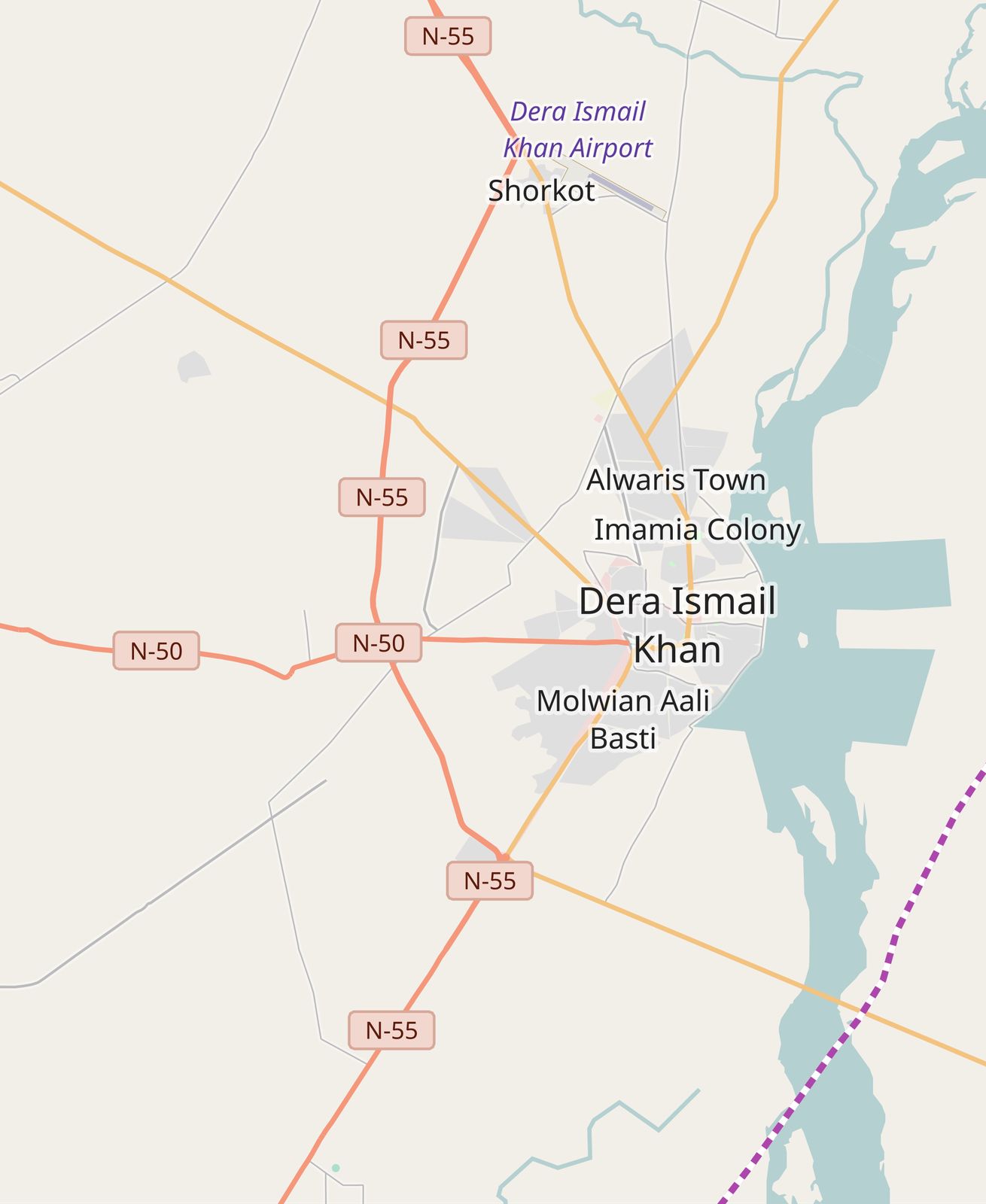
Dera Ismail Khan's geography makes it more than the location of another bombing. The district sits near South Waziristan and along the seam between Khyber Pakhtunkhwa and Balochistan. The Dera Ismail Khan–Quetta Road ties population centers, frontier districts and commercial routes together. Security forces must monitor not only fixed towns but long stretches of road, side routes and terrain that can offer militant cells concealment and multiple directions of approach.
The Aman Mela checkpoint is near Mughal Kot and Darazinda, on a corridor that matters to civilians, commerce and the security apparatus. Repeated militant attacks in Dera Ismail Khan district have targeted police and other security personnel, but the road itself cannot be treated as a closed military zone. People travel through it for work, family and trade. Every extra barrier carries an economic cost; every relaxed procedure carries a security risk.
That is why the location magnifies the meaning of one breached post. Militants do not have to control territory to disrupt it. They can force the state to spend more on guards, barriers, patrols and intelligence while making ordinary movement slower and more dangerous. A checkpoint bombing is an attack on personnel and infrastructure, but it is also an attempt to change behavior across an entire corridor.
The district's proximity to South Waziristan adds historical weight. Pakistani operations displaced militant networks from former strongholds, but dispersal did not eliminate the networks' ability to recruit, plan or exploit borderland routes. The TTP's ability to claim a high-casualty operation at a hardened target is meant to challenge the state's claim that sustained operations have reduced that capacity.
The TTP's resurgence and the Afghanistan dispute
The TTP is separate from the Afghan Taliban but allied with it. That distinction is essential. The organizations do not share a single command structure, yet their ideological, historical and personal connections help explain why the TTP has become a central fault line between Islamabad and Kabul since the Afghan Taliban returned to power in 2021.
Pakistani officials accuse the Afghan Taliban of allowing TTP fighters to operate from Afghan soil. Kabul denies it permits Afghanistan to be used for attacks against Pakistan. The dispute has moved far beyond diplomatic language. Pakistani strikes on alleged militant positions inside Afghanistan and direct border fighting have turned arguments over sanctuary and sovereignty into immediate military risk.
Saturday's bombing will strengthen those in Pakistan who argue that cross-border pressure is necessary because domestic policing alone cannot contain a network with external depth. That argument, however, carries its own danger. Strikes inside Afghanistan can prompt retaliation, harden Afghan public opinion and make cooperation on intelligence or border management more difficult. Escalation can punish an adversary while making the underlying security problem harder to solve.
The mediation effort led or supported by China, Turkey, Qatar and Saudi Arabia matters because none of the alternatives is easy. Pakistan wants enforceable action against TTP networks. Afghanistan's Taliban government rejects Pakistan's account and resists incursions. Mediators can create channels, but they cannot manufacture trust, and they cannot guarantee that every armed group will obey a political arrangement.
For that reason, the Dera Ismail Khan attack is not merely another entry in a ledger of militant violence. It arrives while the regional machinery intended to contain the Pakistan-Afghanistan confrontation is already under strain. The bombing may not be causally connected to the border clashes, but it will affect how both capitals interpret the risks of compromise and the costs of waiting.
The Kohat warning a week earlier
Pakistani media had already reported a similar vehicle-bomb attack on September 18 at a mosque inside the Old Police Lines in Kohat, also in Khyber Pakhtunkhwa. The reported toll varies substantially: Daily Jagran said 21 people were killed, while IANS reporting carried by Hi India put the death toll at 23 and said about 100 people were injured. Signal Post News has not independently reconciled those figures.
The responsible conclusion is not to collapse the two reports into a false precision. It is to note that local media described another very high-casualty vehicle bombing at a police-linked site only eight days before the Aman Mela attack. The recurrence matters more than the unresolved difference of two deaths. It suggests that security planners are confronting a method — a large explosive vehicle directed at a police position — rather than an isolated improvisation.
Two attacks do not by themselves establish a single operational chain. Public reporting had not shown that the same bombmaker, cell or logistics network prepared both vehicles. Yet the close timing will inevitably focus investigators on common materials, trigger mechanisms, routes and facilitators. If there is overlap, disrupting that network becomes the urgent task. If there is not, the problem may be broader: more than one cell able to assemble and deliver large bombs.
Who gains and who loses
The TTP gains a demonstration of reach. By claiming a deadly strike on a police checkpoint, the group signals that it can still select a hardened target, prepare a vehicle bomb and penetrate the outer edge of the state's security system. Its unverified claim of an ambush on a reinforcement convoy appears designed to extend that image of control beyond the initial blast. Until independent evidence emerges, that element remains propaganda, not fact.
Pakistan's security establishment loses the comfort of distance. A bombing at a checkpoint near a major road forces officials to defend not only bases and headquarters but the routine connective tissue of policing. It also intensifies political pressure for action across the Afghan border, even though military escalation could create a second security problem rather than solve the first.
Khyber Pakhtunkhwa's civilians bear the clearest loss. Women and a child were among the dead, according to Dawn-cited reporting, and passersby were among the casualties. Civilians also pay in the less visible aftermath: road closures, searches, delayed commerce, fear of crowded checkpoints and the risk that militant and state responses bring new violence to their communities.
The Afghan Taliban government faces more pressure and blame. Islamabad will point to the attack as another reason its sanctuary allegation must be addressed. Kabul will resist responsibility for violence carried out inside Pakistan. The gap between those positions narrows the space for cooperative policing and widens the constituency for coercion.
The mediators lose ground. China, Turkey, Qatar and Saudi Arabia can help keep channels open, but every bombing and cross-border clash raises the domestic political price of restraint. Mediation works best when both sides can show their publics that de-escalation produces security. Saturday's attack makes that case harder for Pakistan's leaders to sell.
What the casualty numbers say — and what they do not
Eleven deaths at one checkpoint are a severe tactical loss. The reported victims included security personnel and passersby; the dead included men, women and a child. At least 20 people were injured, and Rescue 1122's figure of 30 may prove to be the final or more complete count. The uncertainty should remain visible until authorities publish a reconciled list.
The numbers reveal the destructive capacity of a successful vehicle bomb, but they cannot by themselves measure the TTP's total strength. A single operation may reflect months of preparation by a small cell rather than a large force. Conversely, even a small cell can impose strategic costs if it has explosives expertise, access to vehicles, local reconnaissance and the patience to wait for a vulnerable moment.
What the attack does demonstrate is operational capacity in the present tense. Someone assembled the bomb, moved it toward the checkpoint and reached detonation range. That chain survived whatever intelligence and physical-security measures were in place. The investigation must identify not only the driver but the support system that made the final act possible.
The attack also reinforces the longer trend documented by the Associated Press: Pakistan has faced a years-long rise in militant violence, much of it directed at police and security forces in the northwest. Saturday's bombing is a data point in that surge, but it is a particularly revealing one because a checkpoint is intended to stop exactly this kind of threat.
What happens next
The first test is forensic. Bomb-disposal experts and investigators will examine vehicle fragments, the crater, explosive residue and any available camera or telephone records. They will look for a chassis number, purchase history, route, staging location and signatures that connect the bomb to known makers. Public claims should not substitute for that evidence.
The second test is operational. Police across Khyber Pakhtunkhwa are likely to review stand-off distances, vehicle-search procedures and the positioning of barriers at checkpoints. Additional alerts may be issued around police lines, mosques inside security compounds and roads connecting Dera Ismail Khan to neighboring districts. The challenge will be to harden those sites without paralyzing civilian traffic.
The third test is political. Funerals and hospital visits will intensify scrutiny of the provincial and federal response. Officials will face questions about whether warnings were available, whether the checkpoint had adequate protection and how a bomber moved along the route. Those questions deserve evidence-based answers rather than immediate assignment of blame.
The fourth test lies across the border. Islamabad must decide whether the attack changes its calculation about further strikes inside Afghanistan. The bombing will strengthen demands for escalation, but no cited source has established that Afghan territory was used to prepare this specific attack. Acting on assumption rather than verified intelligence could deepen a confrontation already serious enough to threaten mediation.
Finally, the TTP's claim of a convoy ambush must be tested against police records, hospital data, imagery and witness accounts. If corroborated, it would suggest a layered operation designed to hit responders. If not, it should remain identified for what it is: an unverified claim made by the group seeking to magnify the psychological effect of the bombing.
A hard choice between presence and exposure
Pakistan cannot simply withdraw checkpoints from threatened corridors; doing so would surrender control and leave communities more exposed. But every fixed post creates a predictable concentration of officers and travelers. The policy challenge is to keep a visible state presence while reducing the lethal advantage an attacker gains from that predictability.
That requires more than taller barriers. It requires intelligence that identifies bombmaking networks before a vehicle moves, coordination across district boundaries, routes that let ambulances reach remote posts quickly and rules that preserve public cooperation. A checkpoint whose procedures alienate every traveler may collect less useful information. A checkpoint that becomes routine to its guards becomes easier to study.
The Dera Ismail Khan blast exposes that tension in its starkest form. The state needs fixed points to govern contested space, yet militants choose those same points to demonstrate that the state can be reached. Eleven people are dead, including civilians who happened to be near the target. The answer cannot be reduced to either more force or more diplomacy. Pakistan will need both — disciplined protection at home and a regional strategy that does not turn every militant attack into another step toward interstate war.
Sources
- Reuters: Dera Ismail Khan blast kills 11 and injures 30
- Associated Press via Sowetan: suicide bombing at police checkpoint kills at least 11
- Hi India / IANS: casualty reporting and Rescue 1122 response
- Daily Jagran: Dera Ismail Khan blast and Kohat precedent
- The Business Standard / Reuters: attack details and TTP claim
Reporting cutoff: September 26, 2026. Casualty totals remained inconsistent across early reports; this article preserves that variance. The TTP's convoy-ambush assertion is unverified. Analysis is Signal Post News's.