NYC October 7 anniversary protests
On the third anniversary of Hamas's October 7 attack, hundreds of demonstrators rallied across New York City — testing a new mayor, a heavily deployed NYPD, and university campuses still scarred by two years of protest battles.
NEW YORK
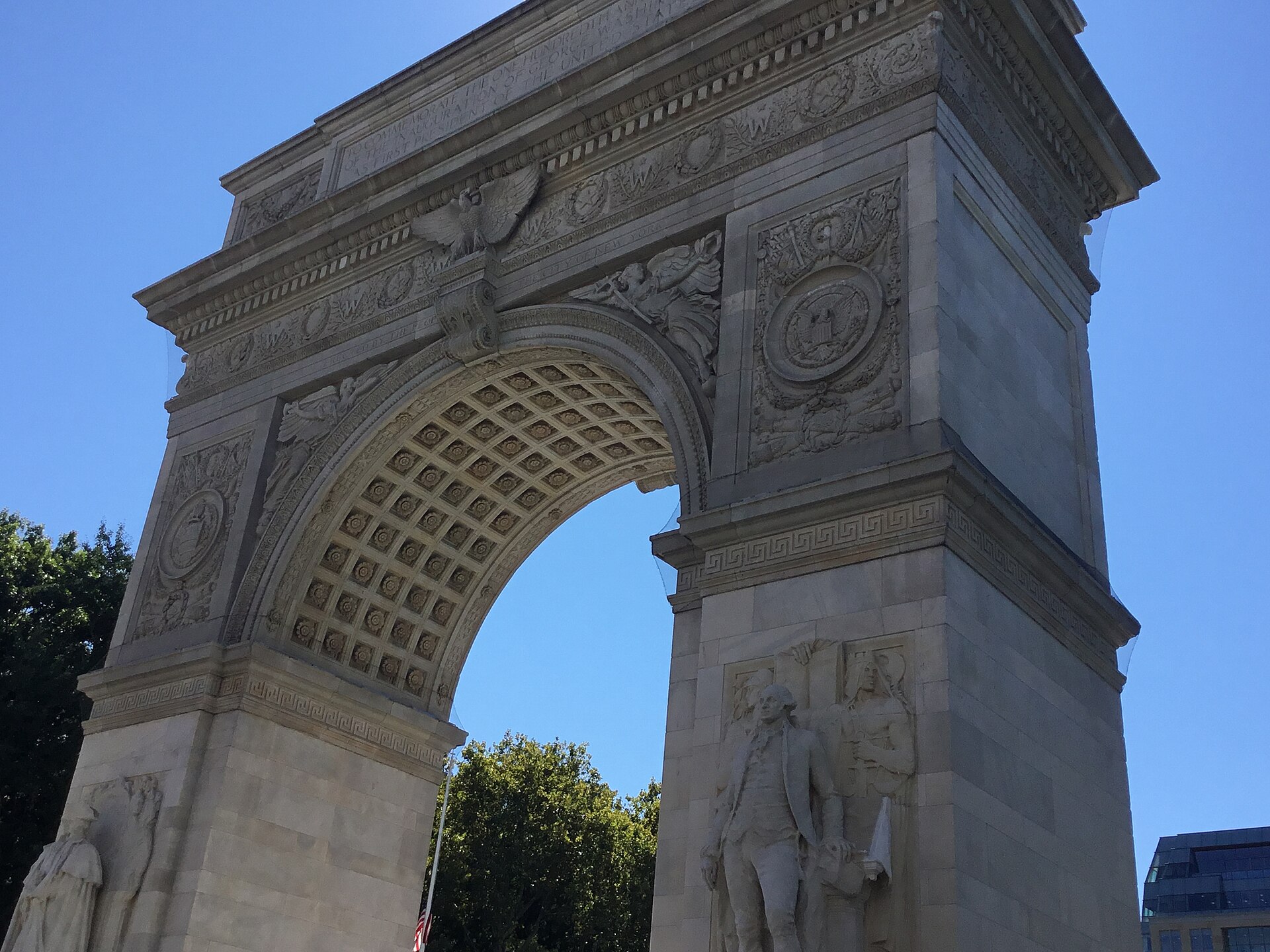
Hundreds of pro-Palestinian demonstrators rallied across New York City on Wednesday, the third anniversary of Hamas's October 7, 2023 attack on Israel, in a day of coordinated walkouts and marches that stretched from Washington Square Park to the gates of Columbia University and finally to Mayor Zohran Mamdani's office at City Hall. The NYC October 7 anniversary protests unfolded under heavy police presence, on a day when Jewish institutions across the city were also marking the anniversary under heightened security.
Why this matters
No city on earth absorbs October 7 the way New York does. It is home to the largest Jewish population outside Israel and one of the most organized pro-Palestinian activist movements in the United States — which means every anniversary is simultaneously a day of mourning and a day of confrontation, playing out on the same streets.
This year's anniversary carried extra weight for three reasons. First, it is Mamdani's first October 7 in office, and he arrived at it having just unveiled a $26 million "Strategy to Combat Antisemitism" — a plan that has already become a political football, praised by Jewish organizations and denounced by pro-Palestinian groups as capitulation. Second, the city's universities have spent two years rewriting the rules of protest after the encampment era made Columbia the national epicenter of campus conflict; Wednesday was the first real stress test of those new codes of conduct. Third, the calendar: with midterm elections four weeks away, every chant captured on a phone camera in Washington Square Park is destined to become someone's campaign ad.
What happened, hour by hour
12:30 p.m. — The NYU walkout at Washington Square Park
The day's first major action belonged to the NYU chapter of Students for Justice in Palestine, which staged a walkout in Washington Square Park as part of what organizers billed as a "Week of Rage" against the Israel-Gaza war. More than 100 people gathered in the park, many wearing keffiyehs and carrying banners demanding that NYU divest from Israel and shutter its Tel Aviv campus, according to the New York Post.
The chants were the day's most incendiary soundtrack: "Long live the intifada," "From the river to the sea, Palestine will be free," and "Glory to the martyrs and victory to the resistance. Intifada intifada!" One demonstrator wore a sign reading "F—k Israel" on her forehead, the Post reported.
The most closely watched speaker was Andrew Ross, a professor in NYU's American Studies program appearing with Faculty and Staff for Justice in Palestine. Ross called the day "very tragic," but then defended Hamas's October 7 invasion as a military tactic whose primary purpose, he said, was acquiring hostages to free Palestinians held in Israeli jails. He also claimed, without evidence, that the Israel Defense Forces killed some of their own citizens during the massacre — an assertion Israeli officials reject and that the Post described as a conspiracy theory. Nearly 1,200 people, including more than 800 civilians, were killed in the October 7, 2023 attack.
2 p.m. — Columbia's gates, behind barricades
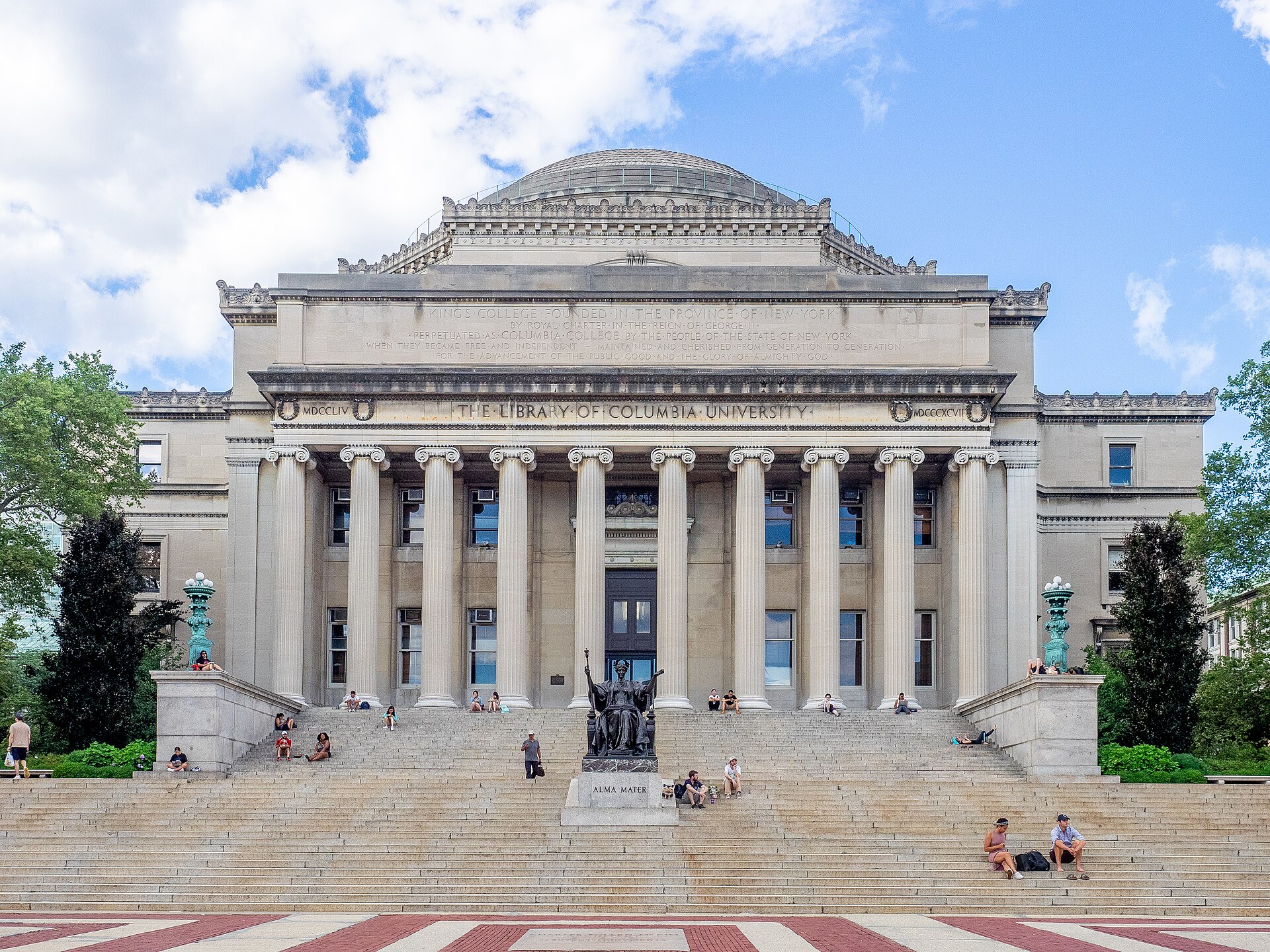
By early afternoon the focus shifted uptown to Columbia University, where demonstrators gathered at the campus gates as students filtered in and out under heavy security. Chants of "globalize the intifada" rang out through a megaphone, Fox News reported, while campus police, private security, and NYPD officers held metal barricades around the Morningside Heights campus.
The scene was freighted with history: Columbia's 2024 encampments made it the defining campus battleground of the Gaza protest era, and the university has spent the time since overhauling its protest rules. Interim President Katrina Armstrong emailed students and staff on Sunday saying administrators had "anticipated and [were] preparing for a period of uncertainty," and noted that a walkout coordinated with the activist group Within Our Lifetime was "not sanctioned." Columbia has previously said the group calling itself "The Columbia Intifada" is not officially associated with the university.
School walkouts were also planned beyond the universities, including an 11:30 a.m. walkout at Fort Hamilton High School in Brooklyn, the Post reported Tuesday.
4 p.m. — The march on City Hall
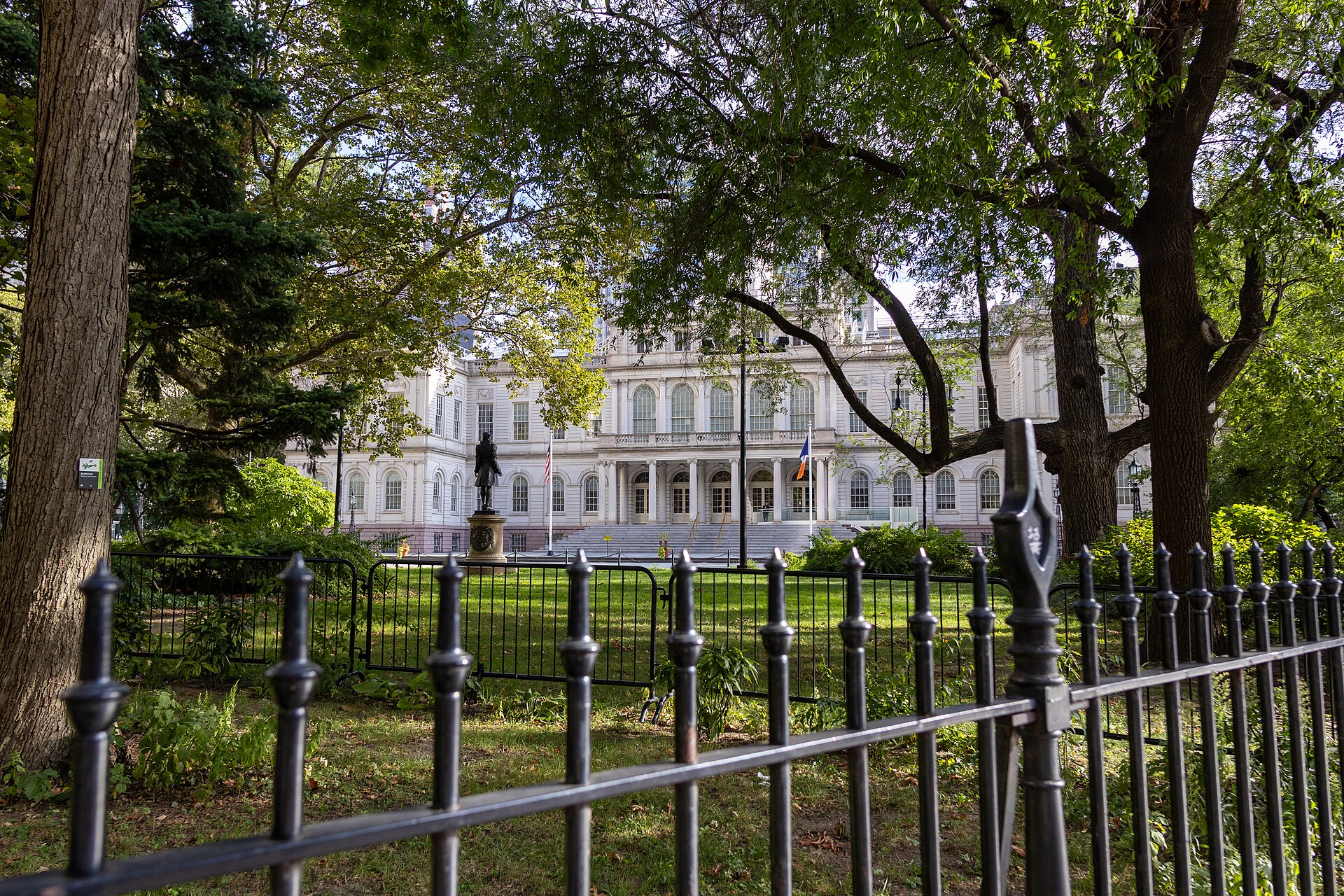
The day's final act was its most politically pointed. Demonstrators who had rallied at Columbia traveled downtown to Mayor Mamdani's office at City Hall, Palestinian flags flying through the Financial District, Fox News reported. A rally outside City Hall had been organized by the group Pal-Awda and endorsed by multiple organizations — explicitly framed as a rebuke of the mayor's new antisemitism strategy.
The pro-Palestinian group Within Our Lifetime had set the tone a day earlier, declaring that the mayor's "claim of solidarity with the Palestinian people is meaningless when it is followed by no action and capitulation to Zionist pressure," in response to the $26 million "Strategy to Combat Antisemitism" the administration announced. That single sentence captures the central tension of Mamdani's position: a mayor elected with significant pro-Palestinian support now trying to reassure a Jewish community marking its darkest anniversary in living memory.
Two cities, one anniversary
To understand why Wednesday crackled the way it did, you have to hold two realities at once.
For the demonstrators, October 7 is inseparable from what followed: a Gaza war that has killed tens of thousands, and a demand — divestment, an end to U.S. military support for Israel, the closure of programs like NYU's Tel Aviv campus — that they believe universities and City Hall have refused to hear. Their grievance with Mamdani is specific: they see the antisemitism strategy, with its millions in funding, as the new mayor choosing sides after campaigning as an ally.
For Jewish New Yorkers, the day is the third yahrzeit of the deadliest single day for Jews since the Holocaust — and the chants that demonstrators describe as political speech ("long live the intifada") land as something else entirely: a celebration of the violence being mourned. That is why NYPD Commissioner Jessica Tisch's pledge on Tuesday mattered as more than routine security theater. "On the eve of the third anniversary of October 7th, we renew our pledge to Jewish institutions that they will not be left to protect themselves without a strong partner in the NYPD," Tisch said — a promise aimed at a community that has spent three years asking whether the city takes its safety seriously.
Both things are true at once, and New York's tragedy — and distinction — is that it must hold them on the same sidewalks. A separate evening gathering told the quieter half of the story: the group Israelis for Peace planned a 7 p.m. gathering in Union Square for "quiet reflection and mourning" of those killed on October 7 and in "its bloody aftermath."
The numbers behind the day
The scale of Wednesday's actions was modest compared with the encampment era — hundreds across the city, just over a hundred at the Washington Square Park walkout — but the political geometry has shifted. In 2024, campus protests were a story about universities. In 2026, they are a story about a mayor.
The $26 million antisemitism strategy is the hinge: it is simultaneously the administration's answer to Jewish communal anxiety and the activists' Exhibit A of betrayal. And the calendar does the rest. National groups — Fox News reported that nonprofits in the Singham network helped organize Wednesday's actions and have larger rallies planned for this weekend — understand that anniversary-week footage has a long shelf life in an election year.
What happens next
The honest answer is that Wednesday was the prelude. The larger rallies planned for this weekend, organized by national nonprofit networks, will be the real measure of whether the anniversary week stays peaceful or escalates — and of how the NYPD's posture, praised in advance by Tisch, holds under pressure.
Three questions will define the aftermath. First, whether Columbia and NYU discipline students who joined unsanctioned walkouts — a decision that will either vindicate the universities' rewritten protest codes or reignite the free-speech wars of 2024. Second, whether Mamdani can sustain his straddle: reassuring Jewish New Yorkers while retaining the activist coalition that helped elect him. And third, whether the footage from Washington Square Park — the chants, the banners, the professor defending October 7 as tactics — migrates from social media into the midterm campaign bloodstream. In New York, October 7 is never just a date on the calendar. It is a mirror, and on Wednesday, the city spent all day looking into it.
Sources
- New York Post, October 7, 2026: "Anti-Israel protests break out across NYC, with Columbia, NYU students walking out on Oct. 7 anniversary"
- Fox News, October 7, 2026: "Anti-Israel groups rally across US on October 7 anniversary, chanting 'long live the intifada'"
- New York Post, October 6, 2026: NYPD Commissioner Tisch's pledge to Jewish New Yorkers
- JBizNews: anniversary commemoration and rally planning guide
- Related on Signal Post News: third-anniversary memorials in Israel; Israel's security posture around the anniversary; France's student protest wave this week