October 7 anniversary 2026
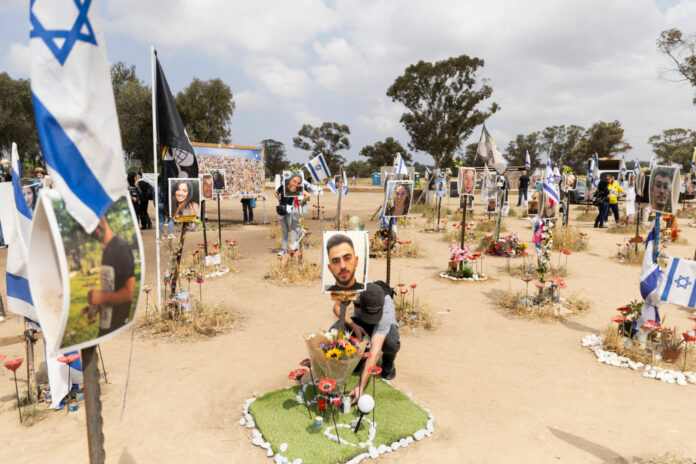
At 6:29 on the morning of October 7, 2026 — three years to the minute after Hamas-led gunmen smashed through the Gaza border fence — Israel stopped. Sirens held their silence, traffic froze, and more than 400 memorials, rallies, and moments of reflection unfolded across the country, from the Nova festival site in Re'im Forest to the military cemetery at Mount Herzl. This October 7 anniversary in 2026 is more than a day of mourning. With a general election just 20 days away, it has become a national reckoning — over who failed to stop the deadliest day in Israel's history, over whether the war that followed will ever end, and over what accountability looks like when the government and the bereaved cannot agree on what the day means.
Why this matters
Anniversaries are supposed to unite. This one has done the opposite. Three years after the October 7 attacks, Israel is marking the day along two parallel tracks that barely acknowledge each other: the state's official ceremonies of strength and continuity, and the grassroots movement of survivors and bereaved families demanding answers the state still refuses to give. That split is the real story of the third anniversary.
The anniversary arrives at the moment Israel is being asked to decide what the war was for. On October 27 — 20 days from now — voters go to the polls, and the question of who bears responsibility for the intelligence and military failures of October 7, 2023 has become one of the campaign's central fault lines. Prime Minister Benjamin Netanyahu's government has spent three years resisting a state commission of inquiry, the country's most powerful investigative mechanism. Survivors' organizations, led by the October Council and the Kumu ("Rise Up") movement, have spent the same three years demanding one. The anniversary has given that standoff its largest stage yet.
There is a second fault line, and it runs through Gaza. The war triggered by the attacks continues with near-daily Israeli strikes, while a U.S.-brokered ceasefire effort has been stalled for roughly a year. At Tuesday's cabinet meeting, Netanyahu foreshadowed more war, not less. So the day of mourning is shadowed by a live question: does the third anniversary mark the beginning of the war's end, or the normalization of a war without one?
What the October 27 election will decide about October 7 accountability
For voters, the inquiry question is now inseparable from the war question. Gadi Eisenkot — Netanyahu's main challenger, who lost his son in the Gaza fighting — has called the failures "a very deep failure" and accused the prime minister of dodging scrutiny. Former prime minister Naftali Bennett spent the anniversary week visiting border communities. Media reports have alleged that Israel received preliminary warnings from the UAE and Egypt before the 2023 attack — claims that remain contested and unproven, but whose political effect is real: twenty days out, accountability is not an abstract demand. It is a ballot question.
A nation stops at 6:29
Israel October 7 memorial ceremonies: how the day unfolded
The choreography of the day was precise. At 6:29 a.m. — the minute the 2023 assault began — a national moment of silence was observed. According to CNN (https://www.cnn.com/2026/10/06/world/october-seven-attack-anniversary-israel-intl?cid=external-feeds_iluminar_meta), ceremonies, memorials, and protests were held at more than 400 locations across Israel, a figure that captures both the scale of the loss and the decentralization of the grief: much of it organized by families and grassroots groups rather than the state.
At noon, bereaved families and grassroots organizations held a national minute of reflection, joined by hospitals, municipalities, universities, and businesses. On Wednesday evening, the national memorial in Tel Aviv — organized by the Kumu movement of survivors and victims' families — was expected to draw tens of thousands. It is hosted by former hostage Eli Sharabi and actress Shani Cohen, a pairing that reflects how the commemoration has become a cultural as well as a political event.
Official state memorials were held separately on Monday, October 5. Netanyahu laid a wreath at Mount Herzl, Israel's national military cemetery, and said: "Even three years after the outbreak of the war — when the State of Israel is stronger than ever — the terrible hours of the Simchat Torah attack remain seared within us."
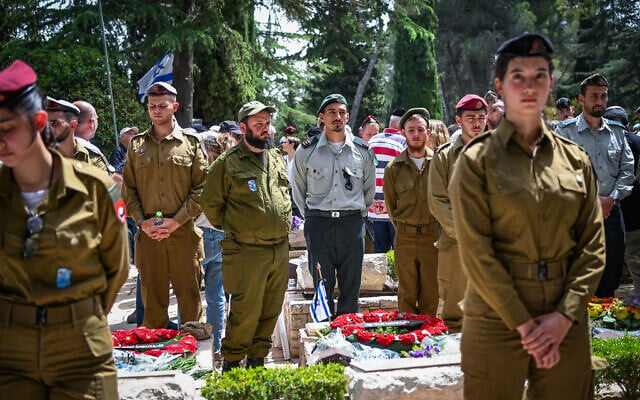
The gap between the official ceremonies and the grassroots ones — separate days, separate organizers, separate tones — is itself part of the story. At the Nova music festival site in Re'im Forest, where more than 370 people were murdered and 44 abducted in 2023, memorial events returned to the ground where the single largest massacre of the day took place.
Netanyahu's message: grief — and more war
The prime minister's anniversary-week message paired remembrance with resolve. At Tuesday's cabinet meeting he foreshadowed further military action, even as the U.S.-brokered ceasefire framework has sat stalled for about a year. His office says Israel has killed "4,000 out of 6,000" of the militants who infiltrated on October 7, 2023 — "We will reach all of them," he said — even as near-daily strikes continue in Gaza. The security posture around the anniversary has been severe: the IDF is on high alert for the anniversary (see our coverage: https://signalpostnews.com/idf-high-alert-october-7-anniversary-gaza-october-2026) and Israel closed the Gaza and West Bank crossings this week (https://signalpostnews.com/israel-closes-gaza-west-bank-crossings-october-7-anniversary-october-2026).
Read one way, this is a wartime leader refusing to let the enemy regroup. Read another, it is an incumbent campaigning: with the election 20 days away, the promise of continued war sits uneasily beside the families' demand for an accounting of how the war started. The tension is structural. A government that concedes it needs a commission of inquiry into its own failures is a government admitting vulnerability in the middle of a campaign. A government that promises more war is asking voters to judge it on the future, not the past. Netanyahu is choosing the second frame, and the anniversary gave him the largest possible stage to set it.
The accountability fight
Netanyahu, the state commission of inquiry, and three years of refusal
The demand is specific: a state commission of inquiry — Israel's most powerful investigative mechanism, with subpoena powers and a mandate no government can easily ignore. Survivors' groups, including the October Council and the Kumu movement, have pressed for one since the first weeks after the attack. For three years, Netanyahu has resisted.
The voices behind the demand were the day's most quoted. Shir Mathias, whose parents were killed at Kibbutz Holit, said: "Everyone must go home." Einav Zangauker, the mother of freed hostage Matan Zangauker, described "three years of a basic demand for accountability." Their argument is not only about the past; it is about whether the institutions that failed have been fixed.
Eisenkot, Bennett, and the warnings that were allegedly missed
The election has weaponized the question. Gadi Eisenkot, the main challenger to Netanyahu and himself a bereaved father — his son was killed fighting in Gaza — has called the October 7 failures "a very deep failure" and accused the prime minister of dodging scrutiny. Naftali Bennett has been visiting the border communities, positioning himself as the candidate of the periphery the state failed to protect.
Media reports alleging that Israel received preliminary warnings from the United Arab Emirates and Egypt before the attack have added fuel — and remain contested. The government has not conceded that any actionable warning was ignored. What is not contested is the pattern: three years of refusal, and an election in which the refusal itself is now on the ballot.
Gaza's toll, and the other side of the day
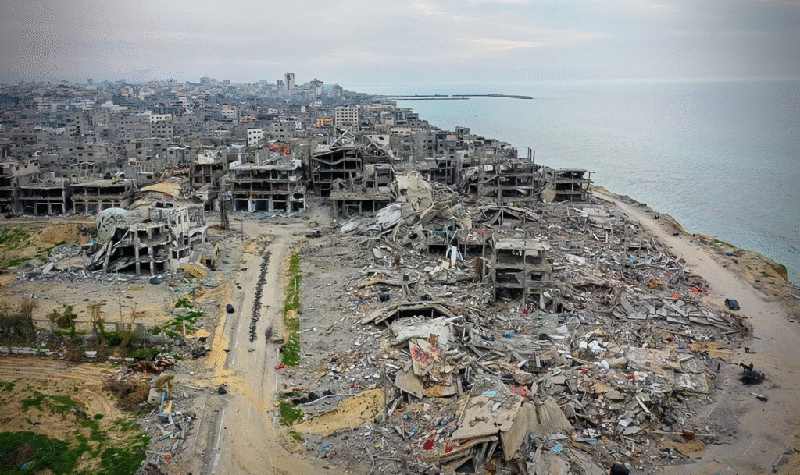
The same day that Israel mourned, Gaza's catastrophe continued to be counted. More than 74,000 Palestinians have been killed since the war began, according to the Palestinian Ministry of Health, as reported by CNN; AAP (https://aapnews.aap.com.au/news/day-of-mourning-as-australia-remembers-october-7-attack) cites Gaza health officials reporting 74,000 killed and 175,000 wounded. UN agencies put the toll at more than 70,000 killed — including 20,000 children — with over 100,000 wounded and nearly all of Gaza's 2.1 million residents displaced (https://news.un.org/en/story/2026/10/1168530). These figures are disputed in their details and cannot be independently verified in full; they are reported here as attributed by their sources, which is the only responsible way to handle wartime casualty counts.
The Guterres October 7 statement: "Nothing can justify these atrocities"
UN Secretary-General António Guterres marked the anniversary by condemning the Hamas attack — "Nothing can justify these atrocities" — while recalling the "untold suffering" of Palestinians in the war that followed. "Civilians continue to endure intolerable conditions," he said. The dual formulation, holding both the attack and its aftermath in the same statement, mirrors the day's global reception.
In Australia, the day was marked on both sides of the divide: Israel's ambassador, Hillel Newman, spoke at a commemoration at Bondi, while about 100 pro-Palestine protesters held an all-day silent sit-in at Victoria's state library calling for a permanent ceasefire, according to AAP. Neither side of that split would accept the other's framing — which is precisely why both belong in the record of the day.
The numbers in context
October 7 three years on: the Gaza death toll and the scale of loss
Put the figures side by side and the asymmetry of the war is stark. More than 1,200 people — children, women, the elderly, entire families — were killed on October 7, 2023, the deadliest single day in Israel's history. Hamas-led gunmen took 251 hostages into Gaza. At the Nova festival alone: more than 370 murdered, 44 abducted.
The war that followed has killed, by the Gaza health ministry's count, more than 74,000 Palestinians — a ratio of roughly 60 to 1 against the October 7 dead. UN agencies count 20,000 of the dead as children. Nearly the entire population of 2.1 million has been displaced at least once. The numbers do not speak for themselves — they are marshaled by both sides for opposite arguments — but they define the scale of what the anniversary is really marking: not one day of horror, but three years of it, distributed with terrible unevenness.
A note on method: wartime death tolls are inherently contested. Israeli officials dispute aspects of the Gaza figures; Palestinian and UN agencies stand by them. Where this article cites a toll, it attributes it. The one figure no party disputes is the starting point: October 7, 2023 — more than 1,200 dead, 251 taken.
What happens next
Three scenarios now compete. In the first, the October 27 election produces a government willing to establish the state commission of inquiry — the survivors' demand becomes policy, and the war's origins get the forensic examination they have been denied. In the second, Netanyahu survives the election and the inquiry remains blocked, while the promised continuation of the war grinds on under a stalled ceasefire framework. In the third, the war itself forces the question: if the fighting does not end, the inquiry's scope keeps growing, and accountability recedes further with every month of combat.
The ceasefire outlook is the murkiest variable. The U.S.-brokered framework has been stalled for about a year; Netanyahu's anniversary-week rhetoric pointed toward escalation, not settlement. Near-daily strikes in Gaza suggest the status quo has a momentum of its own. Anyone predicting an imminent end to the war is betting against the observable trend.
The most likely near-term outcome is the least dramatic: the election decides the inquiry, and the inquiry — or its continued absence — decides how Israel writes the history of its worst day. Anniversaries end. Reckonings take longer.
Conclusion
Three years after 6:29 a.m., Israel stopped again to remember — and then, almost immediately, resumed arguing about what the remembering is for. That is not a failure of the day. It is the day doing its work: forcing a country 20 days from an election to look at the distance between its grief and its government, its dead and its displaced, its demand for answers and its fear of them. The memorials will be taken down. The questions will not.