October 7 anniversary 2026
October 7 anniversary 2026IDF Gaza high alertHamas October 7 third anniversaryGaza ceasefire October 2026Izz al-Din al-Beik killedIsrael Gaza strikesGaza death toll 74016October 7 warnings NetanyahuIDF Southern Command alertAmmar Sharafi killed GazaGaza ceasefire violations

The October 7 anniversary 2026 arrives with Israel's military again at elevated readiness and Gaza still under recurring strike operations. IDF Chief of Staff Eyal Zamir canceled a planned U.S. visit as readiness rose “across all sectors,” according to reporting carried by United with Israel, while the Home Front Command's Gaza Division spokesperson separately told Gaza-envelope residents to expect blasts from operations around Sdot Negev, Sha'ar HaNegev and Sderot. Those are not proof that an anniversary attack is imminent. They are evidence that commanders are unwilling to treat the date as routine.
The distinction matters. Three years after Hamas-led fighters killed about 1,200 people in southern Israel and took 251 hostages, the state that vowed to destroy Hamas is still planning around the possibility that the organization can exploit symbolism, surprise and the border's physical geography. The military has badly degraded Hamas and killed senior commanders. Yet a force does not go onto heightened readiness against an enemy it considers operationally irrelevant.
Why this matters: IDF Gaza high alert is a measure of the unfinished war
An alert is a precaution, not an intelligence conclusion. But precautions reveal what a military considers plausible. The IDF Gaza high alert therefore exposes the gap between a strategic promise — removing Hamas as a military threat — and an operational reality in which Hamas is still treated as capable of coordinating rocket fire, an infiltration attempt or some smaller spectacle timed for maximum psychological effect.
That does not mean Hamas has the capacity it possessed on October 7, 2023. It means capacity is not binary. An organization can lose leaders, territory, weapons and freedom of movement while retaining cells, communications, initiative and the ability to stage a lethal surprise. The anniversary's symbolic value lowers the threshold for what Hamas would count as success: it would not need to reproduce 2023. A single penetrated position, volley or filmed attack could be presented as survival.
The latest public signals also require a correction. A line attributed online to Maj. Gen. Yaron Finkelman — “We are on heightened alert for the coming days” — comes from reporting around the first anniversary in October 2024, not a new October 2026 order. Finkelman announced his resignation as Southern Command chief in January 2025, and Maj. Gen. Yaniv Asor succeeded him that March. The current evidence is Zamir's canceled trip and the Home Front Command notice; recycling a two-year-old quote as new would distort the record.
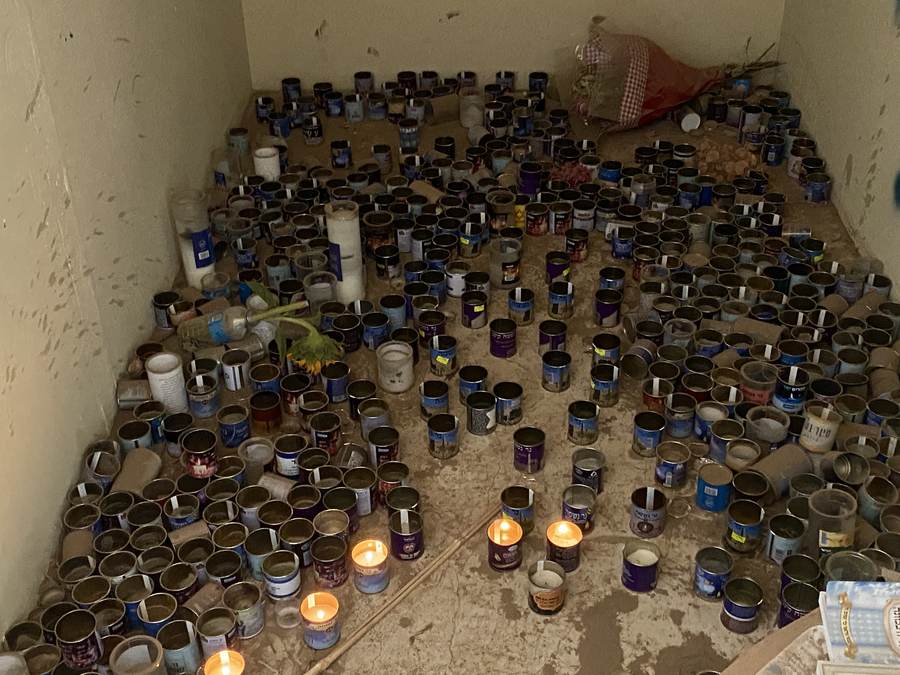
Hamas October 7 third anniversary: attrition without a political end state
Israel's decapitation campaign has continued through the ceasefire. On September 29, an Israeli strike killed Izz al-Din al-Beik, the head of Hamas's armed wing in northern Gaza. Hamas confirmed his death and said he helped plan the 2023 cross-border attack; Reuters reported that the dawn strike hit an apartment in Gaza City's Nasr neighborhood and that a second person later died of wounds. Israeli sources said al-Beik had overseen the detention of Israeli captives during the war.
On October 1, the IDF announced two more killings. It said an aerial strike in the Gaza City area killed Hamas platoon commander Ammar Mahmoud Sharafi, and a strike in southern Gaza killed Muhammad Abd al-Aziz Muhammad Nagar. The military described Nagar as a Hamas military-wing operative who infiltrated Israel on October 7 and said he was later presented as a journalist and radio presenter without the alleged affiliation. Those are IDF claims; the underlying intelligence has not been independently published.
These operations show the logic of leadership attrition: remove planners and local commanders faster than Hamas can replace them. Yet the Hamas October 7 third anniversary also shows attrition's limit. Killing leaders can disrupt networks; it cannot, by itself, create a successor government, produce an agreed security arrangement or answer who controls Gaza when Israeli forces eventually withdraw.
Gaza ceasefire October 2026: a truce that never became a settlement
The U.S.-brokered ceasefire took effect on October 10, 2025. Nearly a year later, negotiators still have not agreed on the reciprocal core: Hamas disarmament and Israeli withdrawal. Israeli forces control more than half of Gaza, no new Palestinian government has arrived and reconstruction has not begun, according to AP reporting. Prime Minister Benjamin Netanyahu says Israel will not withdraw until Hamas disarms. Hamas denies rearming and accuses Israel of undermining the deal; Israel says continued Hamas preparations amount to Gaza ceasefire violations.
Meanwhile, Israel Gaza strikes continue. On September 30, medics told Reuters that an airstrike on a vehicle in Tel Al-Hawa killed four people and wounded 14, while an earlier apartment strike killed a woman. The IDF did not immediately comment on those two reported attacks. The pattern leaves the ceasefire in a gray zone: the front is quieter than full-scale war, but violence remains regular enough that the word “ceasefire” can obscure as much as it explains.
The toll since the truce is itself contested by timing and source. Reuters reported at least 1,400 Palestinians killed since the ceasefire, citing Gaza health officials, and said Israel reported four soldiers killed. An AP report days earlier gave 1,145 Palestinians and seven Israeli soldiers. Rather than force those figures into a false single total, the responsible reading is that the reporting snapshots differ — but both show that a ceasefire meant to stop killing has not stopped it.
What the numbers mean: Gaza death toll 74016 versus 1,200
Gaza's Health Ministry reported 74,016 Palestinians killed and 175,068 wounded since the war began, according to AP. Hamas-led militants killed about 1,200 people in southern Israel on October 7, 2023 and took 251 hostages, according to Reuters and AP. These numbers describe different populations, authorities and methods; they are not a moral equation. They are the scale of loss that any serious account of the war has to hold at the same time.
The 1,200 explain the depth of Israeli fear, rage and the demand that another cross-border assault become impossible. The 74,016 explain why Gaza's civilians experience every continued strike and delayed reconstruction as evidence that the war has no endpoint. Turning either number into a rebuttal of the other is not analysis. The question is whether the policies pursued in their names make the next mass casualty less likely or merely add new losses to the ledger.
Three years is also long enough to judge the prewar doctrine often called “the conception”: the belief that Hamas could be deterred, contained and managed. October 7 shattered it. But endless military pressure can harden into a new conception of its own — that tactical dominance must eventually produce political order. The stalled ceasefire suggests otherwise. Military force can shape a bargaining table; it cannot substitute for one forever.

October 7 warnings, Netanyahu and the politics of accountability
The anniversary lands less than a month before Israel's October 27 election and amid renewed argument over warnings before the 2023 attack. The Wall Street Journal reported, in an account summarized by Matzav, that Egyptian intelligence chief Abbas Kamel raised concerns during a September 2023 visit and in later calls, including roughly 48 hours before the attack; the same report said UAE President Mohamed bin Zayed also warned Netanyahu in September. Netanyahu denied receiving such warnings and instructed attorneys to sue, Matzav reported. The reported warnings lacked a date, targets and scale — a critical limit.
That is the pressure behind the phrase October 7 warnings Netanyahu: not a proven claim that officials knew the attack plan, but an unresolved dispute over whether strategic alarms were dismissed because they did not fit prevailing assumptions. Critics argue that the government emphasizes present danger to avoid responsibility for past failure. Netanyahu's supporters answer that hindsight converts vague regional concern into precision it never possessed.
Escalation can benefit both leaderships politically. Netanyahu's government can emphasize vigilance and battlefield initiative as proof that it learned from 2023. Hamas can use any anniversary action — or simply Israel's visible preparation for one — as evidence that it remains relevant. The losers are civilians in Gaza under continuing strikes, Israeli border communities asked to live inside a permanent warning cycle, and a ceasefire whose credibility erodes with every death and every unfulfilled clause.
IDF Southern Command alert: three scenarios for anniversary week
First, symbolic rocket fire or a localized attack. This is the highest-impact option for Hamas if it retains a launch team or cell capable of acting. Militarily limited action could still dominate the anniversary narrative. Israel's preparations are designed to deny that propaganda win.
Second, quiet under deterrence. Hamas may decide that a visible attempt would expose remaining networks and invite larger retaliation. No attack would not prove incapacity; it could reflect conservation. Israel would call the quiet deterrence, while Hamas could claim survival.
Third, escalation triggered by the strike cycle rather than the date. A targeted killing, disputed movement near the control line or civilian casualties could set off retaliation that neither side planned as an anniversary operation. In a ceasefire without agreed implementation machinery, tactical events can become strategy by accident.
The practical test is not whether the anniversary passes quietly. It is what follows. If the disarmament-for-withdrawal deadlock remains intact, Israel enters a fourth year policing a threat it says must be destroyed, Hamas remains able to claim that mere survival is victory, and Gaza's civilians remain without reconstruction or accountable government. An alert can get a country through a week. It cannot get two peoples out of a war.
Sources
- United with Israel, September 30, 2026 — Eyal Zamir cancels a U.S. visit as the IDF raises readiness across sectors.
- JFeed, October 1, 2026 — Home Front Command warning about operation-related explosions around Gaza-envelope communities.
- JFeed, October 2024 — the original first-anniversary report carrying Finkelman's heightened-alert quote.
- Matzav, January 2025 — Finkelman's resignation over the October 7 failure.
- Matzav, March 2025 — Yaniv Asor takes command of Southern Command.
- Reuters via The Business Standard, September 29, 2026 — al-Beik's death and the wider command-targeting campaign.
- Israel Realtime, October 1, 2026 and United with Israel — IDF statements on Sharafi and Nagar.
- Reuters, September 30, 2026 — Tel Al-Hawa and apartment strikes, ceasefire deadlock and competing allegations.
- Associated Press via AAP, September 2026 — Gaza toll, ceasefire status and post-truce casualty figures.
- Matzav summary of The Wall Street Journal, October 2026 — reported Egyptian and Emirati warnings and Netanyahu's denial.