The final Nobel of 2026 goes to Robert Hall of Stanford and Michael Woodford of Columbia, whose forward-looking models reshaped how central banks fight inflation and recessions — and now sit inside nearly every rate decision on earth.
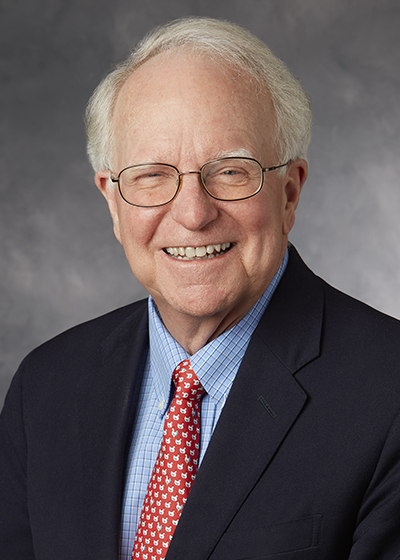
The Nobel Prize economics 2026 has gone to two American professors whose work quietly sits inside almost every modern central-bank decision: Robert E. Hall of Stanford University and Michael Woodford of Columbia University. The Royal Swedish Academy of Sciences announced the award in Stockholm on Monday, October 12, honouring the pair for building microeconomic foundations for macroeconomic stabilisation — in plain terms, for showing how governments and central banks can soften recessions, inflation spikes and sudden shocks without making them worse.
Hall and Woodford will share 12 million Swedish kronor, about $1.2 million, receiving 6 million kronor each. The prize, formally the Sveriges Riksbank Prize in Economic Sciences in Memory of Alfred Nobel, is the last Nobel announced in 2026, closing a week that also honoured medicine, physics, chemistry, literature and peace laureates.
What Hall and Woodford actually did
Older stabilisation models treated the economy as a set of big dials — inflation, output, consumption — linked by statistical relationships from the past. Hall and Woodford started one level down, with people. Households decide how much to spend today based not only on today's pay cheque but on what they expect to earn next year. Businesses set prices based on what they expect costs and demand to look like in the months ahead. Because everyone is looking forward, expectations themselves become an economic force.
That insight changed the toolkit. If a central bank clearly explains where it intends interest rates to go, or a government credibly commits to support in a downturn, those announcements can shift spending and pricing decisions before any money moves. Communication, in their models, is not decoration on policy — it is part of the policy. Committee chair John Hassler said their work provides the stable theoretical foundation for models now used by central banks and governments around the world, and leaves policymakers better equipped for shocks such as energy crises or sudden changes in household consumption. Woodford, reached by phone in New York, described the award as a tremendous honour and a surprise.

Robert Hall Nobel Prize: the household side of a recession
Hall, born in Palo Alto, California in 1943, focused much of his career on demand, employment and how households make purchasing decisions under uncertainty. His work helped explain why consumption does not simply collapse in line with income in a downturn, and why the design and timing of support measures matter as much as their size.
Michael Woodford Nobel Prize: expectations and interest rates
Woodford, born in Chicopee, Massachusetts in 1955, became one of the central architects of the modern framework for monetary policy, synthesising how interest-rate rules, price-setting and expectations interact. Central bankers who talk about anchoring inflation expectations are, knowingly or not, speaking his language.
Why this matters
This award lands in a year when stabilisation is not an academic question. Households have lived through a pandemic shutdown, a supply-shock inflation surge and repeated energy-price spikes — including the current diesel and fuel turmoil that has governments openly debating emergency measures. The committee explicitly credited the laureates' models as extremely helpful in dealing with recent downturns. When the next shock hits, the first response in Washington, Frankfurt and Tokyo will be run through models that descend directly from Hall and Woodford's work.
It also matters who wins and who does not. With Hall and Woodford, the total number of economics laureates reaches 101 — and only three have ever been women, most recently Claudia Goldin in 2023. The United States again supplies both winners, continuing the field's long American dominance and renewing the standing debate about how narrow the pipeline into elite economics remains.
Track it live: live markets and central-bank data on our Markets Tracker.
Context: from Keynes to stagflation to a rebuild
After the Great Depression, John Maynard Keynes persuaded policymakers that governments could and should lean against the cycle — spend more and cut taxes in a slump, cool demand in a boom. That recipe worked until the 1970s, when oil shocks produced stagflation: high inflation and high unemployment at the same time, a combination the simple recipe was not built to handle. Critics argued government stabilisation was doomed to fail because people would anticipate it and neutralise it.
Hall and Woodford's generation answered not by abandoning stabilisation but by rebuilding it. By modelling the forward-looking decisions of households and firms explicitly, they showed when policy can work, why credibility and clear communication amplify it, and why a central bank that loses control of expectations loses control of inflation itself. Economists call the result the New Keynesian framework; central banks just call it the model on the desk.
The numbers in context
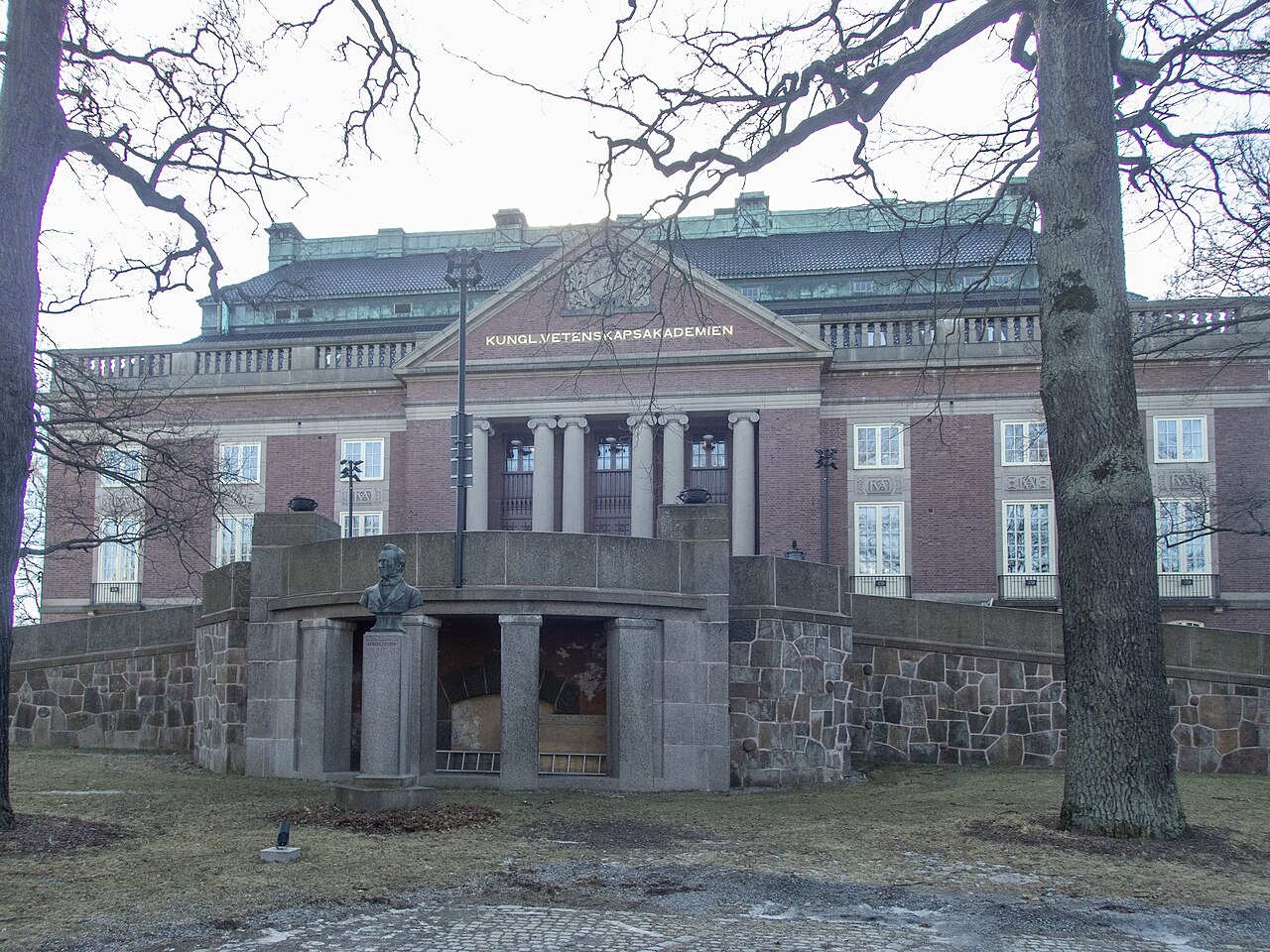
The economics prize is the outlier among the Nobels: it was not in Alfred Nobel's 1895 will. Sweden's central bank created it in 1968, and it was first awarded in 1969 — yet it is presented alongside the original five and carries the same ceremony in December. This year's 12 million kronor is shared equally. For comparison, last year's winners — Joel Mokyr, Philippe Aghion and Peter Howitt — were honoured for work on creative destruction and long-run growth; the 2026 choice swings the spotlight from how economies grow over decades to how they survive the next bad year.
Critics and limits
Balance requires the caveats the committee itself would recognise. No model in this tradition predicted the timing of the financial crisis, the pandemic or the latest energy shock, and critics argue that elegant expectations-based models can understate financial fragility, inequality and the messy politics of fiscal support. Expectations are powerful but hard to measure, and forward guidance only works if the public believes it — a condition that fails precisely when trust in institutions is lowest. Supporters answer that the alternative is not no model, but worse models: the Hall–Woodford framework at least forces policymakers to state how they think people will react, and to be judged on it.
What happens next
Hall and Woodford will receive their medals at the Nobel ceremony in Stockholm in December and deliver the traditional prize lectures. The practical afterlife of the award is longer: every inflation report, rate decision and emergency energy measure in the coming year will be argued over using the language this prize just honoured. If a downturn arrives in 2027, watch the expectations channel first — whether households and businesses believe the rescue plan may matter as much as the plan itself. That is the laureates' real legacy, and why a technical-sounding citation about stabilisation may be the most consequential Nobel of the year.
Sources
- Reuters — Americans Hall and Woodford win 2026 Nobel economics prize
- CNN — Two Americans win Nobel prize for models to tackle economic downturns
- Associated Press — 2 American economists win Nobel Prize for work on economic shocks
- NPR — Two Americans win Nobel Prize in Economics for work on boom-bust cycles
- NobelPrize.org — official @NobelPrize announcement, October 12, 2026