No Kings protests today: the coalition behind three previous nationwide No Kings days held more than 3,000 "Vote Early" events on Saturday — marches to polling places and ballot drop boxes, registration checks, voting-plan help and poll-watcher recruitment — 17 days before the November 3 midterm elections, in a shift from protest to ballot mechanics that organisers call a strategic move and the White House calls proof there is no king.
Done Sending a Message: The No Kings Marches Ended at Ballot Boxes on Saturday
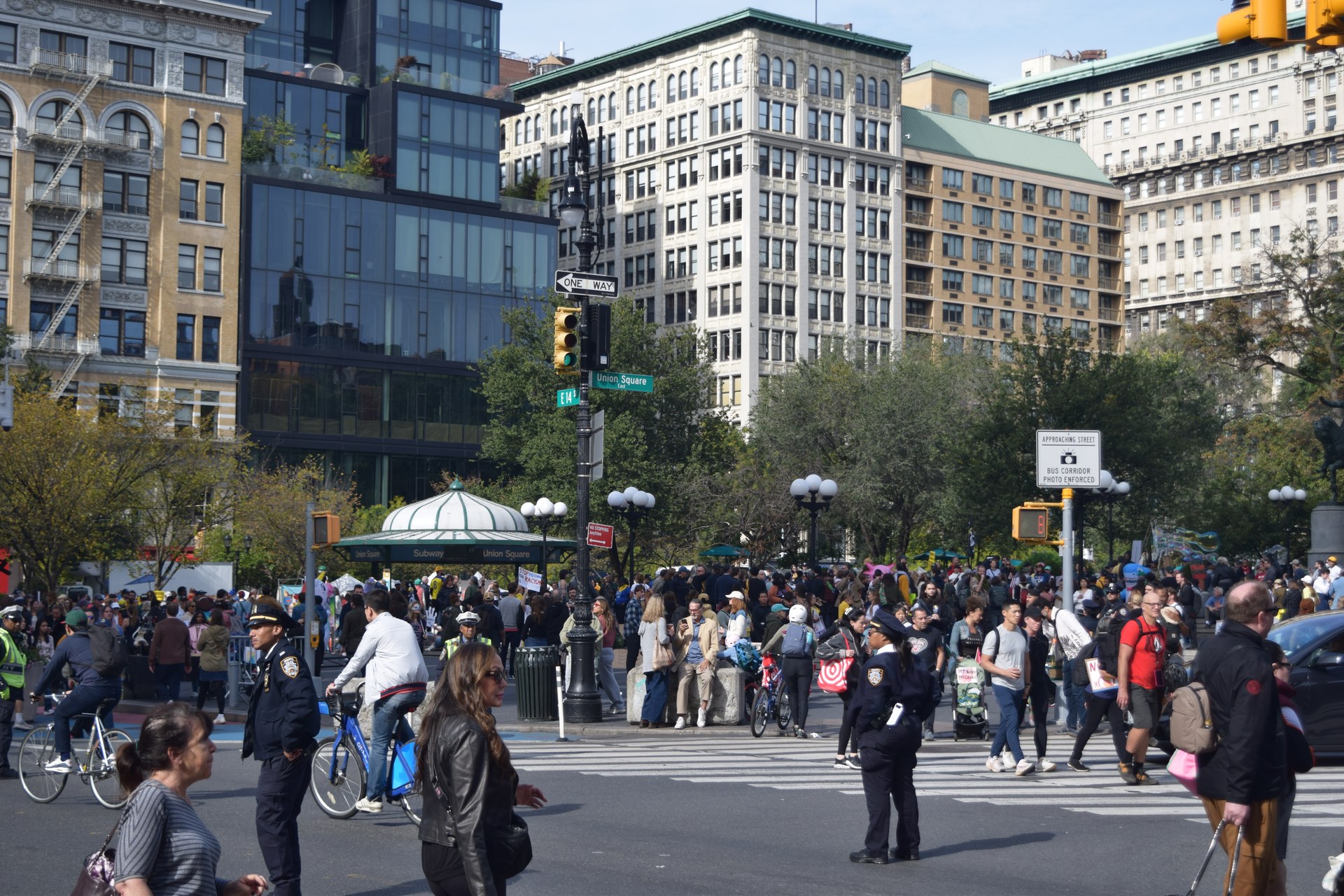
The No Kings movement changed tactics on Saturday. Instead of another day of pure protest, the coalition behind three previous nationwide No Kings days held more than 3,000 events under a new name — "No Kings: Vote Early" — built not around speeches against President Donald Trump, but around the mechanics of voting itself: marches to polling places and ballot drop boxes, registration checks, help making a voting plan, and recruitment of poll watchers, 17 days before the November 3 midterm elections.
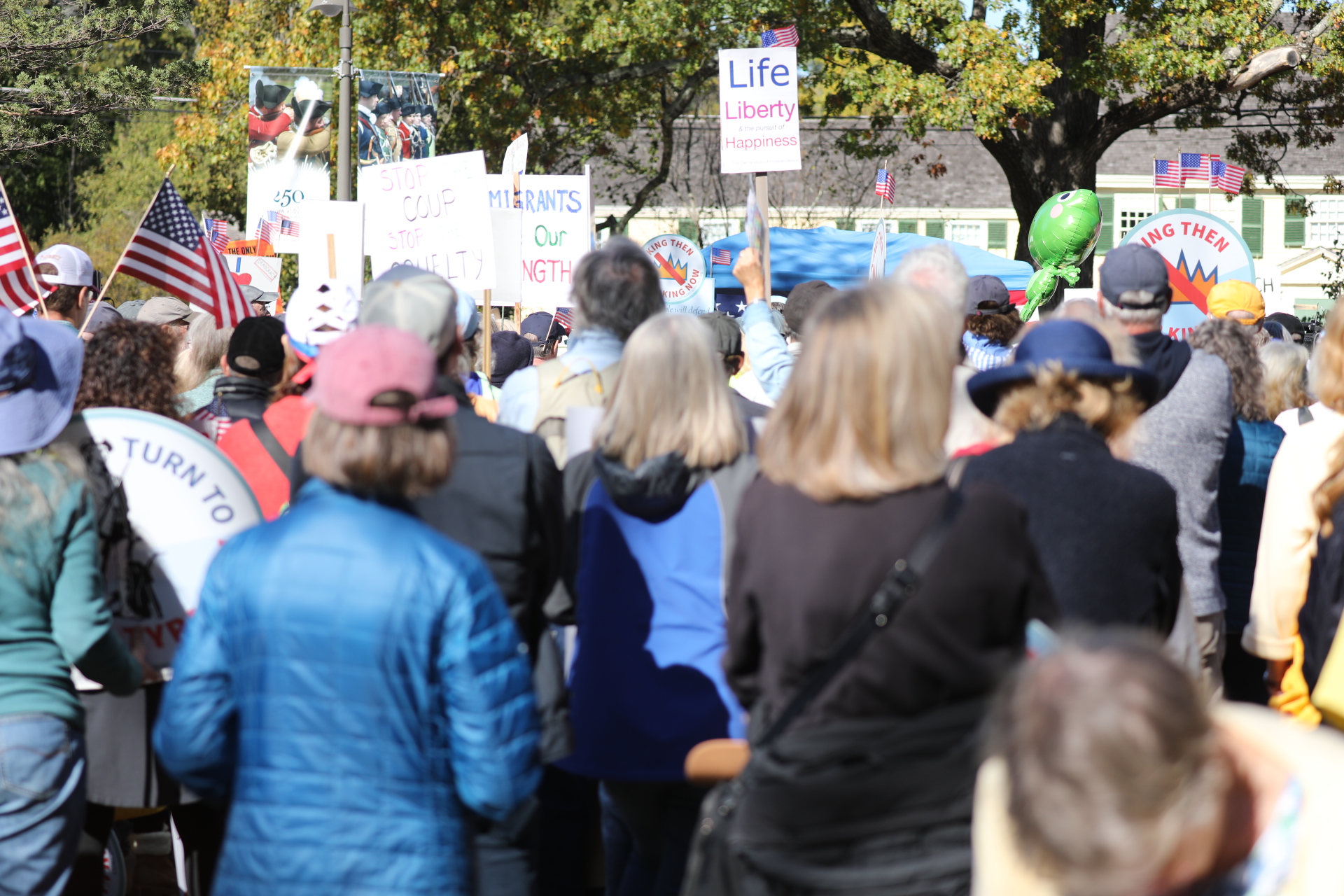
The format varied by town, as it has throughout the movement's history. In Indianapolis, two groups planned to march to the governor's residence. In downtown Phoenix, protesters planned to march to the Maricopa County Tabulation and Election Center to drop off their ballots. Atlanta's Black Voters Matter hosted a party with food trucks and music before moving as a group to a polling location. Michigan had a Halloween-themed event and another asking participants to bring signs and American flags; in Ferndale, Michigan, and Eagle County, Colorado, participants in superhero costumes planned decorated bike and wagon rides to vote; in Chester, Pennsylvania, there was a tailgate party at a ballot drop box. In Golden, Colorado, a "Paws to the Polls" event invited people to bring their dogs on a march, Everett, Washington planned a concert for democracy, and in Frisco, Texas, a local group built its gathering around voting as a superpower, preparing 500 goodie bags with QR codes linking to voting information.
Public Citizen co-president Lisa Gilbert told USA Today the day was "a strategic move and a critical one to help people exercise the most tangible aspect of their power that counters all the abuses we've been seeing, which is voting." "It's so critical that people vote, that they vote early, that we show in a landslide that this is not an acceptable way to govern," she said.
A movement that says it is done sending a message
"The first three No Kings were designed to send a message," Ezra Levin, co-founder of Indivisible, one of the major organisations in the coalition, told NPR. "We're done sending a message." Levin set out two aims for Saturday. The first is to help produce what he hopes will be the largest midterm early-voting turnout in the country's history. The second is to recruit and train poll watchers — an effort he linked to the failed SAVE America Act, which would have required proof of citizenship when registering to vote, to fears that immigration officers could appear at polling places, and to attempts to restrict voting by mail.
"We set No Kings for October because we believed Trump when he signaled again and again and again that he intended to sabotage the election," Levin told USA Today. "How do you prevent the sabotage of an election using the tools available to you? Well, you vote like hell."
Organisers present the day as a nonpartisan push to help people check their registration, make a voting plan and understand their rights, and NPR reported that event rules include no political endorsements and no invitations for current candidates to speak. The coalition spans hundreds of partner organisations, including the American Civil Liberties Union and Black Voters Matter. Readers should hold two descriptions at once, because both are documented: the day's stated purpose is nonpartisan voter participation, and the coalition itself is a broadly progressive network that formed in opposition to Trump's presidency and takes its name from organisers' belief that Trump acts like a monarch rather than a democratically elected leader — a characterisation Trump has repeatedly rejected.
Why this matters
The shift from marching to ballot mechanics is the real story of Saturday, and it cuts in both directions. A protest measures sentiment; an early ballot measures organisation. Votes cast early are banked: they cannot be lost to an Election Day queue, bad weather, a changed work shift, or a late court ruling about polling hours. That is why the argument about early voting has quietly converged even as the argument about its rules has not. Trump himself, in a pre-recorded Truth Social video posted on a recent Saturday morning, urged his own supporters to use "every appropriate tool" — "Vote early. Vote by mail. Or vote in person on Election Day" — a striking reversal for a politician who built a movement on claims that mail ballots are corrupt. On Saturday the two camps were, in effect, running the same play with opposite jerseys: No Kings events pushing early turnout in the morning, and Trump scheduled to headline a Republican midterm rally at Northern Kentucky University in Highland Heights in the afternoon after starting his day at Mar-a-Lago.
There is a second, defensive logic organisers state openly. A historically large early vote, Gilbert and Levin both argue in different words, is harder to dispute after the fact: turnout on a scale that is visible in county-by-county early-voting tallies weeks before Election Day makes a fraud narrative harder to sustain than a close count assembled on one night. Critics answer that the same machinery — poll watchers, citizenship challenges, mail-ballot litigation — is itself a form of pressure on the count, and both claims will now be tested in public, in the daily early-voting numbers, rather than in competing statements.
The risk for the movement is equally plain. If Saturday's energy produces an ordinary early-voting curve, opponents will say the largest protest network in the country could not convert crowds into ballots. If the curve bends visibly upward in the states where events were densest, Saturday will be remembered as the day the protest era of Trump's second term gave way to an electoral one.
How we got here
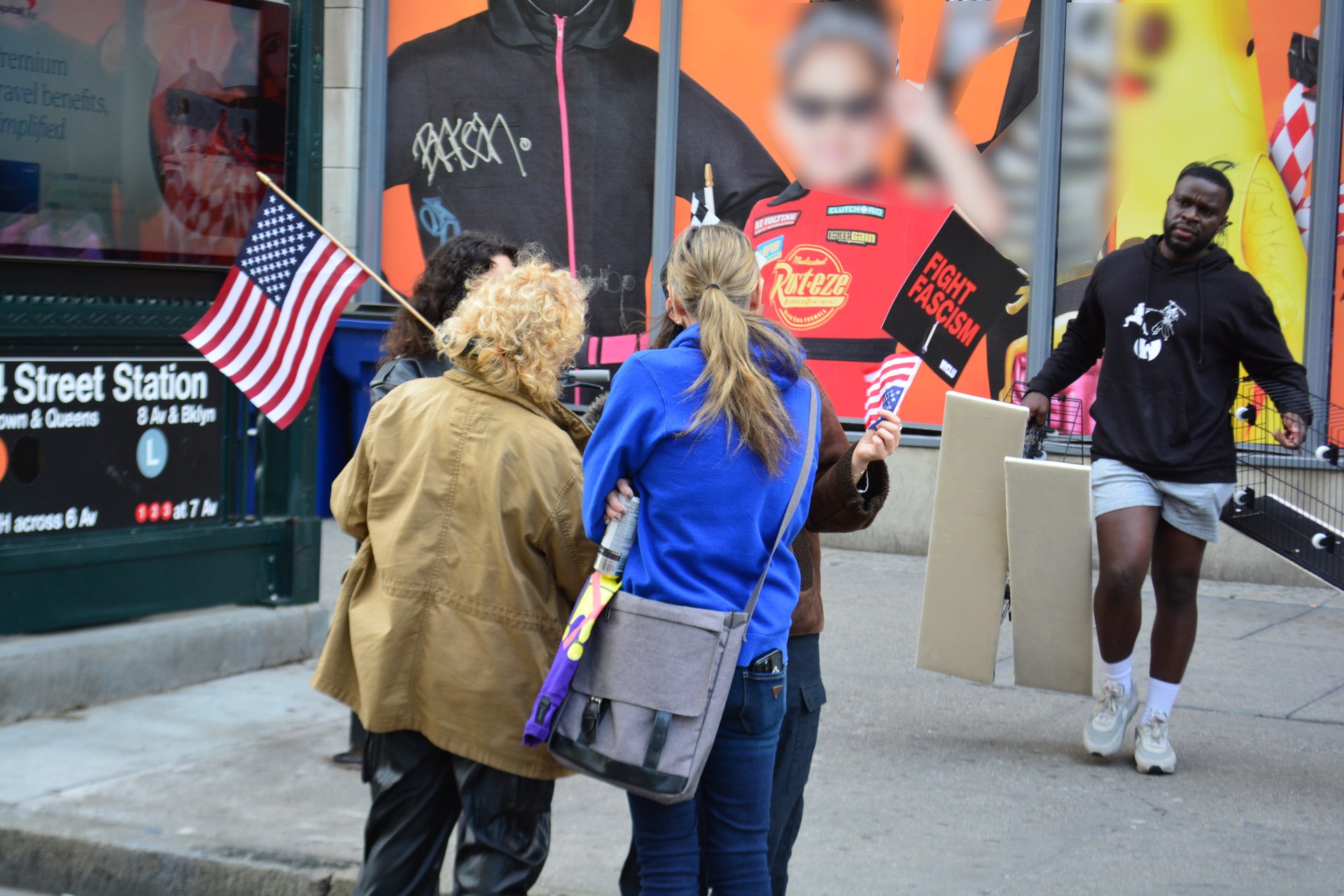
No Kings began in June 2025, when protests were timed to the U.S. Army's 250th anniversary parade, which fell on Trump's birthday. Further nationwide days followed in October 2025 and March 2026. The previous three days drew millions of people into streets in large cities and small towns alike, ranking among the largest protest mobilisations in American history, and organisers say the hyper-local structure — thousands of small events rather than a single march on Washington — was deliberate, so participants could be connected on the spot to local civic work.
Saturday kept the geography and changed the destination. More than 300 events were planned in California alone, according to the coalition figures reported by USA Today. Florida's Palm Beach County had five — Palm Beach Gardens, West Palm Beach, Boynton Beach, Boca Raton and Wellington. In Boca Raton, demonstrators filled every corner of Northwest Second Avenue and Palmetto Park Road, and Marion Lang, 87, of Delray Beach, attending her fourth No Kings day, carried a poster with a single word: "Vote."
What the numbers actually say
Three thousand events is a measure of distribution, not yet of turnout, and the distinction matters for reading the next two weeks. The calendar explains why Saturday's message differed by state. Arizona was already ten days into early voting — in a state where more than 80 percent of voters typically cast ballots by mail — so a march to a tabulation center could end with ballots actually deposited. In Texas, early voting does not start until October 19, which is why the Frisco group's superpower-themed event handed out voting-information QR codes instead of ballots. Florida counties may open early voting as early as October 19 and must offer it from October 24 through October 31, according to the Florida Division of Elections. New York's early voting runs October 24 to November 1. In other words, "vote early today" was literal in Phoenix, preparatory in Boca Raton and Frisco — and the real test is distributed across the next seventeen days, not concentrated in one afternoon's photographs.
What can be measured, starting now, is the early-vote tally itself: how daily in-person early voting and mail-ballot returns in the most event-dense counties compare with the last midterm cycle. Organisers have set their own benchmark — the largest midterm early turnout in American history — which makes success and failure unusually easy to score.
The argument, from both sides
The White House dismissed the day. "The fact that the 'No Kings' organizers are talking about voting in the upcoming election proves they should change their name," spokeswoman Lauren Bis said. "This November, Americans have a clear choice between President Trump and Republicans' commonsense policies or the extreme Democrats' radical socialist, open-border policies." The White House also told USA Today that the organisers' focus on voting itself shows there is no king and no authoritarian government to protest. House Speaker Mike Johnson has referred to No Kings protests as the "Hate America Rally," and Republicans have broadly labelled them anti-American, characterisations organisers dispute. Trump has previously rejected the suggestion that he behaves like a monarch and has dismissed the No Kings protests as "a joke."
Organisers answer that the right to assemble, organise and vote early without intimidation is exactly the democratic practice the day is meant to exercise, and that the poll-watcher recruitment is a response to concrete administration actions — the SAVE America Act push, the Justice Department's effort to stop California counting mail ballots from alleged likely noncitizens until citizenship can be determined (an allegation California's governor and secretary of state dispute), and public discussion of immigration enforcement near polling places. Election officials in both parties, it is worth noting, run early voting itself: the sites No Kings marchers walked to on Saturday are administered locally, under state law, by the same machinery that will run November 3.
What happens next
The next seventeen days turn Saturday's claims into data. County and state early-voting tallies will show, long before Election Day, whether the coalition's network moved measurable numbers of ballots; both parties will read the same figures for opposite warnings. Poll-watcher recruitment and mail-ballot disputes are the likeliest friction points, with the California citizenship case already in motion. On the other side of the ledger, Trump's Kentucky rally opens the closing stretch of a midterm campaign in which control of Congress — and with it the legislative and investigative direction of his final two years — is at stake on November 3.
Saturday did not settle whether No Kings is a protest movement learning to be an electoral one, or a brand stretching itself thin. It did something rarer in modern politics: it set a test, published the benchmark in advance, and left the scoreboard — the early-vote count — where everyone can see it.
Related coverage: Trump urges Republicans to vote by mail in the midterms · Trump's mail-voting reversal ahead of November 3
Sources
USA Today, October 17, 2026 — Nationwide No Kings protests push for historic early voting results: www.usatoday.com
NPR via WHRO, October 17, 2026 — No Kings turns its focus to voting this weekend: www.whro.org
USA Today, October 15, 2026 — No Kings coalition plans nationwide early voting events: www.usatoday.com
Palm Beach Post, October 17, 2026 — Live updates as No Kings protests unfold across Palm Beach County: www.palmbeachpost.com
Herald Tribune, October 17, 2026 — Live updates: Dozens of No Kings protests in Florida to rally voters: www.heraldtribune.com