War · Africa · Nigeria
Nigerian troops backed by air support repelled overnight ISWAP attacks on positions at Bitta in Borno and at the North East Theatre Training School in Buni Yadi, Yobe, the military said on Friday. In the roughly five-hour counter-offensive at Buni Yadi, the military says, 48 fighters were killed. One soldier was killed and two were lightly wounded. The toll is the military's own figure: ISWAP has not commented, and it has not been independently verified.
Track it live: Africa wars tracker, live — Signal Post News · Live war tracker
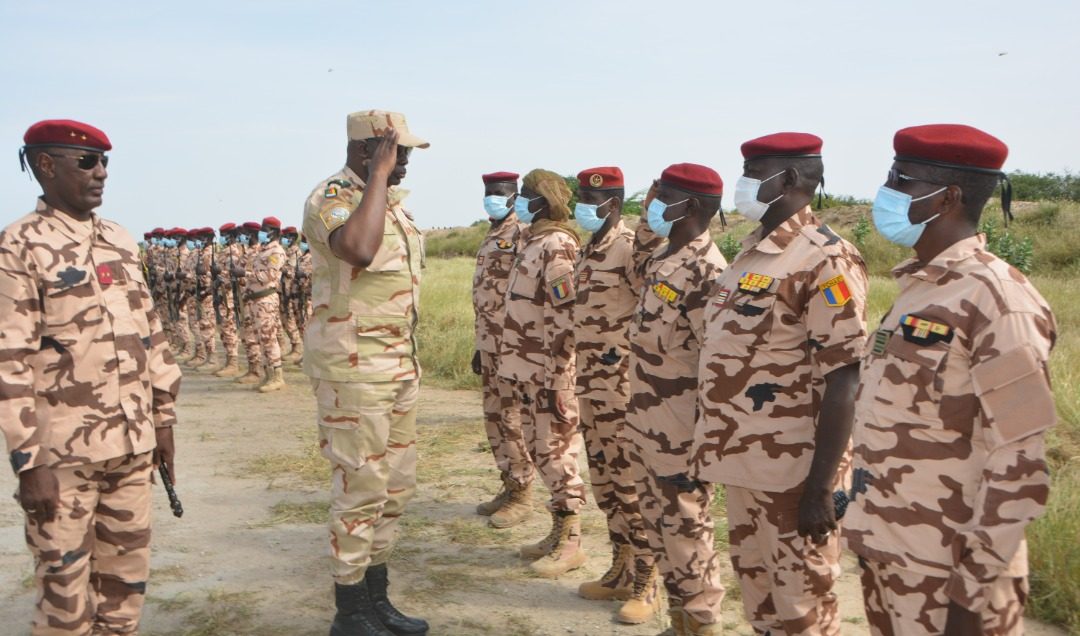
Nigerian troops backed by air support repelled coordinated overnight attacks on military positions in Borno and Yobe states, the military announced on Friday, in the latest and bloodiest reported clash of a surge in assaults on bases across Nigeria's North-East. In a statement issued on Friday, October 30, Capt. Mohammed Goni, Acting Media Information Officer of the Joint Task Force North East, Operation HADIN KAI, said fighters of the Islamic State West Africa Province (ISWAP) attacked a troop position at Bitta, in Gwoza Local Government Area of Borno State, and the North East Theatre Training School at Buni Yadi, in Gujba Local Government Area of Yobe State, during the night of October 29–30. At Buni Yadi, where a large concentration of fighters attacked the training school, troops counter-attacked in an engagement the military said lasted about five hours — and, the military says, killed 48 of the attackers. One Nigerian soldier was killed and two were lightly wounded and are receiving treatment, according to the statement.
Two cautions belong at the top of this story, because they shape everything that follows. First, every casualty figure in it — the 48 dead fighters, the weapons recovered, the army's own losses — comes from the Nigerian military's own statement, reported by Reuters from Maiduguri and carried in full by Nigerian national newspapers. Second, ISWAP and Boko Haram had issued no comment on Friday's fighting as of publication, and the toll of 48 has not been independently verified by journalists or investigators able to reach Buni Yadi. Signal Post News is reporting the military's account as exactly that: the account of one side in a 17-year war, set out in unusual detail, and not yet confirmed by anyone else.
Two attacks in one night
At Bitta, a community in the Gwoza hills near the Cameroon border — territory Boko Haram once held as the seat of its self-declared caliphate in 2014 — the military said troops repelled an attempted assault on their position, disrupting the attack with combined ground fire and air support. Notably, the statement gave no separate death toll for the Bitta fighting: no number of attackers killed there was announced, and readers should not fold Bitta into the headline figure. The 48 belongs to the second battle, some 150 kilometres to the west.
At Buni Yadi, the target was the North East Theatre Training School (NETTS), the army's training institution in Gujba Local Government Area of southern Yobe. The military said a large ISWAP concentration attacked the school, and that troops responded with a counter-offensive coordinated by Theatre Command, combining ISTAR — intelligence, surveillance, target acquisition and reconnaissance — with air and ground assets over roughly five hours of fighting. When it ended, the military said, 48 fighters had been killed and the surviving attackers had withdrawn. Buni Yadi is not a stranger to this war: the town's government secondary school was the site of one of Boko Haram's most notorious atrocities in February 2014, when gunmen murdered scores of schoolboys — a history that makes a training school an especially charged target, and its successful defence an especially resonant claim for the army to make.

The weapons haul — and what it suggests
The most concrete part of Friday's statement is not the death toll but the inventory. At Buni Yadi, the military said, troops recovered 52 firearms: 42 AK-47 rifles, five PKT machine guns, four general-purpose machine guns and one 60mm mortar. Alongside them were 105 AK-47 magazines, two video cameras, and ammunition in quantities that speak to how the attacking force was equipped — 30 rounds of 12.7mm armour-piercing incendiary ammunition, 2,738 rounds of 7.62mm special, 223 rounds of 7.62mm NATO and 2,054 rounds of PKT ammunition, more than 5,000 rounds in all.
Read as analysts read such lists — as evidence, not as proof — the haul describes a raiding force built to overrun a position and hold it long enough to strip it. Machine guns in three types and a mortar are crew-served weapons, the kind used to suppress a garrison while assault teams close in; thousands of rounds are what a force carries when it expects a long fight, not a hit-and-run. A training school is a logical objective for such a force: schools and depots hold armouries, and in this war captured weapons are currency. That reading is interpretation, not established motive — the military did not state what the attackers intended beyond the assault itself, and ISWAP has said nothing. But it is why officers treat the recovery list as the strategically important line of the statement: 52 firearms leaving the battlefield in army hands is 52 firearms an insurgency that largely arms itself from its enemy no longer has.
Why this matters
Base attacks are the engine of this insurgency's economy. ISWAP's growth from a Boko Haram splinter into the dominant jihadist force in the Lake Chad Basin was built substantially on raiding Nigerian positions — overrunning outposts, killing or scattering their garrisons, and leaving with vehicles, weapons and ammunition that equipped the next attack. A failed raid that costs the attackers 48 men and 52 firearms, if the military's account is accurate, runs that economy in reverse for one night: the insurgents spent men, guns and more than 5,000 rounds and took nothing home. Set against that, however, is the tempo. Reuters reported on Friday that attacks by Boko Haram and ISWAP on military positions have surged in recent weeks, despite years of operations against the insurgency — and conflict data point the same way. ACLED, the armed-conflict monitoring project, has reported Boko Haram and ISWAP violence in 2025 running at its highest level since the 2015 peak, and more than 300 clashes in the Lake Chad region in the first quarter of 2026, up roughly 30 per cent on the previous quarter. A garrison that holds is a tactical success; two garrisons attacked on the same night, in two states, is a measure of how many fighters the other side can now put into the field at once. Both things are true at the same time, and any honest account of Thursday night has to hold them together.
Seventeen years of insurgency
The war that produced Thursday night's fighting began in Maiduguri in 2009, when the sect founded by Mohammed Yusuf — known to the world as Boko Haram — rose in revolt and was crushed in days, its leader dying in police custody. It returned as an insurgency that by 2014–15 held swathes of the North-East, seized Gwoza and Chibok, and was declared, in December 2015, "technically defeated" by President Muhammadu Buhari. The declaration has been repeated in various forms by officials ever since, and events have outrun it every time — a pattern worth remembering whenever a single night's toll is offered as a turning point. In 2016 the movement split: the Islamic State recognised Yusuf's son, Abu Musab al-Barnawi, and his faction became ISWAP, while Abubakar Shekau's loyalists kept the Boko Haram name until Shekau's death in 2021, during an ISWAP offensive against his Sambisa forest stronghold. ISWAP, better organised and more focused on military targets and taxation of the communities it controls, emerged as the stronger force, anchoring itself around Lake Chad and spreading the war across the borders of Niger, Chad and Cameroon. The Nigerian response has been run since April 2021 by Operation HADIN KAI — "cooperation" or "unity" in Hausa — the joint task force renamed from Operation Lafiya Dole, headquartered in Maiduguri and fighting, as Thursday showed, on several axes at once.
The numbers in context
Friday's 48 also needs to be read against the military's own running totals. In its monthly briefing on October 30, Defence Headquarters said troops of Operation Hadin Kai had killed 162 insurgents in the North-East in October — the military's figure for the month, presented separately from Friday's statement, which would make the Buni Yadi counter-offensive the single largest claimed engagement of the month. Earlier in October, the air force said a strike on ISWAP fighters at Badu in Borno killed 40 — see our report on Nigeria's airstrike on ISWAP fighters in Borno. What such numbers can prove is limited, and Friday's is no exception. No territory changed hands at Buni Yadi: a base was attacked and held. Kill counts in this war have been disputed before, by journalists and researchers who note that bodies are rarely counted by anyone independent, and insurgent movements in the Lake Chad Basin have historically replaced their losses from a deep pool of recruits, defectors and coerced fighters around the lake. A toll of 48, even if exact, measures one night's fighting. It does not measure whether ISWAP is weaker next month — the surge in attacks Reuters describes suggests the opposite pressure — and it will not be verifiable unless evidence beyond a weapons list is published. The military's statement, as reported, listed weapons and ammunition in detail but released no imagery with it.
What the other side says — and does not say
There is, at present, no other side's statement to set against the military's. ISWAP's media apparatus, which publicises its successful attacks through Islamic State channels, had claimed nothing about Bitta or Buni Yadi by Friday, and Boko Haram's remnants issued no comment either; the army's account stands alone in the public record. Critics of the military's communications — Nigerian journalists and conflict researchers who have covered this war for years — make a standing point rather than a specific one about Thursday: that official tolls from the North-East have sometimes exceeded what later reporting could support, that access for independent journalists to battle sites is rare, and that claims should be treated as claims until corroborated. Supporters of the military answer, also in general terms, that the statement's specificity — a named spokesman, a named school, a five-hour timeline, an itemised weapons inventory, and the admission of a soldier killed and two wounded — is the profile of an after-action report rather than a communiqué written for effect, and that insurgents publicise their victories loudly enough that silence after a claimed defeat is itself a datum. Signal Post News takes no position between those readings; it notes only that the verifiable facts today are that two bases were attacked, both held, and the rest rests on the word of the side that held them.
What happens next
Three questions will decide what Thursday night means. The first is tempo: whether ISWAP's run of attacks on North-East positions continues into November at the pace of recent weeks, or whether a costly failure at Buni Yadi slows it — the surest evidence will be the next fortnight's incident reports, not either side's statements. The second is evidence: whether the military publishes imagery or invites the scrutiny that would let its 48 be tested, as it has sometimes done with recovered-weapons photographs in past operations. The third is the war beyond the wire: Borno and Yobe's civilians live between the garrisons and the insurgents, humanitarian agencies reach much of the countryside only under military escort, and every escalation of base attacks tightens that access further. Friday was a crowded day for Africa's wars on this site — in Ethiopia, drone strikes on the Jari 2 displacement camp in Amhara killed at least 15 people — and in both stories the pattern is the same: wars measured by their spokesmen in victories, and by everyone else in whether the next night is quieter than the last.
Sources
Reuters, Maiduguri, Oct 30, 2026 (Ahmed Kingimi) — troops backed by air support repelled attacks in Borno and Yobe, killing 48, the military said; one soldier killed, two lightly wounded; statement of Capt. Mohammed Goni, Acting Media Information Officer, Joint Task Force North East, Operation HADIN KAI; surge in Boko Haram and ISWAP attacks on military positions in recent weeks. Telegraph Nigeria, Oct 30, 2026, and Daily Courier, Oct 30, 2026 — the full Operation HADIN KAI statement, including the Bitta and Buni Yadi engagements, the roughly five-hour Buni Yadi counter-offensive coordinated with ISTAR, air and ground assets, and the complete recovered-weapons and ammunition lists. Defence Headquarters monthly briefing, Oct 30, 2026 (via Nigerian press) — 162 insurgents killed in the North-East in October, the military's figure. ACLED conflict data and analysis reporting — Boko Haram and ISWAP violence in 2025 at its highest since the 2015 peak; more than 300 clashes in the Lake Chad region in the first quarter of 2026.
Photos: file photographs, as credited in the captions — Multinational Joint Task Force (MNJTF); John Taggart via Wikimedia Commons (CC BY-SA 2.0); Ifeatu Nnaobi via Wikimedia Commons (CC BY-SA 4.0). No verified photograph of the Bitta or Buni Yadi fighting of Oct 29–30 has been published; all three images are file photos and are captioned as such.