War · Africa · Ethiopia
Rescuers buried 13 people at the camp and two more died in hospital after four to five successive strikes hit Jari 2, a fenced camp of more than 1,700 displaced people near Hayk, at about 11 a.m. on Thursday. Who sent the drones is unknown: no party has claimed the attack and Addis Ababa has not commented.
Track it live: Africa wars tracker · Live war tracker
A series of drone strikes hit a camp for displaced civilians in Ethiopia's Amhara region on Thursday, killing at least 15 people — five of them children — in one of the deadliest single attacks on a displacement camp in the country's widening northern war. The camp, known as Jari 2, shelters more than 1,700 people near the town of Hayk in the South Wollo Zone, most of them families who had already fled violence in Oromia. Nobody has claimed the attack, the Ethiopian government has not commented on it, and it is not clear why the camp was targeted or who was behind the strikes, Reuters reported.
"There were around five explosions. Then … we started collecting bodies," a community representative who took part in the burials told Reuters, asking not to be named. The representative said rescuers buried 13 people at the camp, and that two of the injured later died at a hospital in Hayk, a town 17 kilometres away. A local official told Reuters they were aware of the incident and were helping to arrange treatment for 36 injured people. A resident of Hayk who was helping to shelter survivors also put the death toll at 15 and said people from the camp were now sleeping in a school in the town. Camp residents who spoke to the Ethiopian newspaper Addis Standard on Thursday gave a slightly higher count — 16 killed and 22 injured, among them three pregnant women and an eight-year-old girl — and said the camp was struck at least five times at intervals of roughly 15 minutes from about 11:00 a.m., while displaced people were inside their shelters and children were coming home from school. A witness identified only as Yasin told the news agency AFP that four successive strikes hit the centre and that 14 people were buried at the camp, with two more dying while receiving treatment. The counts differ in detail, as early tolls from chaotic scenes usually do; what every account agrees on is the place, the repeated strikes, and that the dead were civilians, including children.
A camp of people who had already fled once
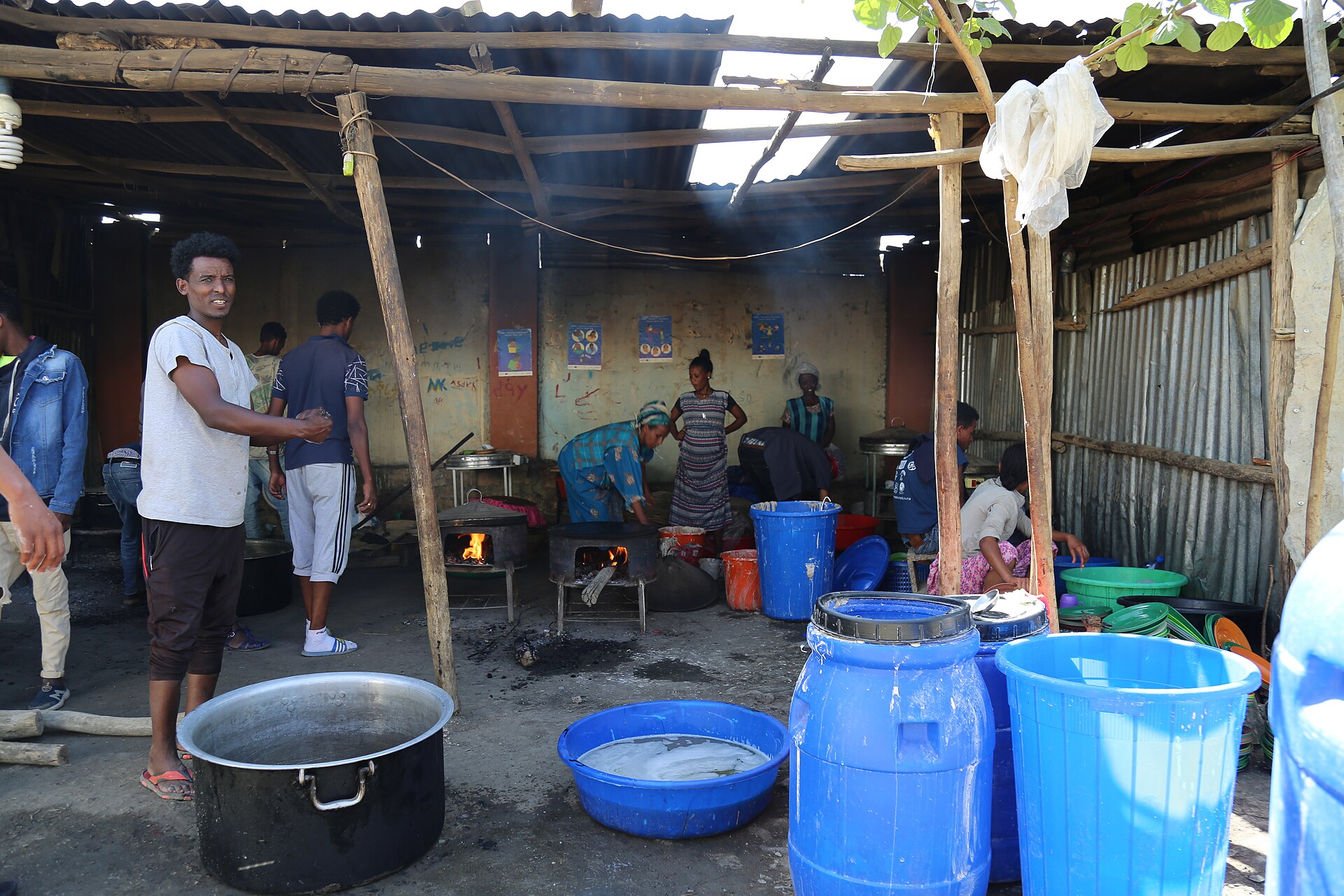
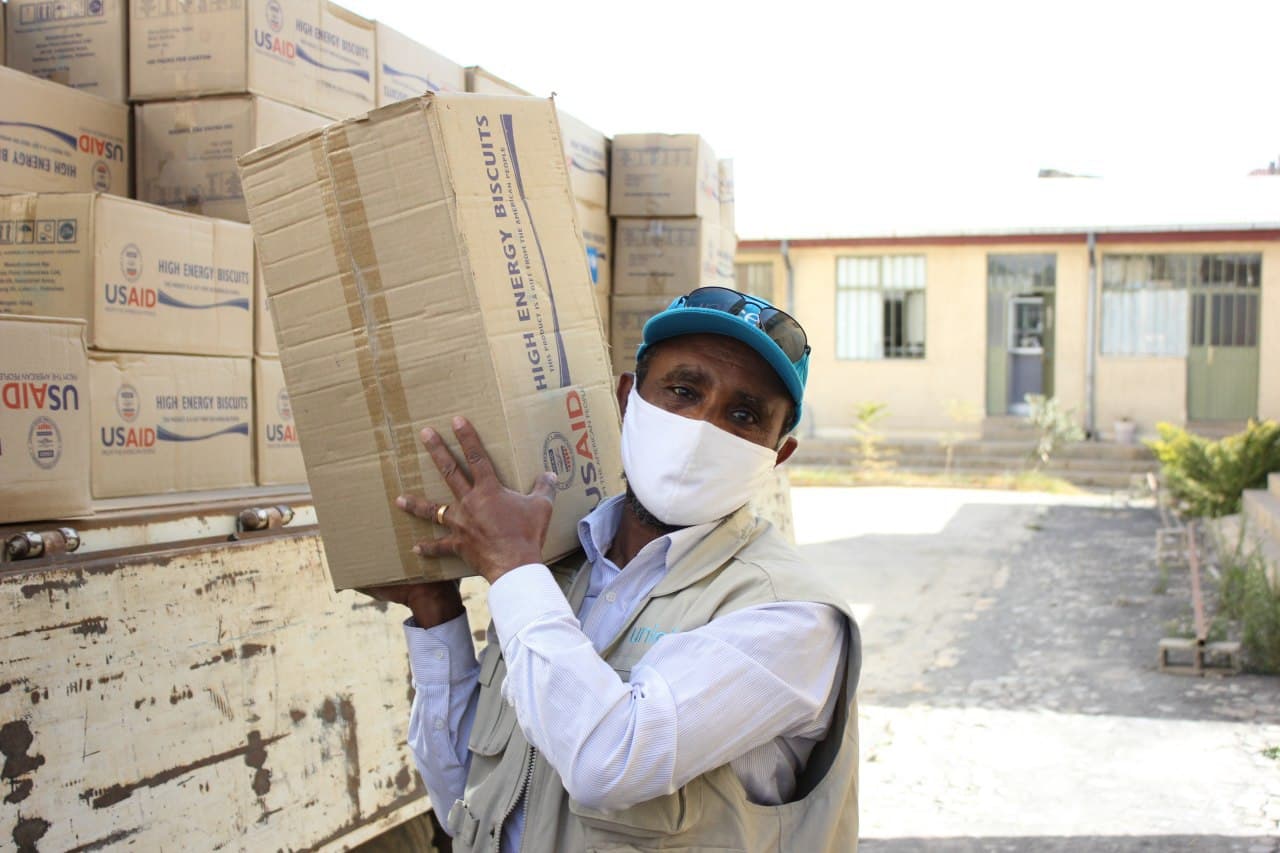
Jari 2 — listed in local reporting as the Hayiq Jari 2 Turk camp — stands in Tehuledere woreda and is one of three displacement camps in the district, alongside Jari 1 and Mekane Eyesus, according to Doctors Without Borders (MSF), which works in the area. The site once served as a base for a Turkish company constructing a railway; it is fully fenced and made up of a mix of containers, tents in varying condition and temporary shelters along a rocky mountain road. Its residents were displaced mainly from the Wollega zones and West Shewa in Oromia, and like the more than 660,000 internally displaced people across Amhara counted by the UN's humanitarian office, they were living on shrinking assistance: Addis Standard reported on October 6 that people in camps across Amhara faced worsening shortages of food, medicine and healthcare as humanitarian organisations scaled back or withdrew amid funding cuts. Witnesses said more than 20 household shelters caught fire during Thursday's strikes, leaving surviving families without even the shelter they had. "We fled from Wollega to save our lives, but the worst has happened here," one resident said.
What we know — and what we do not
What is established by multiple independent accounts — Reuters' rescue sources, AFP's witness reporting and Addis Standard's camp residents — is that the camp was hit repeatedly, in daylight, over an extended period, and that civilians were killed and injured in significant numbers. What is not established is responsibility. Both of Reuters' sources said there had been no fighting in the area when the strikes took place, but they also said members of the Amhara Fano National Movement — a militia that is part of the rebel alliance spearheaded by fighters from Tigray — had been nearby. Residents and activist accounts blame federal forces, and Addis Standard places the attack within what it describes as a growing federal use of drones across Tigray, Amhara and Oromia during October. The federal government is the side in this war known to operate armed drones at scale. But no party has claimed the strike, a spokesperson for Prime Minister Abiy Ahmed did not respond to Reuters' requests for comment, and no official statement had been issued by Friday. Signal Post News is reporting the attribution claims as claims, and the fact of the attack as established; readers should hold those two things separately, because investigators and journalists on the ground still do.
How the war reached South Wollo
Thursday's strikes landed in a war that has been accelerating for five weeks. An alliance of rebels from northern Tigray, fighting alongside Amhara Fano forces, launched an offensive on September 23. Government troops have since driven the alliance back, retook the Tigrayan capital, Mekelle, earlier this month and advanced toward the border with Eritrea, which Addis Ababa accuses of backing the rebellion with troops — an accusation Asmara denies (see our report on Ethiopia's drone strikes on Eritrean troops in Tigray). In parallel, federal forces and Fano fighters have been fighting in Amhara itself since 2023. Drones have become the federal side's signature weapon in this phase of the wars — cheap to keep in the air, able to reach valleys and roads far behind shifting front lines, and, as a pattern of October incidents suggests, increasingly used in places where civilians gather. On Friday morning, hours after the Jari 2 burials, Addis Standard reported that a drone struck civilians in Rama town in Central Tigray who had gathered to collect sorghum spilled from a grain truck that had itself been hit by a drone the previous evening; at least 12 civilians were reported killed. That is a separate incident, in a different region, and its toll is not part of the Jari 2 count — but rescuers and editors in Ethiopia are now describing the two attacks in the same breath, as a method rather than an aberration.
Why this matters
A displacement camp is, in law and in logic, one of the clearest civilian objects in any war: a fenced, registered, aid-served concentration of people who have already been driven from their homes, whose location is known to every party and humanitarian agency in the district. That is why a single strike on such a camp would be grave, and why the repeated character of Thursday's attack — wave after wave over the better part of an hour, on the accounts of people who were there — is the fact investigators will press hardest on. A weapon that returns four or five times is not a stray round or a single mis-identified target; each return is a fresh decision, or a fresh failure to decide, by whoever controlled it. Ethiopia's wars have produced this pattern before — the drone campaigns documented in Tigray, Amhara and Oromia this month, and in Sudan's war, where drone strikes have killed hundreds, aid agencies and UN experts have warned that camps, markets and grain queues are becoming routine aim points rather than protected places. The numbers give the scale of the exposure: more than 660,000 displaced people in Amhara alone, many in camps that, like Jari 2, sit within range of front lines that move faster than aid maps are redrawn. If camps are not safe, the entire logic of civilian protection in this war — flee, register, shelter, wait — collapses, and people will draw the conclusion Jari 2's survivors are already voicing: that it might be better to sleep on a city street than in a known, listed, targetable camp.
Both sides' positions
The federal government's public position on the wider offensive is that it is reversing a rebel invasion supported by Eritrea and restoring state authority in the north; it has not addressed the Jari 2 strikes specifically, and official silence after mass-casualty incidents has been its pattern through much of October. The Fano movement and Tigrayan opposition voices say federal drones are being used indiscriminately against civilians across three regions and point to Rama, Jari 2 and earlier October strikes as one campaign; the government and its supporters respond, in general terms, that operations target armed fighters who move among and near civilian sites — the same argument Reuters' sources implicitly raised by noting Fano members near the camp, and implicitly undercut by noting there was no fighting there when the strikes began. Humanitarian organisations, for their part, have largely limited themselves to documenting conditions in the camps — MSF's description of Jari 2 was published as part of a warning about a growing crisis for Amhara's displaced, before the strike — and to calling, so far without visible effect, for the protection of civilian sites. Between a government that has not spoken, an opposition that speaks in certainties it cannot yet prove, and rescuers who buried 13 neighbours before any camera arrived, the verified record at this point is the rescuers' — and it is damning enough on its own terms, without embellishment from either side.
What happens next
Three things will decide what Thursday means. First, accountability: whether any investigation — Ethiopian, or by the UN and African Union mechanisms that have documented earlier strikes — establishes who operated the drones over Jari 2 and what they were aiming at; silence, sustained, becomes its own finding in the eyes of the displaced. Second, the offensive itself: government forces are advancing toward the Eritrean border and describe momentum as theirs, and every week of advance pushes the drone war over new towns, markets and camps that were behind the lines a month ago. Third, the humanitarian arithmetic: survivors of Jari 2 are sleeping in a Hayk school, more than 20 shelters burned, the seriously injured were referred onward to Dessie hospital, and the aid system that was already withdrawing from Amhara's camps before the strike now has to decide whether returning to them is safe for its own staff. A camp that has been struck once, and never explained, does not refill with confidence. It empties — into towns, onto streets, and out of the reach of the registries that are supposed to protect people. That dispersal, invisible in any single day's toll, may be Thursday's longest consequence.
Sources
Reuters, "Strikes on camp in Ethiopia kill at least 15, sources say," Oct 30, 2026; Addis Standard, "Drone strike kills 16, injures 22 at Hayiq Jari 2 IDP camp in Amhara region," Oct 29, 2026, and "At least a dozen civilians killed in yet another army drone strike in Tigray's Rama town," Oct 30, 2026; AFP witness reporting from the Jari 2 camp, Oct 30, 2026 (via News Central / YNews); Doctors Without Borders (MSF), "A growing crisis for thousands of displaced people in Ethiopia's Amhara region" (camp descriptions and UN OCHA displacement figures); Abay Times, "Drone strike hits displacement camp in South Wollo," Oct 29–30, 2026.
Photos: file photographs via Wikimedia Commons, as credited in the captions — Rastakwere (CC BY-SA 4.0), Radosław Botev (CC BY 3.0 pl) and USAID (public domain). No verified licensed photo of the Jari 2 aftermath exists; all three images are file photos and are captioned as such.